Stamping Press Transfer Robot
Multi-axis linear and articulated press-to-press transfer systems engineered for tandem press lines. Replaces manual operator feeding while optimizing dwell times and protecting expensive progressive dies.
How Tier-1 suppliers and OEM stamping facilities eliminate press bottlenecks, protect complex dies, and maximize Strokes Per Minute (SPM) using multi-axis press transfer robots, coil-fed laser blanking, and vision-assisted traceability cells.
Global automotive procurement teams facing aggressive EV model rollouts and shifting structural lightweighting requirements (such as 22MnB5 press-hardened steel and 6000-series aluminum alloys) can no longer rely on standalone, manual press operations. Modern Automotive Metal Stamping Automation requires holistic line synchronization—from coil destacking and centring to multi-station press transfer, laser trimming, and inline 2D DataMatrix marking.
At Marvel Industrial Solution, operating from our state-of-the-art facility in Ahmedabad, Gujarat, India, we design, build, assemble, and test comprehensive pressroom automation cells. We manufacture every structural robotic frame and transfer gantry in-house, stress-relieving and precision-machining every mounting surface to guarantee structural alignment over millions of continuous press cycles.
To eliminate shop-floor bottlenecks and maximize Strokes Per Minute (SPM), global automotive buyers deploy a combination of customized special purpose machines (SPM), transfer robots, and high-power fiber laser systems.
Multi-axis linear and articulated press-to-press transfer systems engineered for tandem press lines. Replaces manual operator feeding while optimizing dwell times and protecting expensive progressive dies.
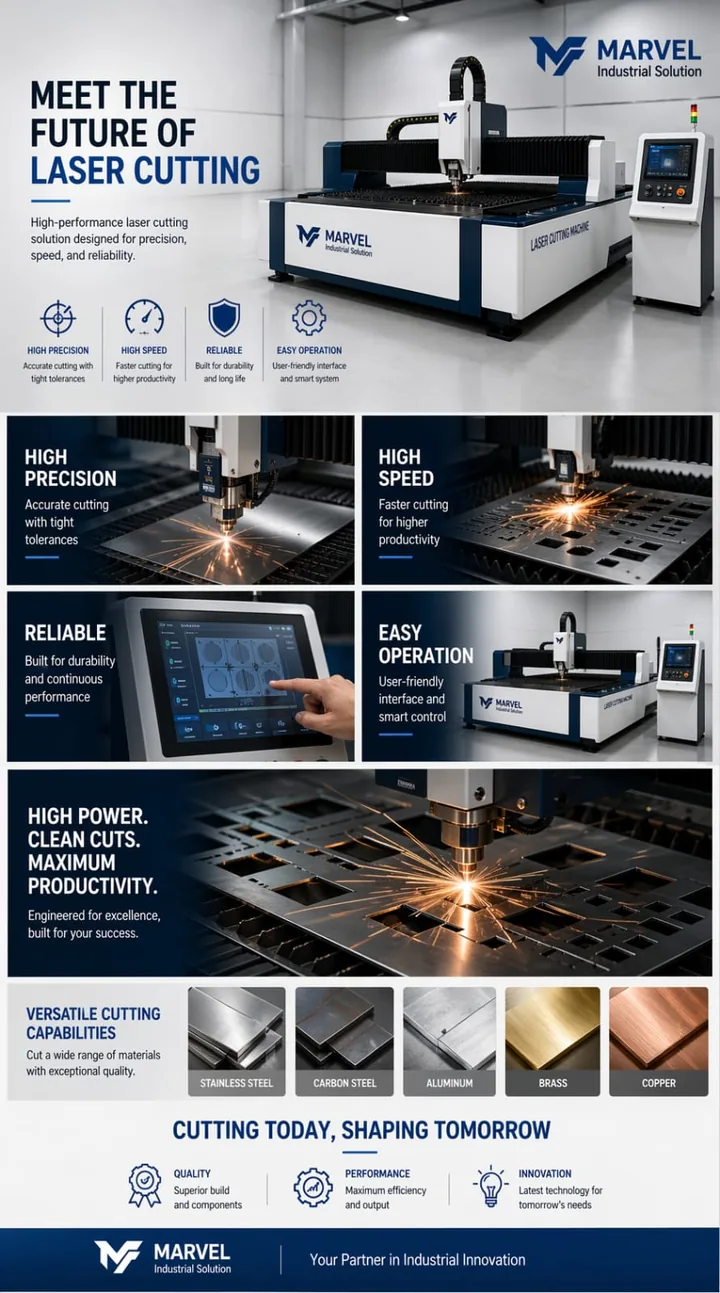
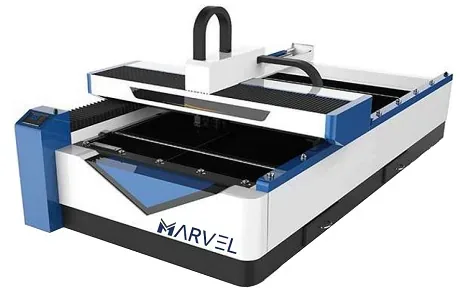
Continuous coil-fed fiber laser cutting system combining decoiling, leveling, laser blanking, and stack transfer. Eliminates physical blanking dies for low-to-medium volume automotive variants.
High-rigidity overhead gantry systems designed for automated sheet loading, blank destacking, sheet centring, and double-sheet detection before entering the press line.
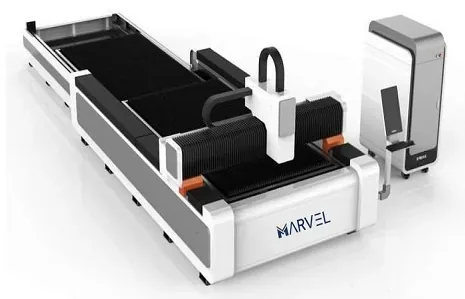
Dual-pallet CNC fiber laser platform utilized for post-stamping 2D/3D trimming, hole piercing, and prototype modifications on hot-stamped structural automotive components.
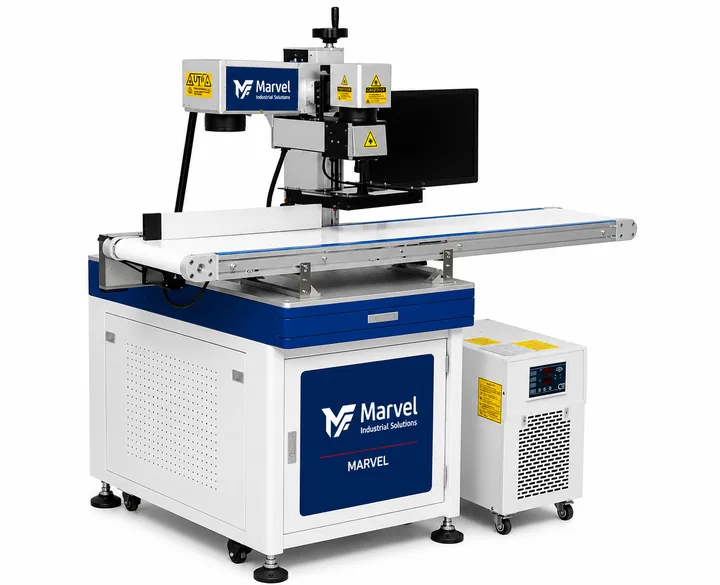
High-speed camera-guided laser marking cell that automatically detects part orientation on post-stamped parts, engraving 2D DataMatrix codes, VIN numbers, and tracking IDs.
Robotic special purpose machine engineered to remove burrs, sharp edges, and drawing line imperfections from stamped automotive body panels and chassis elements.
As the automotive sector transitions from traditional internal combustion engine (ICE) architectures to complex Electric Vehicle (EV) platforms, stamping pressrooms face unprecedented technical shifts.
Traditional tandem press lines suffered from mechanical dwell inefficiencies and high peak-energy draws. Modern automation integrates programmable servo-driven transfer arms directly into the press encoder loop. By calculating continuous motion profiles (electronic camming), transfer arms enter and exit the die envelope within milliseconds of stroke clearance. This advances line speeds from 10–12 SPM to upwards of 25–30 SPM while reducing vibration and mechanical wear on progressive dies.
With EV production demanding higher model variance in smaller batch sizes, dedicated hard transfer tooling creates severe downtime during product switchovers. Leading stamping plants are adopting modular carbon-fiber transfer booms equipped with Quick Gripper Changeover (QGC) couplings. Combined with automatic tool changers (ATC) mounted along the press bed, tool changeover times are compressed from hours down to under three minutes.
Before any physical steel frame is cut or welded, global automotive buyers demand 100% virtual validation. Using Digital Twin software (such as Siemens Process Simulate or Delmia), Marvel Industrial Solution models the entire transfer trajectory, checking 3D clearances against die structures, upper press rams, and safety pillars. Virtual commissioning eliminates on-site mechanical collisions and reduces factory commissioning timelines by over 40%.
Scrap prevention is paramount when handling expensive lightweight materials like high-strength aluminum and Advanced High-Strength Steels (AHSS). Advanced stamping automation lines now embed 2D/3D vision cameras and optical sensors on the destacking station. The system instantly detects double-blank feeds, verifies sheet orientation, adjusts the robotic gripper offset in real-time, and rejects misaligned blanks before they can damage multi-million-dollar stamping dies.
Procurement directors and chief operations officers evaluating capital expenditure (CapEx) investments in metal stamping equipment must navigate several long-term structural market shifts.
Procurement departments are moving away from buying standalone mechanical presses, destackers, and transfer arms from separate vendors. Single-source turnkey accountability ensures unified PLC software architectures, single-point safety circuits, synchronized warranty terms, and seamless integration without vendor finger-pointing during line stops.
With global energy prices remaining volatile, buyers prioritize servo-electric transfer mechanisms over energy-inefficient pneumatic or hydraulic actuting arms. Servo transfer systems regenerate braking kinetic energy back into the power grid, reducing electrical power consumption per stamped part by up to 35% across multi-shift production.
Global automotive component manufacturers are re-engineering supply chains to mitigate regional geopolitical risks. Sourcing high-precision stamping press transfer robots and fiber laser SPM machinery from established manufacturing hubs like India provides European, North American, and Asian buyers with Western-grade components (Siemens, Yaskawa, Schneider, IPG) at highly competitive capital acquisition costs.
Compare performance metrics across Marvel Industrial Solution’s press automation platforms to identify the correct kinematic configuration for your press shop floor.
| Automation System Platform | Max Payload Capacity | Stroke Speed (Max SPM) | Repeatability Accuracy | Primary Automotive Application |
|---|---|---|---|---|
| Linear Servo Transfer Robot (Tandem Line) | 15 kg – 50 kg per arm | Up to 25 SPM | ±0.05 mm | Door panels, fenders, hood outer/inner stampings |
| Tri-Axis Servo Transfer Press System | 25 kg – 80 kg | Up to 30 SPM | ±0.03 mm | Progressive multi-station single press stamping |
| Heavy-Duty Gantry Blank Destacker | 50 kg – 200 kg | 18 Blanks/min | ±0.10 mm | Coil-fed blank loading, centring & oiling stations |
| Coil-Fed Laser Blanking Line (Continuous) | Coil width up to 1800mm | Dynamic cut speed up to 100m/min | ±0.03 mm | EV structural chassis components, tailored blanks |
| Vision-Assisted Part Marking Cell | Integrated Conveyor | 30 – 60 Parts/min | Optical DPM | Post-stamping VIN code & 2D DataMatrix engraving |
* Note: Exact SPM ratings depend on press stroke length, die daylight opening distance, part geometry, and gripper arm weight.
Selecting an automation partner for automotive stamping requires absolute confidence in structural design, controller integration, and long-term field support. Here is how Marvel Industrial Solution delivers an unmatched value proposition for global buyers:
Detailed engineering answers to the questions global procurement leads and plant managers ask when specifying automated press transfer lines.
Tandem press transfer robots move stamped parts horizontally between separate, independent press structures located in a sequential line. Each press performs a dedicated operation (such as draw, trim, pierce, flanging). In contrast, a tri-axis transfer system operates inside a single press bed carrying multi-station dies, moving parts synchronously along three axes (lift, advance, clamp) within the same bolster space. Marvel Industrial Solution engineers both customized tandem transfer robots and internal tri-axis systems based on your shop floor layout and press tonnage.
Strokes Per Minute (SPM) is dictated by press ram stroke speed, die daylight clearance height, part transfer distance, and gripper acceleration dynamics. Manual feeding typically tops out at 6 to 10 SPM due to operator fatigue and safety interlock delays. By implementing high-speed servo transfer arms synchronized with press continuous-run mode (using rotary encoders and continuous electronic camming profiles), output increases to 20–30 SPM, effectively doubling or tripling daily pressroom throughput.
Class-A body panels (such as vehicle doors, hoods, and quarter panels) require zero surface marring or oil ring marks. Marvel Industrial Solution designs end-of-arm tooling (EOAT) utilizing lightweight carbon-fiber crossbars fitted with non-marking polyurethane vacuum cups, soft-touch silicone pads, or specialized magnetic grippers. In addition, integrated pneumatic blow-off nozzles clean residual debris from cup surfaces between pick cycles.
Electric vehicle (EV) production often requires rapid design iterations and lower initial batch volumes compared to high-volume ICE vehicles. Hard blanking dies cost tens of thousands of dollars and take months to fabricate and modify. A coil-fed fiber laser blanking line cuts complex blank geometries directly from uncoiled sheet metal according to CAD files, completely eliminating hard blanking die tooling costs, saving storage space, and allowing instant part nesting modifications.
Safety is absolute in modern press shops. Marvel Industrial Solution automation systems meet global CE and ISO safety standards. Safety interlocks include dual-channel safety PLCs, light curtains surrounding the press perimeter, mechanical interlock gates, anti-collision sensor heads on transfer arms, double-blank thickness sensors (preventing multi-sheet die crashing), and immediate emergency stop integration with the main press clutch/brake controls.
Yes. We regularly retrofit legacy mechanical and hydraulic presses with modern servo transfer automation. Our engineering team designs custom mechanical adapter plates, updates electrical control interface cabinets, and installs press encoder feedback loops to sync legacy press movement seamlessly with our modern robotic transfer controllers.
Standard press transfer automation cells typically ship within 8 to 14 weeks following 3D CAD design approval and factory acceptance testing (FAT). Every system is shipped with complete sea-worthy packaging, plug-and-play wiring harnesses, labeled schematics, and foundation layouts. Overseas installation can be supported directly by our field engineers or managed via remote augmented reality (AR) video support alongside your local maintenance team.
Share your press room layout, component DXF/STEP files, stroke speed targets, and press specifications with Marvel Industrial Solution. Our senior automation engineers will evaluate your process and provide a technical feasibility proposal and commercial quote.
Explore technical concepts, automation technologies, and machinery categories engineered by Marvel Industrial Solution.