Blog

Top 10 Exchange Table Fiber Laser Cutting Machines

Top 10 Exchange Table Fiber Laser Cutting Machines

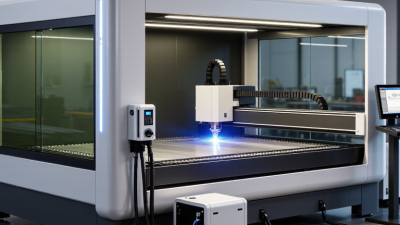
Choosing among the Top 10 Exchange Table Fiber Laser Cutting Machines requires more than comparing laser power and price. In real workshops, productivity depends on loading speed, cutting stability, software control, and after-sales support. An Exchange Table Fiber Laser Cutting Machine can reduce idle time by moving one worktable outside the cutting zone while another table operates inside. This matters when operators process thick steel plates throughout a busy shift. This guide evaluates leading machines through practical criteria, including cutting accuracy, exchange speed, drive systems, safety design, and service reliability. It also considers details that catalogs often overlook. For example, a stable machine should produce clean edges on stainless steel without excessive dross. Its table should remain smooth after repeated loading with heavy sheets. Operators should also find the control interface clear, even during urgent production changes. No single model suits every factory. A compact machine may fit a small fabrication shop, while a high-power system may better serve structural steel production. Real results can vary with material quality, gas purity, maintenance, and operator experience. That limitation deserves attention. Some advertised specifications look impressive, yet they may not reflect daily performance. Therefore, this overview combines technical analysis with practical observations, helping buyers compare machines more responsibly. Readers should verify current specifications, certifications, warranty terms, and local service coverage before making a final decision. Small details often decide long-term value.
Read more »
Evelyn By:Evelyn - September 20, 2026
How to Choose a Single Table Fiber Laser Cutting Machine

How to Choose a Single Table Fiber Laser Cutting Machine

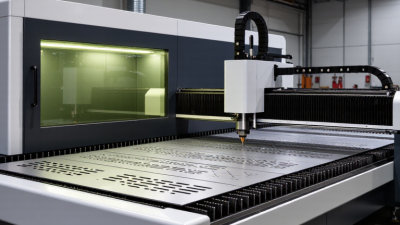
Choosing a Single Table Fiber Laser Cutting Machine is not simply a matter of selecting the highest wattage. It requires a close look at materials, sheet sizes, production volume, floor space, and operator skill. A compact workshop may need a 3 kW system for stainless steel and carbon steel. A busy fabrication plant may require 6 kW or more. Higher power can improve throughput, but it can also increase investment, energy use, and maintenance demands. David Belforte, a respected laser industry analyst, offers a useful principle: “Match the laser to the application, not the application to the laser.” This idea should guide every purchasing decision. Ask how often the machine will cut thick plate. Check its working area against your most common sheets. Inspect the cutting head, fiber source, motion system, nesting software, and fume extraction design. Small details matter. A rigid bed can reduce vibration during long cuts. Automatic nozzle changing can save minutes throughout a shift. Reliable technical support can prevent a minor fault from becoming a costly stoppage. There is no perfect machine for every factory. That is easy to forget. Some buyers focus too heavily on speed claims. Others overlook training, spare parts, or installation conditions. Compare real cutting samples, not only brochures. Request references from companies processing similar materials. Review warranty terms carefully. A well-chosen Single Table Fiber Laser Cutting Machine should deliver stable quality, practical operating costs, and room for sensible growth. It may not be the fastest option available. It should be the one your team can use consistently, safely, and profitably.
Read more »
Evelyn By:Evelyn - September 20, 2026
Top Large Single Table Fiber Laser Cutting Machines?

Top Large Single Table Fiber Laser Cutting Machines?

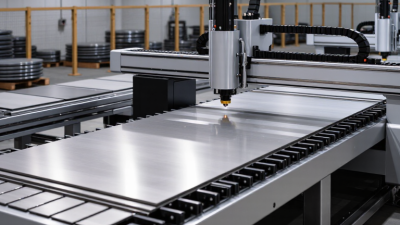
Choosing among the top Large Single Table Fiber Laser Cutting Machine models requires more than comparing laser power or purchase price. A reliable evaluation begins with the workpiece. Sheet dimensions, thickness range, material type, production volume, and nesting patterns determine whether a machine truly fits the shop floor. Dr. John C. Powell, a respected laser-processing researcher and author, has stated, “Laser cutting is a thermal process, and the material always tells you what happened.” That observation remains practical. A clean edge, narrow kerf, and limited heat-affected zone reveal process stability more clearly than a glossy specification sheet. Operators should inspect acceleration, positioning accuracy, autofocus response, cutting-head protection, and assist-gas control. Small differences become visible on long stainless-steel cuts. Capacity matters. A large single-table design can simplify loading and reduce transfer time. It may also require more floor space, stronger extraction, and disciplined material handling. Those trade-offs are easy to underestimate. In real workshops, a powerful resonator cannot correct poor nesting, unstable gas pressure, or delayed maintenance. The best Large Single Table Fiber Laser Cutting Machine should therefore balance output, precision, accessibility, energy use, and long-term service support. This guide compares leading machine categories through measurable criteria and practical experience. It also considers an uncomfortable question: is maximum power always useful? Not necessarily. A lower-power system may deliver better value for thin and medium-gauge sheets, while a high-power model can justify its cost under demanding production schedules. Performance depends on the complete process, not one impressive number.
Read more »
Evelyn By:Evelyn - September 20, 2026