0%

A Sheet Metal Fabrication Laser Machine can shape a workshop’s output, but the right choice depends on more than laser power. Material thickness, part geometry, production volume, and operator skill all matter. A machine cutting thin stainless-steel brackets may be poorly suited to thick plate or frequent material changes. The details show up on the shop floor.

The International Federation of Robotics’ World Robotics 2024 report recorded 541,302 industrial robot installations worldwide in 2023. That figure reflects broader factory automation, not laser-machine sales specifically. Still, it points to a production environment where equipment integration, repeatability, and workflow increasingly deserve attention. A laser cutter should be assessed alongside loading, unloading, nesting software, extraction, and maintenance—not as an isolated purchase.

For 2026, this guide compares machine types and practical selection criteria, including fiber-laser capability, cutting-bed size, controls, service support, and total operating cost. Buyers should request sample cuts using their own materials and inspect edge quality, burrs, and consistency. Ask for realistic throughput data, too. A showroom demonstration may not match a mixed-job schedule or a crowded production floor. No machine wins every job. And published specifications rarely capture every setup delay. Use the figures as a starting point, then verify performance against actual parts, staffing, and shift patterns. The best choice is the one that fits the work reliably—not simply the one with the largest headline number.
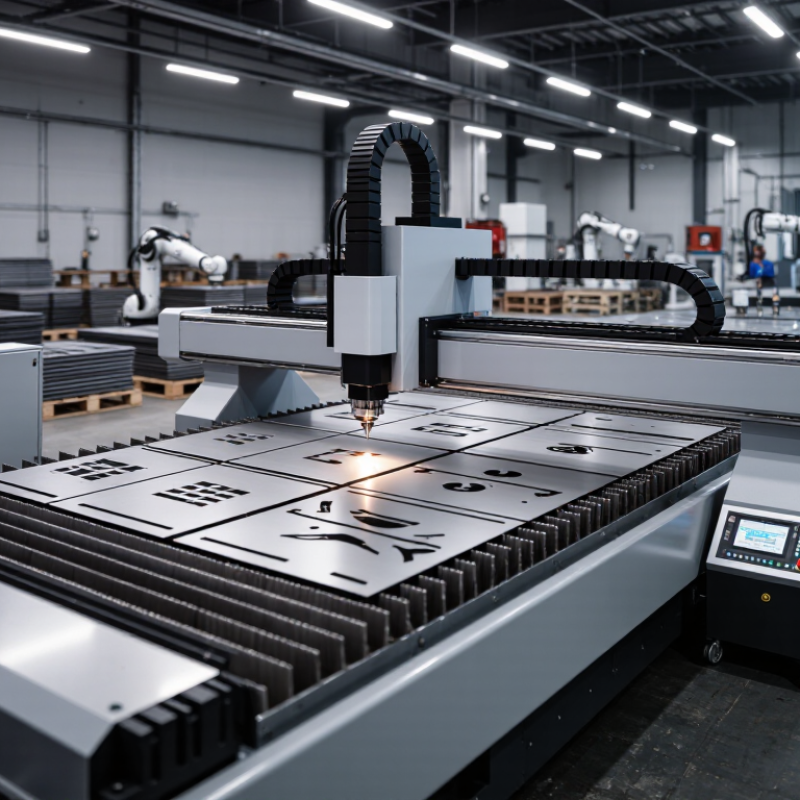
2026 Best Sheet Metal Fabrication Laser Machine

What Is a Sheet Metal Fabrication Laser Machine?

A sheet metal fabrication laser machine uses a focused beam of light to cut or shape flat metal. Its cutting head concentrates energy into a tiny spot, melting or vaporizing material along a programmed path. Computer-controlled axes move the sheet or head, while software guides the cut. That matters. Assist gas clears molten material from the kerf and influences the finished edge.

A typical system combines a laser source, cutting head, motion platform, control software, and a sturdy work bed. Fume extraction removes smoke and fine particles, while cooling equipment helps manage heat. Operators load a drawing, set material parameters, and check focus and nozzle condition before cutting. Small setup errors can leave rough edges or produce parts that do not fit.

Performance depends on more than laser power. Metal type, thickness, surface condition, assist gas, and cutting speed all affect results. For example, a narrow sheet can shift as heat builds, so supports and cutting order matter. Not every machine handles every thickness equally well. It is easy to overlook maintenance, too; dirty optics or a worn nozzle can reduce cut quality. A test piece often reveals problems that look invisible on screen.

2026 Best Sheet Metal Fabrication Laser Machine: What Is It?

A sheet metal fabrication laser machine uses a focused laser beam to cut or process metal sheets. This chart compares representative wavelengths for common laser sources. Fiber and Nd:YAG lasers operate near 1.06 micrometers, while CO₂ lasers operate near 10.6 micrometers. Actual specifications can vary by machine.

How Does Laser Cutting Process Sheet Metal?

Laser cutting turns a digital flat pattern into a sheet-metal part by directing a focused beam along programmed paths. Assist gas clears molten metal, while a CNC system controls the cutting head or sheet. The method works with materials such as mild steel, stainless steel, and aluminum. Results depend on thickness, focus, nozzle condition, and gas pressure. Small setup errors can leave burrs or heat-tinted edges.

The 2024 World Steel Association report records 1,888.2 million tonnes of crude steel production worldwide in 2023, illustrating the scale of the material supply behind fabrication. MarketsandMarkets estimated the laser-cutting-machine market at USD 5.1 billion in 2023 and projected USD 7.5 billion by 2028. These figures show industry scale, not guaranteed savings for any shop. In practice, nesting parts carefully can reduce scrap, but the first setup is rarely perfect. A test cut helps reveal problems before a full sheet is processed.

Tips: Match power, speed, and assist gas to the material and thickness. Check the cut edge under good light, especially around corners and small holes. Record successful settings, then verify them when the sheet, nozzle, or machine condition changes.

Which Machine Types and Configurations Are Available?

Sheet-metal laser machines come in several working formats. Flatbed systems cut plate and sheet, while tube machines handle round, square, and rectangular profiles. Combination machines process both, but their shared work area can limit throughput when jobs run concurrently. For thick plate, higher-power fiber lasers and sturdy frames help maintain cutting speed and edge quality. Thin stainless panels may need less power, careful gas selection, and precise focus control. Small parts matter.

Configurations also differ in automation. A basic flatbed machine uses manual loading; more advanced cells add pallet changers, tower storage, sorting, or robotic unloading. The International Federation of Robotics’ World Robotics 2024 report counted 4,281,585 industrial robots operating worldwide in 2023, reflecting the scale of automation available to manufacturers. That figure is not specific to laser cutting, so it should not be treated as proof that every shop needs a robot. Still, repeat orders and heavy sheets can make automated loading worthwhile. Not every shop needs that. Consider floor space, material mix, and service access before choosing: a compact cell may save space but make maintenance awkward. The right configuration depends on the parts actually scheduled, not the machine’s maximum specification.

Which Specifications Matter When Comparing Machines?

2026 Best Sheet Metal Fabrication Laser Machine

When comparing machines, start with the materials and thicknesses you actually cut. A 6 kW laser may handle thin stainless steel quickly, but that number alone does not predict finished-part quality. Ask for cutting data on your own material, including speed, edge condition, and assist-gas use. Check the numbers.

Working area matters when sheets are large or parts need careful nesting. Compare usable bed dimensions, loading access, and the time required to change sheets. Acceleration and positioning accuracy can affect output on intricate parts with many short cuts. They matter. Still, published figures may come from ideal test conditions, so treat them as a starting point rather than a promise.

Look closely at the CNC controls, automatic focusing, nozzle changes, and material-handling options. These features can reduce setup time, but only if they suit your operators and production mix. Ask how often lenses and nozzles need inspection, and whether routine maintenance is straightforward. Extraction, guarding, and reliable service support also deserve attention. A machine can cut beautifully during a demonstration, then feel different across a full shift. That comparison is not always tidy. Include power use, gas consumption, and expected maintenance in the operating-cost estimate, not just the purchase price.

2026 Best Sheet Metal Fabrication Laser Machine - Which Specifications Matter When Comparing Machines?

Specification Compact / Lower-Volume Setup General Production Setup High-Throughput Setup Why It Matters
Laser source and power Fiber laser, commonly around 1–3 kW Fiber laser, commonly around 3–6 kW Fiber laser, often 6 kW and above Power affects cutting speed and the range of material thicknesses the machine can process. Match it to actual jobs, not peak power alone.
Working area Often about 3,000 × 1,500 mm Commonly about 3,000 × 1,500 mm or 4,000 × 2,000 mm May use larger formats, such as 6,000 × 2,000 mm, depending on the application Choose a bed that fits the sheet sizes you buy and the available floor space. Larger formats may reduce sheet handling but require more space.
Materials and rated thickness Typically suited to thin and medium sheet work; confirm capacity for each material Can cover a broader mix of sheet thicknesses when properly configured Higher-power configurations may support thicker sections, subject to process limits Request cutting data by material, thickness, gas, and quality target. Maximum thickness is not the same as reliable production capacity.
Cutting gases Often nitrogen, oxygen, or compressed air, depending on material and finish Gas choice matched to material, thickness, edge quality, and operating cost May require higher gas flow and pressure for demanding cutting conditions Gas supply and consumption affect cut quality, cycle cost, and facility requirements. Check pressure, flow, and purity needs.
Motion system and accuracy Servo-driven axes; verify documented positioning accuracy and repeatability Servo motion with specifications suited to the required part tolerances Designed for sustained, high-speed operation; evaluate accuracy under production conditions Compare test methods and tolerances, not just headline figures. Part accuracy also depends on material, setup, and process control.
Cutting head and focus control Manual or automatic focus options, depending on configuration Automatic focus is commonly useful for mixed jobs Focus control and monitoring features can support repeatable production Check supported power, consumable availability, collision protection, and the ease of maintenance.
Loading and unloading Manual loading is common Manual or assisted loading, depending on sheet weight and workflow Automated towers or loading systems may be considered for continuous operation Automation can reduce handling time, but its value depends on utilization, staffing, and material flow.
Controls and nesting software Confirm file compatibility, nesting tools, and operator training needs Look for workflow tools for common part mixes and job changes Evaluate production scheduling, reporting, and integration requirements Software affects material yield, setup time, and day-to-day usability. Confirm licensing and support terms.
Electrical, extraction, and safety Check electrical supply, fume extraction, enclosure, and applicable safety requirements Confirm site utilities and extraction capacity for expected duty Plan for machine, automation, gas supply, extraction, and facility capacity together Installation needs can affect total cost and commissioning time. Verify compliance with local regulations.
Service and operating cost Compare service access, consumables, and expected maintenance Review response times, spare-parts availability, and training Assess uptime support, preventive maintenance, and automation service capability Purchase price is only one part of cost. Include energy, gas, consumables, maintenance, and downtime.

Note: The categories and figures above are general comparison ranges, not specifications for a particular machine. Actual performance depends on machine configuration, material grade, thickness, cutting gas, and process settings. Request a cutting demonstration using representative parts and confirm specifications in writing.

How to Choose the Best Machine for Your Production Needs?

2026 Best Sheet Metal Fabrication Laser Machine

How to Choose the Best Machine for Your Production Needs?

Choosing a sheet metal laser machine starts with the parts you actually make. List your common materials, thicknesses, sheet sizes, and daily production volume. A machine rated for thick plate may be inefficient for mostly thin stainless panels. That mismatch costs time. Check cutting speed at your typical thickness, not only the maximum speed shown in a specification sheet. Also compare bed size with your standard sheet stock to avoid unnecessary handling or scrap.

Tips: Ask for a sample cut using your own material. Inspect edge quality, burrs, heat discoloration, and corner accuracy. Confirm what utilities, extraction, and floor space the machine needs before installation.

Automation can help when jobs repeat, but it may add setup complexity for short, varied runs. Review loading options, nesting software, and operator training alongside the machine price. Ask how routine lens cleaning, nozzle changes, and service access fit into a normal shift. A polished demo is useful, but it may not reflect a busy shop. Compare a few real production jobs, including awkward shapes and frequent material changes. Some uncertainty remains until the machine runs in your workflow.

FAQS

Which types of sheet-metal laser machines are available?

Flatbed machines cut sheet and plate. Tube machines handle round, square, and rectangular profiles. Combination machines process both, but shared work areas can slow simultaneous jobs. The right fit is not always obvious.

How much laser power do I need?

Match power to the materials and thicknesses you cut most often. Higher-power fiber lasers and sturdy frames can help with thick plate. Thin stainless panels may need less power, suitable assist gas, and precise focus. More power alone proves little.

Which specifications should I compare?

Ask for cutting data on your own material and thickness. Compare cutting speed, edge condition, and assist-gas use. Check acceleration and positioning accuracy for parts with many short cuts. Check the numbers.

How can I tell if a machine suits my parts?

Request a sample cut using your material. Inspect the edge, burrs, heat discoloration, and corner accuracy. Compare the sample with your real production work, not only a clean demonstration. Some doubt remains until the machine runs on your shop floor.

When is automation worthwhile?

Pallet changers, storage towers, sorting, or robotic unloading can help with repeat orders and heavy sheets. Short, varied runs may bring extra setup complexity. A robot is not an automatic win. Consider operator training and service access.

How important is the working area?

Compare usable bed dimensions with your standard sheet stock. Check loading access and sheet-change time. A small bed may increase handling or scrap; a large cell can take valuable floor space. Measure the aisle, too.

Which features can reduce setup time?

Automatic focusing, nozzle changes, and nesting software may reduce setup time. They help only when they suit your operators and job mix. Ask how often lenses and nozzles need inspection. Small parts matter.

What costs should I include?

Estimate electricity, assist gas, maintenance, and consumables alongside the purchase price. Include extraction and service support. Ask how lens cleaning and nozzle changes fit into a normal shift. Estimates are imperfect; real use can differ.

Conclusion

A Sheet Metal Fabrication Laser Machine uses a focused laser beam to cut sheet materials with speed and precision. During the cutting process, the beam follows a programmed path while heat melts or vaporizes the material; an assist gas helps clear the cut area and can improve edge quality. Machine performance depends on factors such as material type and thickness, cutting speed, precision, power, and the ability to handle different sheet sizes.

Available configurations range from compact systems for straightforward cutting tasks to larger machines with automated loading, unloading, or multiple processing functions. Choosing the right option starts with assessing your production volume, part designs, workspace, and budget. Compare specifications such as laser power, working area, positioning accuracy, supported materials, software, and maintenance needs. The best machine is not necessarily the most powerful: it is the one that reliably meets your production requirements while balancing quality, flexibility, operating costs, and room for future growth.

Amelia

Amelia

Amelia is a dedicated marketing professional with a deep understanding of the company’s products, services, and customer needs. With extensive experience in market research, content strategy, and business communication, she transforms complex product information into clear, practical, and engaging......