0%

Global demand for traceable, permanent product identification is reshaping industrial marking in 2026. MarketsandMarkets projects the laser marking market to grow from approximately USD 3.1 billion in 2023 to USD 4.4 billion by 2028. Fortune Business Insights also reports sustained growth through 2032, although market definitions differ between studies. That difference deserves attention.

A Fiber Laser Marking Machine now serves more than basic serial-number work. A 20W machine may mark stainless-steel tools, while a 30W or 50W source can process deeper engraving, dense QR codes, and anodized aluminum. Pulsed, MOPA, and compact air-cooled models each suit different materials and production speeds. Buyers should compare pulse width, beam quality, software integration, cooling design, and after-sales support. Power alone is not a reliable selection method.

Valentin Gapontsev, founder of IPG Photonics, is widely associated with the practical observation, “The best laser is the one that works.” The wording is simple. The lesson remains valuable. A fast machine can still disappoint when its galvo scanner drifts, its software lacks verification, or operators struggle with setup. This 2026 guide examines leading Fiber Laser Marking Machine types for global buyers, using manufacturer specifications, industry reports, and real production considerations. It also recognizes an uncomfortable limitation: published market forecasts cannot fully reflect regional service quality, operator training, or long-term maintenance costs. Those factors often decide whether a machine becomes a productive asset or an expensive idle cabinet.
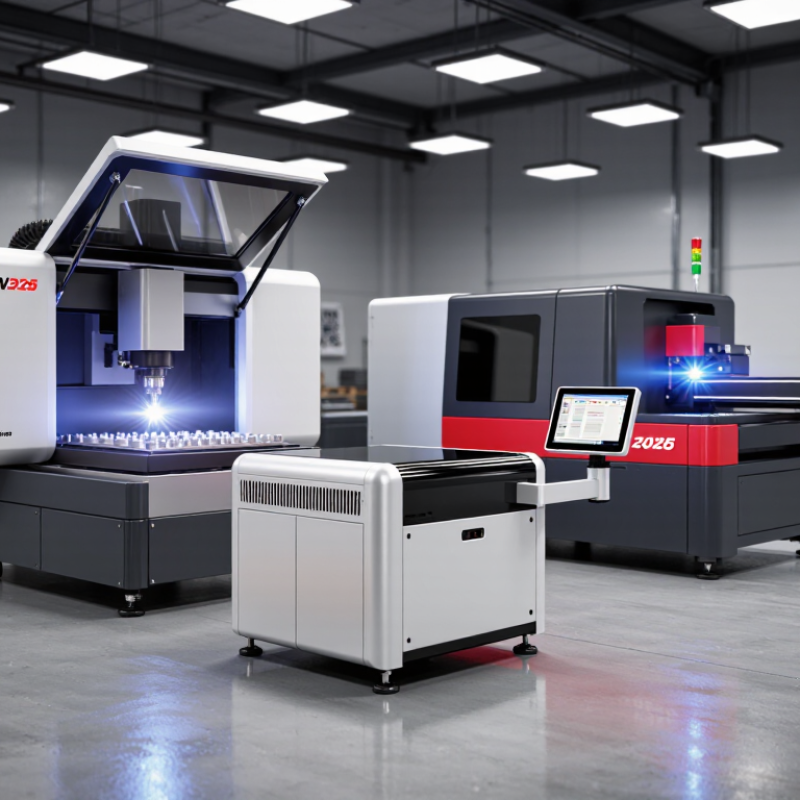
2026 Top Fiber Laser Marking Machine Types for Global Buyers

What Is a Fiber Laser Marking Machine?

2026 Top Fiber Laser Marking Machine Types for Global Buyers

What Is a Fiber Laser Marking Machine?

A fiber laser marking machine creates permanent marks by focusing light onto a material surface. Its laser source uses an optical fiber, commonly doped with ytterbium. Most systems operate near the 1,064-nanometre wavelength. This range suits stainless steel, aluminum, copper, coated metals, and some engineering plastics.

A typical machine combines a laser source, scanning galvanometer, focusing lens, controller, and worktable. The beam removes, changes, or colors a very thin surface layer. It can produce serial numbers, QR codes, logos, and fine text without ink or physical contact. The result depends on power, pulse frequency, speed, focus, and material condition. One setting will not fit every alloy.

Industry data supports this technology’s growing role. Grand View Research has reported continued expansion in the global laser marking market, driven by traceability and automated production. MarketsandMarkets also identifies fiber lasers as a major segment because of their efficiency, compact design, and low maintenance needs. These reports use different methods, so their market estimates should not be treated as identical.

Tips: Test marks on the actual material first. Check readability after polishing, heat exposure, or cleaning. A small focus error can blur a two-millimetre code. It happens. Buyers should also request sample results, safety documentation, warranty terms, and service response times before choosing a machine.

How Fiber Laser Marking Machines Work

2026 Top Fiber Laser Marking Machine Types for Global Buyers

How Fiber Laser Marking Machines Work

A fiber laser marking machine creates light inside a doped optical fiber. Pump diodes supply energy to the fiber core. The laser then produces a concentrated beam with high stability. Galvanometer mirrors move this beam across the workpiece. A focusing lens reduces the spot size to a fine point. Small spot, sharp details.

When the beam reaches metal, it changes the surface through heating, oxidation, annealing, or controlled material removal. Stainless steel may receive a dark annealed mark without deep cutting. Aluminum often needs careful power control to avoid uneven contrast. Plastics require different wavelengths or settings because some melt easily. Pulse frequency, speed, power, and hatch spacing must work together.

In practical testing, operators should clean the surface and secure the part firmly. A loose component can produce doubled edges. Even a correct drawing may mark poorly. I have found that starting with a small parameter grid is safer than trusting factory presets. Presets are only starting points. Lens focal length also affects the marking field and detail. Shorter focal lengths can improve precision, while longer lenses cover larger areas. Exhaust systems, enclosures, and interlocks support reliable operation and workplace safety. Results still need inspection under angled light and, when required, measurement tools.

2026 Top Fiber Laser Marking Machine Types for Global Buyers - How Fiber Laser Marking Machines Work

Machine Type Typical Laser Source How It Works Typical Output Range Common Materials Best Applications Key Advantages Important Buying Considerations
Q-Switched Pulsed Fiber Laser Marker Pulsed ytterbium-doped fiber laser, usually around 1064 nm A Q-switch stores energy in the laser cavity and releases it in short, high-peak-power pulses. A galvanometer scanner directs the focused beam across the workpiece, producing localized heating, oxidation, annealing, or material removal. 20–100 W average power; commonly 20–100 kHz pulse repetition rate; pulse duration often about 50–150 ns Stainless steel, carbon steel, aluminum, copper, brass, titanium, coated metals, engineering plastics Serial numbers, barcodes, logos, text, machine-readable codes, general component identification Reliable general-purpose performance, good contrast on metals, low maintenance, and relatively fast marking Check pulse stability, beam quality, scan-field size, cooling method, enclosure safety, and compatibility with reflective metals
MOPA Pulsed Fiber Laser Marker Master-oscillator power-amplifier fiber laser, commonly around 1064 nm A seed laser generates pulses while fiber amplifiers increase their energy. Independent control of pulse duration and repetition rate allows the operator to adjust heat input, peak power, and surface interaction. 20–100 W average power; pulse duration may range from a few nanoseconds to several hundred nanoseconds, depending on the source Anodized aluminum, stainless steel, plastics, coated metals, titanium, copper, and sensitive alloy surfaces Color marking on anodized aluminum, black marking on plastics, fine engraving, precision contrast marking, and delicate components Flexible pulse control, reduced heat-affected zones, improved control of contrast, and better results on difficult materials Confirm the actual pulse-duration range, frequency-power relationship, software control, thermal management, and validated material test samples
High-Power Pulsed Fiber Laser Marker High-power pulsed ytterbium fiber laser at approximately 1064 nm Short pulses with higher average power deliver more energy per unit time. Repeated beam passes or hatch patterns remove material progressively to create deeper engravings. 100–300 W is common in industrial systems; higher configurations are available for specialized deep-engraving work Steel, stainless steel, aluminum, brass, copper, tool steel, hardened metals, and selected technical plastics Deep engraving, molds and dies, automotive parts, heavy industrial components, and high-throughput production Higher material-removal rate, improved productivity, and deeper marks than standard low-power markers Evaluate extraction capacity, duty cycle, workholding, scan-head rating, thermal performance, and the required engraving depth
Continuous-Wave Fiber Laser Marker Continuous-wave ytterbium fiber laser, typically around 1064 nm The laser emits a nearly continuous beam rather than separated pulses. A moving scanner, gantry, or processing head creates a continuous thermal interaction for engraving, cutting, or surface treatment. Commonly 20–1000 W or more, depending on whether the system is used for marking, engraving, welding, or cutting Steel, stainless steel, aluminum, copper, brass, and other electrically conductive metals Heavy-duty engraving, surface cleaning, localized processing, and applications requiring high continuous energy High energy delivery and strong suitability for larger or deeper metal-processing tasks It can create more heat than pulsed systems; verify thermal distortion limits, workpiece speed, shielding, extraction, and the intended process
Portable Handheld Fiber Laser Marker Usually a 20–50 W pulsed fiber laser source integrated with a handheld marking head The operator positions the compact scanning head directly on or above the workpiece. The internal galvanometer steers the beam according to the digital marking file. 20–50 W is typical for portable identification and light engraving Steel, aluminum, brass, copper, coated metals, tools, pipes, and large assembled parts On-site marking, large components, irregular workpieces, maintenance operations, and low-volume production Flexible access, reduced fixture requirements, and easier marking of parts that cannot fit inside a standard cabinet Prioritize operator safety, head stability, focus control, protective enclosure options, cable management, and compliance with local laser regulations
Desktop Fiber Laser Marking Machine Typically a 20–50 W pulsed or MOPA fiber laser source A fixed cabinet, compact worktable, focusing column, and galvanometer scanner provide a controlled marking area for small parts and repeatable batch work. 20–50 W, with marking fields commonly selected according to the lens and required detail Metals, anodized aluminum, coated components, jewelry alloys, tools, and engineering plastics Workshops, laboratories, prototyping, small-batch production, electronic components, and product personalization Compact footprint, straightforward operation, repeatable positioning, and lower installation requirements Check usable work area, Z-axis travel, rotary-axis support, ventilation, electrical requirements, and enclosure classification
Integrated Production-Line Fiber Marker Pulsed or MOPA fiber laser source, commonly 20–100 W The laser controller receives signals from a programmable logic controller, encoder, or vision system. Parts are marked while stationary or moving on a conveyor or indexing station. 20–100 W; throughput depends on mark size, line speed, resolution, and required contrast Metal parts, coated components, plastics compatible with 1064 nm marking, cables, tools, and electronic housings Traceability codes, serial numbers, production dates, data matrices, barcodes, and automated quality control High repeatability, automation readiness, reduced manual handling, and consistent marking at production speed Confirm communication protocols, encoder compatibility, vision inspection, cycle time, reject handling, and machine guarding
Fiber Laser Marker with Rotary Axis Usually a 20–60 W pulsed or MOPA fiber laser source A motorized rotary attachment turns cylindrical or conical parts while the scanner synchronizes beam movement with angular position to maintain the design around the surface. 20–60 W; practical diameter and length depend on the rotary chuck, roller, and machine enclosure Metal tubes, rings, bearings, shafts, tools, bottles with compatible coatings, and cylindrical hardware Circumferential text, serial numbers, graduations, decorative patterns, and identification of round components Expands marking capability beyond flat surfaces and improves alignment on cylindrical parts Review maximum diameter, part length, chuck or roller design, rotational accuracy, focus variation, and software compatibility

Note: Performance ranges are typical industry values and vary with laser source configuration, focusing lens, scan field, material condition, marking speed, and required mark quality.

Main Types of Fiber Laser Marking Machines in 2026

In 2026, fiber laser marking machines mainly fall into four practical types: standard pulsed, MOPA pulsed, continuous-wave, and portable integrated systems.

Standard pulsed models suit steel, aluminum, tools, and industrial nameplates. They deliver stable contrast with relatively simple maintenance.

MOPA pulsed systems offer adjustable pulse width, making them better for black marks on anodized aluminum, colored stainless steel, and heat-sensitive plastics.

Continuous-wave fiber lasers support deeper engraving and cutting-like processing on thicker metals. However, they can create more heat-affected areas.

Portable integrated machines combine the laser source, scanner, and control unit in one frame. They fit workshops requiring flexible movement, although compact design may limit enclosure space and extraction options. Small footprints matter.

Grand View Research estimates the global fiber laser market will expand at about 11.3% annually from 2024 to 2030. MarketsandMarkets also projects the laser marking market to grow from approximately USD 3.2 billion in 2023 to USD 4.7 billion by 2028.

These figures support continued investment, but they do not guarantee every machine fits every material.

Experienced buyers should compare pulse duration, spot size, marking speed, cooling, software control, and safety certification. Higher wattage is not automatically better.

A 20-watt MOPA system may produce cleaner plastic marks than a stronger standard source.

This is often overlooked. Material testing remains essential because published specifications rarely show real production variation.

Key Applications Across Global Industries

2026 Top Fiber Laser Marking Machine Types for Global Buyers: Key Applications Across Global Industries

Fiber laser marking machines now serve demanding production lines, not only metal workshops. MarketsandMarkets estimates the global fiber laser market will grow from about USD 6.5 billion in 2024 to USD 11.8 billion by 2029.

Pulsed fiber lasers suit serial numbers, QR codes, and logos on steel, aluminum, and coated parts.

MOPA models provide finer control for colored marks on anodized aluminum and sensitive electronics.

Continuous-wave systems support deeper processing, although they are less common for precision identification.

Automotive factories use these machines on engine components, battery housings, and safety parts.

A small code must remain readable after oil, heat, and abrasion. Electronics manufacturers mark connectors, circuit shields, and miniature housings with low-contact processes. That reduces tooling wear.

Medical-device production requires clean, permanent marks on stainless steel instruments and implants. Here, contrast and surface protection matter more than speed. Grand View Research reports that industrial laser demand is expanding with automation and traceability requirements across manufacturing.

Aerospace suppliers mark lightweight alloys and titanium parts, often linking each component to digital records.

Packaging lines use fiber systems for durable codes on metal lids and selected polymer surfaces.

The practical lesson is uncomfortable: higher power is not always better. Excess energy can discolor edges or distort thin parts. Tests on the actual material remain essential.

Production teams should compare pulse width, beam quality, enclosure safety, software traceability, and maintenance access before choosing a machine type.

Results vary. Carefully.

How to Choose the Right Fiber Laser Marker for Your Needs

Choosing the right fiber laser marker starts with the material, not the machine’s advertised power. For stainless steel, aluminum, brass, and coated metals, a 20W to 50W source often covers routine identification work. Higher power may improve speed, but it can damage thin parts or create unwanted heat marks. Test samples matter. Always test them.

Check the marking area, lens options, beam quality, and software workflow. A 110 mm lens gives fine detail, while a larger lens covers broader surfaces with lower resolution. If your parts are cylindrical, consider a rotary attachment. For workshop safety, verify enclosure design, extraction needs, emergency controls, and local compliance documents. A reliable supplier should explain maintenance intervals, warranty limits, training, and replacement-part access clearly.

Tips: Ask for marked samples using your real material, font, line width, and production speed. Measure contrast after cleaning and handling. Do not choose by wattage alone. I once focused too heavily on maximum speed and overlooked setup time; the machine looked efficient, but daily changeovers reduced output. Think about operators, floor space, ventilation, and future part sizes. A practical marker should fit your process, even if its specifications seem less impressive.

FAQS

How does a fiber laser marking machine create marks?

Pump diodes energize a doped optical fiber. The fiber produces a stable, concentrated beam. Galvanometer mirrors guide it across the part.

What happens when the laser reaches metal?

Heat, oxidation, annealing, or controlled removal changes the surface. Stainless steel may receive a dark mark without deep cutting.

Which materials can these machines mark?

Standard systems commonly mark steel, aluminum, tools, and metal nameplates. Plastics need careful wavelength and parameter selection.

What are the main machine types?

Common types include standard pulsed, MOPA pulsed, continuous-wave, and portable integrated systems. Each type suits different materials and processing needs.

Is higher laser power always better?

No. Higher power can increase heat and damage. A lower-power adjustable system may create cleaner marks on sensitive plastics.

How should operators choose marking settings?

Test power, speed, pulse frequency, and hatch spacing together. A small parameter grid is safer than trusting presets.

Why do some marks have doubled edges?

The part may move during marking. Secure it firmly and clean the surface first. Loose components cause avoidable errors.

How does lens focal length affect results?

Shorter focal lengths can improve fine detail. Longer lenses cover larger fields. The choice depends on precision and workpiece size.

What safety features and checks are important?

Enclosures, interlocks, and exhaust systems support safer operation. Inspect marks under angled light and measure them when necessary. Safety still needs attention.

Conclusion

A Fiber Laser Marking Machine is a precision system that uses a focused fiber laser beam to create permanent, high-contrast marks on metal and selected nonmetal surfaces. By controlling laser intensity, speed, frequency, and movement through software, it can produce text, serial numbers, logos, barcodes, QR codes, and detailed graphics with excellent accuracy. In 2026, common types include desktop, portable, enclosed, split-type, and automated fiber laser markers, each designed for different workspace, safety, production, and integration requirements.

These machines support applications across electronics, automotive components, tools, medical equipment, hardware, jewelry, and general manufacturing. When selecting the right model, buyers should evaluate material compatibility, laser power, marking area, required speed, precision, cooling method, automation options, software functions, maintenance needs, and workplace safety. A clear understanding of production volume and marking requirements helps global buyers choose a reliable, efficient, and cost-effective solution for long-term use.

Evelyn

Evelyn

Evelyn is a dedicated marketing professional with a strong understanding of the company’s products, services, and customer needs. With a thoughtful approach to communication and a passion for turning complex information into clear, practical insights, Evelyn regularly contributes professional......