0%

Choosing the best Plastic Injection Moulding Robot in 2026 depends on the moulding cell, not a single headline speed. A robot removing small caps from a compact press has different demands from one handling a warm automotive panel. Reach, payload, cycle time, access, and integration all matter. So does the part.

The International Federation of Robotics’ World Robotics 2024 report recorded 4,281,585 industrial robots operating worldwide in 2023, with 541,302 installed that year. These figures cover industrial robots across sectors, not injection moulding alone. They still show how widely automation is being adopted. For moulders, the practical question is more specific: can a robot remove parts reliably within the available cycle, without obstructing the operator or slowing downstream work?

Look closely at the cell. A take-out robot may need to clear the mould, place parts neatly on a conveyor, and leave room for inspection. A six-axis robot may offer flexibility for inserts or complex handling; a dedicated linear robot may suit straightforward, high-speed extraction. Neither wins automatically. Compare verified payload and reach data, motion performance under load, control compatibility, safety features, and local service support. Ask suppliers to demonstrate your actual part and end-of-arm tooling. That test can reveal more than a brochure.

Fast is not always best. A poorly matched robot can add complexity, and published cycle times may not reflect your production conditions. The right choice is the one that meets the application’s measured requirements, integrates cleanly, and remains supportable as products change. That is a less exciting answer, perhaps, but a more useful one.
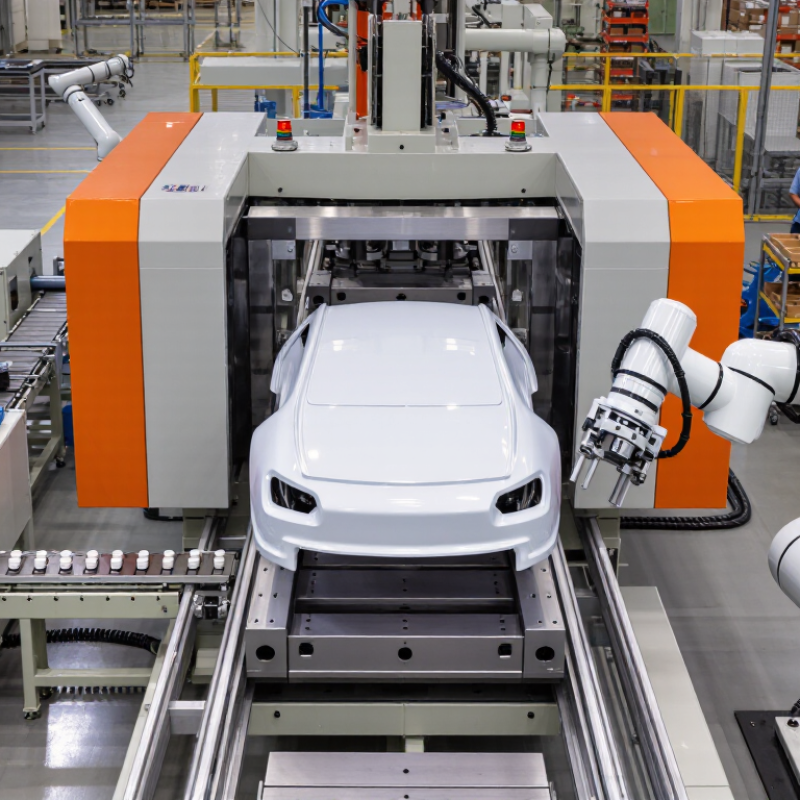
What Is the Best Plastic Injection Moulding Robot in 2026?

What Is a Plastic Injection Moulding Robot?

A plastic injection moulding robot is an automated arm that removes parts or performs other tasks around an injection press. A common type is a Cartesian take-out robot, mounted above the machine. When the mould opens, its arm enters the work area, grips the part or sprue, and withdraws along a programmed path. It may then place parts on a conveyor, in a fixture, or into a bin. It is a workhorse. The gripper, often called end-of-arm tooling, must suit the part’s shape and surface. A delicate, warm component needs different handling from a rigid one.

Robots can also load inserts or arrange parts for downstream operations. The International Federation of Robotics’ World Robotics 2024 report recorded 541,302 new industrial robot installations worldwide in 2023. That figure covers all industries, not injection moulding alone; it indicates the wider scale of industrial automation, not a guaranteed benefit for every press. Fit matters more. Selection depends on press size, mould opening, part weight, cycle target, floor space, and required reach. In practice, poor gripper design or awkward part placement can erase expected cycle-time gains. A robot may look fast on paper, yet still need careful testing with the actual mould and parts.

How Injection Moulding Robots Work

What Is the Best Plastic Injection Moulding Robot in 2026?
How Injection Moulding Robots Work

An injection moulding robot works in step with the moulding machine. When the mould opens, a controller sends a signal that allows the robot to enter the guarded area. Its arm moves to a programmed position, and an end-of-arm tool grips the newly moulded part. The robot then withdraws before the mould closes. Timing matters: even a small delay can affect cycle time or interrupt production. The exact sequence depends on the machine, part shape, and handling method.

After removal, the robot may place the part on a conveyor, in a tray, or at a trimming station. Vacuum cups suit some flat surfaces; mechanical grippers can offer a firmer hold on other shapes. Sensors can check whether a part was picked up, while safety interlocks help prevent movement when access doors are open. That sounds simple. It isn’t always. Parts may stick, bend, or cool unevenly, so a setup that works in a test run may need adjustment on the production floor. Careful programming and regular checks help keep each movement repeatable without treating every cycle as identical.

Types of Robots Used in Injection Moulding

Injection moulding robots differ mainly in reach, flexibility, payload, and how they handle parts. A sprue picker is a compact choice for removing runners or simple moulded pieces. It often enters the machine from above and suits short, repeatable movements. Small parts differ. Their weight may be low, but delicate edges can still be damaged by a poorly designed gripper.

Cartesian robots move along straight axes, making them common for pick-and-place tasks and steady production cycles. They can transfer parts to a conveyor, fixture, or cooling area with predictable motion. Six-axis articulated robots offer more reach around obstacles and can serve multiple stations, though they need more space and careful programming. Collaborative robots may support tending or inspection tasks, but their suitability depends on the cell’s risk assessment and operating conditions. That matters.

The best option in 2026 depends on the mould, cycle time, part geometry, and downstream process—not a robot label alone. Check payload with the gripper included, access through the open mould, and the time available before the next cycle. A reach diagram can look convincing and still miss a real clearance problem. Test the full motion, including cables and part release, before committing to a layout.

How to Evaluate the Best Robot for 2026

The best plastic injection moulding robot in 2026 is not simply the fastest model. It is the robot that fits the machine, part, and production routine. Start with the part’s weight, required reach, and available floor space. Then check the robot’s payload, repeatability, and cycle time against the actual job. A quoted cycle time means little if the robot must wait for a mould to open or an operator to clear parts. Fit matters more.

Assess integration as carefully as performance. Confirm that the robot can communicate with the injection machine and work with the planned end-of-arm tooling. Ask how quickly technicians can adjust pickup positions, change recipes, and recover from a fault. Request documented cycle tests and maintenance requirements, not just a product brochure. Test it on-site. Use a representative mould and part, and record handling time, placement accuracy, and interruptions across repeated cycles. Also consider guarding, operator access, energy use, and local service support. A cheaper system may cost more if setup takes weeks or spare parts are slow to arrive. The awkward truth is that no specification sheet captures every production wrinkle. Leave room in the evaluation for a missed pickup, a slightly warped part, and the occasional changeover.

Leading Injection Moulding Robot Options in 2026

Leading Injection Moulding Robot Options in 2026

Choosing a moulding robot starts with the part, press, and cycle—not a universal ranking. Cartesian robots suit straightforward part removal and stacking, with predictable movements above the mould. Side-entry systems can support fast takeout on suitable packaging lines. Six-axis robots offer more reach for trimming, inspection, or placing inserts, but need careful programming and floor-space planning. Each option has trade-offs.

The International Federation of Robotics’ World Robotics 2024 report recorded 541,302 industrial robot installations worldwide in 2023; 70% were in Asia. Those figures cover all industries, not injection moulding alone. They show broad automation uptake, not which robot type performs best in a particular cell. For a sound comparison, record actual cycle time, payload, reach, changeover time, and scrap rate under production conditions.

Collaborative robots may help with flexible, lower-volume tasks, but their speed and payload may not suit every press cycle. Safety needs assessment around the complete cell, not just the robot. A neat comparison table can hide awkward details, like a gripper that slows takeout or a layout that blocks maintenance access. That matters. Test the intended part and end-of-arm tooling before committing; catalogue reach alone rarely tells the whole story.

What Is the Best Plastic Injection Moulding Robot in 2026? - Leading Injection Moulding Robot Options in 2026

The best choice depends on the moulding process, machine layout, part-handling requirements, and available floor space. This comparison covers common robot configurations rather than individual suppliers or brands.

Robot Option Typical Configuration Best-Fit Applications Main Advantages Trade-Offs Key Selection Checks
Three-axis Cartesian take-out robot Linear X, Y, and Z axes, usually mounted above or beside the moulding machine. Removing moulded parts, sprue separation, simple stacking, and basic pick-and-place tasks. Direct, repeatable movements; straightforward machine integration; well suited to regular, predictable part paths. Less flexible than articulated robots for angled access, complex part orientation, or work around obstacles. Check machine opening and tie-bar clearance, stroke and reach, payload including the gripper, part-release timing, and guarding requirements.
Five-axis servo take-out robot Cartesian movement with additional servo-controlled wrist or rotational axes for part orientation. Parts that need controlled rotation, orientation, stacking, or transfer to a nearby fixture or conveyor. Combines a structured take-out path with more orientation flexibility than a basic three-axis unit. Additional axes can increase programming, integration, and maintenance requirements compared with a simpler configuration. Confirm the required rotation range, wrist payload, cable routing, placement accuracy, and whether the extra axis is needed for every part variant.
Six-axis articulated robot Jointed arm with multiple rotary axes, commonly installed beside the machine or as part of a cell. Flexible tending, insert handling, multi-angle access, and downstream operations such as inspection or assembly. Can approach parts and fixtures from varied directions and can serve more than one operation when the cell is designed for it. Reachable paths and cycle time depend on arm placement and motion; cell layout and safety integration require careful planning. Evaluate reach envelope, payload and wrist moment, cycle-time target, machine access, end-of-arm tooling, and collaborative or safeguarded operating requirements.
Side-entry high-speed robot Robot enters the mould area horizontally from the side, with a layout designed for rapid take-out and return. High-throughput packaging and other applications where short mould-open time is a major production priority. Can support fast, direct part removal and may leave space above the machine for other equipment or access. Requires a compatible machine and cell layout; the entry path and tooling are generally more application-specific. Check mould and machine compatibility, side-entry clearance, actual take-out sequence, part cooling needs, and the effect on the complete production cycle.
Sprue picker Compact, typically simple pick-and-place mechanism positioned to remove the runner or sprue. Basic runner removal on applications that do not require complex part handling or extensive downstream automation. Compact and focused on a limited, repetitive task; may suit straightforward cells with modest handling needs. Limited flexibility and capability compared with multi-axis take-out robots; not a substitute for full part handling where orientation or transfer is required. Confirm runner geometry, removal direction, cycle timing, drop or collection method, and whether part removal must be automated as well.

Practical recommendation: A three-axis Cartesian robot is often a strong starting point for repeatable part take-out. Consider a servo wrist or articulated robot when orientation, access, or additional operations justify the added flexibility; consider side-entry designs when rapid take-out and machine layout make them appropriate. Final selection should be validated against the moulding machine, mould, part, end-of-arm tooling, and required production cycle.

FAQS

What does a plastic injection moulding robot do?

It removes moulded parts or sprues from an injection press. It can place them on a conveyor, in a fixture, or in a bin.

Which robot types are commonly used for injection moulding?

Sprue pickers handle simple, repeatable movements. Cartesian robots suit straight pick-and-place tasks, while six-axis robots can reach around obstacles. Collaborative robots may support tending or inspection when the cell’s risk assessment allows.

How should I choose a robot for a production line?

Check the mould, part shape, cycle target, floor space, and required reach. The best fit depends on the whole production routine, not just the robot type.

Should the gripper be included when checking payload?

Yes. Include the gripper’s weight when checking payload. Its shape and grip should suit the part’s surface, edges, and temperature.

Why test a robot with the actual mould and parts?

A reach diagram may miss a clearance problem. Test the full motion, including cables, part release, and placement. Small details matter.

Does a faster robot always reduce cycle time?

No. It may wait for the mould to open or for an operator to clear parts. Record handling time and interruptions across repeated cycles.

What should I check before integrating a robot with an injection press?

Confirm machine communication and compatibility with the planned tooling. Ask how technicians adjust pickup positions, change recipes, and recover from faults.

What practical issues can affect the expected benefits?

A warped part, missed pickup, or slow spare-parts delivery can disrupt production. A brochure cannot show every wrinkle. Leave room for surprises.

Conclusion

A Plastic Injection Moulding Robot automates tasks around the injection moulding process, such as removing finished parts, handling inserts, trimming, and moving products between workstations. It typically works in coordination with the moulding machine: once the mould opens, the robot follows a programmed path to collect the part and place it at a designated location. This can improve consistency, reduce repetitive manual handling, and support more efficient production.

Common options include Cartesian, articulated, and side-entry robots, each suited to different machine layouts, cycle times, payloads, and levels of flexibility. Choosing the best robot for 2026 means assessing reach, speed, precision, payload capacity, ease of programming, safety features, integration requirements, and long-term support. Rather than selecting by one specification alone, manufacturers should match the robot’s capabilities to their parts, production volume, available floor space, and future plans. The leading options are those that provide reliable performance and practical integration for the intended application.

Ethan

Ethan

Ethan is a dedicated marketing professional with a strong understanding of the company’s products, customers, and evolving market needs. Through a combination of industry knowledge, strategic thinking, and clear communication, he helps translate complex product features into practical value for......