Choosing the China Best Auto Metal Polishing Machine Manufacturer requires more than comparing catalog prices. It demands practical judgment, technical verification, and careful supplier research. An experienced buyer should examine polishing consistency, machine rigidity, spindle stability, abrasive consumption, and operator safety. Stainless steel panels, aluminum wheels, and automotive trim each require different polishing pressures and compounds. A machine that performs well on one surface may disappoint on another.
Dr. Shigeo Shingo, a respected manufacturing and quality expert, said, “The most dangerous kind of waste is the waste we do not recognize.” His insight applies directly to Auto Metal Polishing Machine selection. Hidden waste may appear through excessive compound usage, repeated manual correction, long setup times, or rejected parts. These costs quietly reduce production value. They deserve attention.
Reliable Chinese manufacturers should provide sample testing, detailed specifications, electrical documentation, spare-parts support, and clear warranty terms. Buyers should request videos of real production, not only polished showroom demonstrations. Ask about PLC brands, motor protection, dust collection, emergency stops, and maintenance access. Check whether the manufacturer has experience serving automotive metal processors. Certifications help, but they never replace a practical factory audit.
The best supplier is not always the cheapest. It should understand your material, finish standard, batch size, and workshop conditions. Still, perfection is unrealistic. Some advertised performance figures may depend on ideal operators and carefully prepared surfaces. That point is easy to overlook. A thoughtful comparison should include total ownership cost, training quality, delivery reliability, and measurable polishing results. This introduction examines how to identify dependable Chinese manufacturers and avoid attractive machines that create expensive problems later.
What Is an Auto Metal Polishing Machine?
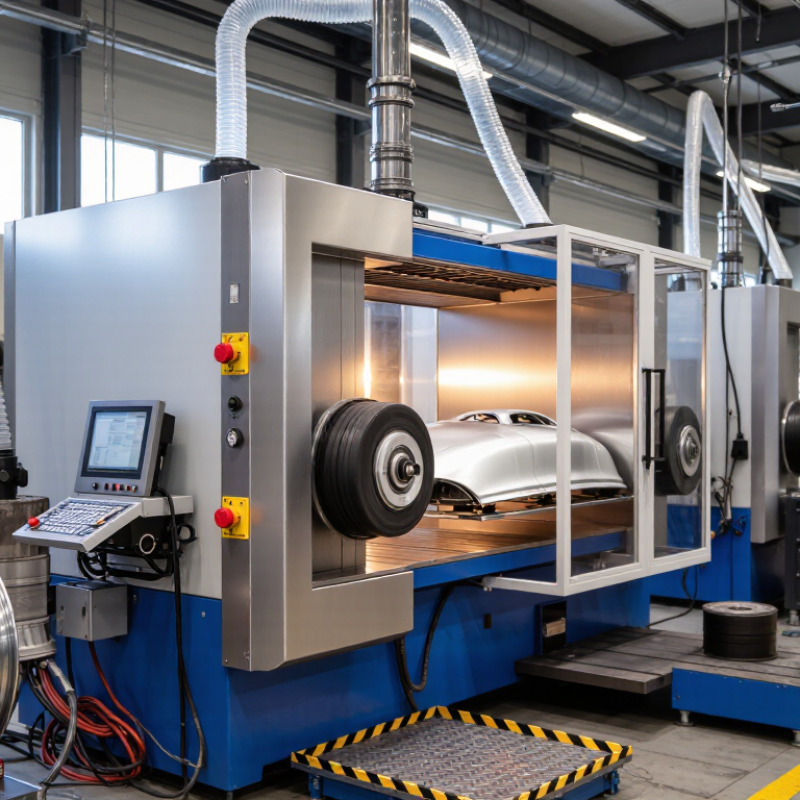
An auto metal polishing machine is industrial equipment designed to smooth and finish vehicle metal parts. It uses abrasive belts, polishing wheels, or compound-fed pads. These tools remove scratches, oxidation, burrs, and uneven marks from surfaces. Common workpieces include exhaust components, wheels, trim, brackets, and body panels. The machine controls pressure, speed, and movement more consistently than manual polishing. This consistency helps create a uniform surface across repeated parts.
A typical system includes a motor, workholding fixture, polishing head, control panel, and dust collection unit. Some models use sensors to follow curved edges or adjust contact pressure. This matters when polishing aluminum, stainless steel, or coated materials. Each metal needs suitable abrasives and carefully selected speeds. Too much pressure can create heat stains, rounded edges, or distortion. Too little pressure leaves visible lines. Small settings matter.
Experienced technicians still inspect every finished part under bright, angled light. A glossy surface does not always mean a properly polished surface. Hidden grooves may remain. The machine is not magic. Regular wheel replacement, fixture checks, and dust removal support stable results. Operators should also review the machine’s guarding, emergency controls, and maintenance records before purchase. Some production teams expect complete automation, but difficult shapes may still require hand correction. That limitation deserves honest attention.
Automotive metal polishing machines differ by surface, finish, and production volume. Abrasive belt machines remove weld marks from steel frames and brackets. They work quickly, but excessive pressure can create uneven heat lines. Buffing machines use sisal, cotton, or nonwoven wheels for trim and visible panels. Cotton wheels produce a bright finish, while sisal cuts more aggressively.
Robotic polishing cells suit repeated work on wheels, exhaust parts, and aluminum housings. Sensors help control force across curved surfaces. However, programming still needs careful testing. A small angle error can leave dull edges. Vibratory finishing machines process many small components together. They are useful for bolts, fittings, and cast parts, but they cannot replace precise edge polishing.
According to Grand View Research, the global metal finishing market is projected to grow at about 5% annually through 2030. That growth reflects rising demand for consistent surface quality. ISO 21920 also emphasizes measurable surface-texture control, not visual shine alone. Buyers should check spindle speed, wheel diameter, dust extraction, and abrasive compatibility. The U.S. Department of Energy reports that compressed-air systems may lose 20–30% of capacity through leaks. Energy checks matter. A polished panel may look perfect, yet fail under roughness testing. That is where machine selection becomes less simple.
China Best Auto Metal Polishing Machine Manufacturer?
How to Assess Chinese Machine Manufacturers
Choosing a Chinese metal polishing machine manufacturer requires more than comparing online prices. Check whether the factory builds machines internally or mainly resells equipment. Request a live video of the workshop, assembly area, and testing process. A reliable supplier should explain motor power, polishing speed, abrasive consumption, and suitable metal shapes clearly.
Ask for a sample test using your actual automotive parts. Send a stainless-steel trim piece, wheel component, or irregular bracket. Measure the surface before and after polishing. Important data includes cycle time, gloss level, roughness, heat buildup, and material removal. Photos can help, but recorded measurements are more trustworthy. Small details matter.
Review electrical specifications, machine dimensions, spare-part availability, and operator safety features. The control system should be easy to understand, even for a new operator. Request installation guidance, maintenance schedules, training materials, and a written warranty. Contact previous overseas customers when possible, but treat polished testimonials carefully. They may show only the best results.
A factory audit is useful. So is doubt. One weak point in my assessment method is relying too heavily on technical documents. Real production often exposes vibration, dust, noise, or inconsistent finishing. Ask the manufacturer to run the machine continuously under realistic conditions. Inspect welds, guards, wiring, and emergency controls. A dependable partner welcomes difficult questions, admits limitations, and improves the proposal instead of promising perfection.
| Assessment Dimension | What to Check | Practical Reference Benchmark | Evidence to Request | Evaluation Guidance |
|---|---|---|---|---|
| Machine Type | Confirm whether the equipment is designed for automatic, semi-automatic, or manual polishing of the required metal parts. | The machine configuration should match the part geometry, material, surface area, and required production volume. | Process-flow diagram, machine layout, sample-part video, and a written application list. | Do not compare machines only by motor power or external dimensions; process suitability is more important. |
| Workpiece Compatibility | Review the supported material, maximum part size, minimum part size, weight, shape, and clamping method. | The supplier should provide clearly stated working dimensions and loading limits rather than general descriptions. | Technical data sheet, dimensional drawings, fixture drawings, and sample-part acceptance records. | Ask for a test using the buyer’s actual parts, especially for curved, narrow, deep, or irregular surfaces. |
| Surface-Finish Capability | Check the required roughness, gloss, visual appearance, edge quality, and consistency after polishing. | The acceptance target should be defined using measurable criteria such as Ra, gloss level, defect rate, or approved visual samples. | Before-and-after inspection reports, surface-roughness readings, gloss measurements, and approved samples. | Ra values depend on the material and process; a lower numerical Ra value generally indicates a smoother surface. |
| Production Capacity | Verify cycle time, loading and unloading time, changeover time, and the number of parts processed per shift. | Capacity should be calculated from a complete cycle, including loading, polishing, inspection, and tool changes. | Factory acceptance test results, timed production video, cycle-time sheet, and capacity calculation. | Use the same part, abrasive specification, finish requirement, and operator conditions when comparing suppliers. |
| Abrasive and Consumable Control | Assess compatibility with polishing wheels, belts, brushes, compounds, abrasive media, and coolant or lubricant systems. | The supplier should specify consumable type, size, replacement interval, operating speed, and estimated consumption. | Consumable specification sheet, recommended process parameters, and replacement-cost estimate. | A low purchase price can be offset by high abrasive consumption or frequent tool replacement. |
| Automation and Controls | Review PLC control, touchscreen interface, recipe storage, alarm history, sensor functions, and data access. | The control system should support repeatable recipes, fault diagnosis, parameter protection, and safe restart procedures. | Control-system architecture, alarm list, user manual, sample recipes, and backup procedure. | Confirm language options, electrical documentation, remote-support method, and availability of replacement control components. |
| Electrical Safety | Check guarding, emergency stops, interlocks, electrical protection, grounding, and the declared operating voltage. | The machine should be designed and documented against applicable machinery and electrical-safety requirements in the destination market. | Electrical schematics, risk assessment, safety-circuit description, inspection records, and conformity documentation. | CE marking, when applicable, is a conformity claim and should be supported by a technical file and relevant declarations. |
| Dust and Fume Management | Evaluate enclosure design, extraction points, filtration, airflow, spark control, and waste collection. | The system should control airborne metal and abrasive dust at the source and provide safe filter-maintenance access. | Airflow specification, filter type, extraction layout, dust-collection test results, and maintenance schedule. | Dust-control requirements vary by material and abrasive; stainless steel, aluminum, and mixed-metal dust require careful risk review. |
| Build Quality | Inspect frame rigidity, guarding, bearings, linear guides, transmission components, weld quality, and finish consistency. | Critical components should have identifiable specifications, suitable protection, and documented maintenance intervals. | Component list, assembly photographs, inspection checklist, and records of dimensional or alignment checks. | Prefer traceable component specifications over vague statements such as “high quality” or “heavy duty.” |
| Reliability and Testing | Review factory testing, continuous-operation testing, repeatability, and failure-record management. | Testing should cover the intended process, safety functions, cycle repeatability, and operation under representative load. | Factory acceptance test protocol, test results, inspection records, and corrective-action reports. | A live factory demonstration is more useful when the supplier uses the buyer’s parts and documented acceptance criteria. |
| Quality Management | Assess incoming inspection, in-process inspection, final inspection, calibration control, and nonconformance handling. | An ISO 9001-certified quality-management system can provide useful structure, but certification does not guarantee process performance. | Certificate scope and validity, quality manual extracts, inspection forms, calibration records, and corrective-action examples. | Verify that the certificate covers the actual manufacturing site and relevant scope of activity. |
| Customization Capability | Determine whether the manufacturer can modify fixtures, tooling, guarding, extraction, software, and material-handling systems. | Engineering changes should be controlled through drawings, revision numbers, approval records, and documented design reviews. | Past project schedules, engineering-change forms, custom fixture drawings, and sample project specifications. | A supplier that can explain limitations clearly is often more reliable than one that promises unlimited customization. |
| Installation and Commissioning | Clarify site requirements, utilities, foundation, ventilation, lifting access, installation scope, and operator training. | The quotation should identify power demand, compressed-air requirement, extraction requirement, floor space, and installation responsibilities. | Site-preparation document, utility list, installation schedule, training agenda, and commissioning checklist. | Unclear site requirements can create delays and additional costs after delivery. |
| After-Sales Support | Assess response time, spare-parts availability, troubleshooting process, software support, and technical documentation. | The supplier should define service channels, response targets, warranty coverage, and recommended critical spares. | Warranty terms, spare-parts list, service contacts, troubleshooting guide, and anonymized service records. | Confirm whether support is provided directly by the manufacturer or through an unverified intermediary. |
| Total Cost of Ownership | Calculate purchase price together with freight, installation, utilities, labor, abrasives, maintenance, downtime, and spare parts. | Compare the estimated cost per accepted finished part over the expected operating period. | Five-year cost model, energy estimate, consumable forecast, maintenance schedule, and spare-parts pricing. | The lowest initial quotation is not necessarily the lowest-cost solution when finish consistency and downtime are included. |
| Commercial Transparency | Check legal entity details, manufacturing location, quotation scope, payment terms, delivery terms, and change-order rules. | The quotation should identify inclusions, exclusions, delivery basis, acceptance criteria, warranty period, and delay responsibilities. | Signed quotation, pro forma invoice, contract draft, delivery schedule, and company registration verification. | Use an independent verification process before making substantial advance payments. |
| Supplier Scoring | Use a consistent weighted score instead of selecting solely on price. | A practical weighting may allocate 30% to technical performance, 20% to quality and safety, 15% to reliability, 15% to service, 10% to total cost, and 10% to delivery and commercial terms. | Completed supplier scorecard, test results, quotation comparison, risk register, and final approval record. | Set minimum pass requirements for safety, finish quality, capacity, and service before applying the overall score. |
China Best Auto Metal Polishing Machine Manufacturer?
When evaluating a Chinese auto metal polishing machine manufacturer, inspect the process, not only the brochure. In a working factory, ask to see spindle balancing, frame welding, and electrical cabinet assembly. These details affect vibration, finish consistency, and service life. Request sample polishing with your actual wheels, brackets, or exhaust components. A bright sample proves little without cycle time, abrasive consumption, and measured surface roughness.
Technology should support repeatability. Servo-controlled pressure, programmable polishing paths, and sensors can reduce operator variation. Automatic loading may improve output, but it also increases maintenance points. Dust collection needs proper airflow, filters, and accessible cleaning areas. Check whether the control system records alarms and production data. Simple controls often survive harsh workshops better. That matters.
Customization must begin with clear production data. Share part dimensions, material hardness, target finish, daily volume, and available floor space. The manufacturer should explain fixture design, polishing wheels, compound delivery, and changeover time. It should also provide factory acceptance testing, operation training, spare-parts guidance, and traceable inspection records. Confirm applicable safety requirements before shipment.
Experience teaches caution. I have seen polished samples look excellent while production results varied after several hours. This happens when heat, tool wear, or clamping pressure is ignored. Ask for endurance testing and repeat measurements. A reliable supplier welcomes difficult questions and documents limitations. No machine fits every line perfectly. That is where honest engineering matters.
Choosing the best manufacturer starts with your production needs, not an attractive catalog. Define the metal type, component size, required finish, daily output, and available floor space. A machine for exhaust parts may not suit large aluminum housings. Ask for polishing tests using your actual workpieces. A bright sample can hide uneven edges or excessive material removal.
Technical expertise should be visible in the details. Check spindle speed control, abrasive compatibility, dust collection, guarding, and emergency stop design. Request clear specifications, inspection records, installation guidance, and operator training. Reliable manufacturers should explain maintenance intervals and spare-part availability. Their engineers should answer practical questions without vague promises.
Tips: Compare at least three suppliers. Review factory videos carefully. Ask for a trial report. Confirm energy consumption and noise levels. Discuss delivery, installation, and after-sales response times in writing. A low purchase price may become expensive when polishing quality changes between batches. It happens. Also, do not judge reliability from one successful test alone. Repeat the test with several parts, different operators, and realistic production pressure. A thoughtful manufacturer will accept this scrutiny and help identify limitations before purchase.
Inspect spindle balancing, frame welding, and electrical cabinet assembly. These details influence vibration, finish consistency, and machine life. Ask to see the real production floor.
Test your actual wheels, brackets, or exhaust components. A bright sample may hide uneven edges, long cycle times, or excessive material removal.
Share material type, hardness, part dimensions, target finish, daily volume, and floor space. Include fixture needs and expected changeover time. Details matter.
Automatic loading may increase output and reduce handling variation. However, it adds maintenance points and possible downtime. More automation is not always better.
Servo-controlled pressure, programmable paths, and sensors can reduce operator differences. The control system should record alarms and production data. Simple controls may survive harsh workshops better.
Check airflow, filter access, cleaning areas, guarding, and emergency-stop design. Confirm applicable safety requirements before shipment. Dust control needs regular attention.
Request inspection records, acceptance testing, operation training, maintenance intervals, and spare-parts guidance. Confirm installation support and after-sales response times in writing.
Compare at least three suppliers. Review factory evidence, trial reports, energy use, noise levels, delivery terms, and service response times.
Repeat testing with several parts, different operators, and realistic production pressure. Results may change after several hours because of heat, tool wear, or clamping pressure. One test can mislead.
Be cautious when answers stay vague or limitations remain undocumented. A low purchase price may become costly when batch quality changes. Perfect consistency is not guaranteed.
An Auto Metal Polishing Machine is specialized equipment designed to improve the surface quality, appearance, and consistency of automotive metal components. Depending on the application, it may use abrasive belts, polishing wheels, buffing systems, or automated robotic processes to handle parts such as wheels, exhaust components, trim, and other shaped metal products. Key machine types include manual, semi-automatic, fully automatic, rotary, belt-based, and robotic polishing systems, each offering different levels of flexibility, productivity, and precision.
When evaluating Chinese manufacturers, buyers should examine production experience, engineering capabilities, equipment stability, safety features, and after-sales support. Quality should be assessed through material durability, processing accuracy, surface consistency, and testing procedures. Customization is also important, especially when polishing unusual shapes, handling multiple part sizes, or integrating the machine into an existing production line. The best manufacturer is one that can understand your output goals, provide suitable technical solutions, communicate clearly, and offer reliable installation, training, maintenance, and long-term service.