Demand for precise, traceable product identification is reshaping modern manufacturing. The global laser marking machine market reflects this shift. Grand View Research reports continued growth, driven by electronics, medical devices, automotive parts, and packaging. These sectors require permanent marks without damaging delicate surfaces.
A UV Fly Laser Marking Machine uses a 355 nm ultraviolet laser in many industrial configurations. Its short wavelength supports “cold marking” with limited heat transfer. This matters when marking plastic housings, glass bottles, silicon wafers, coated films, and small electronic components. Marking can include serial numbers, QR codes, logos, and production dates. Fine details remain readable under inspection cameras. That is valuable.
Industry experience shows that speed alone cannot define supplier quality. Stable beam performance, accurate galvanometer control, extraction design, and software compatibility affect daily output. Reports from MarketsandMarkets identify automation and traceability as important laser processing trends. Meanwhile, Smithers’ packaging research highlights rising pressure for efficient, compliant, and high-quality packaging identification.
China has become a significant manufacturing base for laser equipment and integrated production lines. A reliable China supplier should provide sample testing, measured marking results, factory acceptance procedures, and responsive technical support. Certificates help, but they do not replace process evidence. This is where some evaluations become too optimistic. A perfect brochure cannot reveal lens contamination, uneven focus, or weak after-sales service. Buyers should test real materials before purchase. The right UV Fly Laser Marking Machine must match the product, line speed, marking depth, and long-term maintenance plan.
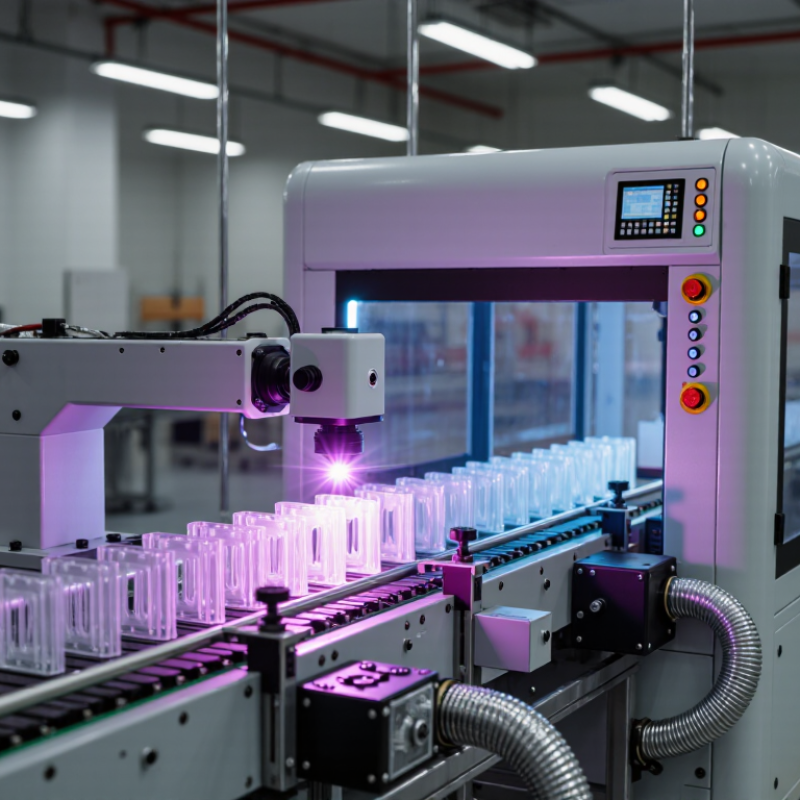
A UV fly laser marking machine creates permanent marks while products move along a production line. “Fly” means marking happens without stopping the conveyor. The system uses a short-wavelength ultraviolet laser, commonly near 355 nm, to remove or alter a thin surface layer. This process is often called cold marking because it transfers less heat than many infrared lasers.
In practical production trials, the machine can mark plastic caps, electronic parts, coated materials, glass, and delicate films. It can print serial numbers, dates, barcodes, and small logos with fine detail. A motion encoder tracks conveyor speed, while a scanner directs the beam to the correct position. A vision camera may check alignment before marking. The result depends on material chemistry, surface cleanliness, line speed, and laser settings.
Not every material reacts well. That matters.
A reliable installation requires sample testing, enclosure protection, interlocks, extraction, and trained operation. Incorrect focus can create pale characters or uneven edges. Excessive energy may discolor sensitive plastic. Even accurate equipment can fail when the conveyor vibrates or product spacing changes. I have found that controlled trials are more useful than assuming a preset recipe will work. Operators should record speed, frequency, power, focus, and inspection results. Regular lens cleaning and calibration also support stable marking quality over long production runs.
When products move along a conveyor, a UV laser marks them without stopping the line. The system receives a trigger signal from a sensor. An encoder tracks conveyor speed and product distance. The controller adjusts each pulse to maintain accurate positioning. Timing matters most.
UV light removes or changes a very thin surface layer. It can create sharp codes on plastics, coated materials, films, and sensitive components. The short wavelength produces a small heat-affected area, reducing visible burning. On dark film, contrast may depend on additives and surface texture. Focus must remain stable. A slight height change can soften fine characters.
In real production trials, speed variation causes more trouble than expected. Acceleration can stretch letters or shift a code from its target area. Operators should test several speeds, trigger delays, and focal distances before approval. Keep it clean. Dust on the protective window may weaken energy and create uneven marks. A qualified technician should verify guarding, interlocks, ventilation, and routine calibration. I would not promise perfect results from one sample test. Materials age, surfaces change, and conveyor vibration can expose weaknesses later. Reliable marking comes from measured trials, documented settings, and regular inspection.
China-made UV fly laser marking machines are designed for continuous production lines, where products pass beneath the laser without stopping. Their 355 nm ultraviolet source creates fine, high-contrast marks with limited heat transfer. This helps reduce burning on plastics, films, coated metals, and sensitive electronic parts. In practical testing, marking quality depends on material, speed, and surface cleanliness. The result is not always perfect.
A galvanometer scanning head supports fast positioning, while an encoder synchronizes marking with conveyor movement. Vision alignment can improve accuracy when labels or components shift slightly. Air cooling often reduces maintenance requirements, though workshop temperature still matters. Reliable systems should include sealed optics, emergency protection, stable software, and traceable quality checks. Operators also need adjustable power, frequency, and pulse settings for different surfaces.
Tips: Test real production samples before purchase. Ask for speed data, mark photographs, and repeatability records. Check whether the control software supports your line encoder and communication system. Leave space for ventilation and routine lens cleaning. A low price may look attractive, but unstable synchronization can create costly rejects. Consult an experienced technician when marking curved, reflective, or heat-sensitive parts. Small adjustments matter.
UV fly laser marking machines commonly use a 355 nm ultraviolet laser. Compared with longer-wavelength marking lasers, UV light has higher photon energy and can create precise marks with reduced heat-affected areas on many plastics, films, glass, and coated materials.
The 355 nm wavelength enables fine marking and supports high-contrast processing on selected sensitive materials.
Higher-energy UV photons can reduce reliance on heat transfer, helping limit melting, charring, and deformation when settings are properly matched.
Encoder feedback, photoelectric triggers, and conveyor synchronization allow marking while products move continuously on a production line.
Choosing a top Chinese UV laser supplier requires more than comparing prices or polished sample videos. A reliable supplier should understand fly marking on moving conveyors, variable product spacing, and fine detail requirements. Ask for a live test using your actual material, speed, and artwork. UV systems commonly use a 355 nm wavelength, but pulse width, spot size, and thermal control also affect results. Examine edges under magnification. Clean marks matter.
Request complete technical documents, including laser source data, scan-field size, marking accuracy, cooling method, and recommended maintenance intervals. The machine should include suitable guarding, interlocks, emergency stops, and clear safety instructions. Check whether engineers can support installation and operator training. Confirm spare-part availability and response times in writing. A supplier with documented testing procedures is easier to trust.
Tips: Compare at least three suppliers. Send identical samples and artwork. Measure contrast, cycle time, heat impact, and repeatability. Ask for a factory acceptance test before shipment. Verify packaging and commissioning details. A beautiful demonstration can mislead. Real production is less forgiving. One evaluation mistake is focusing only on maximum marking speed. I would also inspect cable routing, software stability, and access to the working area. These details seem minor, yet they often shape daily reliability. Do not accept vague promises; request measurable values and recorded test results.
UV fly laser marking systems serve electronics, cosmetic packaging, cables, and food containers. Their 355 nm wavelength creates sharp marks with limited heat impact. This helps protect thin films and sensitive surfaces during high-speed production. Grand View Research estimates the global laser marking machine market could reach about USD 5 billion by 2030, with strong demand from electronics and packaging. MarketsandMarkets also identifies automation and traceability as major growth drivers.
A reliable supplier should prove performance, not only display samples. Factory acceptance tests should record line speed, character clarity, positioning accuracy, and reject rates. Quality systems aligned with ISO 9001 support consistent assembly and documentation. Laser safety should follow IEC 60825-1, while electrical and software checks need traceable test records. In practice, small details matter: stable conveyor synchronization, clean extraction, and readable marks after abrasion testing. One overlooked issue can stop a whole line.
After-sales support is equally important. Suppliers should provide installation training, operating manuals, remote diagnostics, and critical spare parts. A practical service agreement can define response times, firmware procedures, and preventive maintenance intervals. Reports from the International Federation of Robotics show continuing industrial automation growth, but automation is not maintenance-free. A supplier may promise 24-hour support, yet vague coverage remains a weakness. Buyers should request real service records, calibration evidence, and references from comparable production lines before choosing a UV fly laser marking machine supplier.
A sensor triggers the laser, while an encoder tracks conveyor speed and product distance. The controller adjusts each pulse. Products keep moving.
UV marking suits plastics, films, coated metals, cables, and sensitive components. Surface additives and texture affect contrast. Results can vary.
Its short wavelength changes a thin surface layer with limited heat transfer. This can reduce visible burning and distortion. It does not eliminate heat completely.
Yes. Speed changes, acceleration, and vibration can stretch letters or shift codes. Test several speeds and trigger delays. Timing is unforgiving.
Keep the protective window and product surface clean. Maintain stable focus, correct focal distance, and suitable ventilation. Even dust matters.
No. One sample is not enough. Test real materials at production speed, including curved or reflective surfaces. Material aging may reveal later problems.
Useful features include encoder synchronization, adjustable pulse settings, protected optics, and stable control software. Vision alignment can correct small product shifts. It is helpful, not magic.
Request records for speed, positioning accuracy, mark clarity, reject rates, and repeatability. Safety checks should cover guarding, interlocks, ventilation, and electrical controls. Ask for evidence, not promises.
Support should include installation training, manuals, remote diagnosis, spare parts, and calibration guidance. A service agreement should define response times and maintenance intervals. Vague coverage remains a weakness.
A UV Fly Laser Marking Machine is an advanced industrial system designed to create clear, durable marks on products while they move along a production line. Using a focused ultraviolet laser beam, it can produce fine text, serial numbers, barcodes, logos, and graphics with minimal heat impact. This makes it suitable for sensitive materials such as plastic, glass, films, coated surfaces, and electronic components. With high-speed scanning, precise positioning, and synchronization with conveyor systems, the machine supports efficient continuous manufacturing.
When selecting a top Chinese UV laser supplier, buyers should evaluate laser stability, marking accuracy, production speed, software compatibility, equipment safety, and overall system integration. Reliable suppliers should also provide strict quality control, practical testing, clear technical documentation, and responsive after-sales service. Applications may include packaging, electronics, medical products, cosmetics, and industrial components, where permanent and traceable identification is important. A dependable UV Fly Laser Marking Machine should combine consistent performance, flexible configuration, international safety awareness, and long-term maintenance support.