Choosing a supplier from China’s top ten Automatic Material Handling System providers requires more than comparing product brochures. Warehouses, factories, and distribution centers each impose different demands. A conveyor line may suit steady carton flow, while autonomous mobile robots can offer flexibility where routes change. The right choice depends on actual operating conditions.
Martin Christopher, a logistics and supply chain scholar, defines the supply chain as “the network of organisations that are involved, through upstream and downstream linkages.” His framing is useful here: an Automatic Material Handling System affects connected processes, not just equipment. Its performance depends on software integration, safety planning, maintenance access, and the people who operate it. Small details matter. A poorly placed charging point or an unclear service plan can disrupt a carefully designed flow.
This overview compares suppliers through practical questions: What systems do they provide? Can they integrate with existing warehouse or manufacturing software? What commissioning, training, and after-sales support can buyers verify? Ask for references from facilities with similar workloads, and request clear performance assumptions before comparing proposals. Product specifications alone rarely tell the whole story. A neat top-ten list can look more certain than the buying decision really is. Supplier capabilities and project results vary, so treat rankings as a starting point—not a substitute for site assessments, reference checks, and careful review of the proposed system.
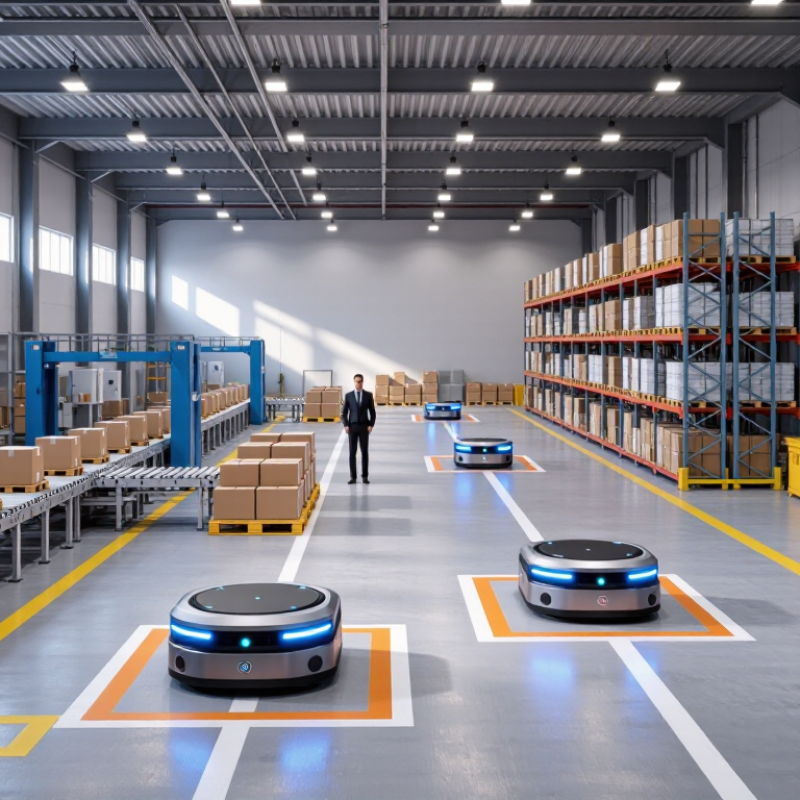
What Is an Automatic Material Handling System?
An automatic material handling system (AMHS) moves, stores, retrieves, or sorts goods with limited manual intervention. It can combine conveyors, automated storage and retrieval equipment, mobile robots, sensors, and control software. In a warehouse, a tote may travel from a receiving belt to a storage aisle, then return to a packing station when an order arrives. The software coordinates these movements and shares status information with inventory systems. Small delays matter.
Automation does not always mean a facility runs without people. Staff may still replenish stock, handle exceptions, and maintain equipment. MHI’s 2024 Annual Industry Report found that 55% of surveyed organizations planned to increase supply chain technology investment, while 88% expected to adopt artificial intelligence within five years. These figures describe broader technology plans, not AMHS adoption alone. They show why connected systems are gaining attention, but they do not guarantee a good fit for every site. A system must match actual order volumes, load sizes, aisle conditions, and peak-season demand. One overlooked detail is recovery: when a sensor fails or a route is blocked, workers need a clear way to intervene. Automation can improve flow, but poor layout data or weak exception planning can create new bottlenecks. That part is often underestimated.
A credible supplier ranking starts with a clear scoring method, not a polished catalogue. Each company should be assessed against the same operating requirements, including load size, peak throughput, aisle width, and available floor space. A system designed for cartons may not suit heavy pallets. That difference matters.
Technical review should cover equipment compatibility, control software, safety features, installation planning, and commissioning support. Evaluators can ask for system diagrams, test records, and references from facilities with similar workflows. Evidence matters. Published performance figures are useful, but they should be checked against real operating conditions, such as shift length and product mix.
Service capability deserves its own score. Review response times, spare-parts availability, training, and the process for diagnosing downtime. Compare total ownership costs, not just the initial quotation. A lower price can hide integration work or service gaps. Rankings should explain how criteria are weighted and where information is incomplete. No scoring model is perfect; site visits may reveal details that documents miss. A fair comparison makes those limits visible rather than treating every score as certain.
Who are China’s top 10 automatic material handling system suppliers? A dependable answer should compare verified project experience, integration capability, and after-sales support—not just company size. China has a deep automation ecosystem, but supplier rankings change with system type and project needs. The International Federation of Robotics’ World Robotics 2024 report recorded 276,288 industrial robot installations in China in 2023, about 51% of the global total. This signals strong automation capacity, though robot data alone cannot rank material-handling suppliers.
A useful shortlist should cover suppliers experienced in automated storage and retrieval, conveyors, shuttle systems, and autonomous mobile robots. Check whether each can connect warehouse controls with existing software and equipment. Ask for comparable-site references, measured throughput, uptime figures, and local maintenance response times. MHI’s 2024 Annual Industry Report found that 55% of surveyed organizations planned to increase investment in supply-chain innovation. That points to growing demand, not guaranteed project success. No ranking is perfect; published lists may overlook service quality or project fit.
Tips: Request a site visit and trace one real order from receiving to dispatch. Confirm spare-parts availability and support hours in writing. A polished demo can still hide a weak handover.
China’s express delivery volume rose from 63.52 billion parcels in 2019 to 174.5 billion in 2024. This rapid growth highlights the increasing need for efficient sorting, conveying, and other automated material handling solutions. Source: State Post Bureau of China.
Automatic material handling suppliers in China serve more than warehouse operations. Their systems can combine conveyors, sorters, automated storage and retrieval, and autonomous mobile robots. Sensors and control software coordinate each movement, from receiving a pallet to routing a small parcel. The exact mix depends on load size, floor space, and daily order volume. Small details matter.
E-commerce and parcel centers often need fast sorting and flexible routing. Automotive and general manufacturing sites may use automated vehicles to deliver parts between workstations. Food, beverage, and cold-storage facilities need equipment suited to washdown routines or low temperatures. Pharmaceutical and medical-product warehouses may prioritize traceable inventory and controlled access. These are different operating conditions, not just different labels on a proposal.
When comparing suppliers, ask how their equipment connects with existing warehouse or production software. Request realistic cycle-time assumptions, maintenance plans, and examples of handling similar loads. A polished demonstration can hide awkward handoffs. Site measurements and a pilot test can reveal bottlenecks before full deployment. Even then, forecasts can miss seasonal peaks, so capacity deserves another look.
The profiles below describe common supplier capability categories in China’s material-handling market. They are illustrative, not a verified ranking of named suppliers or companies.
| Profile | Typical System Focus | Common Technologies | Industries Served | Typical Material or Workflow | Common Integration Points |
|---|---|---|---|---|---|
| 1. AS/RS and Warehouse Automation | Automated storage and retrieval for high-density inventory storage and controlled access to goods. | Unit-load and mini-load systems, stacker cranes, shuttle systems, storage racks, warehouse control software. | Automotive, e-commerce, retail, food and beverage, pharmaceuticals, and general manufacturing. | Pallets, totes, cartons, and other standardized unit loads moving between storage, picking, and dispatch. | Warehouse management systems (WMS), warehouse control systems (WCS), conveyors, picking stations, and enterprise resource planning (ERP) systems. |
| 2. Conveyor and Sortation Systems | Continuous movement, accumulation, merging, and routing of items through facilities. | Belt, roller, and chain conveyors; powered accumulation; barcode or dimension scanning; cross-belt and sliding-shoe sortation. | Parcel and express logistics, e-commerce, airports, retail distribution, and manufacturing. | Cartons, parcels, trays, totes, and selected palletized goods. | Sortation controls, scanners, weighing and dimensioning equipment, WMS/WCS, packing lines, and shipping systems. |
| 3. Autonomous Mobile Robot (AMR) Systems | Flexible transport of materials between workstations, storage areas, and production or picking zones. | AMRs, onboard navigation and safety sensors, fleet management software, automatic charging, and traffic coordination. | Electronics, automotive, e-commerce fulfillment, consumer goods, and light manufacturing. | Totes, carts, shelves, components, and selected pallet loads, depending on the vehicle design. | WMS, manufacturing execution systems (MES), production scheduling software, elevators, doors, and operator workstations. |
| 4. Automated Guided Vehicle (AGV) Systems | Repeatable transport along defined routes in warehouses and production facilities. | Tugger AGVs, unit-load carriers, pallet movers, magnetic or optical guidance, laser navigation, and fleet control. | Automotive, machinery, electronics, warehousing, and paper or packaging operations. | Pallets, production parts, containers, and carts on predictable, recurring routes. | Production lines, conveyor transfer points, charging stations, safety systems, and MES or fleet-management software. |
| 5. Robotic Palletizing and Depalletizing | Automated stacking, unstacking, and transfer of packaged products or containers. | Industrial robot arms, palletizing cells, vacuum or mechanical grippers, layer handling, and pallet dispensers. | Food and beverage, chemicals, building materials, consumer goods, and logistics. | Cases, bags, cartons, trays, and selected drums or containers, subject to equipment and payload specifications. | Packaging lines, conveyors, pallet wrappers, labelers, safety enclosures, and production controls. |
| 6. Goods-to-Person Picking Systems | Delivery of stored items to operators or automated picking stations to reduce travel during order fulfillment. | Shuttle storage, cube-based storage, robotic tote handling, lift systems, pick-to-light, and order-picking software. | E-commerce, retail, apparel, spare parts, cosmetics, and pharmaceutical distribution. | Totes, bins, small cartons, and piece-picking inventory. | WMS, order management systems, picking stations, packing lines, conveyor systems, and inventory control. |
| 7. Vertical Lift and Carousel Storage | Space-efficient storage and presentation of small parts or items to operators. | Vertical lift modules, vertical and horizontal carousels, access controls, inventory software, and pick guidance. | Electronics, industrial components, healthcare supply rooms, maintenance operations, and retail backrooms. | Small parts, tools, documents, components, and compact containers. | Inventory management software, barcode or RFID identification, workstation systems, and ERP or WMS platforms. |
| 8. Bulk and Heavy-Load Handling | Movement and storage of heavy unit loads or bulk materials within industrial facilities. | Heavy-duty conveyors, pallet transfer equipment, cranes, hoists, automated storage equipment, and load-positioning controls. | Steel, automotive, machinery, construction materials, ports, and selected process industries. | Heavy pallets, metal coils, components, containers, and bulk materials, depending on the system configuration. | Production equipment, weighing systems, safety interlocks, dispatch controls, and plant-level automation. |
| 9. Cold-Chain Material Handling | Automated storage and movement designed for temperature-controlled environments. | Cold-storage AS/RS, insulated conveyors, temperature monitoring, automated doors, and cold-rated control components. | Frozen and chilled food, pharmaceuticals, cold-chain logistics, and temperature-sensitive products. | Temperature-controlled pallets, cartons, totes, and packaged products. | WMS, temperature monitoring and alarm systems, cold-room controls, order picking, and traceability systems. |
| 10. Integrated Material-Handling Projects | End-to-end design and coordination of multiple handling technologies within one facility. | Combinations of AS/RS, conveyors, sorters, robots, AGVs or AMRs, control software, and safety systems. | Manufacturing, e-commerce, retail distribution, food and beverage, pharmaceuticals, and third-party logistics. | Mixed flows of raw materials, work-in-process, finished goods, cartons, totes, and pallets. | WMS, WCS, MES, ERP, equipment controls, warehouse planning, and facility-level safety systems. |
System suitability, payload, throughput, temperature range, and software compatibility vary by project and equipment specification. The industry examples indicate common application areas rather than guaranteed supplier capabilities.
When evaluating automatic material handling suppliers in China, begin with your actual operating profile, not catalog speed. Record peak and average loads, product dimensions, shift patterns, aisle widths, and seasonal changes. Then ask each supplier to model the same order mix and delivery window. Compare hourly throughput, buffer capacity, recovery time after a stoppage, and expected operator involvement. Small details matter.
Request a layout showing conveyors, vehicles, transfer points, charging areas, and pedestrian crossings. Check how the proposed system connects with warehouse software, existing equipment, and manual fallback procedures. Ask for acceptance criteria in measurable terms, such as picks per hour and uptime across a defined test period. Visit a comparable installation if possible, and speak with its operators and maintenance staff. Real shifts reveal friction.
Compare the full ownership cost, including installation, training, spare parts, software updates, and service response times. Clarify which components are made locally, what lead times apply, and how faults are diagnosed remotely. A spreadsheet can make every proposal look precise; it cannot prove that assumptions match your floor. Ask suppliers to identify exclusions and risks, then test one demanding workflow before committing.
It moves, stores, retrieves, or sorts goods with limited manual work. A tote might travel from a receiving belt to storage, then return to packing.
No. Staff may replenish stock, maintain equipment, and handle exceptions. People still matter.
It may combine conveyors, sorters, automated storage equipment, mobile robots, sensors, and control software. The right mix depends on loads and floor space.
Compare relevant project experience, integration skills, service coverage, and verified performance. Ask for references from sites with similar loads and order volumes.
Not from the available information alone. Rankings vary by system type and project needs, and published lists may miss service quality.
E-commerce centers may need fast parcel sorting. Manufacturers may move parts between workstations, while cold-storage sites need equipment suited to low temperatures.
Request measured throughput, realistic cycle times, maintenance plans, spare-parts availability, and written support hours. Trace one real order from receiving to dispatch.
Measure aisles and test a representative workflow. A pilot can expose awkward handoffs, but seasonal demand forecasts can still be wrong. Recheck capacity.
An Automatic Material Handling System uses equipment, software, and controls to move, store, and track materials with less manual effort. This overview explains how suppliers can be assessed using factors such as product range, engineering capability, system integration, production quality, service support, and project experience. It also introduces a framework for comparing leading suppliers in China without relying on a single ranking criterion.
The discussion covers technologies including conveyors, automated storage and retrieval systems, sortation equipment, mobile robots, and warehouse control software, along with their use in manufacturing, logistics, e-commerce, and other industries. For buyers, selecting a solution means first defining the materials, throughput, facility constraints, safety needs, and future growth plans. Comparing proposals, compatibility, implementation schedules, maintenance support, and total lifecycle costs can help ensure the chosen system fits both operational requirements and long-term objectives.