Choosing among the top Large Single Table Fiber Laser Cutting Machine models requires more than comparing laser power or purchase price. A reliable evaluation begins with the workpiece. Sheet dimensions, thickness range, material type, production volume, and nesting patterns determine whether a machine truly fits the shop floor.
Dr. John C. Powell, a respected laser-processing researcher and author, has stated, “Laser cutting is a thermal process, and the material always tells you what happened.” That observation remains practical. A clean edge, narrow kerf, and limited heat-affected zone reveal process stability more clearly than a glossy specification sheet. Operators should inspect acceleration, positioning accuracy, autofocus response, cutting-head protection, and assist-gas control. Small differences become visible on long stainless-steel cuts.
Capacity matters.
A large single-table design can simplify loading and reduce transfer time. It may also require more floor space, stronger extraction, and disciplined material handling. Those trade-offs are easy to underestimate. In real workshops, a powerful resonator cannot correct poor nesting, unstable gas pressure, or delayed maintenance. The best Large Single Table Fiber Laser Cutting Machine should therefore balance output, precision, accessibility, energy use, and long-term service support.
This guide compares leading machine categories through measurable criteria and practical experience. It also considers an uncomfortable question: is maximum power always useful? Not necessarily. A lower-power system may deliver better value for thin and medium-gauge sheets, while a high-power model can justify its cost under demanding production schedules. Performance depends on the complete process, not one impressive number.
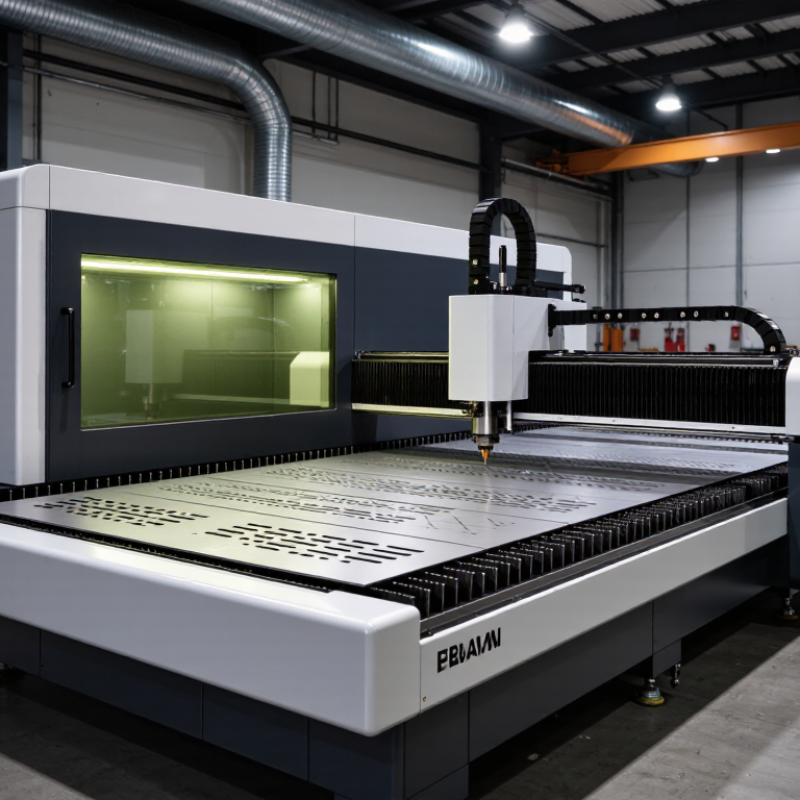
A large single-table fiber laser cutting machine is defined by its working envelope, not by laser power alone. In practical workshops, formats such as 3,000 × 1,500 mm or 4,000 × 2,000 mm are commonly treated as large. Some systems extend beyond 6,000 mm in length. The “single-table” design uses one fixed cutting bed, without an automatic shuttle table. It suits operators who process oversized plates, structural parts, and repeated medium-volume orders.
The table must support heavy sheets without noticeable deflection. A rigid welded frame, accurate rack-and-pinion motion, and stable height sensing directly affect edge quality. A 6 kW source may cut thick carbon steel efficiently, but power alone does not guarantee productivity. Noisy extraction, slow loading, or poor nesting can erase the advantage. That part is often underestimated.
Industry data supports this demand. MarketsandMarkets projects the laser cutting machine market to grow from about USD 7.1 billion in 2023 to USD 10.5 billion by 2028, reflecting an 8.1% compound annual growth rate. Fortune Business Insights also estimates strong expansion in the global laser cutting machine market, driven by automation and metal fabrication. However, published figures differ by scope and methodology. Buyers should compare usable table area, duty cycle, positioning accuracy, extraction capacity, and service response—not headline wattage. Small details matter.
Top Large Single Table Fiber Laser Cutting Machines?
Key Specifications for Comparing Large Single-Table Laser Cutters
Choosing a large single-table fiber laser cutter starts with the working area. Measure your largest sheets, then allow space for loading and edge clearance. A 3,000 × 1,500 mm table suits common plate sizes, while larger formats reduce repositioning. Bigger is not always better. Oversized tables can increase floor space, handling time, and installation costs.
Laser power should match your materials and production schedule. Lower power can cut thin stainless steel efficiently. Higher power supports thicker carbon steel, but only with suitable lenses, nozzles, and assist-gas pressure. Compare rated thickness with real test results. Ask for sample cuts using your actual grade and thickness. Marketing figures can be optimistic.
Acceleration, positioning accuracy, and repeatability affect daily output. A fast machine may still waste time during piercing or sheet changes. Check the cutting head’s height control, autofocus response, and nozzle replacement process. Effective fume extraction matters in a large enclosure. So does stable temperature control. Small details matter.
Inspect the control system and maintenance access before purchase. Remote diagnostics can shorten downtime, but local technical support remains valuable. Review power requirements, compressed-air quality, gas consumption, and warranty conditions. I would also examine cut edges after several hours of operation. Early results can look excellent, yet heat buildup may reveal inconsistencies later. A careful comparison uses measured data, operator feedback, and repeated test cuts.
| Specification | Configuration A | Configuration B | Configuration C | Configuration D | Configuration E |
|---|---|---|---|---|---|
| Machine Size and Cutting Capacity | |||||
| Working Area | 3,000 × 1,500 mm | 4,000 × 2,000 mm | 6,000 × 2,000 mm | 6,000 × 2,500 mm | 8,000 × 2,500 mm |
| Laser Power | 3 kW | 6 kW | 12 kW | 20 kW | 30 kW |
| Laser Source Type | Continuous-wave fiber laser | Continuous-wave fiber laser | Continuous-wave fiber laser | Continuous-wave fiber laser | Continuous-wave fiber laser |
| Laser Wavelength | Approximately 1,070 nm | Approximately 1,070 nm | Approximately 1,070 nm | Approximately 1,070 nm | Approximately 1,070 nm |
| Maximum Mild Steel Thickness* | 20 mm | 25 mm | 35 mm | 50 mm | 60 mm |
| Maximum Stainless Steel Thickness* | 10 mm | 16 mm | 25 mm | 35 mm | 40 mm |
| Maximum Aluminum Thickness* | 8 mm | 12 mm | 20 mm | 30 mm | 35 mm |
| Motion and Cutting Performance | |||||
| Maximum Rapid Traverse Speed | 80 m/min | 100 m/min | 120 m/min | 120 m/min | 120 m/min |
| Maximum Cutting Speed | 35 m/min | 45 m/min | 60 m/min | 70 m/min | 80 m/min |
| Maximum Acceleration | 0.8 G | 1.0 G | 1.2 G | 1.5 G | 1.5 G |
| Positioning Accuracy | ±0.05 mm/m | ±0.05 mm/m | ±0.03 mm/m | ±0.03 mm/m | ±0.03 mm/m |
| Repeatability | ±0.03 mm | ±0.03 mm | ±0.02 mm | ±0.02 mm | ±0.02 mm |
| Typical Kerf Width | Approximately 0.10–0.25 mm | Approximately 0.10–0.25 mm | Approximately 0.12–0.30 mm | Approximately 0.15–0.35 mm | Approximately 0.15–0.40 mm |
| Table, Gas, and Operating Features | |||||
| Table Design | Fixed single exchange-free table | Fixed single exchange-free table | Heavy-duty fixed single table | Heavy-duty fixed single table | Reinforced heavy-duty single table |
| Approximate Table Load Capacity | 3,000 kg | 5,000 kg | 8,000 kg | 12,000 kg | 15,000 kg |
| Assist Gas Options | Oxygen, nitrogen, compressed air | Oxygen, nitrogen, compressed air | Oxygen, nitrogen, compressed air | Oxygen, nitrogen, compressed air | Oxygen, nitrogen, compressed air |
| Maximum Recommended Nitrogen Pressure | 20 bar | 25 bar | 30 bar | 30 bar | 30 bar |
| Automatic Focus | Included | Included | Included | Included | Included |
| Edge Detection and Plate Positioning | Available | Available | Standard | Standard | Standard |
| Remote Monitoring | Optional | Optional | Available | Available | Available |
| Installation and Application Considerations | |||||
| Typical Application | General fabrication and sheet-metal work | Medium-duty industrial fabrication | Heavy equipment and structural parts | Shipbuilding, construction, and large components | Large-scale steel service centers |
| Recommended Production Volume | Low to medium | Medium to high | High | High-volume heavy plate production | Continuous heavy-duty production |
| Approximate Connected Load | 35–50 kVA | 55–80 kVA | 100–140 kVA | 160–220 kVA | 220–300 kVA |
| Floor Space Requirement | Approximately 8 × 4 m | Approximately 10 × 5 m | Approximately 14 × 6 m | Approximately 15 × 7 m | Approximately 18 × 7 m |
| Best Selection Priority | Lower investment and flexible sheet processing | Balanced speed, capacity, and operating cost | Higher throughput for thick and large plates | High power and heavy-duty cutting capability | Maximum plate size and production capacity |
Large single-table fiber laser cutters are built for oversized sheets, heavy plates, and continuous fabrication work. Open gantry machines suit structural steel, agricultural equipment, and custom metal frames. Enclosed flatbed systems offer cleaner operation and improved protection for busy production floors. High-power configurations handle carbon steel, stainless steel, and aluminum with different gas settings and cutting speeds.
Tube-and-plate models add rotary equipment for square, round, or rectangular profiles. They support stair components, vehicle parts, furniture frames, and construction assemblies. A large working area reduces sheet repositioning, which can improve accuracy and lower handling time. However, a bigger bed is not automatically better. In practical factory tests, poor material support can create vibration, edge marks, and wasted sheet space. Operators should check the machine’s motion accuracy, table strength, nesting software, and extraction performance.
Tips: Match power to real material thickness, not occasional jobs. Measure the floor space, loading path, and crane access before purchase. Keep cutting samples from your own steel grades for comparison. I have seen teams choose excessive power, then lose efficiency through higher operating costs. Sometimes, a moderate-power machine with reliable focusing and simple maintenance performs better. Review nozzle wear, lens protection, service access, and operator training records before approving the final configuration.
Top Large Single Table Fiber Laser Cutting Machines?
How Cutting Performance, Automation, and Maintenance Affect Selection
Choosing a large single-table fiber laser cutting machine starts with the workpiece, not the catalog. Measure your largest sheets, common thicknesses, and daily production hours. A 6000 × 2500 mm table may suit large panels, but it can waste floor space for smaller jobs. Cutting performance depends on laser power, motion accuracy, beam quality, and material handling. Ask for sample cuts using your actual steel or aluminum. Inspect edge smoothness, piercing marks, heat discoloration, and finished dimensions. Test matters more than impressive specifications.
Automation should reduce handling without creating new delays. Automatic sheet loading, height sensing, nozzle changing, and nesting software can improve consistency. However, complex automation may require trained operators and scheduled calibration. Keep this trade-off visible. A fast cycle is not useful if setup takes too long. Production records, service reports, and operator feedback provide stronger evidence than sales claims.
Tips: Check access around the table for loading and cleaning. Confirm spare-part availability and technician response times. Review dust extraction, chiller alarms, lens inspection, and nozzle replacement procedures. Maintenance is not optional. Small problems can become poor edges, unstable piercing, or unexpected downtime. Even a carefully selected machine can underperform when operators skip cleaning or ignore warning signals. That is a practical weakness worth admitting before purchase.
Representative cutting-speed midpoints for industrial fiber laser systems. Cutting performance should be evaluated together with automated loading and unloading, nozzle or lens monitoring, fume extraction, and the maintenance required to keep beam quality stable.
Thinner sheets generally deliver much higher cutting speeds, while thicker materials require lower speeds and more precise gas, focus, and nozzle control. For high-volume production, automation can reduce handling time, while regular optics, nozzle, filter, and cooling-system maintenance helps preserve consistent cutting quality.
Choosing a large single table fiber laser cutting machine starts with your workshop, not a catalog ranking. Measure doorways, floor loading, extraction routes, and material storage. Table size should match your usual sheet dimensions, but larger is not automatically better. Leave room for loading, unloading, and service access. I have seen operators lose production because a large bed blocked the forklift path. That detail matters.
Check laser power against material thickness, daily volume, and your regular material mix. Higher power may improve cutting speed, yet it can increase energy use, assist-gas demand, and maintenance costs. Ask for cutting samples using your actual mild steel, stainless steel, or aluminum grades. Inspect edge dross, corner quality, heat marks, and small-hole accuracy. Request cycle-time data, not only maximum speed. Maximum speed can be marketing language. Also verify acceleration, positioning accuracy, and autofocus response. A technically impressive machine may disappoint when nesting many small parts.
Reliability depends on more than the cutting head. Examine the motion system, cooling unit, dust protection, software workflow, and spare-part availability. Operators need training in nozzle inspection, lens protection, bed cleaning, and alarm checks. Training quality is often underestimated. Ask how quickly technical support responds and whether service records are documented. Calculate three-year ownership costs, including electricity, gas, consumables, downtime, and preventive maintenance. I would keep a capacity margin, but avoid buying unused power. Early estimates are often too optimistic. A clear acceptance test, realistic workload trial, and honest operator feedback provide stronger evidence than a polished showroom demonstration.
Its working envelope defines its size, not laser power alone. Common formats include 3,000 × 1,500 mm and 4,000 × 2,000 mm. Some tables exceed 6,000 mm in length. Large machines suit oversized plates, structural parts, and repeated medium-volume orders.
A single-table machine uses one fixed cutting bed. It does not include an automatic shuttle table. This design simplifies the layout and suits large sheets. Loading may take longer, though. That trade-off deserves attention.
Match power to common material thicknesses, not occasional jobs. Higher power can cut thick carbon steel efficiently. Power alone cannot guarantee productivity. Slow loading, poor nesting, or difficult maintenance may erase its advantage. Sometimes, moderate power works better.
High-power configurations can process carbon steel, stainless steel, and aluminum. Each material needs suitable gas settings and cutting speeds. Test samples from your own metal grades. A clean edge on one alloy proves little about another.
The bed must support heavy sheets without noticeable deflection. A rigid welded frame helps maintain stable cutting movement. Weak support can cause vibration, edge marks, and wasted material. Heavy plates need firm support. Small movements matter.
Use actual steel or aluminum samples. Check edge smoothness, piercing marks, heat discoloration, and finished dimensions. Measure the largest sheets you process. A catalog sample may look excellent, but your material may behave differently.
Automatic loading, height sensing, nozzle changing, and nesting software can reduce handling time. Automation may improve consistency. Complex systems also require trained operators and regular calibration. A fast cutting cycle is not helpful when setup takes too long.
Operators should inspect lenses, replace worn nozzles, and clean extraction paths. They should also monitor chiller alarms and height-sensing systems. Ignored warnings can create poor edges or unstable piercing. Maintenance is not optional. I might underestimate it.
Measure the machine footprint, loading route, cleaning access, and crane path. A 6,000 × 2,500 mm table may suit large panels. It can waste valuable space for smaller work. Leave room around the table. Crowded layouts slow daily handling.
Review spare-part availability, technician response times, service records, and operator training. Ask about calibration schedules and common alarm conditions. Reliable support can prevent extended downtime. Published market figures differ, so practical evidence matters more than forecasts.
A Large Single Table Fiber Laser Cutting Machine is designed to process oversized metal sheets on one continuous working platform, offering a practical balance of cutting area, accuracy, and production efficiency. When comparing these machines, workshops should examine table dimensions, laser power, positioning accuracy, cutting speed, material compatibility, maximum sheet weight, and overall structural stability. These specifications help determine whether a machine can handle common materials such as carbon steel, stainless steel, aluminum, and other industrial sheet metals.
Different machine configurations serve applications including fabrication, agricultural equipment, architectural components, transportation parts, and general manufacturing. Selection should also consider cutting performance, automatic focusing, loading and unloading assistance, control-system usability, dust extraction, and maintenance access. A reliable machine should support consistent results while keeping setup time, operating costs, and downtime under control. Finally, workshop space, electrical capacity, operator experience, expected production volume, safety provisions, and future expansion plans should all be evaluated before choosing the most suitable solution.