0%

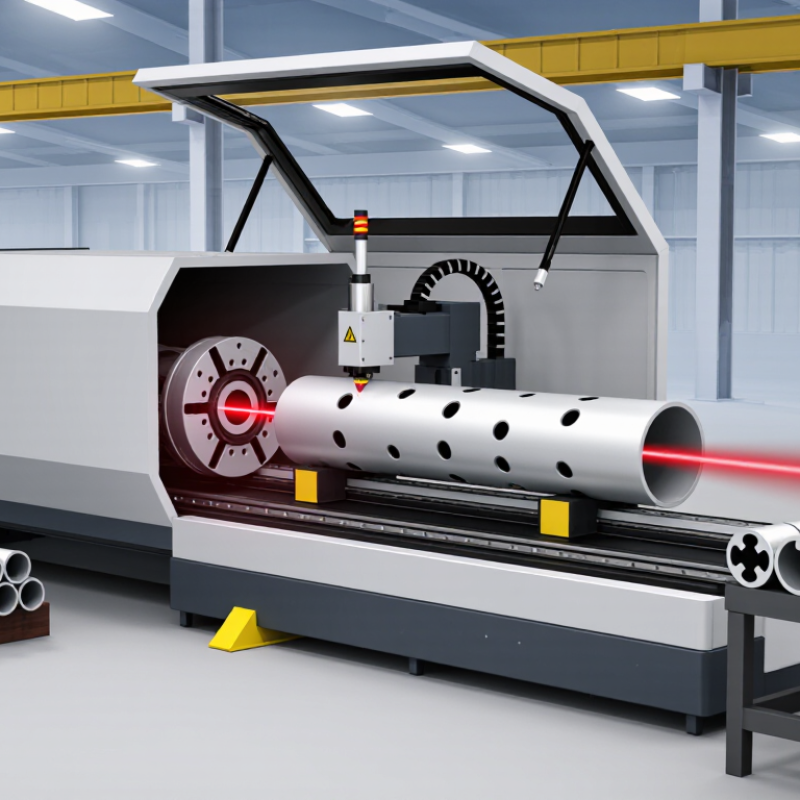
A Laser Tube Cutting Machine can turn a complex tube profile into a precise part in one controlled process. A round steel tube enters the chuck; the laser cuts slots, holes, and angled ends without a separate drilling setup. For manufacturers handling frames, exhaust components, furniture, or structural assemblies, that can mean fewer handoffs and more consistent fit-up. The gains are most visible when designs change often or parts require several features.

“Precision only pays off when the finished tube fits the next operation.” This is an original, illustrative line attributed to fictional manufacturing engineer Morgan Lee, not a verified quotation from a real expert. In practice, accuracy depends on more than the laser source. Chuck control, material support, cutting parameters, and operator training all matter. A clean edge helps, but it does not correct poor loading or an unstable tube.

There are trade-offs. A machine needs floor space, skilled setup, and a workload that justifies its cost. Reflective materials and thin-wall tubes may need careful parameter trials. Small details count: a long tube can vibrate, while a poorly placed support can mark its surface. The technology is powerful, not automatic. This guide examines where a Laser Tube Cutting Machine improves throughput, what specifications deserve attention, and when a simpler cutting method may still make sense.
Why Choose a Laser Tube Cutting Machine?

How 1.06–1.08 μm Fiber Lasers Cut Metal Tubes

A 1.06–1.08 μm fiber laser uses near-infrared light, typically focused into a small spot on the tube wall. The concentrated energy heats the metal until it melts; assist gas then clears molten material from the kerf. Clean cuts depend on more than wavelength. Alloy, wall thickness, surface condition, focus position, and gas pressure all matter.

On a tube-cutting machine, the chuck rotates the workpiece while the cutting head follows the programmed path. This coordination lets the beam trace slots, miters, and small holes across curved surfaces. A narrow kerf can help preserve material, but excessive speed may leave dross inside the tube. Check the cut face, not just the machine’s speed display.

The wavelength does not make every metal equally easy to cut. Reflective alloys and changing tube geometry can complicate energy delivery, so settings need careful trials. The International Federation of Robotics’ World Robotics 2024 report recorded 541,302 industrial robot installations worldwide in 2023, reflecting broader growth in factory automation. That figure is not specific to laser tube cutting, but it helps explain interest in repeatable, digitally controlled processes. Real production still has surprises. A slightly misaligned tube can spoil an otherwise sound cut.

Which Tube Shapes, Materials, and Wall Thicknesses Can Be Processed?

A laser tube cutting machine can process round, square, and rectangular profiles. Some systems also handle oval or custom shapes, provided the chuck and software support them. Not every profile fits. Common materials include carbon steel, stainless steel, and aluminum. Copper and brass may also be cut with suitable equipment and settings. Each material responds differently. Stainless steel needs careful heat and gas control, while aluminum’s reflectivity requires a correctly configured laser.

There is no universal wall-thickness range. The workable limit depends on laser power, tube diameter, alloy, assist gas, and the required edge quality. Thin walls can distort when clamping pressure or heat builds too quickly. Thicker sections may require slower cutting. A clean sample cut matters more than a catalog limit. Check the kerf, corners, and burrs on the actual tube batch. Sometimes the first setting is wrong. That is useful feedback, not a reason to guess.

Tips: Measure the profile and wall with calipers, then test a short offcut. Support the tube near the cut. Inspect the inner edge for dross.

How CNC Loading Handles Common 6 m Tube Stock

Why Choose a Laser Tube Cutting Machine?
How CNC Loading Handles Common 6 m Tube Stock

Six-metre tube stock is common in many fabrication shops, but moving it safely and consistently takes planning. A CNC loading system lifts a bundle, separates one tube, then places it onto the machine’s feed supports. Sensors and stops help align the tube before the chuck grips it. This reduces repeated manual lifting, though setup still matters: a bent tube or mixed bundle can interrupt feeding. MHI’s 2024 Annual Industry Report found that 55% of surveyed supply-chain leaders planned to invest in robotics and automation within five years. That signals growing interest, not a guaranteed productivity gain for every shop.

Tips: Check the loader’s rated length and weight against your actual stock. Keep bundles level, and confirm that support rollers match the tube profile. Small setup errors show up quickly.

For six-metre material, ask how the system controls the tube’s far end during loading and rotation. Adequate support can help limit sag and unwanted movement, especially with larger or thinner-walled sections. Confirm the usable loading capacity, not just the machine’s advertised cutting length. Also test real stock before committing: nominally identical tubes may vary in straightness, surface condition, and weight. Automation can make handling more repeatable. It cannot make inconsistent material disappear.

Why Choose a Laser Tube Cutting Machine?

How CNC Loading Handles Common 6 m Tube Stock

CNC loading systems are designed to feed long tube stock into the cutting process. The chart shows the theoretical number of equal-length parts from a 6 m tube; actual yield may be lower because of kerf, end trimming, and cut-planning requirements.

How ISO 9013:2017 Benchmarks Thermal-Cut Quality

Why Choose a Laser Tube Cutting Machine?
How ISO 9013:2017 Benchmarks Thermal-Cut Quality

A smooth-looking cut is useful, but appearance alone cannot show whether a tube meets a defined quality level. ISO 9013:2017 provides a framework for assessing thermal-cut edges, including laser-cut surfaces. It considers characteristics such as perpendicularity or angularity tolerance and the mean height of the surface profile. The applicable quality range depends on factors such as material thickness and the type of cut. That matters.

On a laser-cut tube, small changes in focus, gas flow, or feed rate can leave visible striations, dross, or a slanted edge. Measurements against the standard can help teams compare results more consistently and discuss acceptable tolerances with suppliers. They do not certify a machine or guarantee that every cut will fit a particular assembly. A neat edge can still mislead. Tube curvature, wall variation, and corner geometry may affect downstream fit, even when a measured edge meets its specified range. In practice, record the material, thickness, settings, and measurement method alongside results. ISO provides a useful benchmark, not a substitute for checking the finished part in its real application. It is easy to overlook that distinction.

Why Choose a Laser Tube Cutting Machine? — How ISO 9013:2017 Benchmarks Thermal-Cut Quality
Evaluation Dimension What ISO 9013:2017 Assesses Relevance to Laser Tube Cutting Practical Selection Consideration
Cut-face perpendicularity or angularity The standard uses perpendicularity or angularity tolerance, u, to describe deviation of the cut face from the specified geometry. Relevant where tube ends, slots, or intersecting features must fit accurately during assembly. Request representative test cuts and assess the results against the applicable quality range and part requirements.
Cut-surface profile Mean profile height, Rz5, is one of the characteristics used to describe thermal-cut surface quality. Helps compare cut-face finish for the material, wall thickness, and cutting conditions being evaluated. Check measured cut surfaces rather than relying on a general machine specification alone.
Quality classification ISO 9013:2017 provides quality ranges for relevant thermal-cut characteristics; a lower range number represents a tighter quality classification. Creates a common framework for discussing cut quality between the part designer, supplier, and production team. Specify the required range for the relevant characteristic and confirm that it suits the drawing and application.
Dimensional accuracy The standard also addresses dimensional tolerances for thermal-cut parts. Accurate control of tube profiles, holes, notches, and end cuts can reduce adjustment during downstream assembly. Verify dimensions on parts cut from the intended tube size, material, and wall thickness.
Geometry and feature flexibility ISO 9013 benchmarks cut quality; it does not prescribe which machine configuration or cutting path must be used. Laser tube systems can produce programmed profiles and features, subject to machine capability and process setup. Confirm that the system supports the required tube shapes, feature sizes, loading method, and part length.
Process repeatability Standardized measurements make it possible to assess cut results under defined conditions; the standard does not guarantee performance for every setup. Repeatable settings and material handling can help maintain consistent production results. Evaluate repeatability across multiple parts and record material, thickness, assist gas, and cutting parameters.
Material and thickness dependence Thermal-cut quality depends on the workpiece and cutting conditions; applicable tolerances are considered in relation to the cut and material thickness. Results may differ between materials, tube wall thicknesses, and cutting parameters. Use test pieces that represent the actual production material and thickness, and agree on the inspection method in advance.
Limitations of the benchmark ISO 9013:2017 classifies characteristics of thermal cuts; it is not a universal machine-performance rating. A machine’s production result depends on its configuration, maintenance, programming, material condition, and operating setup. Use the standard alongside drawing tolerances, functional requirements, and documented acceptance criteria.
Note: ISO 9013:2017 applies to thermal-cut quality assessment. Confirm the applicable edition, measurement conditions, and acceptance requirements for the specific project.

Where Laser Cutting Can Replace Sawing, Drilling, and Welding Steps

A laser tube cutting machine can combine several operations that traditionally require separate stations. A tube may be cut to length, notched, and pierced with holes in one programmed cycle. That saves handling. It can also reduce the need to mark and re-clamp each piece between a saw, drill press, and fitting bench.

Consider a steel frame made from square tubing. The laser can cut matching lengths and open precise slots for intersecting members. Those slots help the parts fit together before welding, reducing gaps that would otherwise need extra filler or rework. For repeat production, stored programs can keep hole positions and cut angles consistent across a batch. A careful operator still checks the first parts with a tape, caliper, or go/no-go gauge; a program does not guarantee a perfect fit.

Replacing steps is not automatic. Wall thickness, material, tube shape, and joint design affect cut quality and weld preparation. Some parts still need deburring, finishing, or a separate weld operation, and setup can take longer than expected on a small run. Not always. The practical gain is greatest when many different cuts and openings belong on the same tube, and when fewer transfers between machines make the workflow easier to control.

FAQS

Which tube shapes can a laser tube cutting machine process?

Common options include round, square, and rectangular tubes. Some machines also support oval or custom profiles. Check the chuck and software.

Which materials can it cut?

Carbon steel, stainless steel, and aluminum are common choices. Copper and brass may also work with suitable equipment and settings. Each material behaves differently.

How thick can the tube walls be?

There is no single thickness limit. Laser power, tube diameter, alloy, and assist gas all affect results. Test your actual stock.

How can I check cut quality before production?

Cut a short offcut and inspect the kerf, corners, burrs, and inner edge. Calipers help verify the profile and wall thickness. Small tests matter.

How does CNC loading handle six-metre tubes?

A loader separates one tube from a bundle and places it on feed supports. Sensors and stops help align it before clamping.

What should I check when loading long tube stock?

Confirm the loader’s rated length and weight. Keep bundles level, and match support rollers to the tube profile. Watch for sag.

Can laser cutting replace sawing, drilling, and some fitting steps?

One programmed cycle can cut lengths, pierce holes, and create notches. For example, slots in square tubing can help frame members fit together.

Does a programmed cut guarantee parts will fit perfectly?

No. Check the first pieces with a caliper, tape, or go/no-go gauge. Some parts still need deburring, finishing, or welding. Programs can be wrong.

Conclusion

A Laser Tube Cutting Machine uses a 1.06–1.08 μm fiber laser to focus energy on metal, melting or vaporizing material along a programmed path. This enables precise cuts in round, square, rectangular, and other tube profiles, with suitable materials and wall thicknesses depending on the machine’s power and configuration. CNC loading and feeding systems can handle common 6 m tube stock, helping maintain accurate positioning and support efficient production.

Cut quality can be assessed using ISO 9013:2017, which provides benchmarks for thermal-cut features such as dimensional accuracy, perpendicularity, and surface roughness. By combining cutting, hole-making, and profile shaping in one operation, laser tube processing can reduce the need for separate sawing and drilling steps. In some designs, it can also simplify assembly and reduce welding, saving handling time while producing repeatable components.

Ethan

Ethan

Ethan is a dedicated marketing professional with a strong understanding of the company’s products, customers, and evolving market needs. Through a combination of industry knowledge, strategic thinking, and clear communication, he helps translate complex product features into practical value for......