0%

Metal fabrication is becoming faster, more connected, and less tolerant of wasted motion. The International Federation of Robotics reported 541,302 new industrial robots installed worldwide in 2023. That figure reflects a broader manufacturing shift toward repeatable automation. In this environment, an Auto Feeding Fiber Laser Cutting Machine offers more than cutting power. It combines automatic loading, continuous material handling, precision fiber-laser processing, and programmed nesting. Operators can move sheets from storage to the cutting bed with fewer manual touches. That matters during long production runs, where one misplaced plate can interrupt an entire schedule.

Grand View Research identifies automation, higher laser power, and improved process control as major trends in the laser-cutting machine market. A well-configured system can reduce idle time between jobs and maintain consistent edge quality across steel, stainless steel, and aluminum. The practical difference is visible on the factory floor. Sheets arrive, feed forward, and leave with clean profiles. Less handling can also reduce surface scratches and operator fatigue. However, automation is not magic. Poorly calibrated sensors, unsuitable gas settings, or inaccurate drawings can still produce expensive scrap. That uncomfortable point deserves attention.

Choosing this machine requires more than comparing laser wattage. Buyers should examine feeder stability, software compatibility, service response, safety interlocks, and real production samples. ISO 12100 and ISO 13849 provide useful frameworks for assessing machine safety and control-system reliability. The strongest investment is not always the fastest machine. It is the system that matches material thickness, batch size, floor space, and workforce capability. In my view, that is the real reason to choose an Auto Feeding Fiber Laser Cutting Machine: dependable throughput, measured against actual shop-floor needs. Not assumptions.
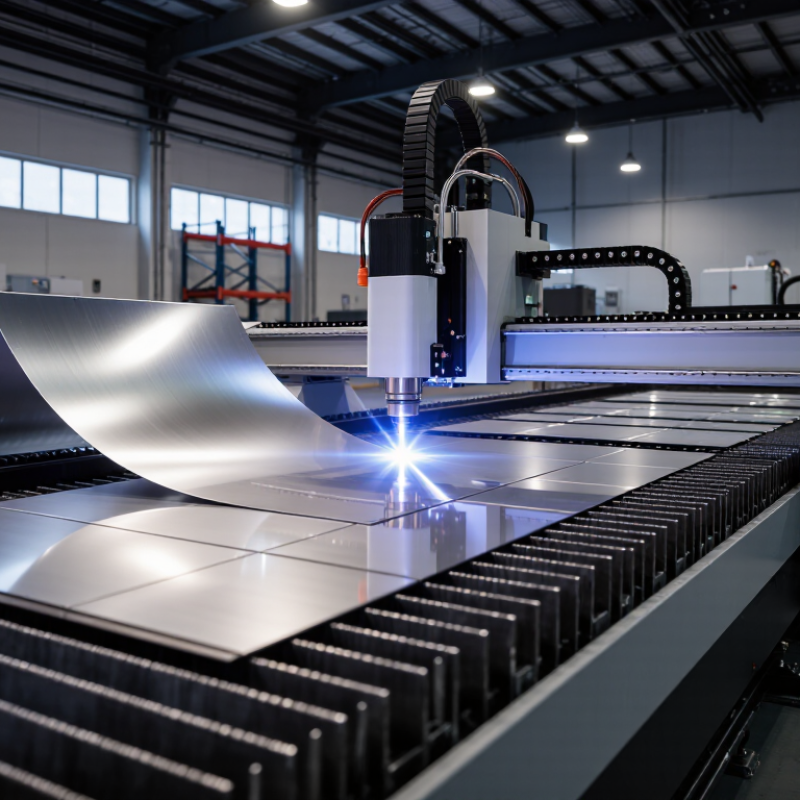
Why Choose an Auto Feeding Fiber Laser Cutting Machine?

What Is an Auto Feeding Fiber Laser Cutting Machine?

An auto feeding fiber laser cutting machine combines material loading, positioning, and laser cutting in one coordinated workflow. It usually draws metal sheets, strips, or coils from a storage unit into the cutting area. Sensors monitor the material edge, while drive rollers control its movement. The laser then follows programmed paths with high speed and consistent accuracy.

This system reduces manual handling and keeps production moving between cutting cycles. It can help workshops save labor, limit material waste, and maintain steadier output.

In practice, the first setup is rarely perfect. A small alignment error can affect hole positions or cut edges. Operators should check material thickness, surface condition, feeding tension, and cutting parameters before full production.

It is not magic. Regular cleaning and calibration still matter.

Tips: Test a short section before running a full coil. Watch for slipping, vibration, or uneven feeding. Keep the laser lens and guide rails clean. Record successful settings for different materials, but review them when humidity, thickness, or batch quality changes. A reliable operator still makes the final difference.

How Does the Automatic Feeding System Work?

An automatic feeding system turns raw material preparation into a controlled cutting sequence. A loading rack stores tubes, profiles, or sheet blanks near the machine. Sensors confirm material position, while servo-driven rollers move it toward the cutting area. An encoder measures feed length in real time. The controller coordinates feeding, clamping, and laser cutting. Small corrections matter.

During operation, clamps secure the material before each cut. The system can detect length errors, skewed stock, and incomplete loading. For tube cutting, a rotating chuck aligns the profile before piercing. For sheet cutting, a transfer table positions the next blank with minimal operator handling. According to the International Federation of Robotics’ World Robotics 2024 report, 541,302 industrial robots were installed worldwide in 2023. This growth reflects a wider shift toward repeatable material handling.

Automation can improve flow, but it is not magic. Deloitte’s 2024 Smart Manufacturing and Operations Survey reports expected gains of 10–20% in production capacity from smart manufacturing investments. Actual results depend on material quality, maintenance, and software settings. A bent tube can still create inaccurate cuts. Dust can confuse a sensor. Operators should inspect the first batch, verify feeding pressure, and adjust acceleration when thin material vibrates. The weakest link still deserves attention.

Why Choose an Auto Feeding Fiber Laser Cutting Machine? - How Does the Automatic Feeding System Work?

System Dimension How the Automatic Feeding System Works Typical Data or Operating Range Why It Matters
Material Loading A loading device, fork, or magnetic/vacuum system places raw sheets onto the cutting table or an exchange pallet. Common sheet formats include 1,500 × 3,000 mm and 2,000 × 4,000 mm; allowable load depends on machine design. Reduces manual lifting and supports consistent material positioning.
Sheet Separation Separating fingers, magnets, or vacuum cups lift the top sheet and prevent two sheets from entering the cutting area together. Most suitable for flat metal sheets with clean, reasonably uniform surfaces; oily or heavily warped sheets may require additional preparation. Helps prevent double-sheet feeding, machine stoppages, and material damage.
Positioning and Alignment Powered rollers, clamps, and positioning pins move the sheet to a defined reference point before cutting begins. Typical positioning accuracy is specified by the machine manufacturer and often falls within approximately ±0.05 to ±0.10 mm under defined test conditions. Improves repeatability and reduces setup time between batches.
Automatic Feeding Sequence The controller coordinates loading, separation, alignment, cutting, unloading, and the next-sheet cycle according to the programmed job. A full cycle varies with sheet size, nesting layout, material thickness, handling distance, and cutting time. Creates a repeatable workflow with less operator intervention.
Fiber Laser Cutting After the sheet is confirmed in position, the laser head follows the CNC toolpath and cuts the programmed contours. Fiber lasers are widely used for carbon steel, stainless steel, aluminum, brass, and copper; maximum thickness depends on laser power, material, and process settings. Provides high-speed, non-contact cutting with no cutting-tool wear.
Pallet or Table Exchange On systems equipped with an exchange table, one pallet can be loaded or unloaded while the other is inside the cutting zone. Exchange time is application-specific; many systems are designed for a changeover measured in seconds rather than minutes. Minimizes non-cutting time and improves machine utilization.
Finished-Part Unloading Unloading forks, conveyors, or robotic handling devices remove cut parts and separate them from the remaining skeleton. The handling method should be selected according to part size, weight, shape, and the risk of surface scratching. Reduces repetitive handling and keeps the work area more organized.
Material Thickness Flexibility The feeder handles sheets within the rated thickness and weight range, while the laser process is adjusted through power, speed, focus, and gas parameters. Thin sheet cutting may start below 1 mm; practical maximum thickness varies substantially by material and laser power. Allows one production line to process different jobs when properly configured.
Labor Requirement An operator loads the material supply, selects the program, checks consumables, and monitors alarms; the system performs routine sheet transfers automatically. Labor savings depend on batch size, sheet weight, layout, and the degree of loading and unloading automation. Improves ergonomics and allows operators to supervise more than one process when permitted by the workflow.
Safety Interlocks Sensors, guards, door switches, collision detection, and position confirmation prevent the next operation from starting when conditions are unsafe. Safety functions must be validated according to the applicable machinery and laser-safety requirements in the installation region. Helps protect operators and reduces the risk of incorrect feeding or machine interference.
Best-Fit Production Scenario The system repeatedly feeds standard sheet sizes into a programmed cutting sequence with limited manual handling. Most valuable for medium- to high-volume production, repeated orders, heavy sheets, or multi-shift operation. The return on automation is strongest when reduced handling time and higher machine utilization offset the additional equipment cost.
Note: Performance figures are representative engineering ranges, not guaranteed specifications. Actual results depend on laser power, material grade, sheet flatness, thickness, nesting efficiency, assist gas, machine configuration, and operator procedures.

Which Materials Can It Cut Efficiently?

Why Choose an Auto Feeding Fiber Laser Cutting Machine?

The real question is which materials it can cut efficiently. Carbon steel is often the easiest starting point. It produces clean edges, stable kerfs, and consistent results during continuous feeding. Stainless steel also performs well, especially when nitrogen reduces oxidation and surface discoloration. Aluminum can be cut efficiently, but its high reflectivity demands accurate focus, speed, and power settings. Thin galvanized steel is possible too, although fumes require proper extraction and process control.

Copper and brass need more caution. Their reflective surfaces can challenge the laser source and optical system. A suitable machine configuration, controlled power, and correct assist gas are essential. Material thickness matters greatly. A setting that cuts 3 mm stainless steel may fail on 6 mm plate. In practical production, automatic feeding improves consistency with long sheets or repeated profiles. Still, feeding errors can create costly misalignment. I once assumed thicker material always needed more power. That was too simple. Gas pressure, nozzle height, focus position, and heat buildup also change the result.

Tips: Test a small sample before full production. Check the edge for dross, taper, and heat marks. Keep protective windows clean. Record successful parameters for each material and thickness. Do not rely on factory settings alone. Real workshops are rarely perfect.

Why Choose an Auto Feeding Fiber Laser Cutting Machine?

Typical efficient cutting thickness by material for a 3 kW fiber laser

An auto feeding system supports continuous sheet or coil handling, reducing manual loading time and improving production flow. The values show indicative upper thickness limits for productive cutting; actual results vary with laser power, assist gas, cutting speed, material grade, and required edge quality.

What Are Its Main Advantages for Industrial Production?

Why Choose an Auto Feeding Fiber Laser Cutting Machine?

An auto feeding fiber laser cutting machine can keep industrial production moving with fewer manual loading steps. It feeds sheets or metal strips into the cutting area at a controlled speed. This reduces idle time between jobs. In a busy workshop, that difference can mean several additional batches each shift.

The main advantage is consistent productivity. Sensors help detect material position, while programmed nesting reduces unused metal around each part. A clean cut edge can also reduce grinding before welding or assembly. For example, a machine processing stainless steel panels may produce repeatable slots, brackets, and mounting holes without repeated manual measurement. It is not magic. Poor calibration still causes misalignment, burrs, or wasted material.

Safety and labor efficiency matter as well. Operators spend less time lifting heavy sheets near the cutting zone. Enclosed guarding, fume extraction, and interlocked access should remain essential. Regular checks of the nozzle, lens, rails, and assist-gas pressure support stable results. Small details matter. However, automatic feeding adds mechanical parts that require maintenance and careful setup. A factory should review material thickness, floor space, power supply, and expected production volume before investing. The fastest machine is not always the most practical choice.

How Should Buyers Evaluate Machine Performance and Cost?

Buying an auto feeding fiber laser cutting machine requires more than checking its advertised cutting speed. Buyers should inspect actual output on their materials. Ask for test cuts using the same thickness, alloy, and sheet dimensions used in production. Watch the loading cycle closely. Does the feeder align sheets smoothly, or does it pause and require manual correction?

Measure accuracy at the beginning and end of a long batch. A stable machine should maintain clean edges and consistent hole sizes. Check acceleration, nesting performance, laser power, and cutting gas consumption together. Fast movement means little if scrap rates rise. Operator access also matters. A clear control interface can reduce training time and prevent costly setup mistakes.

Cost evaluation should include the full ownership period. Compare purchase price, installation, extraction equipment, maintenance, lenses, nozzles, electricity, and downtime. Request written service response times and spare-part availability. A low initial price may become expensive after repeated stoppages. Calculate cost per usable part, not cost per machine hour. That figure is more practical.

Do not trust perfect showroom demonstrations. Production floors are rarely perfect. Dust, unstable material, and rushed operators expose weaknesses. A short trial may hide them. Buyers should request a longer acceptance test and record actual cycle times. My own assessment would still remain cautious, because software updates and material changes can alter results. A machine that fits today’s workload may become restrictive next year.

FAQS

What are the main advantages of an auto feeding fiber laser cutting machine?

It feeds sheets or metal strips automatically, reducing manual loading and idle time. Production can continue more smoothly. It may increase batches per shift.

How does automatic feeding improve production consistency?

Sensors detect material position, while programmed nesting reduces unused metal. Repeatable slots, brackets, and mounting holes become easier to produce. Results still depend on calibration.

Can this machine reduce finishing work?

Clean laser-cut edges may reduce grinding before welding or assembly. However, poor settings can create burrs, misalignment, or rough surfaces. The benefit is real, but not guaranteed.

How can automatic feeding improve workplace safety?

Operators lift fewer heavy sheets near the cutting area. Enclosed guarding, fume extraction, and interlocked access remain essential. Safety cannot be treated as an optional feature.

What maintenance does an automatic feeding system require?

Check the nozzle, lens, rails, feeder alignment, and assist-gas pressure regularly. Mechanical feeding parts also need inspection. Small faults can interrupt a whole batch.

How should buyers test machine performance?

Request test cuts using the same alloy, thickness, and sheet size used in production. Observe loading cycles carefully. Does the feeder align smoothly?

Which performance details matter beyond cutting speed?

Check accuracy at the start and end of long batches. Review hole sizes, edge quality, acceleration, nesting, laser power, and gas consumption. Fast is not always efficient.

What costs should buyers include before purchasing?

Include installation, extraction equipment, maintenance, lenses, nozzles, electricity, downtime, and spare parts. Calculate the cost per usable part. Machine-hour pricing can mislead.

What workplace conditions should buyers consider?

Review material thickness, floor space, power supply, and expected production volume. Dust and unstable materials may expose weaknesses. A short showroom test proves very little.

Is the fastest machine always the best investment?

No. A slower machine may fit the factory better and create less waste. I would request a longer acceptance test. Future material changes may make today’s choice restrictive.

Conclusion

An Auto Feeding Fiber Laser Cutting Machine is an industrial cutting system that combines a high-precision fiber laser with an automatic material loading and feeding mechanism. Instead of requiring operators to position every piece manually, the system continuously delivers sheets, tubes, or profiles into the cutting area according to programmed instructions. Sensors and control software help maintain accurate alignment, regulate feeding speed, and coordinate cutting paths, supporting stable production with less interruption.

This machine can efficiently process many conductive materials, including carbon steel, stainless steel, aluminum, copper, and galvanized metal, provided that the equipment is configured correctly. Its main advantages include higher productivity, consistent cutting quality, reduced material handling, improved workplace efficiency, and lower labor demand. When evaluating performance and cost, buyers should compare laser power, cutting speed, positioning accuracy, feeding capacity, compatibility with material types and sizes, software functions, energy consumption, maintenance requirements, safety features, and expected service life. A complete cost assessment should consider both the initial investment and long-term operating value.

Evelyn

Evelyn

Evelyn is a dedicated marketing professional with a strong understanding of the company’s products, services, and customer needs. With a thoughtful approach to communication and a passion for turning complex information into clear, practical insights, Evelyn regularly contributes professional......