Precision Industrial CNC Sheet Metal Benders, High-Power Fiber Laser Cutters & Integrated Fabrication Systems Engineered for Maximum Production Yield
Primary Machinery Portfolio
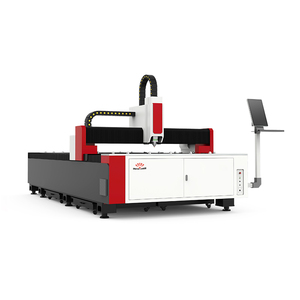
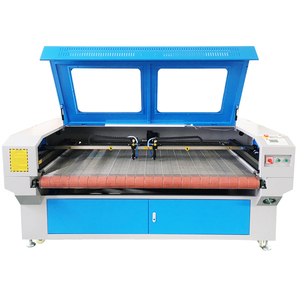
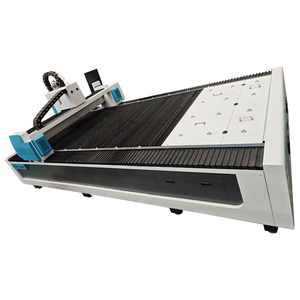
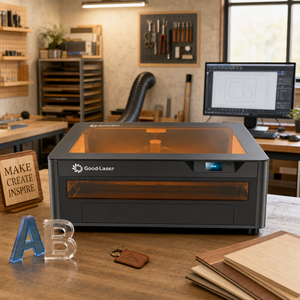
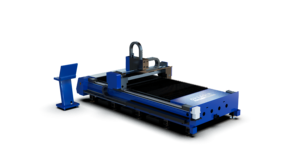
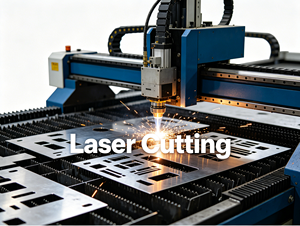
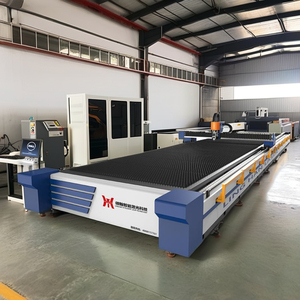
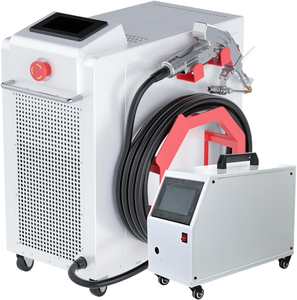
Featured Industrial Laser Cutting & Bending Machinery
Explore our factory-direct CE-certified metal processing solutions. Built with stress-relieved heavy gantry frames, tier-1 laser sources, and intelligent CNC controls to optimize your metal bending and sheet fabrication workflows.
CE Certified Metal Bender & Laser Manufacturing Engineering Standard
In modern high-precision metal fabrication, achieving consistent bend radii and micro-flat cut edges requires more than just assembling off-the-shelf components. As an enterprise OEM factory operating out of our dedicated manufacturing hub in Ahmedabad, Gujarat, Marvel Industrial Solution engineers heavy-duty metal processing machinery built to satisfy rigorous European Union CE directives, including EN ISO 12100 (Safety of Machinery), EN 60204-1 (Electrical Equipment of Machines), and EN 60825-1 (Laser Product Safety).
A true industrial metal bender and CNC laser cutter must maintain structural rigidity under extreme mechanical dynamic loads. Standard light-duty frames suffer from thermal expansion deformation and vibration chatter during high-acceleration traverse moves (up to 1.5G). To prevent structural micro-flexing, every bed frame produced in our facility undergoes a high-temperature thermal annealing stress-relieving process in a controlled furnace, followed by high-precision gantry milling on advanced five-axis machining centers.
Stress-Relieved Bed Frames
Heavy-plate welded structure tempered above 600°C to eliminate internal stress, guaranteeing dimensional stability over decades of continuous 24/7 industrial production.
Optoelectronic Interlocks
Class-1 fully enclosed safety housing equipped with safety light curtains, automatic door interlocks, and OD6+ laser protective viewing glass to shield operators from harmful radiation.
Dual Servo Rack-Drive
Helical rack and pinion drive coupled with high-torque Japanese Yaskawa or EtherCAT servo systems delivering ±0.03mm positioning accuracy and zero backlash under high acceleration.
Modern sheet metal fabrication demands a seamless integration between the blanking cut stage and the downstream metal bending (press brake forming) process. If a fiber laser cutter leaves micro-burrs, dross, or excessive heat-affected zones (HAZ) along the cut edge, the subsequent metal bender will experience dimensional variation during corner forming due to uneven stress distribution across the bend allowance angle.
By leveraging high-wattage fiber laser sources (6kW to 30kW) paired with automated nitrogen assist gas controls, cut edge roughness (Ra) is reduced to less than 3.2 µm. This clean, oxide-free edge enables precise alignment against the backgauge fingers of CNC press brake benders, ensuring exact bend angles without cracking carbon steel or flaking stainless steel surfaces.
Technical Parameter Matrix: Laser Wattage vs Metal Thickness vs Bending Compatibility
Laser Source Power
Mild Steel Cut Limit
Stainless Steel (N₂ Bright Cut)
Aluminium / Copper (Reflective)
Min. Bending Radius Compatibility
Target Production Industry
1.5kW – 3kW
Up to 16 mm
Up to 8 mm
Up to 6 mm
R = 1.0 t (Thin Sheet)
Electrical Enclosures, HVAC Ducting, Signage
6kW – 8kW
Up to 25 mm
Up to 14 mm
Up to 12 mm
R = 1.5 t (Standard)
Automotive Chassis, Elevator Panels, Kitchenware
12kW – 15kW
Up to 35 mm
Up to 25 mm
Up to 20 mm
R = 2.0 t (Medium Plate)
Heavy Agricultural Machinery, Stamping Dies
20kW – 30kW
Up to 45 mm
Up to 35 mm
Up to 30 mm
R = 2.5 t (Structural)
Shipbuilding, Pressure Vessels, Structural Steel
Factory Advantage & E-E-A-T
Why Procurement Officers Partner Directly with Our Factory
Selecting a long-term metal processing equipment manufacturer requires evaluating total factory capability beyond basic price points. As an OEM machine builder located at Gopal Charan Industrial Hub in Ahmedabad, India, our facility provides comprehensive engineering, customized Special Purpose Machine (SPM) integration, and worldwide after-sales deployment.
Direct Factory Engineering Support: You consult directly with our application engineers who review your DXF/STEP engineering files, part geometry, and bend allowances before machine configuration.
Comprehensive Pre-Shipment Sample Testing: We run trial cutting and metal bending tests using your specific sheet materials (mild steel, stainless, brass, copper) and supply comprehensive edge quality inspection reports with video verification prior to packaging.
Seaworthy Export Logistics & Documentation: Every machine ships in heavy-duty moisture-proof vacuum wrapping and reinforced steel frames, accompanied by complete CE declarations, electrical circuit diagrams, parameter databases, and foundation lay-out drawings.
Turnkey Automation Interlocking: We integrate fiber lasers and sheet metal benders with gantry robot pick-and-place loaders, stamping press transfer arms, and material handling systems for lights-out automated production lines.
Strategic Forecasting
Future Trends in Metal Bending & Laser Processing Procurement
The global metal processing landscape is shifting rapidly toward higher automation density, green manufacturing compliance, and ultra-high-power fiber laser systems. Strategic procurement managers must align their capital expenditure (CapEx) decisions with upcoming industry trends:
1. Transition from Mechanical Shearing to Ultra-High Power Laser Blanking
High-wattage fiber lasers (12kW to 30kW) are rapidly displacing traditional mechanical shears and punch presses. High-speed laser cutting eliminates custom tool wear costs, handles complex contour cuts instantly, and leaves zero edge burrs for subsequent metal bender forming.
Standalone press brake benders are evolving into integrated robotic bending cells. 6-axis articulated robots combined with automatic tool changers (ATC) handle heavy sheet positioning, reducing operator labor dependence and eliminating ergonomically hazardous manual lifting.
3. On-Site High-Pressure Nitrogen Generation Systems
Operating expense (OpEx) optimization is driving factories away from liquid gas bottles. Modern plant setups install dedicated high-pressure nitrogen generators, cutting assist gas costs by up to 70% while guaranteeing bright, weldable edges across stainless steel parts.
4. Industry 4.0 IoT Monitoring & MES Integration
Smart machines connected via OPC-UA protocols send real-time sensor data to Enterprise Resource Planning (ERP) systems. Operators monitor laser nozzle health, electrical power draw, gas consumption rates, and maintenance cycles remotely to prevent unplanned downtime.
Frequently Asked Questions
Industrial Metal Processing Machinery Procurement FAQ
Key technical insights directly from our application engineers to address common questions asked by global machinery buyers and plant floor managers.
What does CE Certification mean for a metal bender or laser cutter?
CE certification guarantees that the machinery complies with all relevant European Union health, safety, and environmental protection standards. For metal processing machinery, this covers electrical enclosure wiring standards (EN 60204-1), emergency stop safety relays, light curtains on bending axes, and certified radiation enclosures for fiber laser sources (EN 60825-1). Non-certified machines risk impoundment at EU customs and pose safety hazards to workers.
How do I select the right fiber laser power for my sheet metal bending line?
Always size laser power based on your daily regular production thickness, not the absolute maximum capability. For light gauge sheet metal under 6mm mild steel or 3mm stainless steel, a 1.5kW-3kW machine offers maximum return on investment (ROI). For medium fabrication (up to 16mm mild steel or 8mm stainless), 6kW-8kW is the industry benchmark. For heavy engineering above 20mm plate, 12kW to 30kW units are recommended to maintain high cutting speeds using nitrogen assist gas.
Can fiber laser machines cut highly reflective metals like copper, brass, and aluminium?
Yes. Unlike older CO2 lasers whose 10.6µm wavelength reflected dangerously back into the optical resonator, modern fiber lasers operate at a 1064nm wavelength which is efficiently absorbed by reflective non-ferrous metals. Our machines feature active back-reflection isolation software and anti-reflective optical coatings, enabling safe, continuous processing of pure copper, brass, aluminium, and galvanised sheets.
What is the difference between single-table and exchange-table laser cutting machines?
A single-table machine features one stationary bed; the laser remains idle during part unloading and sheet loading. An exchange-table (shuttle pallet) machine utilizes two synchronized beds. While sheet A is being cut inside the laser enclosure, the operator safely unloads parts and loads sheet B outside. Exchange tables increase beam-on duty cycle by 20% to 35%, making them essential for high-volume manufacturing facilities.
What support and spare parts are provided for international shipments?
Every machine export package includes an overseas startup kit containing spare cutting nozzles, protective quartz windows, ceramic rings, and replacement optics. We provide comprehensive remote video diagnostic support, foundation CAD drawings, utility requirement lists, and optional on-site commissioning by our field installation engineers.
How does laser cutting quality impact downstream CNC metal bending accuracy?
Laser cutting edge perpendicularity and dross presence directly dictate bending precision. When a cut sheet is placed against the mechanical stop finger of a metal bender, any edge taper or thermal distortion causes misalignments, resulting in angular errors across the bend line. High-precision laser blanking guarantees square cut edges, enabling uniform bend allowances and repeatable bend angles across batch runs.
Ready to Upgrade Your Metal Bending & Laser Cutting Line?
Consult directly with Marvel Industrial Solution engineers. Send us your CAD drawings or material specifications for a custom machine quotation, cycle time analysis, and factory-direct pricing.