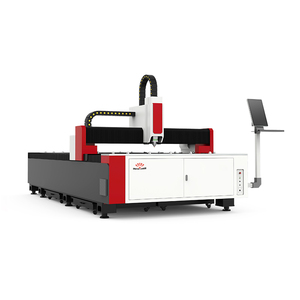
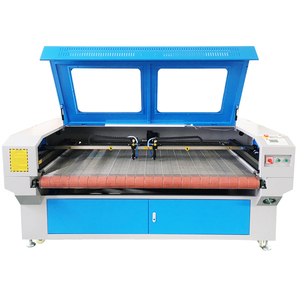
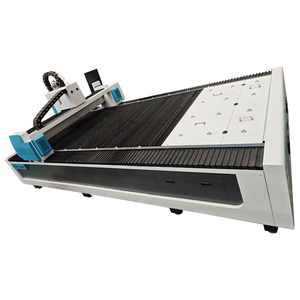
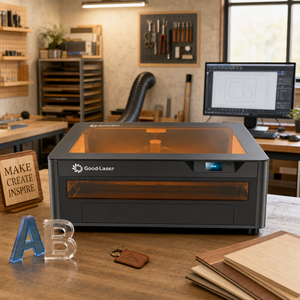
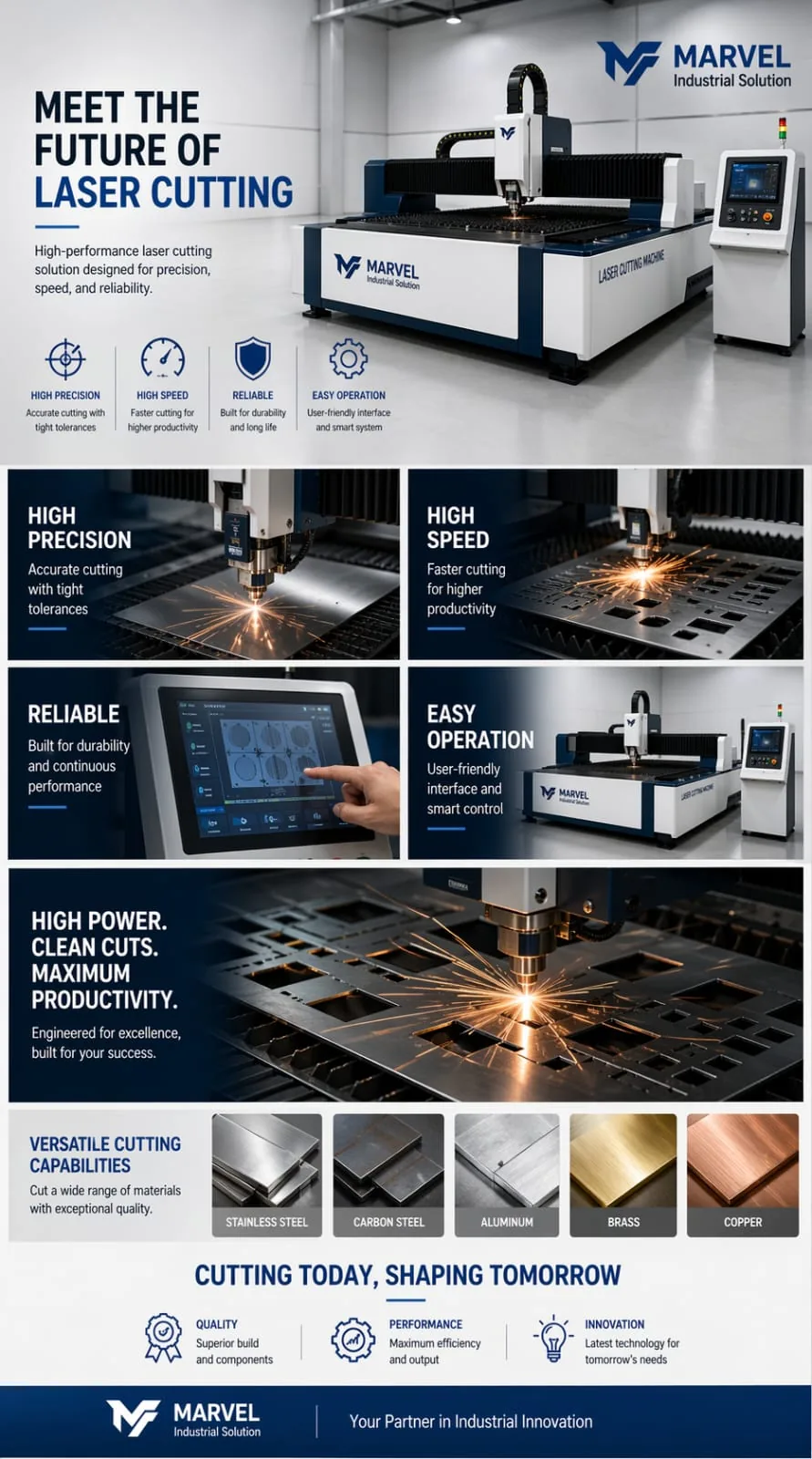
Explore our factory-direct fleet of certified CNC fiber laser cutters, high-speed robotic welding systems, automated tube processing machinery, and precision marking workstations.
In high-throughput sheet metal fabrication, heavy structural engineering, and automotive Tier-1 assembly line operations, switching from manual metal arc processes to CE certified robotic welder systems represents the definitive inflection point for overall equipment effectiveness (OEE). As global manufacturing procurement directives shift toward total compliance, automated traceability, and zero-defect quality thresholds, international buyers face complex engineering tradeoffs when evaluating exporter specifications.
Attaining authentic CE Certification for an integrated robotic welding cell requires far more than sticking a label on an imported arm. It mandates rigorous end-to-end verification against the European Union’s Machinery Directive 2006/42/EC, Electromagnetic Compatibility (EMC) Directive 2014/30/EU, and Low Voltage Directive 2014/35/EU. For enterprise buyers, non-compliant automated equipment poses severe operational risks, including costly regulatory shutdowns, insurance invalidation, safety liabilities, and premature mechanical fatigue under continuous 24/7 duty cycles.
Integrated Performance Level d/e (PLd/PLe) dual-channel safety interlocks, dynamic zone monitoring, and hardware-redundant emergency stop circuits prevent cataclysmic cell failures.
Every standard robotic cell export configuration is backed by verified Welding Procedure Specifications (WPS) and Procedure Qualification Records (PQR) across carbon, stainless, and aluminum alloys.
Fully compliant industrial control enclosures featuring IP54/IP65 ingress protection, thermal management, shielded cable tracks, and noise-immune ground topology for dirty environments.
Selecting the optimal robotic welder architecture requires matching thermal input dynamics, axis speed, and seam tracking capabilities against workpiece metallurgy. The technical comparison below outlines key operational parameters across primary automated joining methodologies supplied by leading exporters:
| Welding Methodology | Heat Affected Zone (HAZ) | Duty Cycle / Travel Speed | Seam Gap Tolerance | Primary Industry Applications |
|---|---|---|---|---|
| 6-Axis Fiber Laser Robotic Cell | Ultra-Narrow (<0.5mm) | Up to 120 mm/sec (Continuous) | ≤ 0.2mm (or requires wire feed) | Automotive Battery Trays, Precision Sensors, Aerospace |
| Robotic GMAW / MIG (Pulse Arc) | Moderate (2.0 - 5.0mm) | 15 - 35 mm/sec (100% Duty) | ≤ 2.5mm (with Laser Seam Tracking) | Structural Steel, Heavy Machinery Frames, Agricultural Chassis |
| Robotic TIG (Cold Wire Feed) | Controlled (1.5 - 3.0mm) | 8 - 20 mm/sec (100% Duty) | ≤ 1.0mm (Precision Fixturing) | Sanitary Vessels, Food Grade Stainless Piping, Heat Exchangers |
| Hybrid Laser-Arc Robotic Cell | Narrow-Deep (1.0 - 2.0mm) | Up to 80 mm/sec (Heavy Plate) | ≤ 1.5mm (Excellent Bridging) | Shipbuilding, Pressure Vessels, Defense Armored Vehicles |
The global industrial automation ecosystem is undergoing a profound structural shift. When evaluating CE certified robotic welder suppliers and exporters over the coming decade, procurement directors must factor in four transformative technology trends that redefine factory ROI:
Static robotic programming is rapidly becoming obsolete. Next-generation export-grade robotic welding cells incorporate 2D/3D CMOS optical laser sensors mounted dynamically ahead of the torch head. Operating at sampling rates up to 1,000 Hz, these vision systems continuously calculate joint variance, thermal expansion drift, and part fit-up misalignment, automatically adjusting the robot trajectory and arc voltage parameters in real time without human intervention.
To minimize cell commissioning downtime, leading exporters provide standardized digital twin CAD/CAM integration software. Plant managers can simulate complex multi-pass weld paths, collision avoidance geometries, and torch angle accessibility off-line. Offline programs are compiled, validated against CE safety zones, and pushed directly to the shop floor controller via encrypted OPC-UA / Industry 4.0 protocols.
As fiber laser source costs decrease, high-power fiber laser welding (ranging from 3kW to 20kW) integrated with 6-axis articulated robots is replacing conventional arc welding in high-speed sheet processing. Hybrid laser-arc configurations combine the deep penetration and low distortion of fiber lasers with the gap-bridging flexibility of pulse MIG welding, slashing multi-pass joint preparation times by up to 70%.
Modern CE certified systems incorporate inline melt-pool monitoring, acoustic emission sensors, and infrared thermography. Machine learning algorithms analyze weld bead consistency during execution, instantly flagging porosity, lack of side-wall fusion, or burn-through. Defect logging is tagged directly to the part serial number for complete automotive traceability compliance.
As a premier machine builder based in India's leading industrial manufacturing hub, Marvel Industrial Solution combines rigorous mechanical engineering, tier-1 component integration, and complete CE compliance validation. We do not operate as a trading intermediary; every robotic system and CNC laser machine is designed, stress-relieved, assembled, and run-tested in-house.
Expert answers to critical engineering, compliance, and international shipping queries surrounding CE certified robotic welding cells.
Authentic CE certification requires compliance with multiple harmonized directives. The complete system must meet Machinery Directive 2006/42/EC, Low Voltage Directive 2014/35/EU, and EMC Directive 2014/30/EU. Specific functional safety standards include EN ISO 12100 (Risk Assessment), EN 60204-1 (Electrical Equipment of Machines), EN ISO 13849-1 (Safety-Related Parts of Control Systems), and EN ISO 10218-1/2 (Robots and Robotic Devices Safety Requirements).
Laser seam tracking systems project a line-laser stripe across the joint ahead of the torch. A high-speed camera captures the cross-sectional profile, identifying root gap width, mis-match, and bevel angle variations. The system dynamic feedback algorithm modifies the robot's motion speed, weaving amplitude, voltage, and wire feed rate in real-time to ensure full joint penetration without burn-through.
In typical double-shift fabrication facilities, payback is achieved within 8 to 14 months. Savings derive from a 300%–500% increase in linear weld speed, reduction in shielding gas/filler wire consumption, elimination of post-weld grinding due to spatter-free pulse technology, and near-zero scrap/re-work rates.
Yes. By integrating multi-process digital power sources (MIG Pulse / Double Pulse / TIG) and dedicated dual-liner wire feed push-pull guns, a single cell can process carbon steel, stainless steel, and aluminum alloys. Quick-change torch assemblies and stored job parameters (WPS channels) allow operators to switch materials in under 5 minutes.
Standard preventative cycles involve daily nozzle spatter cleaning and anti-spatter spraying, weekly protective window inspection on laser heads, monthly wire feed liner replacement and axis calibration checks, and annual gearbox lubrication changes. Exporters provide recommended 1-year and 2-year spare parts consumables kits with every shipment.
All export machinery undergoes vacuum barrier packaging inside heavy-duty, fumigated ISPM-15 wooden crates to prevent moisture corrosion during ocean transit. Our international field engineering team coordinates factory acceptance testing (FAT), site acceptance testing (SAT), foundation layout planning, utility connectivity, and full operator safety certification on-site.
Contact our application engineering team today to submit part drawings, request cycle-time studies, or schedule a live video demonstration of our automated cells.
