Explore our export-grade, CE-compliant CNC fiber laser cutting systems, automatic CO2 laser engravers, tube cutters, and handheld welding units designed for industrial metal processing worldwide.
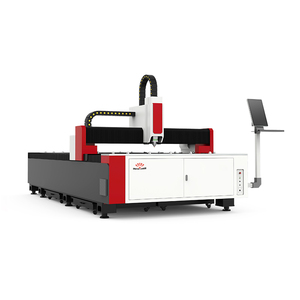
Heavy-duty 4000x1500mm dual-drive CNC fiber laser cutter for high-speed precision cutting of carbon steel, stainless steel, and aluminium plate.
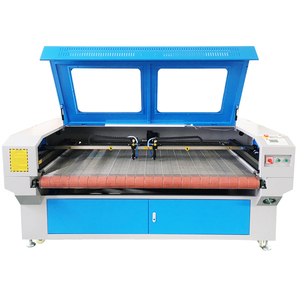
Versatile 1600x1000mm optical cutter for non-metallic components, synthetic gaskets, MDF, acrylic, leather, and composite industrial materials.
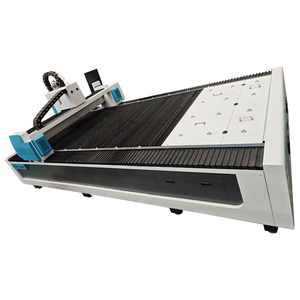
Factory-direct high-durability steel plate cutter equipped with auto-focus laser head, advanced CNC control software, and structural frame annealing.
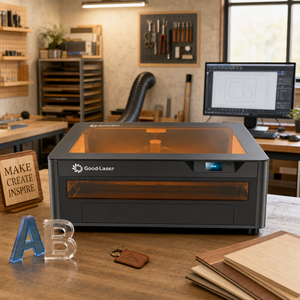
Compact 520x315mm enclosed micro-cutting platform delivering 0.01mm positioning precision for thin sheet prototyping, seals, and technical parts.
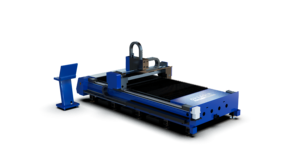
Economical single-bed metal laser cutting machine optimized for medium fabrication shops processing stainless steel, iron, and brass sheets.
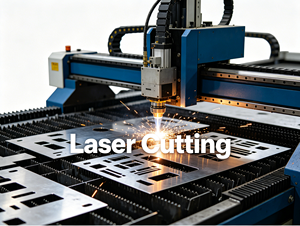
Bespoke CNC laser cutting, bending, and engineering contract manufacturing services for stainless steel, copper, brass, and structural aluminium parts.
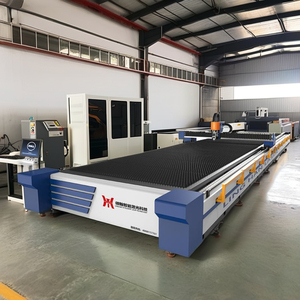
Ultra-high-power fiber laser metal cutter available in 3015 and 4015 formats for ultra-fast nitrogen bright cutting and thick carbon steel oxygen piercing.
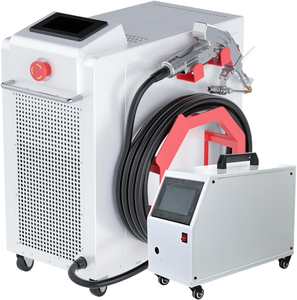
Portable water-cooled laser system combining manual laser seam welding, edge cutting, and surface rust cleaning with wobble head technology.
Building high-performance steel cutting machinery requires rigorous structural engineering, certified safety compliance, and robust component selection. We operate as an authentic OEM manufacturer, not a trading reseller.
Every machine platform is fully documented under European Union Directives: Machinery Directive 2006/42/EC, Low Voltage Directive 2014/35/EU, and EMC Directive 2014/30/EU. Features optical safety interlocks, fire-retardant enclosures, and localized laser safety glass.
Machine beds undergo high-temperature electrical furnace annealing at 600°C for 24 hours to eliminate internal welding stress. This guarantees that frame geometry and linear rail straightness remain warp-free over 10+ years of continuous heavy production.
We strictly integrate world-renowned key optics and motion drive modules: IPG Photonics, nLIGHT, or Raycus laser generators; Precitec or Raytools auto-focus cutting heads; Yaskawa/Panasonic servo motors; and Schneider/Siemens electrical safety circuits.
Pre-installed CNC controller parameters feature optimized material cut tables (cutting speeds, focal offsets, nozzle gap heights, gas pressure bars) across mild steel, stainless steel, aluminium, brass, and copper plates up to 40mm thick.
Export orders include sea-worthy vacuum packing, full installation floor drawings, utility requirements, remote telemetry monitoring, operator safety training, and spare parts supply contracts delivered within 48 hours globally.
Before shipment, customers can submit complex DXF/CAD vector parts for factory test cutting. We supply optical edge surface roughness data (Ra metrics), bevel angle verification, and video footage confirming cycle time targets.
Selecting the optimal fiber laser wattage and assist gas configuration directly impacts hourly operating cost (TCO), edge roughness (Ra), heat-affected zone (HAZ), and throughput efficiency.
| Laser Source Power | Material Type | Max Cut Thickness | Optimal Assist Gas | Avg. Cutting Speed | Edge Finish Quality (Ra) |
|---|---|---|---|---|---|
| 1.5 kW - 2.0 kW | Mild Steel / Stainless | 12mm (MS) / 5mm (SS) | O₂ (MS) / N₂ (SS) | 1.8 - 4.5 m/min | Ra 6.3 - 12.5 µm (Clean Edge) |
| 3.0 kW - 4.0 kW | Carbon Steel / Stainless / AL | 20mm (MS) / 10mm (SS) | Oxygen / High-Pressure N₂ | 2.5 - 8.0 m/min | Ra 3.2 - 6.3 µm (Oxide-Free N₂) |
| 6.0 kW - 8.0 kW | Heavy Structural Steel & Alloys | 25mm (MS) / 16mm (SS) | N₂ / Compressed Air / O₂ | 4.0 - 14.0 m/min | Ra 3.2 µm (Bright Cut Edge) |
| 12.0 kW - 15.0 kW | Thick Plate Engineering Steel | 35mm (MS) / 25mm (SS) | High-Flow Nitrogen / Air | 6.0 - 22.0 m/min | Ra 1.6 - 3.2 µm (Smooth Finish) |
| 20.0 kW - 30.0 kW | Ultra-Thick Vessel & Shipbuilding Steel | 50mm (MS) / 40mm (SS) | Mix Gas / Nitrogen / Oxygen | 8.0 - 35.0 m/min | Industrial Heavy Plate Spec |
Industrial procurement heads and plant executives must evaluate changing capital equipment benchmarks, carbon footprint requirements, and technical total cost of ownership factors when sourcing CE-marked machinery.
Historically, cutting thick mild steel required pure oxygen assist gas, which relies on exothermic iron-oxidation reactions. However, modern high-power fiber lasers (12kW to 30kW) are radically shifting procurement preference toward High-Pressure Compressed Air Cutting.
By pairing high-wattage laser generators with high-pressure air compressors (16-30 bar), steel fabricators reduce gas operating costs by up to 75% while simultaneously boosting linear feed rates on thin-to-medium carbon steel by 200% to 300%.
Stand-alone laser cutting beds are rapidly giving way to Flexible Manufacturing Systems (FMS). Procurement managers are increasingly requesting dual-pallet automatic exchange tables, automated sheet tower loading/unloading systems, and gantry pick-and-place robotics.
Automated sheet loading eliminates crane bottleneck downtime, maximizes beam-on cutting hours (achieving over 85% spindle utilization per shift), and minimizes worker injury risks in compliance with EU Directive 2006/42/EC safety standards.
Advanced procurement specs now require Variable Beam Mode (VBM) fiber lasers. VBM allows the operator to dynamically adjust the laser beam core diameter and beam profile (from small gaussian beam for rapid thin sheet piercing to donut beam shape for thick plate edge smoothness) via CNC software without manually changing optical lenses.
This flexibility enables job shops to process 1mm stainless sheet and 30mm carbon plate on a single cutting machine with zero setup changeover delay.
As international supply chains tighten quality oversight under ISO 9001 and CE directives, importers can no longer purchase unshielded or uncertified laser machinery. Procurement standards mandate Class 1 enclosed cutting chambers with anti-radiation laser protective glass windows, safety door interlocks, and smoke extraction fume filters.
CE-certified machinery guarantees compliance during plant safety audits and protects operators against hazardous airborne particulate emissions (metal fumes and PM2.5 particles).
Excellence in machine tool engineering demands continuous innovation across mechanical rigidity, drive dynamics, optical monitoring, and real-time CNC algorithms.
Modern CNC machine tools are shifting from traditional analog pulse control to full digital EtherCAT fieldbus architectures. EtherCAT enables microsecond-level synchronization between gantry motion motors, laser power pulsing, gas proportional valves, and auto-focus optical height sensors, preventing corner burning and dross formation.
Incorporating acoustic and optical sensors into the laser cutting head allows the machine to detect the exact millisecond a laser pierces through thick steel plate. Auto-Piercing sensors prevent unnecessary dwell time, saving up to 30% piercing time while detecting plasma blowout to prevent lens damage.
Beyond flat sheet cutting, structural steel manufacturing relies on multi-axis chuck tube cutters equipped with 3D bevel heads (±45° tilt). This allows joint copes, countersinks, and weld preparation bevels to be executed on round, square, and rectangular structural profiles in a single clamp setup.
Detailed explanations covering CE certification compliance, fiber power selection, operating running costs, and international warranty support.
CE Certification serves as legal verification that industrial machinery meets strict European Union health, safety, and environmental protection directives. For steel cutting machinery, this entails compliance with the Machinery Directive 2006/42/EC, Low Voltage Directive 2014/35/EU, and laser safety standard EN 60825-1. Importers purchasing CE-certified machinery benefit from verified electrical safety circuits, emergency stop safety relays, fire-retardant electrical cabinets, and optical protective interlocks. This ensures seamless customs clearance, lower industrial insurance premiums, and complete safety audit compliance.
You should calculate required fiber laser wattage based on your regular daily production thickness, not your occasional maximum material cut. For example, if 80% of your production involves 1mm to 6mm carbon steel and stainless, a 3kW to 4kW fiber laser provides the optimal balance of speed, low power consumption, and capital expenditure. However, if your plant regularly processes 12mm to 25mm structural steel plates, a 6kW to 12kW system is recommended to enable high-speed nitrogen bright cutting and minimize heat-affected zone (HAZ) edge deformation.
The total cost of operation (TCO) for a fiber laser cutter consists of three primary elements:
1) Electrical Consumption: A standard 3kW system draws approximately 12-15 kW total electrical power including laser generator, water chiller, and dust extractor.
2) Assist Gas: Oxygen (for thick carbon steel cutting) or Nitrogen/Compressed Air (for oxide-free stainless steel and fast sheet cutting).
3) Optical Consumables: Protective quartz window lenses, copper nozzles, and ceramic rings, which are minimal compared to older CO2 laser gas and mirror replacement expenses.
Yes. Modern fiber lasers operate at a 1064nm optical wavelength, which is absorbed far more effectively by non-ferrous reflective metals than legacy 10,600nm CO2 laser beams. Furthermore, our machines feature integrated optical back-reflection isolator protection in the laser generator source. This prevents reflected laser light from damaging internal optical fibers or diodes when processing polished aluminium, brass, or copper alloys.
A single-table machine features one stationary cutting bed. Material loading and cut-part removal occur while the laser head is idle, making it suitable for lower-volume job shops or heavy plate loading. An exchange table machine incorporates a hydraulic or motor-driven dual shuttle pallet system: while sheet A is being cut inside the safety enclosure, the operator safely unloads finished parts and loads sheet B on the external pallet. This increases machine beam-on time by 25% to 35%, maximizing daily shift yield.
When heavy steel tubes and plates are welded together to form a machine gantry bed, significant internal stress is created within the metal grain structure. If untreated, the frame will gradually warp over 6 to 18 months of thermal cycles, ruining linear rail parallelism and drive gear alignment. Marvel Industrial Solution subjects every welded bed to a 24-hour high-temperature heat treatment furnace annealing cycle (600°C) followed by natural vibration stress relief. This permanently stabilizes the structural frame geometry, maintaining ±0.03mm positioning repeatability over a 10-year lifespan.
All export machinery is delivered with sea-worthy vacuum packing and steel skid framing. Our export service package includes complete foundation layout drawings, electrical load specifications, pre-shipment video trial cutting reports, CAM nesting software licenses, and comprehensive operator manuals. Overseas installation is supported either via on-site field engineers or remote diagnostic telemetry combined with 24/7 video support. Key replacement spares (nozzles, optics, sensors) are stocked for rapid international courier dispatch.
Yes. As an authentic OEM/ODM machine tool builder, our engineering team designs customized Special Purpose Machines tailored to specific part geometry, shop floor layout, and cycle time targets. Custom capabilities include extra-large format gantry beds (up to 12 meters length), integrated multi-axis pipe-and-plate combination machines, automated metal surface polishing systems, and robotic stamping press transfer systems.
Consult with our senior application engineers to receive customized machine sizing recommendations, sample part test cut analysis, and full CE compliance documentation for your manufacturing plant.
