
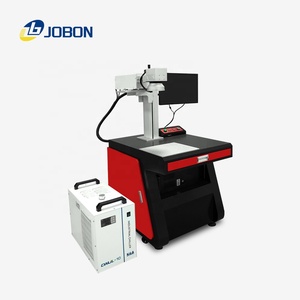
UV Laser Engraver for Flexible PCB & Chip LCD Marking
355nm Wavelength | High Precision Galvo | Flexible Circuit Boards & Chips
Inquire Now
Engineered for ultra-precise micro-processing, semiconductor wafer coding, glass sub-surface etching, and zero-HAZ plastic marking.
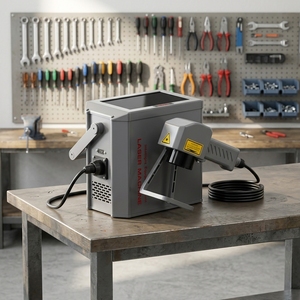
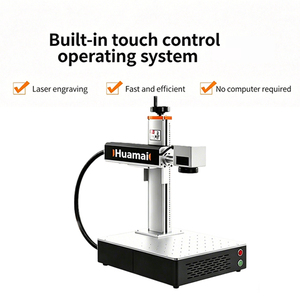
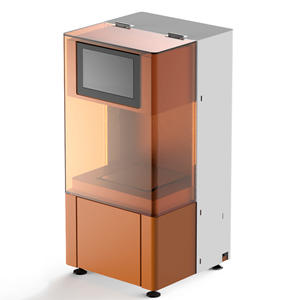
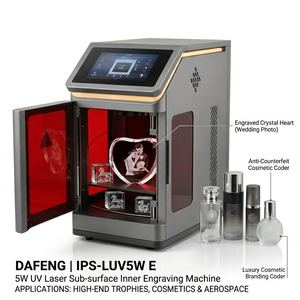
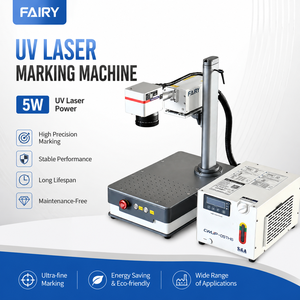
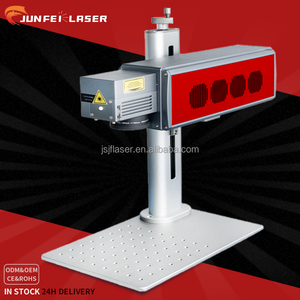
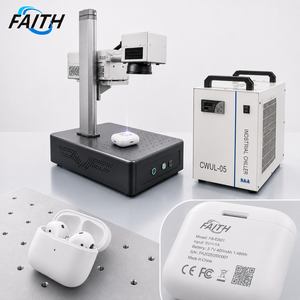
In modern high-density electronics, medical device manufacturing, and pharmaceutical packaging, traditional thermal processing methods—such as 1064nm Fiber lasers and 10.6μm CO2 lasers—frequently encounter insurmountable physical limits. The underlying challenge stems from the Heat-Affected Zone (HAZ). Thermal photons generated by longer wavelengths cause material deformation, edge charring, micro-cracking, and structural degradation in thermo-sensitive polymers, thin-film ceramics, and silicon wafers.
Ultraviolet (UV) laser systems operate on the principle of Photochemical Reaction rather than thermal melting. Utilizing a third-harmonic generation (THG) frequency-tripling diode-pumped solid-state (DPSS) crystal architecture, UV lasers emit photons at a wavelength of 355nm. At this ultraviolet energy state, individual photons possess sufficient quantum energy to directly sever the molecular bonds within organic polymers and brittle substrates without transferring significant thermal kinetic energy to adjacent crystal lattices. This process, known in optical physics as "cold processing," produces ultra-sharp kerfs, micro-level line widths (down to <15μm), and pristine edge integrity.
To assist global procurement officers and system integrators in selecting the correct laser source for factory deployment, the engineering team at Marvel Industrial Solution has compiled the definitive performance matrix below:
| Laser Type / Parameter | 355nm UV DPSS Laser | 1064nm Fiber Laser | 10.6μm CO2 Laser |
|---|---|---|---|
| Primary Processing Mode | Photochemical (Bond Severing) | Photothermal (Melting/Vaporization) | Photothermal (Combustion/Ablation) |
| Heat-Affected Zone (HAZ) | Near-Zero (< 5 μm) | Moderate to High (50–150 μm) | Extremely High (> 200 μm) |
| Focal Spot Diameter (Typical) | 10 – 20 μm | 30 – 50 μm | 100 – 300 μm |
| Flexible PCB (FPC) Cutting | Optimal (Zero Carbonization) | Unsuitable (Burnt Edges) | Poor Edge Quality / Melted Polyimide |
| Glass & Crystal Sub-surface | High Absorptivity (Micro-cracking free) | Transparent (Requires additives) | Surface Thermal Fracturing Only |
| High-Density HDPE/PP Marking | High Contrast Foaming/Color Change | Substrate Burning / Low Contrast | Melts Surface without Color Shift |
We are a direct machine builder, not a trading middleman. Every frame, optical path, and electrical control cabinet is fabricated, stress-relieved, and calibrated in-house.
Unlike lightweight sheet-metal desktop units, our machine beds undergo high-temperature thermal annealing to eliminate structural stress. This guarantees sub-micron positioning accuracy maintained over tens of thousands of continuous operational hours.
Our UV systems feature fully interlocked Class-1 safety enclosures, optical window shielding certified against 355nm specular reflection, dual-channel emergency stop circuits, and CE-compliant EMI/RFI filtered power distribution cabinets.
Before signing contract specifications, clients send target substrates—whether flexible PCBs, medical-grade PEEK tubing, or silicon nitride ceramics—to our optical lab. We return detailed laser confocal microscope reports and edge kerf measurements.
We integrate premium solid-state laser resonators (JPT, Inno, Gainlaser), high-speed digital galvanometer scanners with quartz f-theta lenses, and industrial PLC/PC architectures running dedicated 2D/3D nesting software.
Every exported machine includes sea-worthy vacuum packing, multi-voltage transformer matching (110V/220V/380V), complete electrical schematics, utility installation guides, and full spare parts cataloging.
Our engineering team provides remote IP-connected optical diagnostic routines, live video-assisted parameter tuning, operator training, and rapid door-to-door dispatch of replacement optical modules.
The industrial laser processing landscape is undergoing a major shift toward higher power density, shorter pulse durations, and intelligent inline integration. Procurement teams preparing capital expenditure plans for upcoming production cycles should evaluate these critical technical trends:
While nanosecond-pulsed UV lasers remain the workhorse for standard industrial marking and FPC cutting, ultra-short pulse (USP) UV lasers—operating in the picosecond (ps) and femtosecond (fs) domains—are becoming commercially viable. By reducing pulse durations from 10–15ns down to <500fs, heat transfer to the surrounding medium is eliminated entirely. This enables true "cold ablation" of bio-resorbable medical implants, ultra-thin flexible display glass (UTG), and semiconductor wafers without micro-cracks or stress risers.
Legacy 2D flat-bed marking systems require mechanical Z-axis adjustment when processing stepped, spherical, or slanted workpieces. Next-generation UV machines incorporate dynamic 3D optical focusing hardware. By adjusting the optical path using a high-speed linear voice-coil actuator before the galvo scanner, the laser beam waist dynamically tracks 3D CAD surface contours in real time. This ensures consistent spot power density and line clarity across complex automotive lighting lenses and molded interconnect devices (MID).
Modern high-speed production lines no longer tolerate manual part positioning. Modern UV marking and cutting systems feature coaxial CCD camera alignment and deep-learning vision modules. The vision system detects part offset, rotation, and dimensional variance within 5 milliseconds, automatically recalculating the galvo scan matrix. Simultaneously, post-mark optical character verification (OCV/OCR) verifies barcode readability and 2D DataMatrix quality grade (ISO/IEC 15415) before ejecting the component.
Historically, commercial UV lasers were limited to 3W–5W outputs due to thermal lens effects within the frequency-tripling nonlinear optical crystals (LBO/BBO). Recent advancements in crystal cooling geometry and diode pumping configurations have brought reliable 15W, 20W, and 30W solid-state UV resonators into mass production. This increase in average power translates directly into 3x to 5x faster processing speeds for thick polyimide cutting and ceramic drilling, making UV blanking competitive with traditional mechanical stamping dies.
As international supply chains emphasize total cost of ownership (TCO), environmental compliance, and regional supply chain resilience, corporate procurement strategies for UV laser machinery are evolving rapidly:
Experienced procurement directors are prioritizing Total Cost of Ownership over initial purchase price. Key evaluation factors now include electrical conversion efficiency, consumable replacement cycles, and water chiller power draw. Air-cooled UV systems (such as compact 3W/5W desktop models) are gaining favor over water-cooled units for light-duty applications due to their zero-chiller maintenance, 70% lower energy footprint, and smaller factory footprint.
Customs authorities across Europe, North America, and East Asia are enforcing strict laser safety protocols. Unenclosed Class-4 open-bench laser equipment faces increasing port rejections and workplace safety fines. Leading global buyers now require certified Class-1 enclosures equipped with certified protective viewing windows (OD6+ at 355nm), safety interlock switches with dual-channel redundancy, and mandatory CE certificates issued by notified bodies.
Standalone laser marking machines are quickly being phased out in automated smart factories. Modern RFQs explicitly request industrial communication protocols such as OPC-UA, Modbus-TCP, and Profinet. UV laser controllers must interface directly with factory MES (Manufacturing Execution Systems) to pull dynamic serial numbers, batch data, and lot tracking codes dynamically, while reporting real-time machine health, laser diode current, and operating temperatures back to control rooms.
Clear, authoritative answers from our senior optical application engineers to help guide your procurement process.
A CE certification verifies that the UV laser machine complies with rigorous European Union health, safety, and environmental protection standards—specifically EN 60825-1 for laser product safety and EN 61000-6-2/4 for electromagnetic compatibility. For international buyers, CE compliance ensures smooth customs clearance, lowers corporate liability, and guarantees that operator safety features (such as interlocked enclosures, emergency shut-offs, and optical shielding) meet international industrial standards.
Power selection depends directly on substrate material and required cycle times:
• 3W UV Lasers: Ideal for high-contrast surface marking on plastics (ABS, PVC, HDPE), cosmetic containers, and basic glass etching where thermal impact must be zero.
• 5W UV Lasers: The versatile industrial standard. Recommended for micro-marking, fine glass sub-surface engraving, silicon wafer coding, and thin plastic cutting.
• 10W+ UV Lasers: Engineered for high-speed automated production lines, thick flexible PCB (FPC) micro-cutting, ceramic drilling (Alumina/Silicon Nitride), and deep glass scribing where maximum throughput is required.
Fiber lasers (1064nm) heat and melt plastics, often causing surface distortion, charring, rough texture, and unreadable barcodes. UV lasers (355nm) break chemical bonds photo-chemically ("cold processing"). This induces a clean color-change reaction inside the polymer matrix without melting the surface. The result is a smooth, high-contrast mark readable by machine vision systems, even on medical-grade plastics like PEEK and PTFE.
Modern Diode-Pumped Solid-State (DPSS) UV laser sources feature pump diode lifespans exceeding 20,000 operational hours. Maintenance involves keeping the optical environment dust-free, periodically cleaning the f-theta galvo lens with optical-grade alcohol, inspecting cooling water conductivity (for water-cooled units), and changing particulate/deionizing filters every 6 to 12 months.
Yes. Specialized 5W and 10W UV sub-surface engraving machines utilize high-peak-power focused beams to create micro-explosions inside transparent glass, acrylic, or optical crystals without damaging the exterior surface. This is widely used for anti-counterfeiting codes inside glass bottles, optical components, and premium decorative glass items.
Every exported unit undergoes a mandatory 48-hour continuous burn-in test, power meter stability logging, galvo beam alignment, and sample test reporting. Upon dispatch, clients receive full CE Declaration of Conformity documents, electrical wiring schematics, foundation/utility dimensional drawings, optical safety certificates, and a complete user manual in English.
Send your substrate samples or CAD drawings to our optical engineering team for a complimentary laboratory feasibility report, edge quality analysis, and factory-direct quotation.