High-efficiency, certified polishing solutions tailored for hardware, automotive components, medical devices, jewelry, and structural metal fabrication.
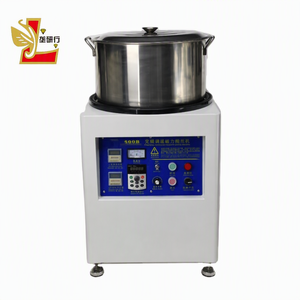
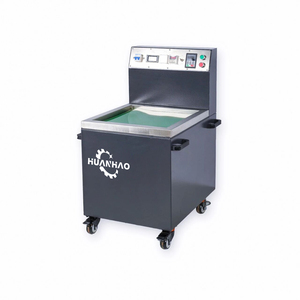
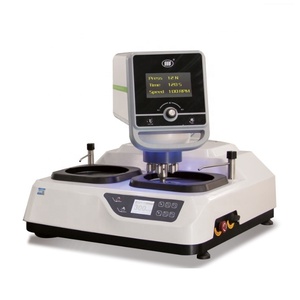
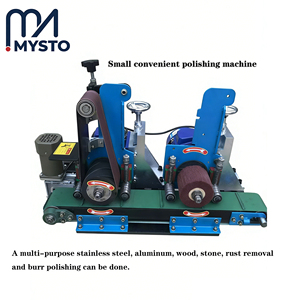
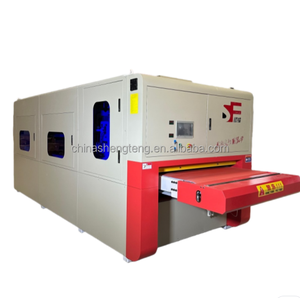
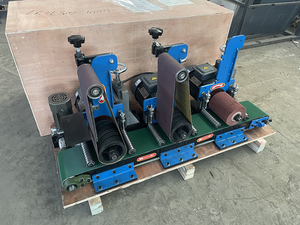
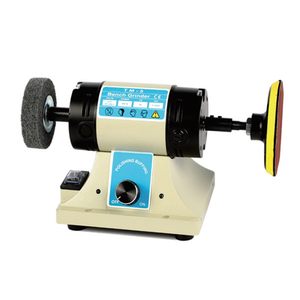
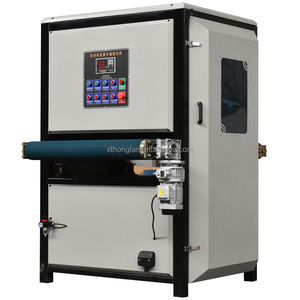
As a global frontrunner in metal processing and automated surface finishing technology, our manufacturing ecosystem bridges advanced metallurgical science with high-precision mechanical engineering. Unlike trading intermediaries, our production base integrates heavy-duty CNC machining centers, thermal stress-relieving annealing furnaces, and computerized dynamic balance testing rigs. Every metal polishing machine—from compact benchtop magnetic tumblers to multi-head inline belt sanders—is engineered to solve specific surface integrity challenges, including micro-burr elimination, oxide layer removal, grain refinement, and mirror-finish reflectivity ($Ra < 0.02 \mu m$).
Our engineering methodology centers on robust structural integrity. Frame structures undergo Finite Element Analysis (FEA) to eliminate resonance vibration during high-RPM spindle rotations or high-frequency magnetic force rotations. Electrical cabinets are assembled according to strict international safety interlock protocols, utilizing tier-1 global components (VFD frequency inverters, Schneider electrics, and Omron PLC logic controllers). By harmonizing physical frame rigidity with smart parameter control, our equipment guarantees uninterrupted 24/7 industrial production cycles.
Heavy-gauge welded steel frames are heat-treated to prevent structural deformation under continuous thermal and vibration stress.
Equipped with premium servo motors, precision linear guides, and dust-proof VFDs for pin-point speed control and low noise emission.
Custom engineering support for automated part feeding, specialized fixture tooling, robotic loading arms, and inline filtration setups.
The global metal surface finishing industry is undergoing a paradigm shift driven by automation, environmental compliance, and micro-precision demands. Procurement leaders and manufacturing plant operators must align their equipment roadmaps with four core technological vectors currently transforming factory floors worldwide:
Traditional mechanical tumbling often damages fragile geometries or leaves internal channels untreated. Modern high-speed magnetic polishers utilize dynamic electromagnetic fields to drive micro stainless-steel magnetic pins ($0.2\text{mm} - 1.2\text{mm}$) through complex internal bores, blind holes, and threads without altering dimensional tolerances.
Environmental regulations (OSHA, CE, ISO 14001) are restricting dry dust-generating grinding systems. Next-generation metal polishers integrate multi-stage wet cyclone filtration, oil-water separators, and automated slurry recovery systems to deliver zero-dust factory environments and lower coolant consumption.
Flat sheet plate finishing is transitioning from manual belt feeding to multi-station CNC automatic wire-drawing machines. Incorporating flexible abrasive belt heads, planetary scotch-brite brushes, and pneumatically floating contact rollers ensures uniform satin or hairline finishes across distorted sheet plates.
Industrial IoT integration allows operators to store pre-calibrated polishing parameter profiles (spindle RPM, magnetic frequency, conveyor feed speed, contact pressure, and process cycle time) for diverse materials (Aluminium 6061, Stainless Steel 316L, Brass, Titanium).
| Technology Type | Target Materials | Surface Roughness Capability | Internal Bore / Blind Hole Deburring | Automation Level |
|---|---|---|---|---|
| Magnetic Tumbling | Non-Ferrous Alloys, Gold, Copper, SS | $Ra \le 0.1 \mu m$ | Exceptional ($0.2\text{mm}$ Pin Penetration) | Semi to Fully Automatic |
| CNC Belt & Roller Flat Polisher | Sheet Metal Plates, Aluminum, Steel | Hairline / Satin / $Ra \le 0.4 \mu m$ | Surface Edge Only | Continuous In-Line Automated |
| Metallographic Grinder (MoPao Series) | Metallurgical Test Samples | Mirror Finish ($Ra \le 0.01 \mu m$) | Flat Micro-Specimens | Precision Programmable PLC |
| Benchtop Heavy-Duty Polisher | Small Hardware, Cutlery, Castings | Custom Buffing dependent on Compound | External Contours Only | Manual / Workstation Integrated |
When sourcing industrial metal polishing equipment from China, international procurement engineers must look beyond the initial purchase price to evaluate the Total Cost of Ownership (TCO). A complete sourcing evaluation matrix must encompass energy efficiency, consumable lifespan, maintenance overhead, tooling adaptability, and supplier technical support responsiveness.
Selecting appropriately rated spindle and VFD drive power (e.g., 2.2kW vs 15kW continuous duty motors) prevents thermal overload during 3-shift manufacturing runs while optimizing factory KVA ratings.
Ensure compatibility with universally available abrasive belts, non-woven Scotch-Brite wheels, diamond suspension pastes, and standardized magnetic stainless steel pin sizes.
Direct OEM verification for CE safety marking, ISO 9001 quality management, sea-worthy fumigated wooden crate packaging, and clear schematic documentation.
Our export operations team provides full logistics integration, including pre-shipment trial video cuts, customized sample testing reports, spare parts kit inclusion (additional belts, seal rings, extra magnetic media), and remote augmented-reality commissioning support to minimize setup time upon container delivery.
Expert technical answers addressing common engineering queries regarding machine selection, media application, and operational maintenance.
Magnetic polishing uses high-speed rotating magnetic fields to energize tiny stainless steel pins in a liquid compound. Unlike vibratory tumblers, which take hours and can round off precision edges, magnetic polishers achieve thorough deburring, cleaning, and brightening in 5 to 15 minutes without compromising critical part dimensions or surface geometries.
Our CNC Flat Metal Surface Polishing & Deburring Machine (Model SSS1000 / Flat Series) is explicitly designed for sheet metals. Utilizing adjustable abrasive belt heads combined with planetary brush rollers, it efficiently removes laser-cutting slag, mill rust, and creates consistent hairline or satin grain finishes across stainless steel, aluminum, and copper plates.
Yes! Magnetic polishing is exceptionally suited for non-ferrous metals such as gold, silver, copper, brass, aluminum, and austenitic stainless steel. Because the workpieces themselves are non-magnetic, they float freely in the solution while the magnetic pins aggressively scrub every crease and internal cavity.
The MoPao 3S is a specialized laboratory instrument designed for metallurgical sample preparation. It allows material testing engineers to micro-grind and mirror-polish metal specimens ($Ra < 0.01 \mu m$) for microscopic grain structure inspection, hardness testing, and microstructural analysis under electron microscopes.
A standard progression starts with 60#–80# coarse grit for heavy weld seam grinding, moving to 120#–180# for surface defect removal, 240#–320# for fine satin drawing, and non-woven scotch-brite or wool felt wheels with polishing paste for mirror-finish results ($Ra \le 0.05 \mu m$).
All export machinery includes a comprehensive 2-Year Factory Limited Warranty, CE conformity certificates, electrical wiring schematics, English operating manuals, and video-assisted setup guides. We stock complete spare parts packages ready for express air dispatch.
Send us your part drawings, material specifications, and target output metrics. Our senior surface finishing application engineers will formulate a complete machine layout, media matching recommendation, and factory-direct price estimate within 12 hours.
Contact Us