Explore our state-of-the-art palletizing robots, high-power CNC laser cutting cells, specialized welding equipment, and automated line transfer systems manufactured directly in our certified smart factory.
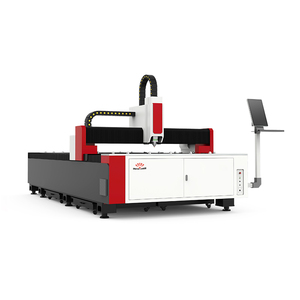
Heavy-duty structural architecture, 6000W-12000W laser power options paired with ultra-precise beam distribution for high-output metal blanking & stack palletizing.
Get Catalog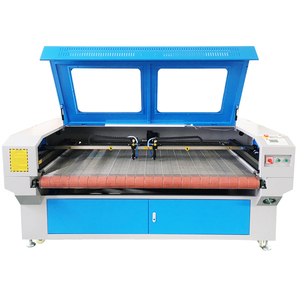
Competitive precision processing system for organic materials, timber, acrylic, and textiles, engineered for high-duty cycle industrial fabrication floors.
Get Catalog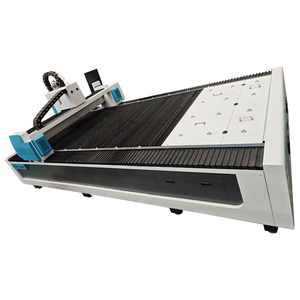
Optimized heavy plate metal cutting solution designed with integrated automatic pallet changers for uninterrupted continuous production shifts.
Get Catalog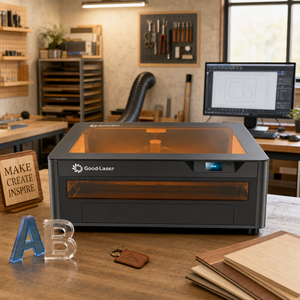
Compact 520x315mm enclosed safety cell featuring active cooling and ultra-fine mechanical repeatability for electronic & small component assembly.
Get Catalog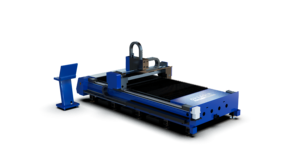
High-rigidity gantry architecture, quick setup profile, optimized for lean job shops requiring clean cuts across non-ferrous and carbon steel sheets.
Get Catalog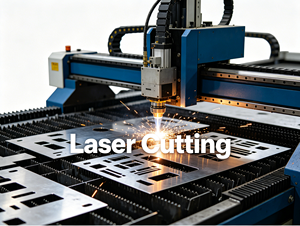
Customized engineering line covering laser blanking, robotic bending, press transfer, and automated end-of-line palletizing systems.
Get Catalog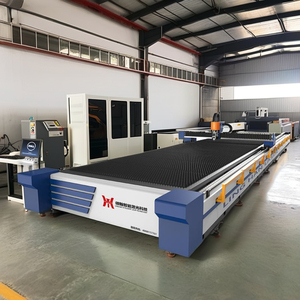
Flagship ultra-high power cutting workhorse designed for thick plate processing, featuring dual shuttle pallets and full Class-1 laser safety housing.
Get Catalog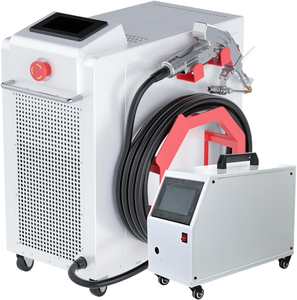
Multi-functional wobble-head welding tool designed for smooth, high-strength joinery on stainless steel, aluminium alloys, and heavy sheet metal assemblies.
Get CatalogModern industrial manufacturing facilities are rapidly transitioning from legacy manual stacking to autonomous end-of-line palletizing cells. As a premier original equipment manufacturer (OEM) in China, our engineering methodology integrates high-torque kinematic servo dynamics, machine-vision alignment, and modular End-of-Arm Tooling (EOAT) to resolve complex intra-logistics bottlenecks across diverse sectors, including chemical packaging, food and beverage, automotive metal stamping, and heavy sheet fabrication.
Palletizing robots are mechanically categorized based on their degree of freedom (DOF), payload envelope, and motion profile. Choosing the appropriate robot architecture is vital to achieving target cycle speeds and maximizing floor area efficiency:
The selection matrix below outlines technical baseline specifications for industrial-grade palletizing cells engineered across our manufacturing facilities:
| Robot Model Category | Payload Capacity (kg) | Max Working Reach (mm) | Repeatability (mm) | Maximum Cycles (Picks/Hr) | Primary Industrial Application |
|---|---|---|---|---|---|
| Light-Duty Fast Palletizer | 20 - 50 kg | 1,800 - 2,200 mm | ±0.03 mm | 1,200 - 1,600 | FMCG, Pharmaceutical, Small Box Cartons |
| Mid-Range Heavy Box Palletizer | 80 - 180 kg | 2,400 - 2,800 mm | ±0.05 mm | 900 - 1,300 | Bagged Agriculture, Chemical Drums, Case Stacking |
| Ultra-Heavy Payload Palletizer | 300 - 800 kg | 3,150 - 3,500 mm | ±0.08 mm | 600 - 950 | Heavy Metal Sheet Blanks, Automotive Body Parts |
| Cartesian Multi-Line Gantry | 500 - 2,000+ kg | Custom Grid (up to 30m) | ±0.10 mm | 400 - 800 | Multi-Line Warehouse End-of-Line Consolidation |
A palletizing robot's efficiency depends entirely on the design of its End-of-Arm Tooling. Our R&D division focuses on customized EOAT integration optimized for precise product handling:
Global procurement directors and supply chain executives face evolving challenges: escalating labor rates, heightened workplace safety mandates, and demands for hyper-flexible manufacturing. When evaluating vendors from top Chinese robotics hubs, smart buyers focus on long-term technological adaptability rather than upfront capital expenditure alone.
Procurement strategies are moving away from initial machine purchase price toward holistic 10-year TCO models. Modern Chinese manufacturers incorporate Kinetic Energy Recovery Systems (KERS) within robot servo drives, capturing deceleration energy and routing it back into the facility grid. This reduces energy consumption by 15% to 25% compared to legacy robotic architectures.
Proprietary closed-loop controllers are rapidly being replaced by open industrial protocols. Modern palletizing installations must seamlessly exchange real-time operational data with Manufacturing Execution Systems (MES) and Enterprise Resource Planning (ERP) databases via OPC UA, PROFINET, or EtherNet/IP. This enables automated batch tracking, barcode scanning validation, and dynamic pallet pattern synchronization from remote control rooms.
Global buyers increasingly prefer turnkey sourcing models. Instead of procuring robotic arms, safety fencing, roller conveyors, wrapping machines, and pallet dispensers from fragmented vendors, buyers prefer single-source OEM factory contracts. China’s leading manufacturing facilities offer fully pre-integrated cells pre-tested under real-world load conditions prior to export shipment.
The convergence of Artificial Intelligence, spatial 3D vision perception, and advanced material sciences is fundamentally redefining the capabilities of industrial palletizing machinery.
Traditional palletizing requires standardized, structured box dimensions feeds. However, next-generation AI vision algorithms allow palletizing robots to perform random, non-uniform package stacking. Using deep neural networks and real-time 3D point-cloud cameras, the robot calculates product volume, structural integrity, and center of gravity on the fly, dynamically constructing mixed-payload pallets without manual programming.
Digital Twin modeling allows factory engineers to simulate robot kinematics, floor clearance, and cycle throughput in a 3D virtual environment prior to physical fabrication. Furthermore, edge computing sensors monitor gearbox vibration, servo motor thermals, and pneumatic pressure differentials in real time. Machine learning models predict component fatigue weeks before structural breakdown occurs, reducing unscheduled downtime to near zero.
Innovations in structural composite materials have introduced carbon-fiber reinforced linkage arms to the high-speed palletizing sector. By dramatically lowering moving mass while retaining structural modulus, next-generation robotic arms achieve higher acceleration curves (up to 3.5G) while reducing motor thermal stresses.
As a specialized OEM and exporter of industrial automation, robotic palletizing lines, and CNC laser processing machinery, our facility offers comprehensive technical mastery and quality assurance to global partners.
Clear, direct technical answers to assist procurement engineers and plant operations managers during machine evaluation.
The total required payload equals the combined mass of the product (or multiple products in a multi-pick cycle) PLUS the complete weight of the End-of-Arm Tooling (EOAT) and quick-change coupling. We recommend building a 20% to 30% safety factor into acceleration torque calculations to avoid servo drive overload during high-speed moves.
A typical 4-axis floor-mounted palletizing cell requires a footprint of approximately 4.0m x 4.5m, including pallet discharge conveyors and safety fencing. Enclosures must feature interlocked safety light curtains, zero-speed safety monitoring relays, and physical mesh barriers compliant with ISO 13849-1 / EN ISO 10218-1 international robotic safety standards.
Yes. By mounting the robot on a linear servo track or positioning it centrally between multi-infeed conveyors, one articulated 4-axis or 6-axis arm can process up to 4 separate product streams simultaneously, placing different box profiles onto distinct pallet stations.
Standard palletizing robot cells require 30 to 45 business days for assembly, custom EOAT machining, electrical panel wiring, and factory testing. Complex multi-line turnkey projects involving autonomous guided vehicles (AGVs) or stretch wrappers typically require 60 to 75 days from initial engineering sign-off.
We provide comprehensive installation assistance: sending senior mechanical/electrical engineers directly to your site for commissioning and team training. Every machine comes standard with a 12 to 36-month full warranty, backed by expedited replacement parts delivery via international express air shipping.
