Direct OEM manufacturing platforms engineered for high duty-cycle industrial production, structural steel processing, and precision fabrication.
A comprehensive analysis of structural dynamics, thermal management, and optical efficiency for industrial buyers evaluating Chinese laser plate cutting OEM partners.
Procuring industrial plate cutters requires moving beyond superficial catalog metrics to evaluate core mechanical engineering, structural dynamics, and optoelectronic integration. As premier China plate cutter manufacturers and international exporters, our manufacturing facility operates on strict structural integrity protocols. Every machine tool bed undergoes finite element analysis (FEA) to withstand high gantry acceleration forces exceeding 1.5G to 2.0G without structural deflection or resonance vibration.
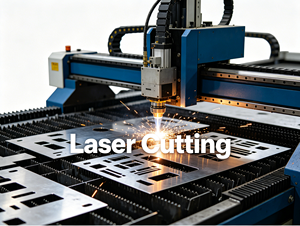
When analyzing total cost of ownership (TCO) and kerf quality, solid-state fiber laser technology demonstrates overwhelmingly superior beam absorption metrics on metallic substrates compared to CO2 gas lasers or mechanical plasma systems. The 1064 nm wavelength of fiber lasers exhibits an energy absorption rate 3 to 5 times higher in carbon steel, stainless steel, brass, and copper than the 10.6 μm wavelength of CO2 systems.
| Evaluation Parameter | Fiber Laser Plate Cutter (3kW-30kW) | High-Definition Plasma Cutter | Legacy CO2 Laser (2kW-6kW) |
|---|---|---|---|
| Process Wavelength / Medium | 1064 nm Ytterbium Fiber Solid State | Ionized Gas Electrical Arc | 10.6 μm Carbon Dioxide Gas Mixture |
| Electro-Optical Efficiency | 35% – 45% (Substantial Power Savings) | 10% – 15% | 8% – 12% |
| Heat Affected Zone (HAZ) | Extremely Narrow (<0.15 mm on 6mm CS) | Wide (1.5 mm – 3.0 mm) | Moderate (0.4 mm – 0.8 mm) |
| Kerf Width & Precision | 0.08 mm – 0.25 mm | ±0.03 mm Accuracy | 1.2 mm – 2.5 mm | ±0.5 mm Accuracy | 0.15 mm – 0.40 mm | ±0.08 mm Accuracy |
| Maintenance & Consumables | No internal mirrors/laser gas; 100,000hr diodes | High electrode & tip wear rates | Frequent beam alignment, optics & gas replacement |
| Operating Cost per Meter | Lowest (Fast cutting speed & low power draw) | Moderate to High (High consumable wear) | Highest (Optical maintenance & low efficiency) |
Tailored configuration matching for diverse manufacturing operational profiles, sheet metal shop demands, and heavy industrial output.
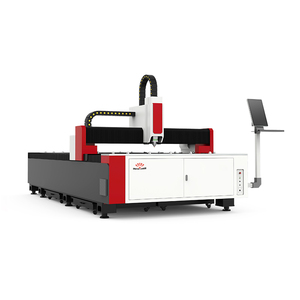
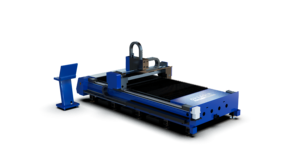
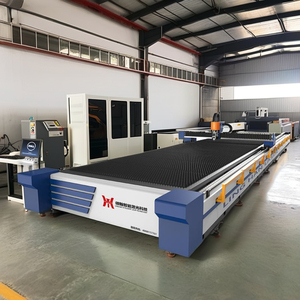
Designed for non-stop 24/7 continuous operation. Features an automated hydraulic parallel exchange table that swaps dual pallets within 15 seconds. Ideal for medium-to-thick carbon steel (up to 40mm) and stainless steel plate processing where beam-on time must be maximized.
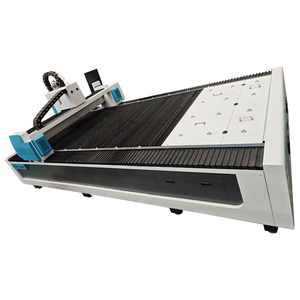
Engineered for job shops, electrical cabinet manufacturers, and high-precision prototyping. Combines a footprint-optimized, open-frame design with high-rigidity extruded aviation-aluminum gantries to achieve rapid axis acceleration up to 1.5G with zero frame deformation.
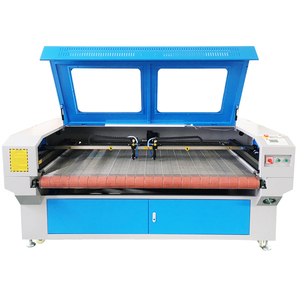
Specialized CO2 laser systems (100W–180W) configured for high-speed cutting and engraving of acrylic, MDF, wood, leather, and composite packaging materials. Features sealed glass laser tubes with digital water chilling systems for tight thermal tolerance control.
Key technological shifts shaping global metal fabrication procurement, supply chain risk management, and capital expenditure ROI over the next decade.
Global procurement strategies are rapidly shifting away from 4kW–8kW systems toward ultra-high power 20kW, 30kW, and 60kW fiber laser sources. High-wattage cutting dramatically shifts assist gas economics: 30kW systems can cut thick carbon steel (up to 25mm) using high-pressure compressed air or nitrogen bright-cutting protocols at speeds 300% to 500% faster than traditional oxygen cutting, reducing gas cost per part by over 60%.
Buyers are no longer procuring standalone cutting machines; they require complete Flexible Manufacturing Systems (FMS). Modern machine tenders incorporate automated tower storage, vacuum suction sheet loaders, unloader rake units, and automated sorting robotics. Integrating automated material handling eliminates manual loading downtime and elevates daily spindle-utilization rates from 45% to over 85%.
Breakthrough developments in dynamic optical beam shaping, machine vision diagnostics, and zero-dross processing algorithms.
Next-gen laser cutting heads dynamically alter beam energy distribution (BPP - Beam Parameter Product) and Rayleigh length in real time. The system automatically switches between a small spot size with high power density for rapid thin-sheet piercing and a wider, top-hat energy distribution profile for smooth, dross-free edge quality on thick plate.
AI-driven camera sensors monitor nozzle tip degradation, slag accumulation, and beam centering in real time. If concentricity deviates or spatter occurs, the internal system executes automatic nozzle cleaning, calibrates capacitive height sensing, and replaces damaged nozzles via automated multi-station changers.
Integrated sensor arrays constantly measure optical lens temperature, protective window thermal lensing index, chiller pressure stability, and motor torque profiles. Edge analytics detect micro-vibrations and optical degradation prior to component failure, eliminating unplanned downtime for remote overseas factories.
Combining world-class component supply chains, rigorous structural machining, and full international technical compliance.
Unlike trading assemblers who outsource frame welding to third-party metal shops, our manufacturing base performs 100% of structural steel bed welding in-house. Machine frames undergo high-temperature electric annealing furnaces to relieve residual stress, followed by precision machining on giant 12-meter gantry CNC milling centers. This guarantees that positioning accuracy of ±0.03mm remains stable over 10 years of continuous production.
To eliminate spare part bottlenecks and ensure overseas operational stability, every machine utilizes universally accessible premium components:
Every plate cutter exported undergoes a rigorous 72-hour continuous laser burn-in test, dynamic laser interferometer accuracy calibration, and full workpiece sample cutting verification matching the client's material drawing specifications.
Technical guidance and commercial clarity for procurement managers, structural engineers, and factory owners.
Match your wattage selection to your regular daily production thickness, not your occasional maximum plate thickness. For standard sheet metal fabrication up to 6mm mild steel and 3mm stainless steel, a 1.5kW to 3kW source delivers optimal ROI. If processing 12mm to 16mm mild steel continuously, select a 6kW source. For heavy structural plate (20mm to 40mm) or high-speed nitrogen bright-cutting of 10mm+ stainless steel, specify 12kW to 30kW laser sources.
A single-table machine requires the laser head to remain idle during sheet loading and unloading, resulting in an average beam-utilization rate of 45% to 55%. An exchange (dual pallet) table shuttles two beds in ~15 seconds, raising beam utilization to 80%-90%. In multi-shift operations or nested job-shop environments operating over 6 hours per day, the 25%–35% gain in daily part output typically recovers the cost difference of an exchange table within 4 to 8 months.
Yes. Modern solid-state fiber laser sources are engineered with multi-stage back-reflection isolators and optical beam dump protections. Unlike legacy CO2 lasers where back-reflected 10.6μm light could destroy output mirrors, 1064nm fiber beams are effectively absorbed by aluminum, brass, and copper when paired with correct auto-focus cutting head optics and nitrogen or high-pressure air assist gas.
Assist gas represents the largest variable operating cost. Oxygen (O2) is used for carbon steel cutting, producing an exothermic reaction that reduces required laser power but leaves an oxidized edge. Nitrogen (N2) acts as an inert shield for stainless steel and aluminum, producing a bright, weld-ready oxide-free edge at higher gas flow pressures. High-pressure compressed air (filtered to Class 1.2.1 oil/water purity) offers the lowest operating cost for thin-to-medium mild steel and stainless steel processing.
We provide full turnkey export support: sea-worthy barrier packaging, foundation engineering drawings, factory acceptance test (FAT) documentation, remote setup assistance, and comprehensive video/online training modules for CAM nesting software and CNC operation. On-site commissioning and operator training by factory-certified field engineers are available upon request.
Send us your DXF/DWG CAD drawings and material specifications. Our application engineers will calculate cycle times, provide assist gas consumption breakdowns, and return cut sample photos before you make a commitment.
