Direct OEM equipment engineered for high-precision manufacturing, metal fabrication, and robotic integration floor automation.
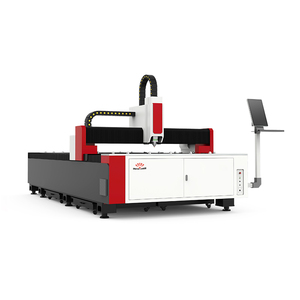
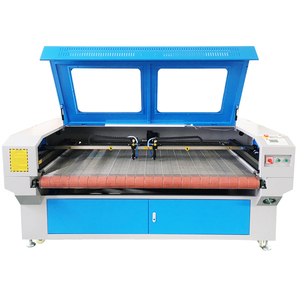
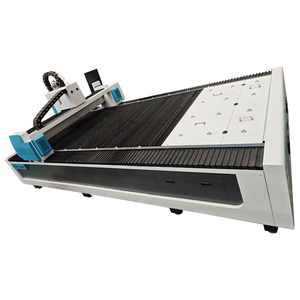
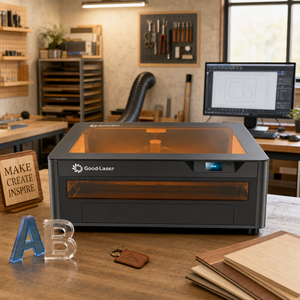
Why Tier-1 global procurement teams shortlist China’s leading industrial automation and robotic arm suppliers.
Every robot bed, gantry structural unit, and laser platform undergoes high-temperature electric furnace annealing to relieve internal mechanical stress. This guarantees geometric positional accuracy under continuous dynamic payloads up to 100 m/min travel speeds.
We integrate world-class core components: RV planetary reducers, Harmonic drives, EtherCAT digital bus communication cards, Yaskawa/Panasonic servo control loops, and IPG/Raycus fiber light sources. No white-label compromise on component longevity.
From 6-Axis articulated robotic arms and press-transfer automation to laser-assisted cutting and vision-guided marking systems, our engineers deliver end-to-end line integration—including safety interlocks, PLC programming, and customized End-of-Arm Tooling (EOAT).
The global manufacturing footprint has fundamentally shifted toward automated high-mix, low-volume production. As procurement executives evaluate suppliers under the search scope of "China Best Robot Arm Factories & Suppliers", technical diligence must extend beyond basic capital expenditure (CapEx) metrics. True operational efficiency lies in total cost of ownership (TCO), kinematic accuracy under full load, control architecture modularity, and seamless field integration.
Modern industrial robotics in China has expanded from traditional heavy-payload welding arms to highly sophisticated multi-axis collaborative robots (Cobots), linear gantry loaders, stamping press transfer robots, and integrated 3D laser processing cells. Navigating the factory vendor landscape requires a clear understanding of mechanical dynamics, reducer engineering, and control system open-source flexibility.
Selecting the optimal robot architecture directly dictates line throughput, cell footprint, and return on investment (ROI). The primary structural categories manufactured in leading Chinese automation clusters include:
Use the quantitative benchmark matrix below when auditing vendor spec sheets prior to factory acceptance testing (FAT):
| Robot / Automation Type | Payload Range | Repeatability | Drive Transmission | Primary Industrial Use Case |
|---|---|---|---|---|
| Heavy 6-Axis Articulated Arm | 20 kg - 500 kg | ±0.03 mm - ±0.08 mm | RV Reducer + Servo Motor | Automotive body welding, heavy casting handling |
| Precision Light Cobot Arm | 3 kg - 20 kg | ±0.01 mm - ±0.03 mm | Harmonic Drive + Absolute Encoder | Electronics testing, lab automation, machine tending |
| Linear Gantry Loader Cell | 50 kg - 2000 kg | ±0.05 mm | Helical Gear & Rack + Linear Guide | CNC lathe loading, heavy sheet metal shuttle |
| Stamping Press Transfer Robot | 10 kg - 80 kg | ±0.04 mm | Linkage Synchronous Servo Drive | Multi-stage press line blank transfer |
| Laser Processing Robotic Cell | 6 kg - 30 kg | ±0.02 mm | Direct Drive / Zero-Backlash Reducer | 3D profile laser cutting & pipe beveling |
The life expectancy of an industrial robot arm is predominantly governed by reducer wear. When sourcing from Chinese suppliers, procurement officers must demand certification regarding speed reducer heat treatments, tooth mesh tolerances, and torsional backlash limits (measured in arcminutes). High-end Chinese manufacturers now integrate proprietary or top-tier domestic/imported RV reducers that maintain backlash under 1 arcmin over 20,000 operating hours.
Furthermore, structural castings must undergo strict Non-Destructive Testing (NDT), such as ultrasonic or X-ray inspection, to eliminate micro-voids in aluminium alloy or nodular cast iron limbs. This prevents catastrophic fatigue failure under continuous cycle reversals.
Hardware without open control logic limits smart factory connectivity. Advanced Chinese robot factories now standardly provide EtherCAT, PROFINET, or Ethernet/IP bus communication protocols. This enables real-time synchronization with plant-level SCADA and MES networks.
With the integration of 2D/3D CCD camera vision systems and AI deep-learning algorithms, modern robot arms can execute random bin picking, automated part registration, seam tracking during laser welding, and inline dimensional measurement without physical mechanical jabbing fixtures.
Key technological shifts reshaping vendor evaluation criteria for overseas machinery buyers.
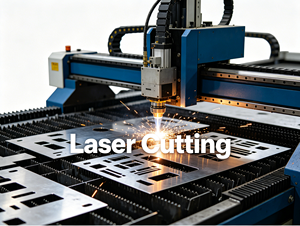
Traditional 2D sheet metal cutting is rapidly shifting toward 3D multi-axis robotic laser cutting cells. By mounting high-power fiber laser processing heads (1.5kW - 6kW) onto 6-axis articulated robot arms, fabricators can perform complex trimming, hole punching, and beveling on thermoformed automotive parts, hydroformed tubes, and structural steel framing in a single setup.
With global industrial electricity costs rising, energy consumption during rapid deceleration phases is a major operational factor. Next-generation Chinese robot controllers feature kinetic energy recovery systems (KERS) that feed braking power back into the factory grid, yielding up to 15-22% energy savings across multi-robot production lines.
Modern robot cells are no longer dedicated to a single part number. Automatic pneumatic and electrical tool changers allow a single robotic arm to switch seamlessly between vacuum grippers, mechanical clamps, arc welding torches, and laser marking heads within 3 seconds, enabling true agile manufacturing.
Top-tier suppliers now integrate IoT sensor packages directly into arm joint casings. By continuously monitoring temperature spikes, harmonic vibration signatures, and lubricant degradation, the controller predicts gearbox wear weeks before downtime occurs, scheduling maintenance proactively.
Direct answers from application engineers to help streamline your OEM supplier evaluation.
Mechanical repeatability should be verified using laser tracker measurements according to ISO 9283 standards. Ask your supplier for a full ISO 9283 calibration report generated under maximum payload and maximum reach conditions at 100% rated speed. Top suppliers will readily provide dynamic trajectory error graphs and thermal drift profiles.
A single-table configuration requires the machine head to remain idle during material loading and unloading. An exchange table (dual pallet shuttle system) automatically swaps processed parts for a fresh metal sheet in 10-15 seconds while cutting continues inside the enclosure. Dual pallet systems recover 20% to 35% more productive spindle-on time per shift, making them the standard choice for multi-shift production floors.
Yes. Modern 1064 nm fiber laser sources incorporate active back-reflection protection isolators. Combined with specialized laser head optics and precise gas flow (Nitrogen or Oxygen assist), robotic fiber laser systems reliably cut and weld highly reflective alloys—including aluminium, brass, copper, and galvanized steel—without risking optical damage to the laser cavity.
Leading Chinese exporters supply complete technical dossiers: CE / UL compliance certificates, foundation engineering drawings, detailed electrical schematics, PLC ladder diagrams, spare parts manuals, and pre-shipment Factory Acceptance Test (FAT) videos. On-site commissioning support, operator training, and remote diagnostic assistance via encrypted VPN routers are standardly provided.
Total Cost of Ownership (TCO) includes initial equipment CapEx, freight/customs duties, installation/tooling cost, annual power consumption, consumable spare parts (protective windows, nozzles, grease), and operator training. Payback is calculated by dividing total turnkey investment by annual labor cost savings plus throughput yield gains (reduced scrap rate + higher operating hours). Typical payback ranges from 8 to 18 months depending on local labor costs.
Consult with our senior application engineers to receive custom layout drawings, part sample testing, cycle-time analysis, and direct factory pricing for your automation project.
