Direct factory-engineered laser cutting, welding, and engraving systems deployed across automotive, aerospace, structural steel, and precision fabrication industries globally.
An authoritative analysis of technological shifts, supply chain centralization, and engineering benchmarks defining premier OEM laser exporters.
The industrial laser machinery ecosystem in China has undergone a structural revolution over the past decade. Evolving beyond baseline 2D flatbed cutting, China's top tier-1 laser suppliers now engineer sophisticated 5-axis 3D dynamic spatial cutting systems, robotic laser welding cells, and automated material handling lines. Sourcing high-power fiber and CO2 laser machinery from China provides global enterprises with a distinct competitive advantage: access to industrial-grade kinetic components, mature optic supply chains, and unprecedented cost-to-performance metrics.
Top-tier Chinese exporters adhere to rigorous international safety and quality standards, including CE Mark, FDA Accession Numbers, and ISO9001:2015 quality management protocols. By integrating stress-relieved gantry beds machined on giant 5-face CNC milling centers, positioning accuracy is locked to within ±0.01mm to ±0.03mm. Procurement directors must evaluate suppliers based on frame structural stability, thermal dissipation design, optic seal integrity, and real-time CNC path interpolation algorithms.
Selecting the optimal optical resonator, beam deliver system, and kinematic platform based on substrate physics and production volume.
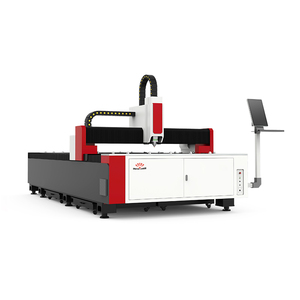
Utilizing ytterbium-doped optical fibers, these systems generate 1064nm wavelength beams delivered directly through flexible fiber cables. Ideal for thin-to-ultra-thick sheet metal processing (mild steel up to 40mm, stainless up to 35mm), fiber lasers eliminate complex mirror alignment while providing zero beam maintenance and exceptional speed on thin-gauge materials.
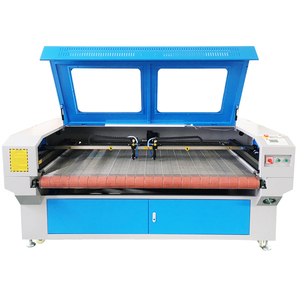
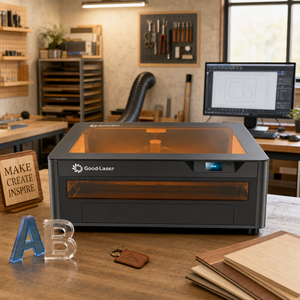
Operating at a 10.6µm wavelength, gas-tube CO2 lasers remain the gold standard for non-metallic substrates including acrylic, timber, MDF, leather, textiles, and organic polymers. Enclosed desktop models offer sub-0.01mm micro-step resolution for intricate architectural modeling, signage, and precision seal manufacturing.
Designed for hydroformed automotive parts, stamped body panels, and structural tubing, 3D laser systems utilize dual-rotary infinite-rotation cutting heads coupled with 6-axis robotic arms or gantry kinematics. They execute beveling, countersinking, and complex 3D profile trimming in a single setup.
| Laser Source Type | Wavelength | Optimal Substrates | Max Thickness | Auxiliary Gas Required | Maintenance Profile |
|---|---|---|---|---|---|
| Fiber Laser (1.5kW - 3kW) | 1064 nm | CS, SS, Aluminium, Brass | Up to 16 mm Mild Steel | N₂, O₂, Compressed Air | Ultra-Low (Solid-State) |
| High-Power Fiber (6kW - 15kW+) | 1064 nm | Heavy Plate Steel, Alloys | Up to 40 mm Mild Steel | High-Pressure N₂ / O₂ | Ultra-Low (Modular Diodes) |
| CO2 Glass/RF Tube (100W - 180W) | 10.6 µm | Acrylic, MDF, Wood, Leather | 20 mm Acrylic / 12 mm Wood | Air Assist (Blower) | Periodic Tube Replacement |
| Handheld Laser Welder (1.5kW - 3kW) | 1064 nm | SS, Carbon Steel, Aluminium | 8 mm Single-Pass Weld | Argon / Nitrogen Shielding | Low (Replaceable Nozzle/Window) |
Evaluating initial capital expenditure against long-term operational costs to maximize Return on Investment (ROI).
When acquiring industrial laser cutting systems from Chinese suppliers, procurement officers must look beyond FOB machine pricing. Total Cost of Ownership (TCO) over a 5-year lifecycle is heavily governed by electrical efficiency, assist gas selection, optical consumable wear, and factory downtime.
Anticipating technological disruptions in ultra-high power scaling, AI autonomous nesting, and robotic automation.
The industrial laser landscape is moving rapidly toward higher power density and autonomous lights-out manufacturing. Sourcing teams should align with suppliers actively developing the following next-generation capabilities:
The shift from plasma and oxy-fuel to ultra-high-power fiber lasers is accelerating. 30kW+ systems allow air-assisted bright cutting of medium carbon plates up to 30mm thickness at double the feed rates, drastically lowering cost-per-part in heavy engineering and shipbuilding.
Integrated machine vision cameras automatically scan residual remnant sheets, optimizing nesting layouts in real-time. Closed-loop sensor monitoring detects plasma cloud formation and nozzle slag buildup, automatically adjusting feed speed and nozzle distance on the fly.
Standalone laser cutters are increasingly replaced by automated cells featuring dual exchange tables, gantry robot loaders, press transfer arms, and 3-in-1 handheld laser welding/cleaning systems for complete end-to-end component fabrication.
Ensuring mechanical accuracy, beam stability, and long-term durability through certified inspection protocols.
Top Chinese suppliers implement standardized quality verification procedures before machine packaging and export dispatch. Buyers are encouraged to demand documented test reports covering the following key verification metrics:
Renishaw Laser Interferometer Testing: Linear positioning error and pitch/yaw angles are measured across the full travel stroke (X/Y axis) to guarantee positioning accuracy $\le 0.03\text{ mm}$.
Ballbar Circularity Test: Dynamic diagonal accuracy and servo tuning are validated under high acceleration (1.0G - 1.5G) to prevent out-of-round hole cutting.
Resonator Full-Power Stress Test: Fiber lasers undergo 24 to 72 hours of continuous full-power firing to verify power output stability and laser diode temperature control.
Dust-Free Cleanroom Assembly: Cutting heads and beam collimators are assembled in Class 100 dust-free environments to eliminate optical contamination and lens burn-through.
Technical and commercial guidance for overseas buyers sourcing laser machinery from China.
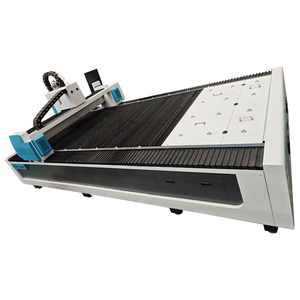
A single table laser cutter utilizes one fixed working bed, requiring the laser head to sit idle during manual loading and unloading of sheet metal. An exchange table (dual pallet shuttle) machine utilizes a motorized chain or hydraulic system to swap two beds in 10 to 18 seconds. While the machine is cutting on pallet A inside the enclosure, the operator safely unloads finished parts and loads a new sheet on pallet B. Exchange tables increase total shift output by 30% to 50%, making them essential for high-volume production lines.
Power selection should be dictated by your primary production material rather than occasional maximum thickness. As a general industry benchmark: 1.5kW-3kW efficiently processes mild steel up to 16mm and stainless up to 8mm; 6kW handles mild steel up to 22mm and stainless up to 14mm with rapid processing speeds; 12kW to 15kW+ is recommended for heavy plate structural steel (25mm-40mm) or high-speed nitrogen bright cutting of thin gauges.
Yes. Modern fiber laser sources operating at 1064nm wavelength absorb significantly better in non-ferrous metals compared to older CO2 lasers. Leading Chinese laser manufacturers integrate optical isolators and hardware back-reflection protection systems within Raycus, Max, or IPG resonators, enabling safe, continuous processing of copper, brass, aluminium, and titanium sheets without damaging internal diode modules.
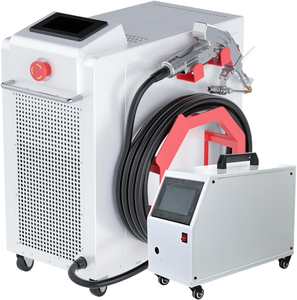
A 3-in-1 handheld laser system combines laser welding, seam cleaning, and light cutting in a single portable unit. Utilizing a wobble welding head, it bridges wider fit-up gaps while producing narrow, low-heat-input welds on stainless steel and aluminium. Laser welding speeds are up to 4x to 10x faster than traditional TIG welding, drastically reducing distortion and eliminating the need for post-weld grinding.
The choice of assist gas depends on edge finish requirements: Oxygen (O₂) chemically reacts with mild steel, creating an exothermic reaction suitable for cutting thick plate at lower gas pressures, though it leaves a thin oxide layer. Nitrogen (N₂) acts as a inert cooling gas, blowing molten metal away without oxidation to produce clean, bright edges ready for paint or welding on stainless steel and aluminium. Compressed air can also be filtered and compressed to 14-16 bar as a low-cost alternative for thin sheet steel.
Export-grade laser machinery undergoes multi-stage seaworthy packaging. The machine frame is coated with anti-rust oil, wrapped in thick moisture-proof vacuum foil, secured with desiccant packs, and bolted to a heavy-duty steel base inside fumigated wooden crates. Enclosed high-power units are loaded into 40ft Open Top (OT) or Flat Rack containers with heavy-duty tension strapping.
Top manufacturers provide a 2 to 3-year factory warranty covering core components including the laser resonator source, CNC system, and servo drives. Overseas buyers receive remote software diagnostics via TeamViewer/EtherCAT interfaces, video troubleshooting support, and rapid express dispatch of replacement parts. On-site commissioning and operator training engineers can also be deployed globally upon request.
Connect directly with our senior application engineers to receive customized machine recommendations, CAD nesting throughput estimates, and competitive direct factory pricing.
