Direct factory supply of high-precision CNC fiber laser cutters, enclosed CO2 engravers, automated tube processors, and multi-functional laser welding workstations engineered to European quality standards.
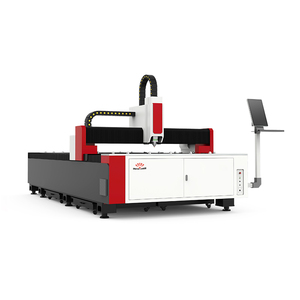
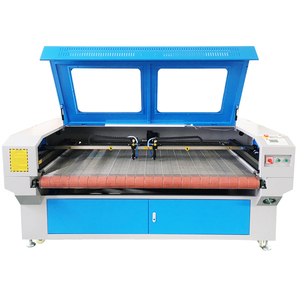
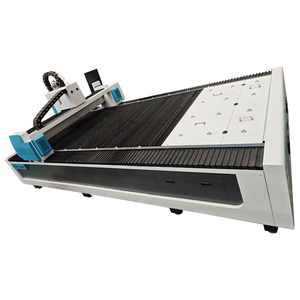
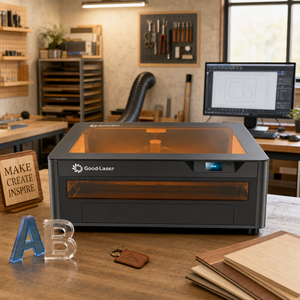
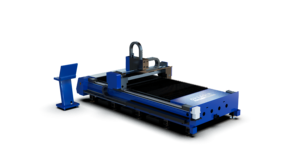
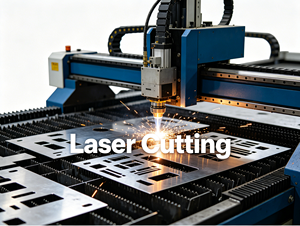
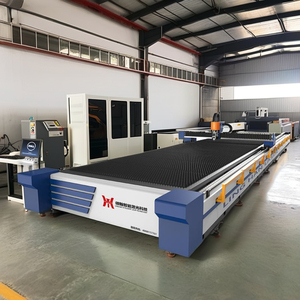
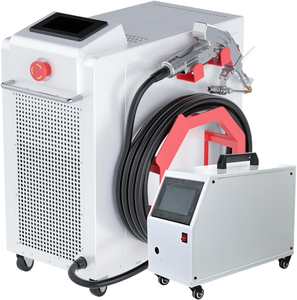
Select machinery buyers, structural fabricators, and automotive Tier-1 suppliers face an increasingly complex global procurement landscape. China has emerged as the global nexus for CNC fiber laser manufacturing, commanding over 70% of global optical machine tool shipments. However, evaluating OEM manufacturers requires deep technical discernment beyond surface-level power specifications. This comprehensive whitepaper breaks down the physics of beam quality, machine tool structural mechanics, total cost of ownership (TCO), and critical procurement parameters for international engineering teams.
SEO & Procurement Insight (Information Gain): When evaluating Chinese CNC laser suppliers, machine bed thermal stability, stress-relief annealing protocols, and CNC servo response latency dictate 10-year operational ROI far more than raw laser source wattage alone.
The transition from CO2 gas lasers (10.6 µm wavelength) to solid-state Ytterbium fiber lasers (1.064 µm wavelength) represents a fundamental shift in optical energy delivery. The 10-fold shorter wavelength of fiber lasers yields a significantly higher photon absorption rate across ferrous and non-ferrous alloys. For instance, cold-rolled carbon steel absorbs less than 12% of a CO2 beam at room temperature, whereas it absorbs over 40% of a fiber laser beam. This dramatically improves energy transition efficiency, enabling 3kW fiber systems to match or exceed the cutting speeds of legacy 6kW CO2 systems in thin-to-medium gauge sheet metals.
| Performance Metric | Fiber Laser (1.064 µm) | CO2 Laser (10.6 µm) | Impact on Procurement & Operation |
|---|---|---|---|
| Wall-Plug Electrical Efficiency | 35% - 50% | 8% - 12% | Fiber reduces power consumption by up to 70%, drastically lowering plant utility overhead. |
| Reflective Metal Processing | Excellent (Copper, Brass, Al) | Poor / High Back-Reflection Risk | Fiber enables safe, high-speed cutting of non-ferrous alloys with zero optical mirror damage. |
| Optical Beam Delivery | Flexible Fiber Optic Cable | Internal Mirrors & Bellows | Eliminates beam alignment maintenance, laser gas replenishment, and mirror cleaning routines. |
| Maint. Interval (Laser Engine) | > 100,000 Hours (MTBF) | ~ 15,000 Hours (Tube / Gas) | Fiber laser sources require near-zero internal maintenance over a 10-year operating lifespan. |
High-power CNC fiber lasers operate at extreme acceleration dynamics—often reaching up to 1.5G to 2.0G vector acceleration with rapid traverse speeds of 120 m/min. Under these mechanical forces, low-cost un-annealed steel tube frames suffer rapid structural fatigue, weld joint cracking, and irreversible thermal warping caused by residual ambient shop floor temperatures. Premium Chinese manufacturers utilize heavy plate-welded bed structures subjected to high-temperature furnace annealing at 600°C for 24 hours, followed by controlled slow cooling inside the furnace. This complete stress-relief process guarantees zero bed deformation over a 10-year operational horizon, preserving positional accuracy within ±0.03mm.
Operating costs for fiber lasers are dominated by assist gas selection rather than power consumption. Understanding gas dynamics is vital for calculating production cost per part:
Oxygen (O2) Exothermic Cutting: O2 acts as a chemical reactant when cutting carbon steel. The oxidation reaction generates supplementary thermal energy, allowing lower laser power (e.g., 3kW) to slice through thick carbon steel plate up to 20mm. However, O2 cutting leaves a dark iron oxide scale on the cut edge that requires mechanical deburring or chemical etching before powder coating or welding.
High-Pressure Nitrogen (N2) Vaporization Cutting: N2 serves purely as a physical shield and melt-ejection medium. It prevents oxidation, leaving a silver, mirror-bright cut edge ready for immediate welding without post-processing. Nitrogen cutting demands significantly higher pressure (16-24 bar) and higher laser wattage (6kW to 15kW+), increasing gas consumption costs by 3x to 5x compared to oxygen.
High-Pressure Clean Compressed Air (16-20 bar): Air cutting (78% N2, 21% O2) provides an optimal economic compromise for stainless steel and mild steel up to 6mm thickness. Operating with a dedicated screw compressor equipped with multi-stage oil-water filters cuts assist gas operating expense by over 80% compared to bottled or liquid nitrogen gas.
Combining Tier-1 global component integration with rigorous internal quality control standards to deliver heavy-duty machine tools engineered for continuous operation.
Built with high-tensile carbon steel plate utilizing interlocking mortise-and-tenon structural welding. High-temperature 600°C furnace stress relief prevents thermal and mechanical distortion under continuous 2G acceleration.
Equipped exclusively with world-class optical subsystems: Raycus/MAX/IPG fiber laser generators, Precitec or Raytools auto-focus cutting heads, and Shimpo/Schneider servo systems for uncompromised reliability.
All machine platforms undergo 100% factory burn-in testing, strict laser safety interlock audits, 24-hour continuous burn cutting trials, and carry certified CE, ISO 9001, and FDA laser safety documentation for seamless global import.
Pre-integrated with industry-standard Cypcut or Hypcut CNC control suites. Includes automated CAD lead-in optimization, common-line cutting algorithms, fly-cutting routines, and automatic collision avoidance algorithms.
Beyond standard flatbed cutting, our engineering team designs custom Special Purpose Machines (SPM), including auto-loading coil-fed blanking lines, gantry robotic pick-and-place, and multi-axis tube laser processing cells.
Integrated cloud-based remote diagnostic hardware allows our factory application engineers to troubleshoot CNC parameter issues, update software firmware, and inspect optical alarms anywhere in the world within hours.
Industrial manufacturing is entering a new paradigm characterized by extreme laser power scaling, automated smart factory integration, and green energy optimization. Sourcing professionals planning capital expenditure for 2025 and beyond must account for these key technological shifts:
The market share of ultra-high-power fiber lasers (20kW, 30kW, and up to 60kW) is expanding rapidly. Previously, heavy steel plate exceeding 25mm thickness was the exclusive domain of oxy-fuel flame cutting or high-definition plasma cutting. Today, a 30kW fiber laser cuts 40mm carbon steel plate at speeds 4x to 6x faster than plasma, while consuming zero consumable electrodes and delivering a perpendicular cut edge with minimal kerf taper. As laser source costs continue to decline, high-power fiber lasers are rapidly replacing plasma cutters across shipbuilding, structural steel bridge construction, and heavy earthmoving equipment manufacturing.
Stand-alone CNC laser cutting machines are increasingly viewed as bottlenecks if material loading and unloading remain manual. Modern procurement strategies mandate fully automated exchange tables paired with tower material storage systems (FMS - Flexible Manufacturing Systems). Automatic sheet metal loading vacuum grippers and unloader rake fingers reduce non-cutting idle shuttle time from minutes to under 35 seconds, enabling true 24/7 un-attended "lights-out" automated sheet processing.
In the light fabrication, enclosure, and sheet metal ducting sectors, handheld fiber laser welding machines (1.5kW to 3kW) are aggressively replacing traditional TIG (GTAW) and MIG (GMAW) welding. Handheld laser welders perform 4x to 10x faster than TIG welding, generate negligible heat-affected zones (HAZ) without thermal distortion, and require minimal operator skill. Furthermore, modern handheld units integrate 3-in-1 capability—allowing operators to instantly switch between wire-feed welding, rust/paint cleaning, and light metal slitting with a quick nozzle change.
Answers to essential technical and commercial questions compiled by our senior laser application engineers.
Consult with our senior CNC laser application engineers today. Send us your CAD drawings or part specifications for a free material sample test cut, nesting cycle time calculation, and direct factory quotation.
Send an Inquiry