Navigating the Chinese CNC machine tool landscape requires deep domain expertise in static rigidity, thermal expansion control, motion dynamics, and micro-precision spindle engineering. This industry benchmark report analyzes premier 3-axis, 4-axis, and 5-axis vertical milling centers alongside OEM component fabrication capabilities.
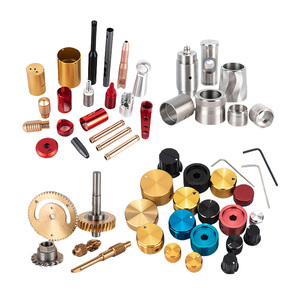
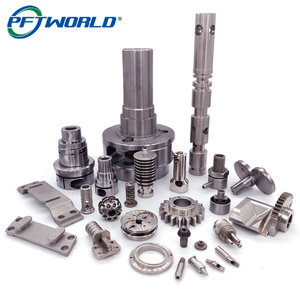
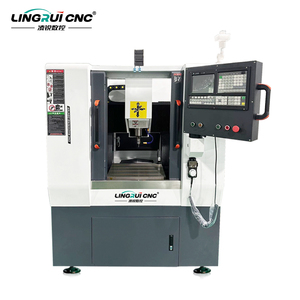
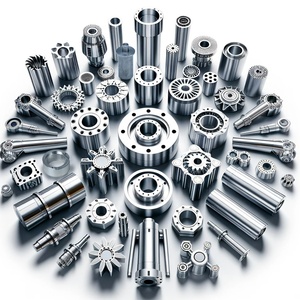
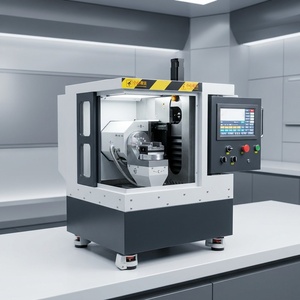
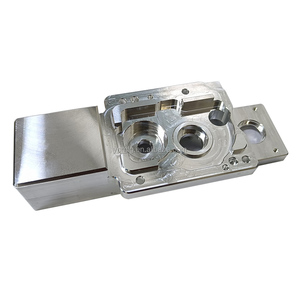
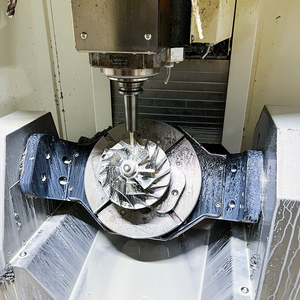
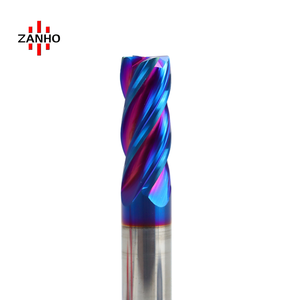
Leading Chinese CNC mill factories have evolved from low-cost assembly lines to state-of-the-art engineering hubs. Building competitive industrial milling centers requires uncompromising structural integrity, premium component integration, and advanced quality assurance protocols. Our manufacturing facilities leverage Meehanite cast iron beds, laser interferometer dynamic positioning, and closed-loop temperature control to deliver world-class machine tools and custom parts.
To eliminate high-frequency chatter during heavy metal removal, machine structures are subjected to Finite Element Analysis (FEA) and artificial aging heat treatment to relieve residual casting stress. Whether manufacturing compact desktop 5-axis machines with RTCP (Rotational Tool Center Point) or high-rigidity industrial VMC units like the LK220T, structural rigidity under peak dynamic torque remains our primary engineering objective.
Complete flexibility in multi-axis kit engineering. Custom tolerances down to ±0.005mm for medical instruments, aerospace housings, and high-frequency communication parts.
Advanced kinematics featuring Rotational Tool Center Point (RTCP) management. Enables seamless 3D contour milling of impeller blades and complex mold inserts with single setup efficiency.
Integrated tool system support featuring HRC65 solid carbide end mills with nano-composite TiSiN coatings, optimized for dry cutting hardened steel die molds and titanium alloys.
Global procurement teams are shifting away from evaluating vendor proposals purely on initial capital expenditure (CAPEX). Modern machine tool sourcing strategy focuses heavily on Total Cost of Ownership (TCO), multi-axis versatility, energy conservation, and automated supply chain resilience.
A. Transition from 3-Axis to 5-Axis "One-Done" Machining: Modern B2B buyers are aggressively adopting 5-axis vertical machining centers (VMC). By executing complex multi-sided machining operations in a single setup, manufacturers eliminate multi-fixture setup errors, dramatically reduce work-in-progress (WIP) queue times, and lower labor cost per part by up to 40%.
B. On-Demand Prototyping to Low-Volume Scalability: The traditional barrier between prototype development and mass manufacturing has dissolved. Sourcing platforms now mandate suppliers to support an MOQ of 1 piece for rapid prototyping while preserving seamless scalability to high-volume production under strict ISO 9001 and IATF 16949 quality frameworks.
C. Green Machining & Energy-Efficient Spindles: Energy efficiency has moved from a secondary metric to a core procurement requirement. Modern CNC mills utilize regenerative servo braking, intelligent variable-frequency coolant pumps, and micro-lubrication (MQL) systems that cut fluid consumption by 85% compared to flood cooling.
Technical reference guide comparing machine categories, precision metrics, and application best-fits.
| Machine Platform | Kinematic Configuration | Positional Accuracy | Spindle Speed / Torque | Target Application |
|---|---|---|---|---|
| Desktop 5-Axis Mill | 5-Axis Simultaneous (RTCP) | ±0.010 mm | 24,000 RPM / High-Speed | Micro-parts, Dental, Prototype R&D |
| LK220T Small VMC | 3+2 / 5-Axis Vertical | ±0.005 mm | 12,000–15,000 RPM Direct-Drive | Precision Electronics, Optics, Auto Parts |
| Fully-Enclosed 3-Axis Mill | 3-Axis Box-Way / Linear | ±0.008 mm | 10,000 RPM Belt / Inline | General Hardware, Small Enclosures, Molds |
| Custom OEM Machined Parts | Multi-Tasking Turning-Milling | Down to ±0.005 mm | Tailored Per Part Drawing | Aerospace Hydros, Medical Implants, Telecom |
| HRC65 Carbide End Mills | Micro-Grain Solid Carbide | h6 Tool Shank Spec | Optimized for High-Speed Hard Cut | Die & Mold Steels (HRC45–65), Inconel |
China's CNC machine tool manufacturing sector is undergoing rapid technological convergence driven by artificial intelligence, IoT connectivity, high-speed spindle technology, and advanced materials engineering. Buyers seeking long-term competitive advantages should prioritize vendors integrating the following technical innovations:
1. Thermal Displacement Real-Time Compensation: Thermal expansion of spindle shafts and machine column castings remains a major root cause of dimensional drift during long production cycles. Advanced Chinese mills integrate embedded thermal sensors wired to CNC control algorithms that calculate dynamic thermal growth real-time, executing sub-micron offset adjustments along the Z-axis instantly.
2. RTCP (Rotational Tool Center Point) Kinematics: In 5-axis continuous milling, the tool tip position relative to the workpiece must remain constant even as rotary axes pivot dynamically. RTCP technology compensates for real-time vector angular shifts, guaranteeing flawless surface finish on complex sculptured surfaces without requiring offline CAM post-processor re-calculations.
3. Smart Diagnostics & Predictive Spindle Monitoring: Industrial IoT gateways monitor spindle vibration frequencies, bearing temperatures, and servo motor electrical draw. By utilizing FFT (Fast Fourier Transform) vibration signature analysis, machines automatically signal operator warnings prior to tool failure or spindle bearing degradation, eliminating unplanned downtime.
4. High-Hardness Dry Milling Tooling (HRC65+): The rapid advancement of ultra-fine grain solid carbide substrate cutting tools coated with nano-structured physical vapor deposition (PVD) films allows direct milling of hardened die steels up to HRC65 without electrical discharge machining (EDM). This clean cutting technology minimizes production cycles by up to 60%.
When selecting a Chinese CNC machine manufacturer or custom milling service partner, supply chain managers must perform rigorous technical audits. Evaluating production facilities requires verifying both hardware capabilities and quality management workflows:
Clear engineering answers regarding machine selection, custom OEM parts fabrication, logistics, and quality assurance.
A 3-axis mill operates along X, Y, and Z linear directions, suitable for flat plate geometries, simple slots, and single-sided features. A 4-axis machine adds a rotary axis (A or B axis), enabling cylindrical milling and multi-sided machining without manual repositioning. A 5-axis mill adds two rotary axes (such as A/B or B/C), allowing simultaneous movement to machine complex 3D organic surfaces, undercuts, and aerospace impellers in a single clamping setup.
Micro-precision accuracy is achieved through a multi-tiered quality control system: 1) Using ultra-precise C1/C3 grade ground ball screws and high-rigidity linear roller guideways; 2) Assembling spindles in climate-controlled cleanrooms; 3) Implementing optical linear scale closed-loop feedback systems; 4) Calibrating dynamic movement via Renishaw laser interferometers; 5) Performing full 3D CMM inspection on finished components.
Without RTCP, any rotation of the table or spindle head causes the tool tip to swing away from the target workpiece contour, requiring complex offline CAM recalculation for every minor pivot. RTCP enables the CNC controller to automatically shift linear axes in real-time, maintaining precise tool tip contact point velocity and vector alignment, ensuring high dimensional accuracy on curved surfaces.
HRC65 end mills are specifically engineered for machining ultra-hard materials including hardened alloy steels, tool steels (D2, H13, SKD61), stainless steels, heat-resistant superalloys (Inconel, Titanium Grade 5), and cast irons. They permit direct high-speed hard milling, eliminating the need for slow secondary EDM (Electric Discharge Machining) processes.
Rapid prototype orders (MOQ 1 piece) are typically processed and shipped within 3 to 7 business days, depending on geometric complexity and surface finish requirements (anodizing, passivation, PVD coating). Mass production batches generally require 2 to 4 weeks, inclusive of complete DFM analysis, fixture design, CMM sampling, and international sea/air freight packaging.
All machinery exported overseas undergoes export-grade maritime protective packaging: key bright metal surfaces are coated with anti-rust oil, wrapped in vacuum-sealed moisture barrier foil with industrial desiccant bags, and enclosed inside heavy-duty, fumigated IPPC-certified wooden crates with reinforced internal vibration dampening blocks.
Whether you require complete industrial VMC machine tools, compact desktop 5-axis centers, or high-precision custom OEM parts manufacturing, our engineering team delivers tailored technical solutions backed by rigorous ISO quality standards.
Contact Us