Explore our flagship lineup of high-rigidity CNC routers, heavy-duty fiber laser cutters, CO2 engravers, and automated welding equipment engineered for 24/7 continuous industrial production.
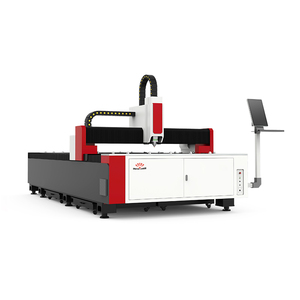
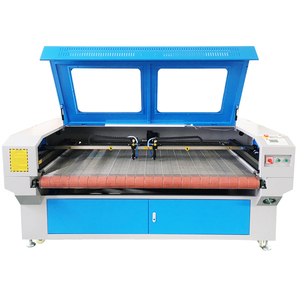
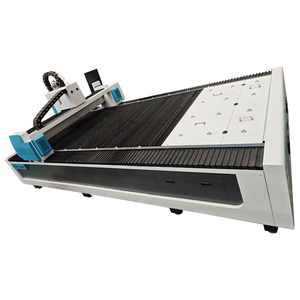
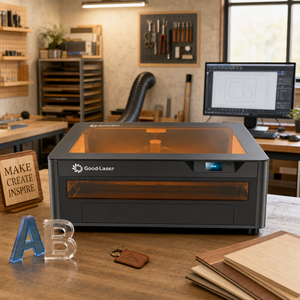
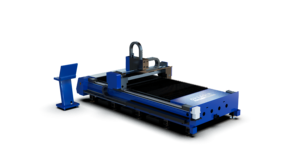
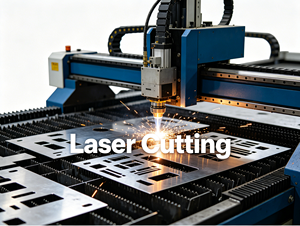
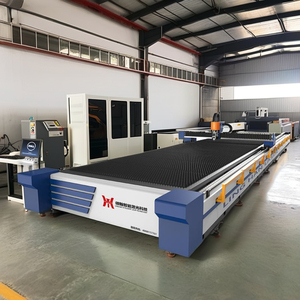
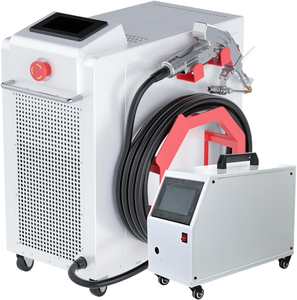
In modern automated fabrication, selecting a industrial-grade CNC router or fiber laser machine from China requires rigorous technical scrutiny beyond surface specifications. China's top CNC router manufacturers have evolved from low-cost assembly workshops into advanced original equipment manufacturers (OEMs) that integrate state-of-the-art gantry kinematics, servo loop dynamics, finite element analysis (FEA) optimized steel frames, and intelligent CNC controllers. Understanding the structural integrity, mechanical resonance damping, and optical drive technologies separates high-return capital investments from rapid accuracy degradation.
The fundamental benchmark of a top-tier CNC router or laser cutting platform lies in its bed structure. Leading Chinese manufacturers employ thick-walled heavy tubed steel or monolithic cast-iron beds. The frame undergoes five-sided CNC pentahedron milling in a single setup to ensure absolute parallelism between guide rails and perpendicularity across drive axes.
Vibration-dampened frame structure prevents micro-chatter during high-speed heavy cutting of hardwood, aluminium billets, or thick steel plates.
Precision-ground German-standard helical gear racks deliver continuous tooth engagement, reducing backlash and expanding load capacity under heavy axial forces.
Absolute encoder AC servomotors (Yaskawa/Delta/Schneider) continuously provide positional feedback, eliminating lost steps during fast acceleration vectors.
Matching process capabilities to material substrates is vital for optimizing unit cost and throughput. Below is an engineering comparison matrix for technical procurement evaluation.
| Technology Platform | Primary Substrates | Optimal Thickness Range | Processing Precision | Operating Cost Factor |
|---|---|---|---|---|
| High-Speed ATC CNC Router | Solid Wood, MDF, Acrylic, Plastics, Aluminium, Composites | 1.0mm - 100mm | ±0.03 mm | Low (Tooling Wear & Spindle Power) |
| Low-Power CO2 Laser (100W-180W) | Acrylic, Wood, Leather, Fabric, Rubber, Thin Plastics | 0.5mm - 20mm | ±0.01 mm | Low (Laser Tube + Electricity) |
| Medium Fiber Laser (3kW-6kW) | Carbon Steel, Stainless Steel, Brass, Copper, Aluminium | 0.5mm - 16mm | ±0.02 mm | Medium (N2/O2 Assist Gas + Power) |
| Ultra-High Fiber Laser (12kW-30kW) | Heavy Metal Plate, Structural Steel, Marine Grade Alloys | 1.0mm - 40mm | ±0.03 mm | High-Efficiency Output / Lower Per-Part Cost |
As global industry transitions toward smart manufacturing, procurement strategy must anticipate technological shifts. Leading Chinese factories are incorporating advanced automation modules into standard machinery formats:
Modern production environments demand multi-process versatility. Future-ready CNC routers feature multi-spindle arrays paired with linear or carousel Automatic Tool Changers (12-24 slots), oscillating knife cutters for gaskets, and CCD vision camera systems for printed graphic registration. This hybrid versatility eliminates manual material handling between workstation cells.
Tier-1 Chinese manufacturers now embed IoT controllers equipped with cloud-based diagnostic telemetry. System sensors monitor spindle temperature, rail lubrication pressure, vibration harmonics, and laser beam stability in real time. Remote engineering teams can troubleshoot parameter drift or update firmware across global borders instantly.
Minimizing machine idle time is the key driver for ROI. Auto-feeding CNC systems pull raw sheet stock from coils or automated vacuum loaders while simultaneously unloading processed parts. Shuttle-table (dual pallet) fiber lasers maintain non-stop laser-on time by shuttling raw material in while finished parts exit.
Energy conservation is a major criterion in factory audits. Intelligent vacuum beds now incorporate zone-switching solenoids that direct suction exclusively to active cutting regions, reducing vacuum pump power consumption by up to 40% while preserving maximum holding force on small workpieces.
Evaluating suppliers requires distinguishing genuine manufacturers from trading intermediaries. Overseas buyers should insist on verified documentation and technical proof during factory audits:
Our manufacturing ecosystem integrates end-to-end design, stress-relieved fabrication, precision assembly, and international technical support. We build machinery engineered for longevity, high throughput, and seamless integration into modern factory floors.
ISO 9001 and CE certified assembly processes guarantee every machine satisfies strict safety, optical alignment, and mechanical tolerance standards.
Special Purpose Machinery (SPM) engineered around your workflow—including gantry robot loading, auto polishing units, and stamping press transfer lines.
Comprehensive export logistics, seaworthy wooden box packaging, foundation engineering drawings, operator nesting software training, and lifetime remote service.
The choice depends primarily on material composition and edge profiling requirements. CNC Routers are ideal for 3D carving, pocket milling, beveling, and cutting non-ferrous materials such as wood, MDF, acrylic, plastics, and thick aluminium plates (over 10mm). Fiber Laser Cutters excel at high-speed 2D sheet metal cutting (carbon steel, stainless steel, brass, copper) with ultra-narrow kerf widths and zero mechanical cutter wear. If your production involves non-metallic substrates or 3D pocketing, choose a CNC Router; for sheet metal blanking, a Fiber Laser is superior.
For solid wood, heavy MDF nesting, or aluminum milling, specify an Italian HSD or high-grade Chinese HQD 9.0kW (or larger) air-cooled automatic tool changer (ATC) spindle with ISO30 or HSK63F tool holders, operating at 12,000 to 24,000 RPM. Ceramic bearings are highly recommended for superior thermal stability and extended operational lifespan under continuous axial load.
Oxygen (O2) acts as an exothermic reactive gas, primarily used for thick carbon steel; gas pressure is low (0.5 - 2.5 bar), keeping hourly gas costs minimal. Nitrogen (N2) is an inert shielding gas used for oxide-free bright edge cutting on stainless steel and aluminium. Nitrogen requires high pressure (14 - 22 bar), resulting in significantly higher hourly gas expenditure. Many modern factories utilize high-pressure air compressor systems with dedicated filtration and drying units to replace Nitrogen for thin stainless sheet cutting, reducing assist gas operational costs by up to 70%.
Welding steel structures introduces heavy internal thermal stress. If a raw frame is machined without heat treatment, residual stresses will naturally release over 6 to 18 months, causing the gantry bed to twist, bow, or sag by fractions of a millimeter. This structural deformation permanently destroys positioning accuracy and leads to premature linear guide rail wear. High-temperature annealing in a electric furnace at 600°C+ stabilizes the crystal structure of the steel frame for lifelong geometric stability.
Every machine is dispatched with comprehensive foundation drawings, electrical schematics, utility requirement specifications, and step-by-step video tutorials. For overseas installations, we provide remote commissioning support via dedicated engineering sessions, camera telemetry assistance, and pre-configured CAM nesting profiles. On-site dispatch of experienced service engineers for machine installation, system calibration, and operator safety training is available globally upon request.
Get tailored machine recommendations, nesting optimization analysis, and complete technical catalogs directly from our engineering team.
