Explore our flagship lineup of high-precision fiber laser cutting platforms, automated handling solutions, CO2 engraving systems, and handheld laser welders engineered for maximum operational throughput.
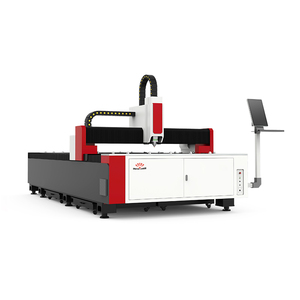
Large-format 4000x1500mm working area designed for thick stainless and carbon steel plates with high-speed rack and pinion drive systems.
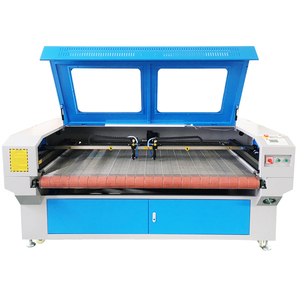
High-precision engraving and cutting system optimized for acrylic, MDF, wood, fabric, and rubber applications with automatic feeding capabilities.
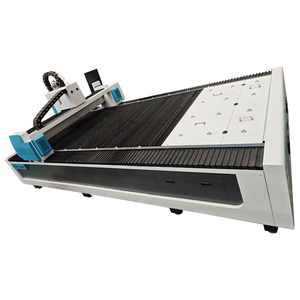
Industrial grade automatic metal cutter engineered for 24/7 continuous operation, back-reflection protection, and high energy efficiency.
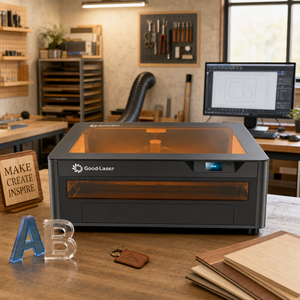
Compact 520x315mm enclosed safety laser engraver featuring 20-40W cooling power, ideal for high-precision micro-machining and prototype crafting.
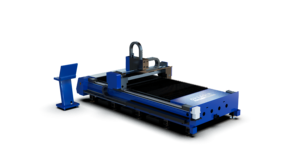
Cost-effective single-bed machine platform delivering zero-dross edge finishing, low power draw, and modular component expandability.
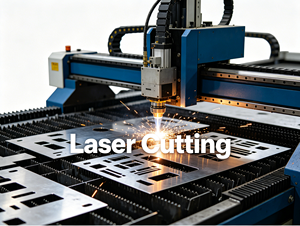
Tailored machine configurations built for reflective metals including copper, brass, aluminum, and high-tensile alloy sheet processing.
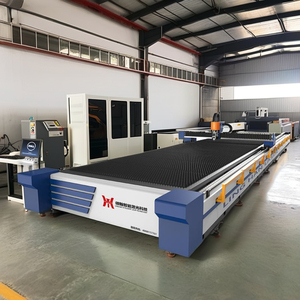
Ultra-high-power industrial laser workstation engineered for rapid nitrogen bright-cutting and thick carbon steel oxygen piercing.
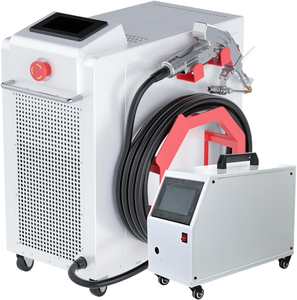
Water-cooled ergonomic handheld laser system combining deep-penetration welding, rust removal, and edge trimming in a single portable unit.
Modern industrial supply chains demand a fundamental shift from standalone cutting machinery to fully automated, integrated material handling ecosystems. As a premier Chinese manufacturer and global exporter of advanced CNC fiber laser cutting systems and automated material handling lines, our facility operates at the nexus of mechanical integrity, optical engineering, and robotic automation.
Unlike conventional trading intermediaries, our manufacturing ethos centers on full-cycle vertical integration. Every gantry frame is fabricated from heavy-duty structural steel plates, subjected to thermal stress relief (annealing at over 600°C for 24 hours), and precision-milled using multi-axis CNC gantry machining centers. This structural rigidity prevents frame deformation across decades of high-acceleration operations (up to 1.5G accelerations and 120 m/min traverse speeds).
In-house heat treatment furnace ensures zero internal stress, delivering long-term geometric precision across 4015 and 6025 formats.
Direct partnerships with world-leading laser resonator providers (Raycus, IPG, nLIGHT) offer back-reflection safety for copper & brass cutting.
Every machine undergoes a 72-hour continuous full-load burn-in test alongside customer-specified sample sheet cutting verification.
Cutting speed alone no longer dictates workshop productivity. As fiber laser powers scale from 6kW to 30kW, cutting cycles for a standard 3015 sheet drop to under 90 seconds. Consequently, manual sheet loading and unloading become the primary operational bottleneck, reducing laser spindle-on time to less than 50% per shift.
Our material handling solutions solve this throughput disparity by connecting CNC laser cutters directly to automatic exchange tables, gantry vacuum loaders, press transfer robots, and automated storage and retrieval systems (ASRS). By automating sheet loading, part sorting, and skeleton unloading, overall beam-on time is pushed to 85–92% per operational shift.
| Handling Configuration | Typical Spindle-On Time | Labor Requirement | Ideal Application Profile | Throughput Multiplier |
|---|---|---|---|---|
| Manual Single Table | 40% – 50% | 2 Operators / Shift | Job shop prototyping, low-volume thick plate processing | 1.0x (Baseline) |
| Dual Shuttle Exchange Table | 65% – 75% | 1 Operator / Shift | Medium-to-high batch production, structural steel sheets | 1.45x Output |
| Automatic Vacuum Gantry Loader | 80% – 88% | 0.5 Operator / Shift | Continuous sheet blanking, electrical enclosure manufacturing | 1.80x Output |
| Coil-Fed Auto Feeding Blanking Line | 90% – 95% | Supervisory Only | High-volume automotive stampings, HVAC ducting batch runs | 2.40x Output |
Procurement directors and factory modernization heads must evaluate machinery investments through a multi-year lens. Based on extensive export market analytics across Europe, North America, Southeast Asia, and the Middle East, four key procurement trends are defining the sector:
Procurement strategies are rapidly migrating away from 3kW–6kW systems toward 12kW+ platforms. High power allows factories to replace expensive helium and nitrogen cutting gas with high-pressure compressed air or air-oxygen gas mixing systems. This dramatically lowers cost-per-cut on carbon steel while achieving high-speed, oxide-free edges on stainless steel up to 25mm.
Modern supply chains mandate part-level traceability. Buyers are increasingly prioritizing machines equipped with integrated CCD camera positioning and vision marking engines. These systems automatically detect sheet orientation, adjust cutting coordinates to compensate for material mis-alignment, and instantly mark 2D DataMatrix or QR codes onto blanked components for downstream ERP tracking.
Standalone equipment is being replaced by modular automated cells. Procurement managers now seek machine partners capable of integrating secondary operations—such as handheld laser seam welding (e.g., 3000W water-cooled systems), automated deburring, metal polishing, and robotic press transfer—into unified, interlocked control systems.
With global electricity tariffs fluctuating, fiber optic energy conversion efficiency (wall-plug efficiency of ~35–40% compared to ~10% for legacy CO2 lasers) has become a non-negotiable metric. Advanced standby power modes, intelligent fume extraction dampers, and pneumatic air-saving nozzles are standard baseline requirements for international RFQs.
The convergence of artificial intelligence, real-time optical sensing, and high-speed motion control is revolutionizing metal fabrication and material transfer. Key innovations currently shaping our R&D roadmap include:
Dynamic beam mode switching adjusts kerf width and energy density in real time, switching from small spot diameter for thin sheet piercing to ring-mode profiles for smooth thick plate cutting.
Cloud-connected CAM engines utilize genetic algorithms to nest parts tightly into sheet skeletons, improving material yield rates up to 91% while preventing tip-ups using dynamic collision avoidance paths.
Integrated sensor networks continuously track optical temperature, protective window contamination, guide-rail vibration, and pneumatic pressure drop to alert operators before failure occurs.
Comprehensive answers compiled by our senior application engineering team to address technical, financial, and operational considerations during machine evaluation.
Looking to upgrade your manufacturing layout, automate sheet loading, or procure high-yield fiber laser cutting machinery? Contact our engineering team for customized machine layouts, sample test cuts, and direct factory pricing.
