Direct factory-engineered machinery built for heavy automotive, aerospace, structural HVAC, and high-volume metal processing lines worldwide.
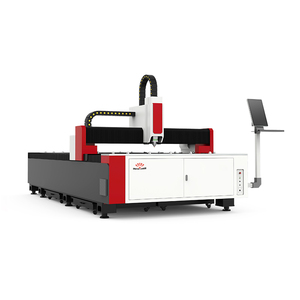
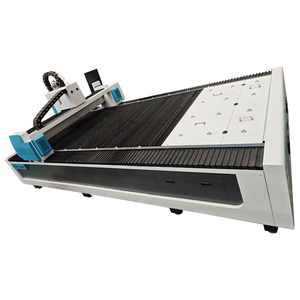
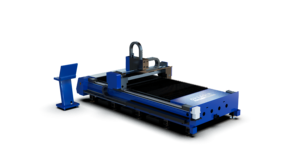
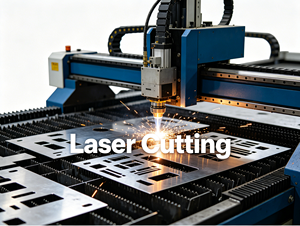
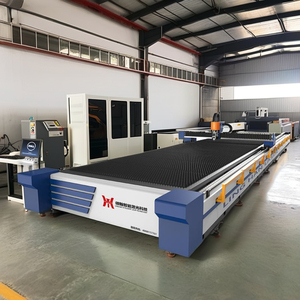
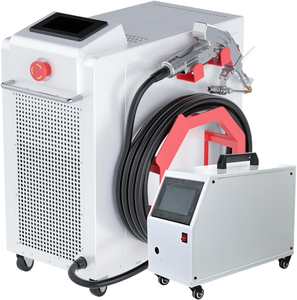
In modern industrial manufacturing, the transition from conventional hydraulic tube benders to multi-axis All-Electric CNC Rotary Draw Tube Bending Systems and integrated 3D fiber laser cutters marks a seismic shift in structural yield optimization. Global procurement teams evaluating China’s manufacturing ecosystem require more than basic supplier directories—they demand verifiable material kinematics, precise springback compensation algorithms, and rigorous quality verification standards.
Tube bending is intrinsically a complex metalworking deformation process governed by tensile stresses along the outer wall and compressive forces along the inner curve radius. Achieving tighter center-line radii ($CLR$) without inducing wall thinning, ovality, wrinking, or cross-sectional collapse demands specialized mandrel support, wiper die kinematics, and active boost pressure balancing. As a premier Chinese manufacturer and exporter, our engineering platforms integrate advanced real-time mechanical modeling to ensure repeatable zero-defect production across carbon steel, stainless steel, titanium alloys, brass, and structural aluminum profiles.
During cold rotary draw bending, the neutral axis shifts inward, forcing the outer tube wall to stretch while the inner wall thickens. Engineers measure difficulty using two non-dimensional indicators: the Relative Radius ($D_m$) and the Relative Wall Thickness ($t_m$):
When bending ultra-thin tubes ($t_m < 1.5\%$) or tight radiuses ($D_m < 1.5D$), standard bending dies fail. Our multi-axis CNC tube benders utilize internal hydraulic expanding mandrels and ceramic-coated wiper dies coupled with Direct Servo-Driven Pressure Die Assist (Boost Technology). This pushes material into the bend zone, limiting wall thinning to below 8% and ovality to under 3%, satisfying strict automotive exhaust and aerospace fluid circuit specifications.
Selecting the optimal production machine platform requires evaluating part geometry, material yield strength, batch sizing, and downstream joining requirements. The technical matrix below provides an operational baseline for plant managers and procurement leads.
| Machine Technology | Target Material Range | Max OD Capacity | Typical CLR Ratio | Primary Industrial Applications |
|---|---|---|---|---|
| All-Electric CNC Multi-Stack Bender | Stainless Steel, Copper, Titanium, Aluminum | Ø 6mm – Ø 114mm | 0.8D – 3.0D | Automotive HVAC, Aerospace Fuel Lines, Furniture |
| Hydraulic Rotary Draw Tube Bender | Heavy Carbon Steel, Structural Alloys | Ø 38mm – Ø 254mm | 1.5D – 5.0D | Shipbuilding, Oil & Gas Pipelines, Heavy Machinery Frame |
| Integrated 3D CNC Fiber Tube Laser | Seamless Steel, Welded Profiles, Structural Channels | Ø 12mm – Ø 350mm | N/A (Cutting) | Architectural Truss, Frame Blanking, Slotting & Notch Jointing |
| 3-Roll CNC Vector Profile Bender | Structural Beams, Large Radius Steel Pipes | Unlimited (Roll) | > 5.0D Large Sweep | Structural Archways, Tunnel Supports, Canopy Framing |
| Hybrid Laser-Welded Tube Production Cell | High-Strength Low-Alloy (HSLA) Steels | Custom Specifications | 1.0D – 2.5D | Automotive Chassis, Crash Cage Assemblies, E-Mobility Frame |
The global tube bending and pipe fabrication industry is undergoing radical digitisation. Procurement managers sourcing machinery from China must align their capital expenditure with next-generation manufacturing paradigms. Here are the five key technological trends reshaping international procurement:
Hydraulic systems are rapidly being replaced by full electric servo architectures. Electric benders reduce energy consumption by up to 65%, eliminate thermal oil drift, and maintain position accuracy within ±0.03mm.
Advanced CNC controllers now embed optical bend inspection and inline laser angle sensors. The machine measures material springback on the fly and adjusts second-stage overbend angles automatically without operator intervention.
Smart factories link 3D fiber tube lasers with CNC benders via unified STEP/IGES file software. Laser-cut holes, weld-seam alignment notches, and end profile copes are calculated pre-bend to compensate for elongation elongation stretching.
Industrial 6-axis articulated robots now handle bundle feeding, seam orientation detection, bender placement, and post-bend CMM verification in continuous lights-out production cells.
Closed-loop Quality Assurance (QA) networks sync measuring arms directly to machine controllers. Corrective bend coordinates are transmitted in real time, reducing scrap setup waste to zero.
Global equipment exporters utilize IoT gateways for predictive maintenance, tracking servo torque anomalies, lubrication levels, and offering instant overseas PLC firmware debugging.
Navigating international OEM equipment procurement requires selecting a partner with proven manufacturing depth, rigorous quality control protocols, and robust overseas after-sales infrastructure. As a direct Chinese OEM manufacturer, we uphold strict standards of technical integrity.
Mandrel and wiper die requirements depend on the Relative Radius ($D_m = CLR/D$) and Relative Wall Thickness ($t_m = t/D$). If $D_m \le 2.0$ and $t_m \le 2.5\%$, an internal mandrel is mandatory to prevent top wall sinking. If $D_m \le 1.5$ and $t_m \le 1.5\%$, a Wiper Die is required on the pressure die side to prevent compression wrinkling inside the bend tangential curve.
All-Electric benders offer unmatched precision, repeatability (±0.03mm vs ±0.15mm), quiet operation, zero hydraulic fluid contamination, and drastically reduced setup times due to digital servo positioning memory. Servo-hydraulic hybrids are generally preferred for heavy wall carbon steel pipes over 3 inches OD where raw bending force requirements exceed economic servo torque limits.
Our CNC software includes a pre-loaded Material Tensile Yield Database. Additionally, optional laser bend-angle sensors measure the pipe angle after initial pressure release. The system calculates the exact springback coefficient (e.g., 3.5° for 304 Stainless Steel) and automatically re-engages the bend die to deliver the precise programmed final angle.
Yes. By equipping our laser chucks with customized form-fitting jaws and integrating 3D visual registration cameras, our CNC tube lasers cut square, rectangular, oval, C-channel, L-angle, and custom extruded aluminum or copper profiles with high accuracy.
All exported machinery comes complete with CE Certification (Low Voltage and Machinery Directives), ISO 9001 Quality System Compliance, comprehensive electrical schematics in English, step-by-step operation manuals, CAM programming guidelines, and complete spare parts catalogs.
We dispatch factory-certified application engineers for on-site installation, utility connection oversight, tooling alignment, and multi-day operator training. Furthermore, 24/7 remote technical support is provided via encrypted IoT remote access modules built into the machine console.
Speak directly with our senior mechanical applications team. Send us your CAD drawings or technical specifications to receive a complete machine configuration, tooling layout, cycle time simulation, and competitive direct factory quotation.
