
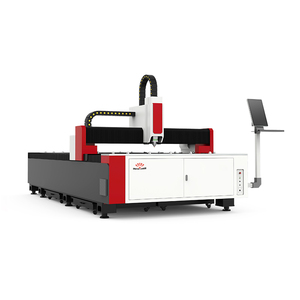
4015 Fiber CNC Lazer Cutter Laser Cutting Machines 6000W 8000W 12000W
High-power heavy-duty production platform designed for large-format sheet metal and heavy plate turning integration.
Explore our industrial-grade CNC lathes, multi-axis turning centers, and integrated metal fabrication machines engineered for high repeatability, continuous operation, and rigorous global manufacturing standards.
High-power heavy-duty production platform designed for large-format sheet metal and heavy plate turning integration.
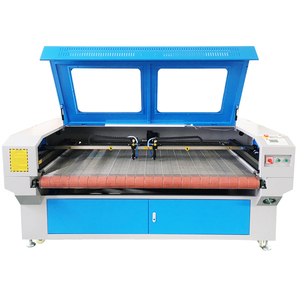
Versatile dual-head automated tooling cutter optimized for precision non-metallic profiling and intricate component finishing.
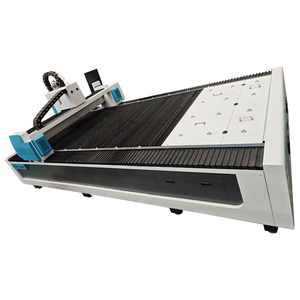
Factory-direct industrial cutting system featuring reinforced bed structures, precision linear guide ways, and long-term warranty.
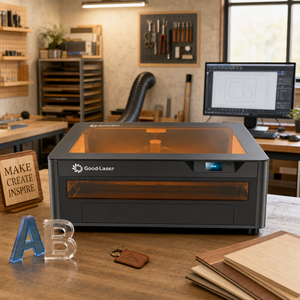
Ultra-compact micro-machining enclosure engineered for 0.01mm positioning accuracy, ideal for R&D prototyping and small parts.
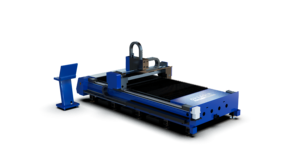
Single-table industrial workstation providing rigid frame stability, optimized dynamic response, and low operating maintenance.
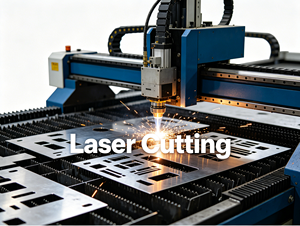
OEM turning, milling, laser cutting, and complex fabrication services tailored to precise architectural and automotive tolerances.
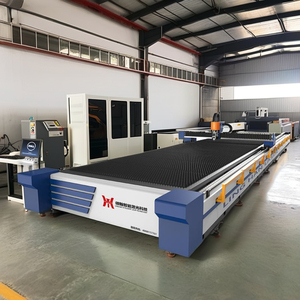
Ultra-high-power fiber cutting cell engineered for thick carbon steel plate processing, high-speed nitrogen bright cutting, and continuous duty.
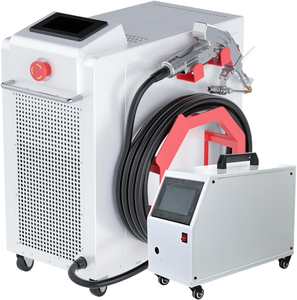
3-in-1 multi-functional laser welding, cutting, and seam-cleaning portable system built for assembly line integration.
Distinguishing true machine tool builders from trading intermediaries requires examining structural engineering, component traceability, and factory acceptance protocols.
Every frame is constructed from high-density HT300 Meehanite gray cast iron, subjected to double thermal tempering and natural aging to eliminate internal stress and guarantee decades of geometric stability under dynamic loads.
We strictly integrate world-renowned CNC controllers (Fanuc, Siemens, GSK, Syntec), THK or PMI preloaded C3 ball screws, and Schneider electrical systems with full international spare parts availability.
Before contract execution, our application engineers conduct 3D CAM simulation and trial machining on buyer-supplied CAD/STEP files. Full CMM inspection reports and video documentation are provided upfront.
The industrial landscape for China wholesale CNC lathe manufacturers has underwent a massive structural evolution over the past decade. China has transformed from a low-cost machine assembler into an advanced manufacturing epicenter producing high-rigidity 45-degree slant bed lathes, multi-axis live-tooling mill-turn centers, and automated turn-key cell solutions. For global procurement officers, plant operations directors, and B2B machinery importers, navigating this vast ecosystem requires a deep technical understanding of machine tool architecture, thermal displacement compensation, spindle dynamics, and quality assurance protocols.
Selecting the right CNC lathe manufacturer is not merely an exercise in comparing nominal catalogue specifications; it requires evaluating the foundational structural integrity of the machine tool. A machine tool's long-term accuracy, damping capacity under heavy interrupted cuts, and thermal stability are established during the casting and heat-treatment phases long before electronic components are installed.
When sourcing wholesale CNC lathes from China, buyers typically choose between two main structural configurations:
The heart of any CNC turning center is its spindle cartridge. Leading Chinese OEM manufacturers employ high-precision P4-class angular contact roller bearings arranged in quad-sets (two front, two rear) to handle extreme radial and thrust loads simultaneously. Modern wholesale specifications should demand dynamic balancing to G0.4 standards to minimize spindle runout under 0.002 mm at maximum RPM ranges (up to 6,000 RPM for compact chuckers).
Furthermore, ambient factory temperature fluctuations can cause Z-axis thermal expansion, leading to axial tolerance drift during continuous shifts. Tier-1 manufacturers incorporate symmetric headstock casting design with integrated oil-cooling jacket channels and real-time thermal sensor feedback loops embedded into the CNC controller to dynamically compensate for lead screw expansion.
| Machine Architecture Class | Target Materials | Positioning / Repeatability | Optimal Production Intent |
|---|---|---|---|
| Flat Bed CNC Lathe (2-Axis, Manual Chuck) | Carbon Steel, Cast Iron, Aluminum | ±0.008 mm / ±0.005 mm | Low-volume shaft turning, maintenance shops, training institutes. |
| Slant Bed CNC Turning Center (30°/45° Monoblock) | Alloy Steels, Stainless 316, Brass | ±0.004 mm / ±0.002 mm | High-volume automotive parts, valve bodies, precision fittings. |
| Multi-Axis Mill-Turn Center (Y-Axis + Live Tooling) | Titanium Grade 5, Inconel, Hardened Alloys | ±0.003 mm / ±0.0015 mm | Aerospace complex hydraulic components, medical implants, single-setup complete machining. |
| Laser-Integrated Turning Cell (Hybrid CNC) | Sheet Metal Tubes, Structural Steel, Clad Pipes | ±0.03 mm / ±0.01 mm | Coil-fed blanking, high-speed tubular laser cutting & contour profiling. |
Understanding where industrial metalworking technology is heading enables procurement directors to select OEM machine platforms that remain competitive and operational over a 15-year horizon.
The global metal machining industry is shifting away from standalone 2-axis turning followed by secondary drill/milling operations. Chinese wholesale manufacturers are seeing massive demand for Y-axis slant bed lathes featuring 12-station BMT55/BMT65 live tooling turrets. By combining turning, off-center milling, keyway slotting, and cross-tapping into a single clamping cycle, manufacturers eliminate human repositioning errors and reduce lead time per part by up to 45%.
Labor shortages and rising operational costs across Western and Asian manufacturing hubs have elevated automated machine tending from a luxury to an operational necessity. Modern Chinese CNC lathe OEM exports now routinely incorporate standard electrical and pneumatic interfaces for automatic bar feeders, truss gantry robots, and 6-axis articulated robotic arms. Turn-key automated cells allow lights-out production shifts for automotive fasteners, bearings, and bushings.
Leading Chinese machine builders are embedding smart vibration sensors, thermal probe networks, and spindle load monitor modules directly into CNC architecture. By utilizing OPC-UA communication protocols, factory managers can remotely track spindle MTBF (Mean Time Between Failures), monitor tool wear, receive instant alerts for collision anomalies, and schedule predictive bearing lubrication, drastically reducing unplanned machine downtime.
Energy efficiency is now a critical evaluation metric in industrial machinery procurement. Advanced wholesale lathes utilize regenerative servo motor drives that capture kinetic braking energy from fast spindle deceleration and feed it back into the plant electrical grid. Furthermore, mist extraction systems and variable-frequency high-pressure coolant pumps (up to 70 Bar) extend tool insert life by 300% while cutting liquid power consumption.
Clear, unvarnished technical guidance written by senior application engineers to assist global purchasing managers during factory evaluation and technical audit stages.
Always request raw casting metallurgical certification (demanding HT250 or HT300 gray cast iron minimum) and documentation of vibration stress relief (VSR) or thermal annealing cycles. Review the width of the bed ways, the brand of linear motion guides (e.g., THK, Hiwin, PMI), and demand a Renishaw laser interferometer calibration certificate for positioning accuracy (±0.005mm) and a circularity ballbar test report prior to final shipment.
Controller choice depends on your local technical operator expertise and software infrastructure. Fanuc (0i-TF Plus) and Siemens (828D/840D) offer the highest global resale value, universal G-code compatibility, and widespread technician familiarity in North America and Europe. For cost-sensitive, high-volume production, GSK (China) or Syntec (Taiwan) offer exceptional reliability, intuitive conversational programming, and significantly lower initial capital expenditure.
Linear Motion (LM) roller guideways provide ultra-low friction, enabling rapid traverse rates (up to 30-36 m/min) and exceptional positioning precision—making them perfect for aluminum, brass, soft steels, and small-diameter high-volume medical/automotive components. Boxed (Hardened & Ground) ways utilize heavy cast-on-cast slide surfaces lined with Turcite-B, offering maximum dynamic damping for heavy interrupted cutting, large cast iron forgings, and tough aerospace nickel alloys.
Standard export protection requires full anti-rust oil grease application over all exposed ground ways and ground metal surfaces, sealed inside heavy vacuum plastic wrapping containing industrial desiccant bags. The machine is then anchored to a heavy steel skid base and enclosed within a fully fumigated ISPM-15 compliant wooden crate to prevent salt-fog corrosion and mechanical impact during transoceanic shipping.
Reliable Chinese manufacturers provide a 2-year comprehensive mechanical and electrical warranty. Critical electrical components (contactors, relays, servo drivers) are sourced from global brands for off-the-shelf local replacement. For complex machinery, factory engineers offer on-site commissioning, foundation layout verification, and operator training, supported by 24/7 remote IP-camera diagnostics for troubleshooting CNC ladder logic.
Whether you require standard 2-axis slant bed lathes, automated high-volume turning cells, or custom-engineered special purpose machine lines—our engineering team is ready to analyze your component drawings and provide a transparent, factory-direct wholesale quote within 24 hours.