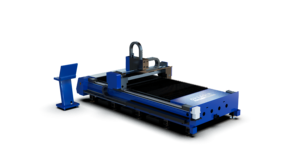
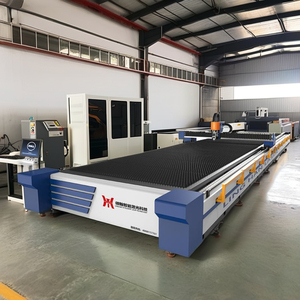
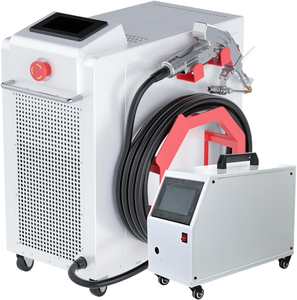
Explore our core export-grade machine series, featuring heavy-duty laser processing platforms, automated material feeding mechanisms, and high-efficiency handheld welding units.
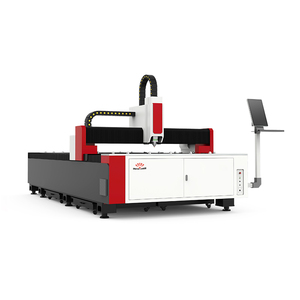
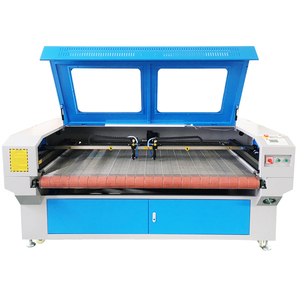
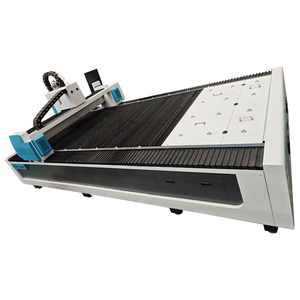
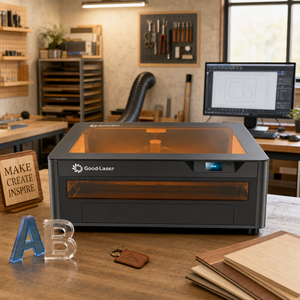
The global manufacturing sector is undergoing an unprecedented structural transition toward hyper-automated, energy-efficient, and software-defined production floors. As global enterprises demand higher dimensional repeatability, reduced labor dependency, and near-zero material waste, Chinese factory automation original equipment manufacturers (OEMs) have evolved from regional machinery assemblers into vertical-tier technology integrators.
At the center of this industrial evolution is the convergence of high-power fiber laser optics, intelligent multi-axis gantry robotics, machine vision inspection, and integrated special-purpose machinery (SPM). Wholesale factory automation procurement is no longer driven solely by initial machine capital expenditures (CAPEX); it is defined by the Total Cost of Ownership (TCO), kilowatt-to-cutting-efficiency ratios, kinematic structural longevity, and localized after-sales engineering agility.
Unannealed machine beds experience microscopic frame deflection under dynamic acceleration exceeding 1.2G. Our factory subjects every heavy-duty CNC bed to a strict high-temperature thermal annealing cycle (600°C furnace cooling over 24 hours), eliminating internal structural stress and ensuring sub-0.03mm kinematic accuracy over 10+ years of continuous multi-shift operations.
Factory automation in 2026 relies heavily on modularity. Whether integrating an exchange-table fiber laser blanking cell or deploying automated press transfer robots across a stamping line, modern industrial procurement managers require fully documented engineering schematics, validated beam parameter product (BPP) optics, and standardized international fieldbus protocols (such as EtherCAT, PROFINET, and CANopen).
Building high-performance automation systems requires rigorous engineering discipline. Unlike trading firms that white-label light-duty components, our manufacturing methodology integrates deep metallurgic treatment, precision mechanical machining, and Tier-1 optical components.
Structural stability forms the backbone of precision cutting. High-tensile steel plate structures are carbon-arc welded, stress-relieved in digital thermal furnaces, and precision-milled on 5-axis gantry machining centers to prevent long-term frame distortion.
We partner with globally recognized laser source innovators (Raycus, Maxphotonics, IPG) to deliver stable electro-optical conversion efficiency exceeding 40%. Each source is paired with closed-loop optical isolators to protect against high-reflectivity copper and brass back-reflections.
Custom industrial automation goes beyond standard flat-sheet processing. Our specialized engineering division develops auto-feeding coil blanking lines, automated metal polishing systems, and multi-station press transfer robotics tailored to exact drawing specifications.
Replacing legacy analog control pulses with absolute digital bus architectures (EtherCAT) enables sub-millisecond signal response, real-time height sensor compensation (Capacitive Sensing), and rapid corner-deceleration contouring without burning thin edges.
International industrial operations require strict risk management. Our machines are engineered with fully enclosed protective covers, anti-radiation protective glass, automatic door safety interlocks, and CE-compliant dual-channel safety relay circuits.
Zero-defect global delivery is guaranteed through our mandatory FAT (Factory Acceptance Test) protocol. Overseas buyers receive actual sample DXF cut logs, high-resolution edge roughness measurements, and full video validation before export packaging.
As global supply chains realign around resilience, high yield, and carbon footprint reduction, B2B procurement leaders are changing how they evaluate China automation factories. The traditional model of purchasing standalone, manual-load machinery is rapidly closing. The next decade of factory automation is built on four core procurement trends:
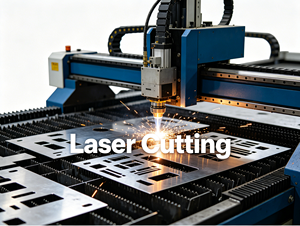
High-power fiber laser cutting (12kW, 20kW, 30kW) is rapidly replacing mechanical plasma and flame cutting for medium-to-thick carbon steel plates. High-power nitrogen bright cutting eliminates secondary oxide scale, allowing immediate robot-welding fitment without costly edge grinding operations.
Spindle-on time directly dictates shop-floor profitability. Procurement teams now prioritize dual-exchange tables and automated gantry sheet loaders. Shuttling a finished bed out while loading a fresh sheet within 15 seconds increases shift capacity by 25% to 35% compared to single-table configurations.
Regulatory mandates in automotive, aerospace, and medical device sectors require end-to-end component traceability. Intelligent vision laser marking systems auto-detect part orientation on conveyor belts, instantly applying dynamic 2D DataMatrix and QR codes without physical clamping fixtures.
Factory floors are combining metal stamping with press transfer automation to eliminate high-risk manual labor. Furthermore, automated polishing and deburring SPMs maintain uniform micro-inch surface roughness across high-volume stainless steel batch production.
Selecting the optimal fiber laser power source requires matching continuous production plate thickness rather than maximum theoretical separation limits. The reference matrix below reflects real-world workshop cutting speeds and assist gas parameters used by our global engineering clients.
| Laser Source Power | Mild Steel (O₂ Cut) | Stainless Steel (N₂ Cut) | Aluminium (N₂ Cut) | Brass & Copper (N₂ Cut) | Optimal Production Application |
|---|---|---|---|---|---|
| 1.5 kW - 2 kW | Up to 12 mm | Up to 5 mm | Up to 4 mm | Up to 3 mm | Light sheet metal, electrical enclosures, HVAC ducting |
| 3 kW - 4 kW | Up to 20 mm | Up to 10 mm | Up to 8 mm | Up to 6 mm | General job shop processing, cabinet panels, furniture frames |
| 6 kW - 8 kW | Up to 25 mm | Up to 16 mm | Up to 14 mm | Up to 10 mm | Automotive tier stamping components, heavy machinery skins |
| 12 kW - 15 kW | Up to 35 mm | Up to 30 mm | Up to 25 mm | Up to 16 mm | High-speed thin sheet bright cutting, structural steel gussets |
| 20 kW - 30 kW | Up to 50 mm | Up to 45 mm | Up to 40 mm | Up to 20 mm | Heavy engineering plate, shipbuilding, pressure vessel fabrication |
*Note: Maximum quality edge cut assumes clean, dross-free parameters using industrial-grade assist gas purity (Oxygen ≥99.5%, Nitrogen ≥99.999%).
From initial part CAD validation to final on-site installation and operator nesting training, our structured engineering workflow minimizes procurement risk at every stage.
Engineers evaluate your target material mix, monthly tonnage, part geometries, and edge finish tolerances to select the exact laser source power and motion bed kinematics.
For complex automated lines (tube processing, gantry loaders, press transfer robots), our team provides complete 3D factory layout drawings and cycle-time calculations.
Frames undergo thermal stress relieving, laser interferometer alignment, dynamic balancing, and full-power cut testing on actual client material samples before crating.
Overseas delivery includes seaworthy vacuum packaging, complete electrical wiring diagrams, foundation layout guides, remote telemetry diagnostics, and spare parts backup.
Direct technical answers addressing international power standards, duty tariffs, laser safety compliance, assist gas optimization, and maintenance SLA protocols.
The choice between a single bed and an exchange table depends on your daily cutting hours and shift structure. A single-table machine requires the laser head to remain completely idle while operators clear finished parts and load new sheet stock manually. An exchange (dual pallet) shuttle table alternates two beds within 15 seconds—allowing operators to safely unload and reload while the laser operates continuously inside the cutting enclosure.
If your daily cutting volume exceeds 5 hours or your production relies on dense nesting with frequent sheet changes, an exchange table typically yields a 25% to 35% higher throughput, accelerating your overall machine capital payback period.
Yes. Modern 1064 nm wavelength fiber lasers process non-ferrous, highly reflective metals efficiently. Unlike legacy CO2 lasers, which experienced catastrophic back-reflection optical damage when cutting shiny materials, modern fiber laser sources integrate active optical isolators and back-reflection sensors.
When cutting aluminium, brass, or copper, high-pressure Nitrogen (N₂) or compressed ambient air assist gas is used to maintain micro-smooth edge geometry and prevent heat buildup along cut seams.
Export machinery is wired to match regional industrial voltage standards (e.g., 380V 50Hz 3-phase, 415V 50Hz, or 220V/480V 60Hz for North American facilities) via isolated step-up or step-down heavy-duty transformers. Electrical supply lines must have dedicated grounding (resistance ≤ 4 Ohms).
Pneumatically, nitrogen bright cutting requires high-pressure supply lines (2.0 to 2.5 MPa) or a dedicated high-pressure screw compressor unit equipped with multi-stage refrigerant dryers and oil-water filters (0.01 micron filtration grade).
Operational costs fall into three main categories: electrical power, assist gas, and routine nozzle/protective window consumables. A standard 3kW machine system draws approximately 14kW to 18kW total electrical power (inclusive of laser source, water chiller, CNC controller, and exhaust fan blower).
Unlike CO2 lasers, fiber lasers require no costly optical mirrors, laser gas mixtures, or turbo-blower overhauls. Consumables are restricted to protective glass lenses, copper nozzles, and ceramic rings, resulting in exceptionally low operating costs per meter cut.
All core components (laser power sources, CNC motion controllers, servo drives, and auto-focus cutting heads) carry 1 to 3-year factory warranties. In the event of a fault, our factory diagnostics team connects directly to your machine controller via secure IoT remote telematics.
Replacement spare parts are dispatched through DHL/FedEx global express within 24 to 48 hours. Overseas engineering field support, on-site commissioning assistance, and complete operator nesting training are available globally upon request.
Yes. Custom industrial automation is one of our primary engineering strengths. Our engineering division designs turnkey special purpose equipment, including automatic metal tube polishers, gantry pick-and-place robots, automated stamping press transfer arms, and coil-fed laser blanking lines.
We review your step files, floor dimensions, and line cycle targets to develop custom mechanical layouts, PLC program logic, and safety interlocking protocols.
