Explore our factory-direct inventory of CNC fiber laser cutters, high-speed laser engravers, handheld welding tools, and automated multi-axis cutting platforms built under ISO9001 and CE quality standards.
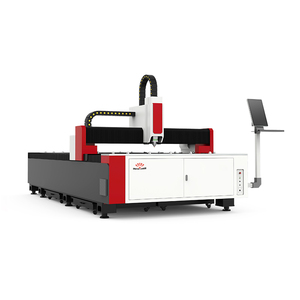
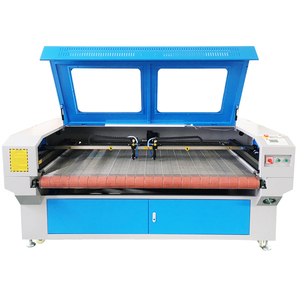
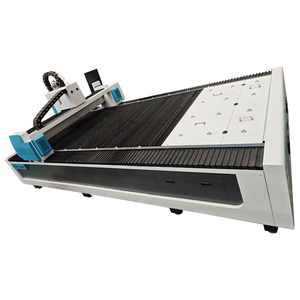
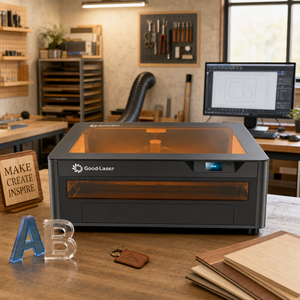
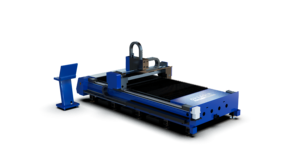
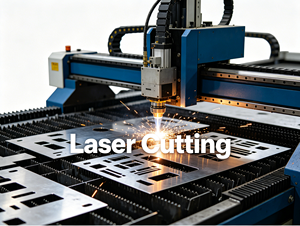
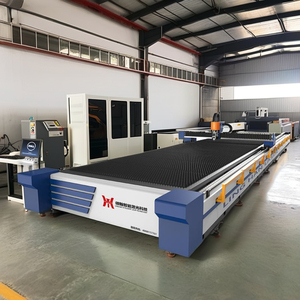
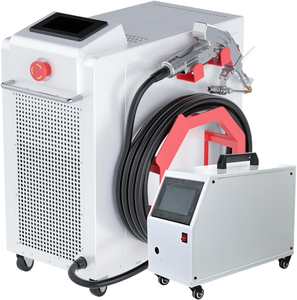
When procuring industrial laser etching, marking, and cutting machinery on a wholesale or B2B factory-direct basis, international engineering teams must evaluate more than just upfront capital expenditure (CapEx). Technical buyer intent requires a thorough analysis of optical beam quality (M² factor), pulse frequency manipulation range (MOPA configuration vs. Q-switched), gantry dynamic response, thermal stability, and operational total cost of ownership (TCO).
China has established itself as the world's epicenter for laser machine manufacturing due to complete supply chain integration—from raw optical crystal production and high-precision galvo motor manufacturing to heavy-duty gantry annealing and assembly. Sourcing directly from certified Chinese exporters eliminates intermediary markups while providing access to highly customized configurations engineered for continuous 24/7 shop floor operation.
| Parameter / Feature | Fiber Laser Etcher / Marker | CO2 Laser Engraver / Cutter | UV Cold Laser Marker |
|---|---|---|---|
| Laser Wavelength | 1064 nm (Near-Infrared) | 10.6 µm (Far-Infrared) | 355 nm (Ultraviolet) |
| Primary Target Materials | Metals (Steel, Aluminum, Brass, Titanium), Engineered Plastics | Organics (Wood, Acrylic, MDF, Leather, Textiles, Glass) | Heat-Sensitive Polymers, Silicon Wafers, Glassware, Medical Plastics |
| Beam Quality (M²) | < 1.3 (Ultra-Fine Focus Spot) | < 1.2 (TEM00 Mode) | < 1.1 (Sub-Micron Spot) |
| Engraving/Etching Speed | Up to 12,000 mm/s (Galvo Driven) | 500 - 1,000 mm/s (Gantry Driven) | Up to 9,000 mm/s (Galvo Driven) |
| Thermal Affected Zone (HAZ) | Moderate (Controllable via MOPA) | High (Thermal Burning / Melting) | Negligible ("Cold Processing") |
| Laser Diode Lifespan | 100,000 Hours (Maintenance-Free) | 10,000 - 20,000 Hours (Glass/RF Tube) | 20,000 - 30,000 Hours |
Our factory facility combines structural mechanical engineering with advanced optoelectronic integration. Unlike non-manufacturing trading companies, our internal fabrication pipeline enforces strict engineering standards across every machine frame and optical assembly:
Machine beds undergo high-temperature electric furnace annealing at 600°C for 24 hours to eliminate internal welding stress. This guarantees 10+ years of structural rigidity without mechanical deformation under dynamic G-force acceleration.
We standardize on world-renowned laser sources (IPG, Raycus, Maxphotonics, JPT) paired with high-speed digital galvo scanning heads featuring quartz field lenses, delivering reflection immunity and thermal drift resistance.
Every CNC laser cutter and galvo etcher undergoes collimation testing, beam profiling, and dynamic positioning accuracy measurement using Renishaw laser interferometers to verify micro-level tolerance conformance (±0.01mm).
The industrial laser micro-machining sector is undergoing rapid evolution driven by automation, Industry 4.0 integration, and green manufacturing imperatives. Procurement executives evaluating wholesale OEM suppliers in China should align their capital investments with these emerging technical shifts:
Standalone laser etchers are rapidly giving way to automated robotic cells. Modern wholesale buyers demand machines equipped with standardized I/O ports, PROFINET/EtherCAT communication, and integrated gantry loaders or 6-axis jointed robots. This enables continuous lights-out manufacturing and automated tray feeding for high-volume automotive and electronics parts.
Manual part alignment during batch etching increases labor cycles and scrap rates. Advanced vision-guided laser marking systems utilize high-resolution CCD cameras and software algorithms to automatically detect part orientation, compensation angles, and surface curvature, executing 100% accurate marks regardless of manual placement randomness.
While nanosecond fiber lasers dominate general marking, precision industries (semiconductors, medical devices, aerospace) are migrating toward ultra-short pulse (USP) lasers. Picosecond and femtosecond ablation breaks chemical bonds directly without thermal conduction, eliminating burrs, micro-cracks, and molten recast layers on delicate substrates.
Global supply chains mandate total part identification via high-density 2D Data Matrix, QR codes, and UDI (Unique Device Identification) standards. Laser etchers are now expected to write permanent, micro-scale codes capable of surviving aggressive anodizing, shot peening, and heat treatment while passing ISO/IEC 15415 code quality audits.
To ensure seamless international trade, transparent factory acceptance testing (FAT), and predictable lead times, our export engineering department operates under a milestone-driven procurement model:
Send part drawings (DXF/STEP) and material specifications for sample cutting/marking trial and beam wavelength selection.
Configuration of laser source power, optical lenses, gantry dimensions, bed styles, and custom enclosure branding.
Stress-relieved frame machining, optoelectronic assembly, 72-hour burn-in testing, and laser interferometer calibration.
Seaworthy vacuum packaging, export customs documentation, CE compliance verification, and door-to-door logistics execution.
Critical operational questions answered by our laser application engineers for overseas buyers and sourcing directors.
Connect direct with our export engineering division to receive instant CAD/DXF sample testing, customized technical proposals, FOB/CIF price lists, and machine catalog access.
