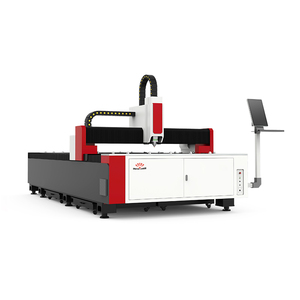
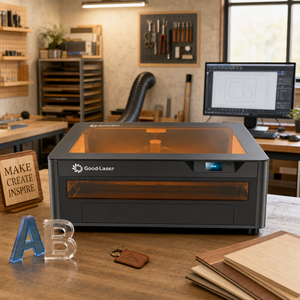
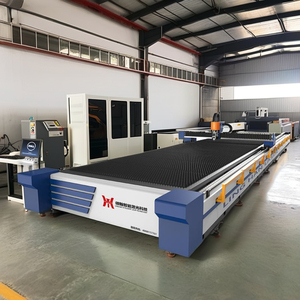
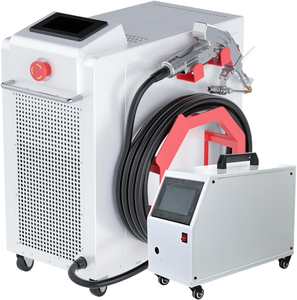
Precision-engineered fiber, CO2, and UV laser machinery designed for high-throughput manufacturing, metal processing, and traceability marking.
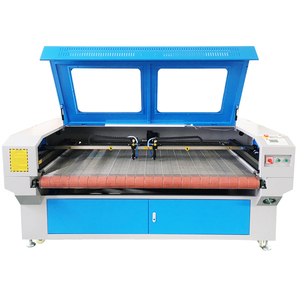
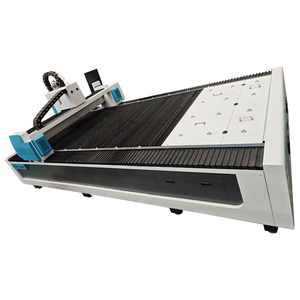
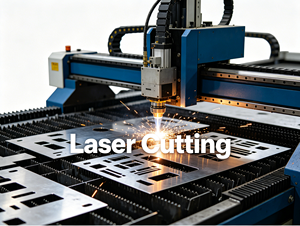
As a leading Chinese wholesale laser marker factory and direct global exporter, our engineering paradigm is built upon rigorous mechanical engineering standards, optical clarity, and robust structural stability. Unlike standard commercial assembly houses, our manufacturing facility controls every critical stage of production—from stress-relieved steel frame annealing to sub-micron optical alignment of galvo scanning heads.
Modern industrial traceability and precision sheet metal processing require equipment that performs consistently under multi-shift continuous duty. Our laser marking and cutting platforms integrate Tier-1 fiber laser optical engines (Raycus, IPG, JPT, Maxphotonics) coupled with high-speed digital galvo systems, delivering unprecedented beam quality factor (M² < 1.3) and long-term operating stability.
Engineering Insight: Structural integrity begins at the foundation. All heavy-duty machine beds undergo high-temperature thermal stress relief annealing at 600°C for 24 hours to eliminate internal welding stress. This guarantees zero frame deformation over a 10-year continuous operating cycle.
Milled on 5-axis CNC machining centers to ensure rail parallelism within 0.02mm, providing a ultra-stable kinetic baseline for high-acceleration laser marking and cutting.
Every laser resonator is tuned using beam profiling software to maintain diffraction-limited focal spot sizing, maximizing energy density and reducing thermal distortion zones.
Fully compliant with CE, FDA, and ISO9001 standards. Fitted with Class 1 laser enclosures, dual-channel interlocks, and intelligent fume extraction interfaces.
Selecting the optimal laser source requires matching photon energy absorption spectrum to substrate physical properties. Below is an engineering evaluation comparing laser wavelengths, pulse width dynamics, and material interactions for B2B procurement decisions.
| Laser Technology | Wavelength | Optimal Substrates | Heat-Affected Zone (HAZ) | Primary Industrial Use Case |
|---|---|---|---|---|
| Fiber Laser (Q-Switched) | 1064 nm | Stainless steel, carbon steel, brass, copper, anodized aluminium | Moderate | High-speed metal marking, deep engraving, barcoding, 2D data matrix |
| MOPA Fiber Laser | 1064 nm (Adjustable pulse: 2-500ns) | Aluminium, stainless steel, ABS, PC, delicate electronic alloys | Low to Minimal | Color marking on stainless, black marking on anodized aluminium, foil cutting |
| UV Cold Laser | 355 nm | HDPE, silicone, glass, ceramic, PCB, medical polymers | Negligible (Cold Processing) | Micron-level micro-machining, non-destructive packaging marking, medical cables |
| CO2 Sealed Tube | 10.6 µm | Wood, acrylic, leather, rubber, MDF, organic textiles | High | Non-metallic cutting, organic engraving, wide-area die-board processing |
For high-throughput industrial environments, fiber laser marking systems operating at 1064nm offer superior wall-plug efficiency (>30%) compared to legacy CO2 or lamp-pumped systems (<5%). This translates into drastically reduced electrical utility consumption and zero optical realignment overhead over 100,000 operational hours.
As global supply chains transition toward smart manufacturing and real-time component traceability, procurement teams must evaluate equipment based on future-proof technological architectures. Modern wholesale buyers are prioritizing automation integration over standalone manual units.
Integration of high-resolution CCD cameras and deep-learning visual algorithms enables 360-degree arbitrary part placement. The marking system automatically detects object orientation and compensates focal position dynamically without physical fixtures.
Future-ready laser markers feature OPC-UA, Modbus, and TCP/IP communication protocols. This allows factory MES systems to push dynamic serial numbers, batch codes, and UID data straight to the laser galvo head without human intervention.
Picosecond and femtosecond laser sources are shifting from laboratory research into mass production. Their sub-picosecond pulse duration vaporizes material before heat can diffuse, eliminating thermal stress in semiconductor and display manufacturing.
Traditional 2D field lenses are being replaced by 3D dynamic focusing systems equipped with linear optical z-axes. This facilitates uniform spot size focus over complex curved, stepped, and slanted 3D surfaces without mechanical vertical axis movement.
In high-power laser cutting, intelligent gas proportioning systems and high-pressure air-cutting nozzles are reducing nitrogen and oxygen consumption by up to 40%, significantly lowering hourly operational cost per part.
Stand-alone equipment is rapidly giving way to robotic loading gantries and press-transfer automation cells, maximizing beam-on time and enabling 24/7 lights-out manufacturing shifts.
Sourcing directly from a China wholesale laser marker factory provides international distributors and B2B buyers distinct commercial and technical advantages. We combine factory-direct pricing with rigorous international engineering support.
Sample-First Verification Protocol: Send your raw material samples or CAD files. Our application lab performs comprehensive cutting, welding, or marking trials, delivering back-profilometer surface scans and high-resolution optical microscopic reports before contract execution.
Clear, unvarnished technical answers to the most common questions raised by procurement managers, factory directors, and OEM importers.
TCO consists of initial capital equipment outlay, electric power consumption (typically 0.5 kW/h to 1.5 kW/h for a 30W-50W system), and minor consumable parts (protective field lens cover glass). Fiber lasers feature zero maintenance optical paths without gas refill requirement, resulting in an average operational cost of less than $0.35 USD per hour.
Standard Q-switched fiber lasers operate at fixed pulse durations (typically 100-120ns), limiting fine thermal control. MOPA (Master Oscillator Power Amplifier) technology allows operators to independently adjust pulse frequency and pulse duration (from 2ns to 500ns). This enables high-contrast black marking on anodized aluminium, damage-free plastic coding, and bright color marking on stainless steel.
Focal lens selection involves a trade-off between marking field area and power density. An F=160mm lens provides a 110x110mm marking area with high power density, ideal for deep engraving and fine barcoding. An F=254mm lens provides a larger 175x175mm field but lowers peak power density. Our engineers calibrate lens selection to your specific part geometry.
Every machine undergoes a 72-hour continuous burn-in test prior to packing. We inspect optical output power stability with power meters, verify laser beam alignment across full galvo sweep ranges, execute vibration testing, and issue a signed Quality Audit Certificate alongside full pre-shipment video documentation.
Oxygen (O2) is recommended for cutting thick mild steel plate as the exothermic reaction assists cutting speed. Nitrogen (N2) is utilized for stainless steel, aluminium, and brass cutting to yield oxide-free, bright burr-free edges ready for immediate welding. High-pressure clean compressed air can be used for thin sheet gauge cutting to minimize gas operational costs.
We provide a comprehensive 3-year warranty on fiber laser sources and 2 years on mechanical components. Export packages include full operational manuals, nesting software video tutorials, and lifetime remote engineering assistance. Emergency spare parts (nozzles, lens optics, sensors) ship globally within 48 hours via DHL/FedEx.
Contact our engineering sales team today to request a factory-direct wholesale quotation, custom solution design, or free sample processing test.
Contact Us