Explore our heavy-duty CNC fiber laser cutters, high-speed engravers, multi-axis tube processors, and turnkey welding workstations built for continuous industrial duty cycles.
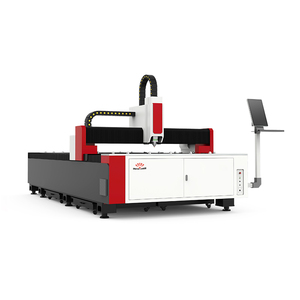
Heavy-frame large-format CNC fiber laser platform equipped with dual auto-exchange tables, rack-and-pinion kinematic motion control, and intelligent auto-focus cutting head.
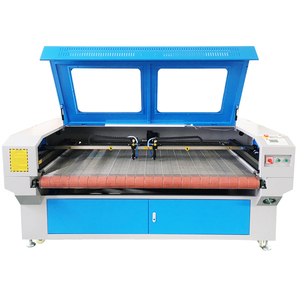
High-speed non-metallic laser processing system featuring pass-through bed architecture, Ruida DSP digital control, and integrated honeycomb & blade worktables.
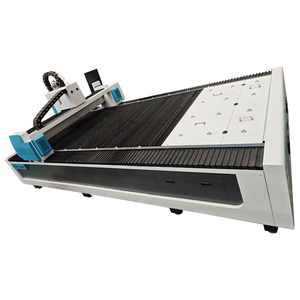
Industrial-grade metal sheet cutter backed by manufacturer warranty, featuring stress-relieved gantry bed, Japanese Yaskawa servo drives, and continuous edge monitor.
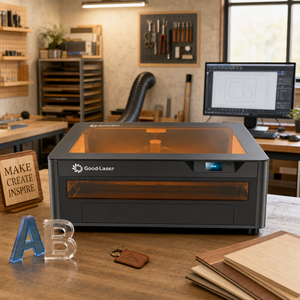
Ultra-compact, fully enclosed class-1 safe desktop laser engraver designed for rapid prototyping, electronics enclosures, and high-precision non-metal machining.
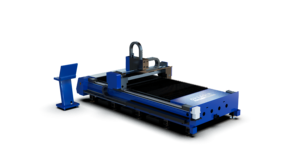
Cost-efficient single-bed fiber cutter engineered for high repeatability on carbon steel, stainless steel, and aluminum sheet metal job-shop operations.
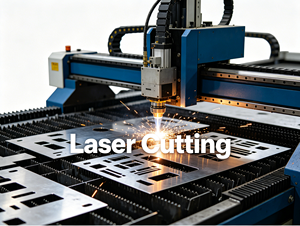
Contract OEM laser cutting service leveraging anti-reflection fiber laser optics to process brass, copper, galvanized sheets, and specialized aerospace alloys.
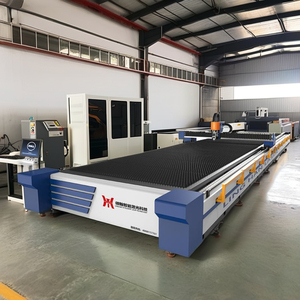
Ultra-high wattage production series built for 24/7 heavy industrial blanking, offering nitrogen bright-cutting assist and high vector acceleration up to 1.5G.
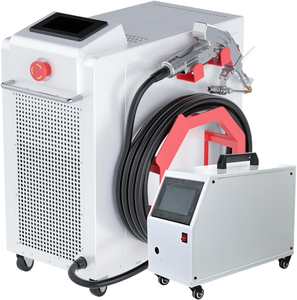
3-in-1 portable fiber laser workstation for high-speed welding, seam cleaning, and localized metal cutting with minimal thermal distortion and zero post-grind finish.
A comprehensive analysis on integrating photonics, multi-axis motion controls, and robotic transfer cells into continuous smart manufacturing facilities.
Modern industrial procurement has shifted permanently from purchasing standalone machine tools toward procuring integrated, custom OEM industrial automation turnkey lines. As global OEMs in automotive, heavy machinery, architectural metalworking, and electronics face shrinking labor pools and escalating margin pressures, the integration of high-wattage fiber lasers with flexible robotic handling cells has emerged as the definitive benchmark for cost-per-part optimization.
Utilizing 1064nm wavelength fiber sources to deliver 4x to 5x higher optical absorption rates in non-ferrous reflective metals compared to legacy CO2 optics.
Eliminating wall-plug energy waste with electrical efficiency exceeding 40%, paired with maintenance-free solid-state diode modules rated for >100,000 hours.
Real-time thermal lensing correction, automated nozzle centering, and direct MES connectivity via OPC-UA/MQTT protocols for Industry 4.0 execution.
A critical differentiator separating generic machinery assemblers from genuine OEM industrial automation factories lies in structural bed mechanics. High-wattage laser processing (6kW to 30kW) introduces immense dynamic kinetic forces during acceleration bursts exceeding 1.5G to 2.0G.
At Marvel Industrial Solution, machine beds undergo a rigorous multi-stage manufacturing protocol:
Procurement directors and factory engineering leads must align equipment acquisitions with long-term technology shifts. Semantic analysis of global supply chain mandates reveals five dominant trends re-shaping OEM manufacturing facilities:
Historically, plates exceeding 20mm required oxygen flame cutting, which created heavy iron oxide scales requiring downstream abrasive grinding. High-pressure nitrogen assist cutting powered by 20kW+ fiber sources now yields completely oxide-free, burr-free edges on mild steel up to 30mm and stainless steel up to 35mm. This eliminates post-processing manual labor entirely, reducing cycle times by up to 65%.
Standalone cutting or stamping equipment creates operational bottlenecks during material loading and unloading. Modern factory layouts mandate gantry robot automation and automated dual-pallet shuttle exchanges. Integrating automated vacuum suction lifters with sheet thickness sensors prevents double-sheet feeding, protecting sensitive tooling while enabling unmanned "lights-out" night shifts.
With renewable energy, electric vehicles (EV), and aerospace infrastructure expanding globally, processing pure copper (C11000), brass (C26000), and specialized aluminum alloys (6061-T6, 7075) is essential. Advanced fiber sources incorporate optical isolators and back-reflection sensing circuitry that automatically adjusts beam phase characteristics to prevent catastrophic fiber core feedback damage during copper piercing cycles.
Automated manufacturing line speeds outpace manual human visual inspection. Integrating vision-assisted laser marking stations equipped with high-resolution CCD cameras enables real-time part orientation recognition, barcode/DataMatrix readability verification, and automatic kerf quality monitoring prior to downstream robotic assembly.
Empirical performance values for production engineering and procurement feasibility studies.
| Laser Source Power | Mild Steel (Oxygen Cut) | Stainless Steel (Nitrogen Cut) | Aluminum Alloy (Nitrogen Cut) | Brass & Copper (Nitrogen) | Target Industrial Application |
|---|---|---|---|---|---|
| 1.5 kW - 2.0 kW | Up to 10 mm | Up to 4 mm | Up to 4 mm | Up to 2 mm | Electrical enclosures, HVAC ducting, thin sheet fabricators |
| 3.0 kW - 4.0 kW | Up to 18 mm | Up to 8 mm | Up to 8 mm | Up to 4 mm | General job shops, cabinet manufacturing, agricultural machinery |
| 6.0 kW - 8.0 kW | Up to 22 mm | Up to 14 mm | Up to 12 mm | Up to 8 mm | Automotive tier-1 suppliers, structural gussets, elevator panels |
| 12.0 kW - 15.0 kW | Up to 30 mm | Up to 25 mm | Up to 20 mm | Up to 12 mm | Heavy earthmoving equipment, vessel building, high-speed sheet production |
| 20.0 kW - 30.0 kW | Up to 45 mm | Up to 40 mm | Up to 35 mm | Up to 16 mm | Shipyard steel plate, defense armor, specialized heavy infrastructure |
Combining rigorous Indian manufacturing engineering with international Tier-1 component integration.
We build without compromise. Every system integrates world-leading sub-assemblies: Raycus/MAX/IPG fiber sources, Raytools/Precitec cutting heads, Yaskawa/Panasonic servo systems, and Shimpo planetary reducers. Spare parts availability is guaranteed worldwide.
Unlike off-the-shelf trading agencies, our internal R&D department engineers dedicated Special Purpose Machines (SPMs)—including auto metal polishing heads, gantry pick-and-place automation, and stamping press transfer units—tailored directly to client CAD/CAM drawings.
Equipment is built to comply with international safety norms, featuring fully enclosed Class-1 optical protection covers, emergency interlock logic doors, zoned negative-pressure fume extraction channels, and clean-room electrical wiring layouts.
Every dispatch includes comprehensive electrical schematics, utility installation guides, nesting CAM parameter charts, operator training, and remote diagnostic gateway access for 24/7 video-assisted engineering support.
Send your CAD drawings, sheet thickness specifications, and target shift output to our engineering team. We will generate a complete technical proposal, utility layout plan, and sample cut analysis.
Clear, engineering-backed answers to critical equipment procurement and integration questions.
Select your laser wattage based on your primary daily production thickness rather than your occasional maximum material gauge. For instance, if 80% of your throughput consists of 1mm to 6mm mild steel and stainless steel, a 3kW to 4kW fiber laser offers optimal capital expenditure and operating cost balance. If your floor processes 12mm to 25mm heavy plate continuously, step up to a 12kW to 15kW platform to utilize high-speed nitrogen bright-cutting assist gas, which delivers clean, dross-free edges at multifold speed increases.
A single table machine forces the laser source to sit idle during manual loading and unloading of finished parts, reducing laser-on time to roughly 50%-60% per shift. An exchange table (dual pallet shuttle) swaps loaded and cut sheets in under 15 to 20 seconds while the laser cuts continuously inside the enclosure. This recovers 25% to 35% more beam-on production time daily. In standard multi-shift fabrication operations, the incremental investment in an exchange table is recovered within 6 to 9 months through higher component yield.
Yes. The 1064nm beam wavelength of a fiber laser is absorbed far more effectively by non-ferrous metals than legacy 10.6µm CO2 lasers. Modern fiber cutters from Marvel Industrial Solution feature hardware back-reflection optical sensors and specialized cutting heads that automatically protect the laser diode modules during piercing cycles on copper (C11000) and brass (C26000), allowing continuous processing without risk of resonator damage.
Unlike CO2 lasers that require costly laser gas mixtures, turbo-blowers, and internal beam reflection mirrors, fiber lasers have no internal moving optical parts. The main operating costs are:
1. Electrical Consumption: A typical 3kW fiber cutter draws approximately 11kW-14kW total system power (including chiller and dust collector).
2. Assist Gas: Compressed air (thin sheet), oxygen (thick carbon steel), or nitrogen (oxide-free stainless steel & aluminum).
3. Wear Parts: Limited to copper cutting nozzles, protective quartz cover slides, and ceramic sealing rings.
Every overseas machine delivery follows a rigorous export protocol: pre-dispatch trial cutting video approval, seaworthy vacuum foil packaging in reinforced wooden crates, complete schematics, and English CAM/HMI software. We provide on-site commissioning by experienced field engineers or guided video commissioning support, complemented by remote IP diagnostic gateways integrated into the machine PLC for fast troubleshooting.
Yes. Custom SPM engineering is a core capability at Marvel Industrial Solution. Whether you require auto metal polishing lines, stamping press transfer robots, robotic welding gantry cells, or vision-guided laser marking workstations, our engineering team designs solutions around your component CAD models, cycle time targets, and floor space constraints.
Connect with our senior automation engineering team for immediate technical consultation and detailed commercial proposals.
