Precision-manufactured robotic grippers designed for high-speed pick-and-place, automotive sheet transfer, CNC tending, fragile electronics handling, and heavy industrial automation.
Precision-guided long-stroke parallel gripper engineered for heavy metal sheet transfer, CNC machine loading, and structural component positioning with customizable jaw fingers.
Compact 180-degree angular opening gripper optimized for rapid packaging, assembly automation, and high-frequency pick-and-place robotics with zero-backlash gearing.
Custom engineered vacuum matrix tooling with integrated check valves for handling porous materials, corrugated boxes, laser-cut sheet metals, and uneven glass panels.
Direct plug-and-play collaborative robot gripper with software-controlled gripping force, position feedback, and soft-touch jaw attachments for delicate electronic assembly.
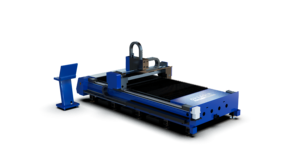
Heavy-duty magnetic transfer tooling designed for high-speed press lines, laser blanking automation, and robotic destacking of ferrous steel components without surface deformation.
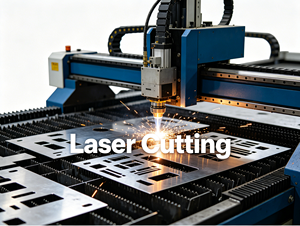
Self-centering 3-jaw robotic gripper designed for precision cylindrical part handling, gear blank loading, shaft machining automation, and high-concentricity assembly tasks.
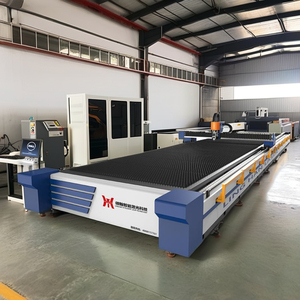
FDA-compliant flexible soft pneumatic gripper specifically crafted for handling organic food products, agricultural produce, fragile glass containers, and irregular geometric shapes.
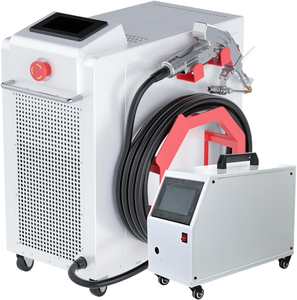
Turnkey heavy-duty End-of-Arm Tooling framework with rapid manual quick-change couplings, integrated pneumatic valves, and proximity sensors for tandem press line automation.
Combining advanced CNC machining precision, finite element analysis (FEA), and deep robotic integration experience to build world-class End-of-Arm Tooling.
Every structural gripper body is milled from aircraft-grade 7075 aluminum or hardened alloy steel on 5-axis machining centers, guaranteeing micrometer-level mechanical concentricity.
Using structural topology optimization and lightweight carbon fiber composite integration, our custom grippers maximize robot arm payload availability while minimizing inertia.
Designed to ISO 9409-1 mechanical flange standards, our grippers seamlessly mount to FANUC, ABB, KUKA, Yaskawa, Universal Robots, Doosan, and custom Cartesian gantry systems.
In modern industrial automation, the robotic arm serves merely as the kinematic positioning mechanism; the true efficiency, cycle velocity, and process reliability of any automated cell are dictated by the performance of its End-of-Arm Tooling (EOAT). As a premier custom OEM robot gripper manufacturer and factory, our engineering discipline is focused on delivering optimized clamping dynamics, high torque-to-weight ratios, and flawless mechanical repeatability for demanding production floors worldwide.
Robotic end-effectors are broadly categorized based on their mechanical motion profile, drive actuation source, and jaw gripping force vectors. When configuring an OEM custom solution, automation engineers must evaluate the precise geometry of workpiece interaction:
Parallel grippers utilize linear guide tracks (such as hardened roller bearings or T-slot guides) to move gripping jaws in a straight line relative to the center axis. This mechanism ensures consistent gripping force throughout the entire stroke distance, making it ideal for dimensionally varying workpieces, internal/external dimension clamping, and high-precision electronic assembly.
Angular grippers pivot jaw fingers around a central mechanical axis, typically moving from 30° up to 180° of total rotation. The mechanical advantage of leverage allows angular grippers to generate massive initial clamping force in extremely compact envelope dimensions, which is essential for tight space constraints inside CNC machine enclosures or press die cavities.
For cylindrical shafts, bearing rings, and round castings, 3-jaw concentric grippers utilize a wedge-hook or scroll-plate kinematic drive. This guarantees automatic self-centering of round parts, maintaining concentric alignment with accuracy tolerances down to ±0.01mm.
Over-specifying a robot gripper adds unnecessary mass to the robot's tool center point (TCP), reducing payload capacity and slowing dynamic acceleration. Conversely, under-specifying leads to part slippage or dropped loads during emergency stops ($E-Stop$). The required gripping force ($F_g$) is calculated using the following fundamental dynamic equation:
F_g = \frac{m \cdot (g + a)}{n \cdot \mu} \cdot S
| Actuation Type | Force-to-Weight Ratio | Control Precision | Energy Efficiency | Best Industrial Application |
|---|---|---|---|---|
| Pneumatic Parallel | Very High (9/10) | Binary (Open/Close) | Moderate (Air Losses) | High-Speed Packaging, Stamping, Foundry |
| Servo-Electric Adaptive | High (7.5/10) | Micrometer Force/Pos | High (Power on Demand) | Cobot Assembly, Medical, Lab Automation |
| Vacuum Matrix Array | High for Flat Surfaces | Vacuum Level Sensing | Variable | Sheet Metal, Box Palletizing, Glass Handling |
| Pneumatic Permanent Magnet | Extreme (10/10) | Binary Magnetic Field | Ultra-High (Power for Switch) | Ferrous Metal Blanking, Press Transfer |
| Bionic Soft Silicone | Moderate (5/10) | Deformation Compliant | Moderate | Agriculture, Bakery, Delicate Fruit Handling |
As smart manufacturing facilities transition toward autonomous digital ecosystems, the procurement criteria for end-of-arm tooling have evolved beyond simple mechanical reliability. Global buyers and automation integrators are prioritizing several key technological trends:
Modern OEM robot grippers are equipped with embedded digital sensors utilizing IO-Link communication protocols. This allows real-time monitoring of jaw stroke position, cycle counter diagnostics, operating temperature, pneumatic pressure fluctuations, and vibration anomalies. Maintenance managers can predict seal wear or component degradation before catastrophic failure occurs, eliminating unplanned downtime.
To support high-mix, low-volume production runs, modern factories demand rapid tool-change capabilities. Automatic robotic tool changers with pass-through pneumatic, electrical, and Ethernet channels allow robots to swap grippers in seconds. Furthermore, custom finger inserts manufactured via additive manufacturing (carbon-fiber reinforced Nylon or TPU soft cushions) allow instant retooling for new part geometries without expensive CNC lead times.
With global industrial initiatives prioritizing decarbonization and energy consumption reduction, servo-electric grippers are replacing traditional pneumatic systems in cleanrooms and assembly lines. Electric grippers eliminate expensive compressed air leakages and consume power only during active jaw actuation.
As a specialized factory, our manufacturing operational flow guarantees that every custom robotic end-effector satisfies rigorous technical validation protocols prior to global deployment:
Direct technical answers to common questions asked by automation engineers, procurement officers, and system integrators.
Contact our senior automation engineering team today for technical consultation, customized CAD designs, or rapid price quotations for high-performance end-of-arm tooling.
Send an Inquiry