Explore our export-grade CNC fiber laser cutters, high-speed multi-axis linear gantries, handheld laser welding units, and precision marking stations engineered for global OEMs.
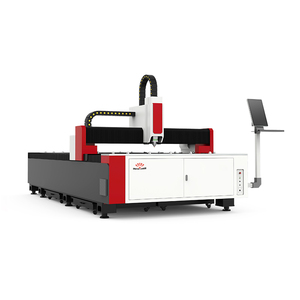
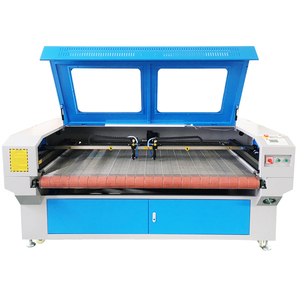
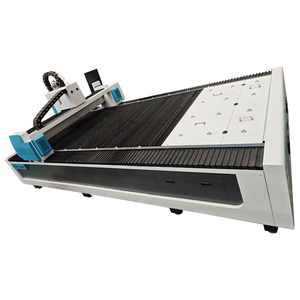


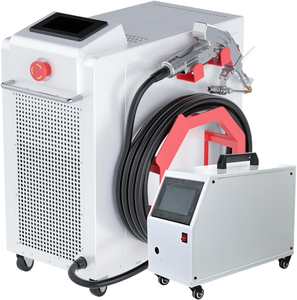
In modern industrial automation, the demand for predictable kinematic accuracy, rigid payload handling, and seamless toolhead integration has placed Cartesian Robots (Linear Motion Gantry Systems) at the epicenter of automated manufacturing. Unlike articulated 6-axis robotic arms that suffer from complex joint deflection vectors and cumulative angular errors, Cartesian robots operate within standard orthogonal coordinate frames ($X, Y, Z$). This rectilinear architecture delivers linear rigidity, uniform torque response, and simplified spatial motion algorithms essential for high-precision CNC laser cutting, automated stamping press transfer, optical inspection, and high-duty pick-and-place routines.
As a specialized OEM/ODM Cartesian Robot Supplier & Exporter, Marvel Industrial Solution engineers multi-axis linear gantries designed to interface directly with high-power CNC laser cutters, industrial machine tools, and specialized purpose machines (SPM). By leveraging stress-relieved steel structures, ground helical gear racks, precision ball screws, and closed-loop AC servo drives, our linear platforms achieve repeatable trajectory tracking even under high G-force acceleration vectors.
Cartesian gantries distribute physical loads evenly across parallel linear guide rails. This eliminates leverage overhangs inherent to articulated arms, allowing payloads from 5 kg up to 2,000 kg without losing structural stiffness.
Utilizing lightweight extruded aluminum or structural box-welded steel gantries driven by direct-drive linear motors or dynamic servomotors, our systems reach traverse speeds exceeding 100 m/min with accelerations up to 1.5G.
Equipped with optical linear encoders and direct feedback loops, positioning accuracy is maintained to ±0.01 mm across stroke lengths extending up to 30 meters, ideal for large-format sheet metal fiber laser processing.
Selecting the optimal automation architecture requires a rigorous analysis of spatial footprint efficiency, payload capacity, trajectory control, and lifecycle cost of ownership. The comparative matrix below highlights why multi-axis Cartesian linear gantries dominate continuous sheet metal processing, machine tending, and precision laser cutting workstations.
| Kinematic Metric | Cartesian / Gantry Linear Robot | Articulated 6-Axis Arm | SCARA Robot | Delta Parallel Robot |
|---|---|---|---|---|
| Work Envelope Geometry | Rectangular Box (Customizable X/Y/Z) | Spherical / Complex Sweep | Cylindrical Envelope | Dome / Inverted Workspace |
| Positional Repeatability | ±0.005 mm to ±0.02 mm (Linear Encoder) | ±0.03 mm to ±0.10 mm | ±0.01 mm to ±0.03 mm | ±0.05 mm to ±0.15 mm |
| Max Practical Payload | Heavy Duty (>2,000 kg scalable) | Medium to Heavy (Up to 500 kg) | Light to Medium (<50 kg) | Ultra Light (<10 kg) |
| Structural Deflection | Near Zero (Supported across double rails) | High (Cantilever torque arms) | Moderate (Joint compliance) | Low (Triangulated linkage) |
| Integration Complexity | Direct CNC / PLC G-Code Control | Proprietary Kinematic Controller | Standard Motion Controller | Dedicated High-Speed Controller |
| Capital Cost per Axis | Economical / Modular OEM Sizing | High Capital Investment | Moderate | Moderate to High |
As an experienced exporter and OEM/ODM manufacturer based in Gujarat's premier industrial hub, Marvel Industrial Solution delivers bespoke Cartesian linear modules tailored to exact mechanical, electrical, and operational parameters. Our end-to-end engineering pipeline supports original equipment manufacturers, automated cell builders, and factory managers worldwide.
Global manufacturing ecosystems are undergoing a rapid transformation driven by labor availability constraints, energy efficiency standards, and the mandate for real-time operational visibility. Decision-makers procuring Cartesian robots and automated machine tools must align their equipment specifications with the following macro trends:
Traditional multi-step processing—where raw sheet metal is moved manually between shearing, stamping, laser cutting, and welding stations—is being replaced by unified laser-gantry cells. Procurement trends show a massive shift toward high-power (12kW to 30kW) fiber laser systems mounted directly onto rigid Cartesian gantries. This setup enables continuous high-speed blanking and cutting, reducing material handling downtime by up to 45%.
Modern international buyers now demand smart Cartesian actuators equipped with edge IoT sensors. Vibration analysis, thermal expansion monitoring, and ball screw torque telemetry are fed continuously to centralized PLC/MES platforms. This predictive maintenance model prevents unplanned downtime, allowing global factories to replace wearing linear guides or bearings before catastrophic structural failure occurs.
Rather than ordering completely custom-built single-purpose machines, buyers are prioritizing modular Cartesian linear platforms. Standardized axis stroke increments, unified mounting plates, and flexible cabling tracks allow manufacturing plants to reconfigure their automated loading/unloading lines when product lines change, maximizing long-term asset utilization.
With rising industrial electricity tariffs worldwide, linear motion controllers now integrate shared DC-bus architecture and regenerative braking modules. Deceleration energy from fast-moving Cartesian gantries is converted back into electrical power, lowering total power draw across multi-axis automated lines by up to 22%.
To maintain a competitive edge, Marvel Industrial Solution invests heavily in R&D, advancing linear motion dynamics and smart workstation integration. The roadmap below outlines key technological milestones shaping our product evolution over the coming decade.
Integrating real-time machine learning algorithms directly into CNC motion controllers to dynamically calculate jerk-limited velocity profiles, reducing cornering wear and improving laser cut edge smoothness.
Replacing steel cross-beams with ultra-lightweight carbon-fiber composite structures, reducing moving inertia by 40% and enabling linear motor accelerations exceeding 3.0G for micro-laser electronics manufacturing.
Integrating 2D/3D coaxial vision systems with zero-latency hardware feedback to execute precise trajectory cutting and welding on warped, thermal-distorted, or unevenly clamped metal plates.
Operating from our modern production facility in Gopal Charan Industrial Hub, Ahmedabad, Gujarat, Marvel Industrial Solution has established itself as an authoritative manufacturer and exporter of CNC fiber laser cutting machines, laser welders, laser markers, and robotic special purpose machines (SPM).
Every structural gantry frame and machine bed undergoes high-temperature electric furnace annealing and mechanical vibration stress relief to eliminate internal residual stresses. This guarantees that linear guide alignment remains stable without warp or twist over decades of continuous 24/7 operation.
Before dispatch, all multi-axis Cartesian linear stages are calibrated using Renishaw laser interferometers and ballbar testing equipment. We provide complete kinematic accuracy certification, pitch/yaw error compensation tables, and sample cut analysis with every export order.
We build our machines strictly using internationally recognized tier-1 components—including IPG/Raycus fiber laser resonators, Precitec/Raytools cutting heads, Shimpo planetary gearboxes, HIWIN/PMI linear rails, and Schneider electrical systems—ensuring overseas buyers can easily source local replacement spares.
Our dedicated export engineering department handles seaworthy wooden crate packaging, foundation layout drawings, electrical schematic documentation, utility requirements, remote commissioning support, and comprehensive online operator CAM training.
Detailed technical answers compiled by our application engineers to assist purchasing directors, automation system integrators, and plant engineers during project specification.
The choice depends on stroke length, dynamic speed, and vertical loading requirements:
Selecting laser power should be based on your primary production material mix rather than maximum occasional thickness:
Yes. Modern fiber laser systems operating at the 1064 nm wavelength feature significantly higher absorptivity in non-ferrous reflective metals compared to older CO2 lasers. Our fiber laser cutting workstations and handheld laser welders include integrated back-reflection optical isolators and sensors that automatically protect the laser resonator module if a reflected beam is detected, ensuring safe processing of brass, copper, bronze, and polished aluminum.
A single table machine features one static cutting bed, meaning the cutting head must stop operating while operators manually reload sheet metal and unload finished parts. An exchange table (dual shuttle pallet) system uses an automated hydraulic or motor-driven chain shuttle to swap two cutting beds in 10 to 15 seconds. While one sheet is being laser-cut inside the enclosed safety housing, the operator safely unloads the cut parts and loads a new sheet on the outside table, increasing shift productivity by 30% to 45%.
Standard CNC fiber laser cutter models typically ship within 20 to 30 calendar days. Custom Cartesian linear gantries and special purpose machines (SPM) require 35 to 50 days depending on electrical and mechanical complexity. Every export order undergoes rigorous Quality Control (QC): 72-hour continuous dynamic burn-in testing, laser interferometer optical alignment verification, high-voltage electrical safety audits, and trial sample cutting/welding using buyer-supplied DXF drawings before seaworthy vacuum packing and crate loading.
We provide a comprehensive global service package. Every machine is supplied with foundation drawings, power supply/assist gas requirements, utility schematics, and operator instructional manuals. We offer direct remote diagnostic support via EtherCAT control interfaces, video-guided commissioning support, and on-site engineer dispatch for installation and staff training upon request. Furthermore, we maintain a complete inventory of standard consumables (nozzles, protective lenses, ceramic rings) and critical spare parts for instant international dispatch.
Primary operating costs comprise electricity consumption, assist gas usage (Oxygen, Nitrogen, or Compressed Air), and consumable optical components:
Contact our senior application engineers today to discuss your OEM/ODM Cartesian gantry requirements, request custom DXF sample cutting, or obtain factory-direct quotation packages tailored to your budget.
