Explore our heavy-duty CNC fiber cutters, automatic sheet-metal processors, precision CO2 engravers, and handheld laser welding systems engineered for rigorous factory operations.
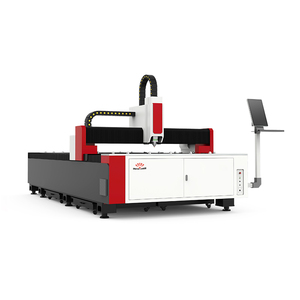
Heavy-duty 4000x1500mm cutting bed built for continuous thick metal plate processing. High-speed gantry acceleration and superior edge precision.
Contact Us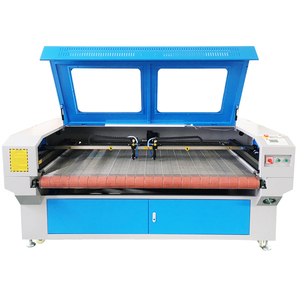
High-speed 100W-180W CO2 processing unit for MDF, wood, acrylic, fabric, and leather. Equipped with auto-feeding tables for non-metal fabrication.
Contact Us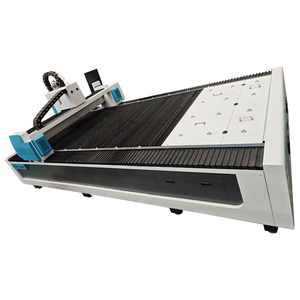
Direct manufacturer-grade sheet metal cutting platform. Engineered with a stress-relieved gantry frame for maximum operational reliability.
Contact Us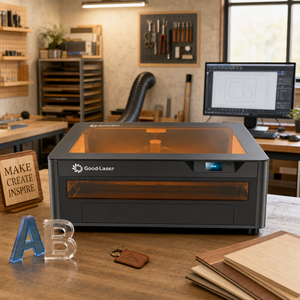
Class-1 safety enclosed compact engraver with 520x315mm working zone. Features integrated active water cooling and 10mm cutting depth.
Contact Us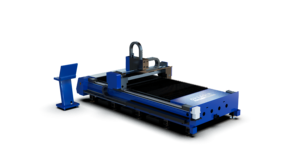
Precision single-bed laser cutting tool designed for stainless steel, carbon steel, and galvanized sheets. Low operational overhead.
Contact Us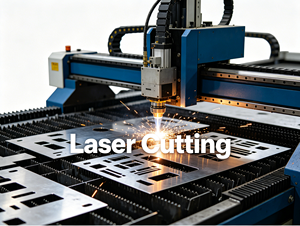
Turnkey fabrication solution for aluminum, iron, brass, copper, and stainless steel parts. Custom nesting, rapid prototyping & OEM export.
Contact Us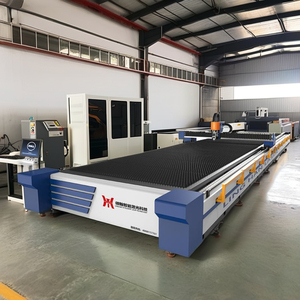
High-power density laser processing line tailored for thick steel plate sectioning, bright nitrogen surface cutting, and fast sheet feeding.
Contact Us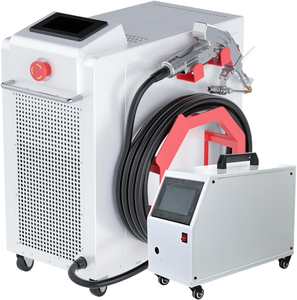
3-in-1 water-cooled laser welding system for seam joining, cleaning, and light cutting. Easy ergonomic gun operation with low thermal deformation.
Contact UsAs a specialized laser machine manufacturer and global exporter (operating from modern machine hubs in Ahmedabad, Gujarat), we bridge the gap between heavy structural engineering and precision optoelectronic control systems. Procurement teams choose our OEM/ODM platforms because we manufacture, assemble, wire, and stress-relieve machine beds in-house rather than functioning as a standard white-label reseller.
Every machine frame undergoes high-temperature electric furnace annealing (over 600°C) to remove internal welding stresses, guaranteeing zero structural deformation over 10+ years of high-acceleration cutting.
We integrate top-tier fiber laser sources (Raycus, Maxphotonics, IPG), auto-focus cutting heads (Precitec, Raytools), Yaskawa/Panasonic AC servo motors, and Shimpo high-precision planetary reducers for dependable uptime.
No machine leaves our production floor without a 72-hour continuous burn-in test, interferometer laser pitch alignment, cut parameter validation, and customer sample cut sign-off.
Full design-to-spec capabilities including custom machine sheet metal colors, custom CNC software skinning, tailored working table dimensions (3015, 4015, 6025, 12025), and dual-pallet automation.
The global metal fabrication landscape is experiencing a paradigm shift. Traditional mechanical blanking, plasma cutting, and low-power CO2 laser systems are rapidly being superseded by high-power solid-state fiber laser machinery. Understanding these technical dynamics is crucial for industrial buyers seeking long-term return on investment (ROI).
Historically, sheet metal fabrication relied on 2kW to 6kW laser power sources for medium-gauge plate processing. Modern industrial demands have pushed fiber laser source capability into the 12kW, 20kW, 30kW, and even 60kW thresholds. The primary technical driver is not merely the capability to cut ultra-thick plate (up to 40mm-50mm carbon steel), but the exponential speed gains achieved in medium-thickness (6mm to 20mm) stainless steel and aluminum using high-pressure nitrogen or compressed air assist gas.
Modern CNC laser cutters utilize dynamic capacitive height sensors combined with closed-loop optical feedback. Servo-driven zoom optics inside the laser head adjust the focal point dynamically based on real-time sheet warping and thermal lens expansion. Furthermore, intelligent nozzle monitoring and automatic nozzle replacement units prevent cut interruption during batch production.
Standalone laser cutting machines create bottleneck conditions at the material loading phase. Future procurement strategies strongly favor automated exchange-table (dual-pallet shuttle) platforms, coil-fed continuous blanking lines (which combine decoilers, levelers, and laser cutters into one line), and gantry robotic loading/unloading arms. These automation modules raise beam-on duty cycles from ~45% to over 85% per operational shift.
Use the authoritative reference guide below to evaluate laser power selection against material thickness and optimal assist gas selection:
| Laser Power | Mild Steel (Oxygen Cut) | Stainless Steel (Nitrogen Cut) | Aluminum Alloy (Air/N2 Cut) | Optimal Production Application |
|---|---|---|---|---|
| 1.5kW - 2kW | Up to 12 mm | Up to 5 mm | Up to 4 mm | Thin-sheet cabinets, HVAC ducting, light enclosures |
| 3kW - 4kW | Up to 18 mm | Up to 10 mm | Up to 8 mm | General job shop fabrication, machinery panels, furniture |
| 6kW - 8kW | Up to 25 mm | Up to 16 mm | Up to 14 mm | Automotive tier suppliers, structural plates, thick tubes |
| 12kW - 15kW | Up to 35 mm | Up to 25 mm | Up to 20 mm | Heavy equipment manufacturing, high-speed bright cutting |
| 20kW - 30kW | Up to 45 mm | Up to 35 mm | Up to 30 mm | Shipbuilding, pressure vessels, yellow goods, structural beams |
Procuring metal laser processing equipment demands a thorough Total Cost of Ownership (TCO) evaluation. Overseas procurement leads, plant automation managers, and B2B buyers must navigate complex vendor criteria to secure efficient, long-term operational efficiency.
Evaluating a supplier solely on upfront capital expenditure (CAPEX) leads to hidden costs. Strategic buyers evaluate power consumption (kWh draw per sheet), assist gas consumption (m³/hr), optical consumable lifespan (protective lens & nozzle wear rates), and maintenance agreement fees.
Ensuring that critical replacement parts—such as fiber optics, ceramic rings, laser safety windows, wireless handwheels, and pneumatic valves—utilize standard non-proprietary component specifications prevents vendor lock-in and minimizes unexpected factory downtime.
Leading OEM/ODM exporters equip machine controllers with IoT telemetry. Remote diagnosis systems enable factory engineers to troubleshoot PLC logic, servo alarm codes, and beam alignment over secure encrypted cloud connections without waiting for field technician visits.
Single-table machines feature a fixed cutting bed, meaning loading a raw sheet and unloading cut parts occurs while the laser system remains idle. Exchange table machines feature automated dual shuttles: while sheet A is being cut inside the safety enclosure, operators safely unload cut parts and load sheet B outside. If your laser duty cycle exceeds 5 hours per day, an exchange table delivers a 25% to 35% increase in shift output, quickly offsetting its higher initial investment.
Yes. Modern solid-state fiber lasers operate at a 1064nm wavelength—which is absorbed far more effectively by non-ferrous reflective metals compared to older 10.6µm CO2 lasers. Our OEM machinery incorporates optical back-reflection sensors and isolators that monitor dynamic reflection, safeguarding the fiber source from optical damage when piercing high-purity copper, brass, and aluminum alloys.
The three main assist gases are Oxygen (O2), Nitrogen (N2), and Clean Dry Compressed Air:
Structural longevity depends on machine frame mass, heat treatment, and gantry composition. High-grade cutters utilize a heavy steel plate welded box structure subjected to high-temperature annealing stress-relief. Axis movement is driven by dual-drive aviation-grade aluminum gantries (lightweight yet rigid) running on precision ground helical rack-and-pinion systems and THK/HIWIN linear guide rails.
Our OEM/ODM manufacturing processes adhere strictly to ISO 9001 quality management systems. Exported laser machinery complies with European Union CE Machine Directives (2006/42/EC), Low Voltage Directives (2014/35/EU), and Laser Product Safety Standards (EN 60825-1). For US and North American markets, machine enclosures and electrical control cabinets meet FDA CDRH registry compliance and UL/CSA safety wiring protocols.
Every exported machine is packed in sea-worthy moisture-proof vacuum packaging inside reinforced wooden crates. We provide comprehensive CAD/CAM nesting software training, foundation layout schematics, and detailed video installation guides. For turnkey setups, our field application engineers deploy globally for on-site commissioning, electrical hookup, cut-parameter fine-tuning, and machine operator training.
