Engineered for heavy-duty metal fabrication, structural sheet bending, laser blanking, and automated press line integration. Delivered directly from our ISO 9001 certified OEM/ODM manufacturing facility.
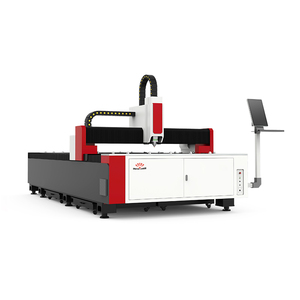
Heavy-format high-power fiber laser system engineered for high-speed precision metal plate processing prior to CNC bending operations.
Inquire Now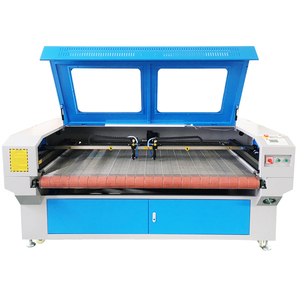
Precision industrial cutting solution for non-metallic templates, rubber dampeners, gasket material, and synthetic enclosure components.
Inquire Now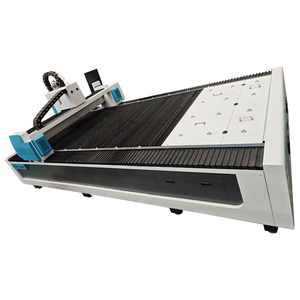
Factory-direct automated sheet metal blanking system equipped with 3-Year warranty and integrated CNC nesting software.
Inquire Now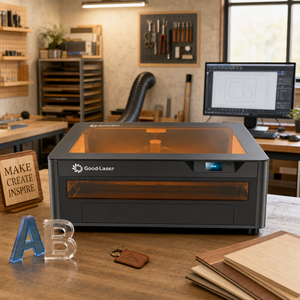
Compact enclosed high-precision cutter for prototype component evaluation, electronic shield profiling, and micro-fit metal parts.
Inquire Now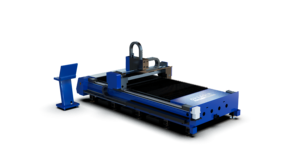
Rigid-frame single platform cutter designed for heavy-gauge carbon steel and alloy plate preparation with zero heat deformation.
Inquire Now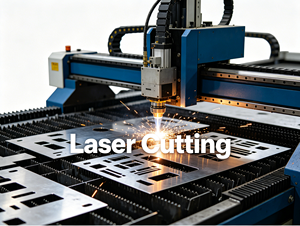
Full-scale turnkey contract manufacturing, precision press brake forming, punch pressing, and welded assembly engineering.
Inquire Now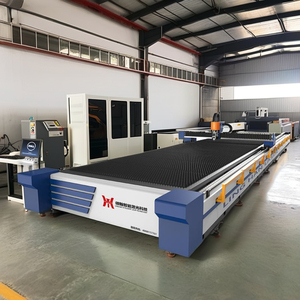
Ultra-high-power continuous cutting platform for structural engineering plates, vessel manufacturing, and heavy-equipment bending blanks.
Inquire Now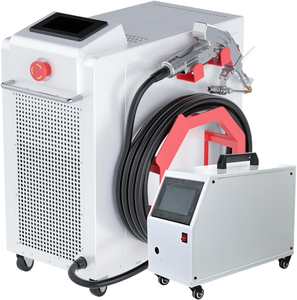
Multi-functional water-cooled laser welding and edge cleaning unit for seamless post-bending box enclosure joining.
Inquire NowFrom stress-relieved monolithic steel beds to micro-tonnage proportional hydraulic control, our press brakes are manufactured to withstand decades of high-volume industrial production.
All press brake side frames and upper rams undergo computer-simulated Finite Element Analysis (FEA) followed by high-temperature electric furnace annealing to permanently eliminate structural internal stress and prevent angular deflection under peak loads.
Utilizing closed-loop German Rexroth/Hoerbiger proportional valves and dual optical linear encoders (Y1-Y2), our machines maintain continuous level accuracy within ±0.005mm even during aggressive off-center bending operations.
Autonomous CNC-controlled wedge crowning compensating tables automatically calculate deflection curves based on material thickness, tensile strength, and bending length—guaranteeing consistent linear angles across the entire workbed.
Direct factory integration of tier-1 European controllers (Delem DA-66T/DA-69T, Cybelec Visitouch, ESA S600) featuring full 3D offline simulation, automatic collision checking, and DXF/IGES CAD import compatibility.
In-house tooling facility supplying induction-hardened (56-60 HRC) segmented punch dies, multi-V bottom dies, goose-neck punches, and specialized non-marking polyurethane forming inserts tailored to customer drawings.
Equipped with IoT cloud telemetry modules enabling real-time remote engineering assistance, controller parameter tuning, predictive valve wear monitoring, and on-site overseas commissioning support.
In modern sheet metal manufacturing, the press brake is no longer a standalone mechanical lever; it is the cornerstone of precision velocity, bend accuracy, and automated production workflows. Sourcing directors, OEM engineering teams, and job-shop procurement leads face increasing demands for tight geometric tolerances, zero-scrap bend margins, and rapid setup turnarounds. Understanding the underlying physics, mechanical structural design, and control kinematics is essential when selecting a reliable manufacturing partner.
The core backbone of any high-tonnage press brake is its bed frame structure. Under bending forces exceeding hundreds of metric tons, raw steel plates naturally experience elastic deflection. If uncompensated, this causes "canoe-shaped" angular deviations where the center of the bend angle is wider than the ends. Premium OEM manufacturers utilize thick Q355B or high-tensile structural plate, cut via high-power fiber lasers, fitted with heavy internal ribs, and stress-relieved in thermal annealing chambers at 600°C. This process removes residual rolling stresses, guaranteeing that the machine frame maintains absolute geometric fidelity under continuous duty cycles.
Modern CNC press brakes discard older mechanical torsion bars in favor of independent electro-hydraulic proportional control. Linear optical scales mounted on separate C-frames (isolated from main frame flex) continuously measure the exact position of the left (Y1) and right (Y2) sides of the upper ram. Proportional servo valves adjust oil flow milliseconds at a time, ensuring that even under severe asymmetrical loading—such as off-center bending or multi-station progressive stage dies—the ram remains perfectly parallel to the bed, preventing die damage and part scrap.
While Y1-Y2 controls ram parallelism, bed deflection under load must be countered at the lower beam. Mechanical crowning systems utilize a series of precisely calculated, motor-driven inclined steel wedges built into the lower bed holder. When the CNC controller calculates a bend command, it automatically moves these wedges to form an upward parabolic curve matching the exact frame deflection calculated for that specific sheet metal alloy, thickness, length, and V-die opening width.
Reference parameters used by our application engineers to determine the correct tonnage, bed length, and backgauge configuration for client metal forming requirements.
| Model Series | Tonnage Range | Bending Length | Max Mild Steel (S235) | Max Stainless (AISI 304) | Recommended Industry Application |
|---|---|---|---|---|---|
| PB-Mini / Servo | 40T – 80T | 1200mm – 2000mm | 3.0 mm | 1.5 mm | Electrical Enclosures, Medical Equipment, Small Precision Components |
| PB-Standard Hydro | 100T – 160T | 2500mm – 3200mm | 6.0 mm | 3.0 mm | HVAC Ducting, Elevator Panels, OEM Automotive Parts, Job Shop Fabrication |
| PB-Heavy Duty | 200T – 400T | 3200mm – 5000mm | 12.0 mm | 6.0 mm | Truck Chassis, Heavy Machinery Guards, Commercial Kitchen Lines |
| PB-Tandem / High-Tonnage | 500T – 1200T+ | 6000mm – 12000mm+ | 25.0 mm+ | 12.0 mm+ | Shipbuilding, Utility Poles, Structural Steel Girders, Armored Vehicles |
How emerging technological advancements are reshaping procurement criteria for global manufacturing enterprises.
Transitioning from hydraulic oil circuits to belt-and-pulley dual servo-electric drives. Electric press brakes deliver up to 50% energy reduction, zero hydraulic maintenance, quiet operations, and ram speeds up to 200mm/s with instant positioning response.
Real-time laser contact-less optical angle measurement devices continuously scan sheet springback during the live bending stroke, signaling the CNC controller to recalculate depth dynamically—ensuring first-part-right accuracy regardless of material grain variances.
Integrating 6-axis industrial robots (KUKA/ABB/Yaskawa) with auto tool-changers (ATC) and sheet vacuum grippers. Automated robotic cells run unattended 24/7, handling part loading, progressive bending sequences, and palletizing without operator intervention.
From preliminary technical drawing evaluation to factory acceptance testing (FAT) and worldwide sea-worthy export delivery.
Client submits part drawings, bend radii specs, and material grades. Our engineering team conducts DFM (Design for Manufacturing) analysis.
Selection of frame tonnage, backgauge axes (X, R, Z1, Z2, X1, X2), CNC controller brand, hydraulic valves, and safety light curtains.
Heavy steel frame welding, thermal furnace stress relieving, and precision milling on multi-axis floor-type gantry CNC centers.
Complete trial bending test with customer parts, optical angle calibration, sea-worthy anti-rust barrier wrapping, and container dispatch.
Essential information for procurement managers, factory directors, and machinery importers.
Consult directly with our senior application engineers to obtain personalized machine recommendations, custom tooling designs, complete CAD layouts, and factory-direct price quotations.
