Automated feeding technology has transitioned from specialized industrial machinery into a foundational pillar spanning precision CNC manufacturing, smart commercial aquaculture, large-scale livestock operations, and IoT-enabled pet care ecosystems. Whether dispensing electrical connector metal strips at 600 strokes per minute or precisely delivering micro-portioned feed to commercial aquaculture ponds, auto feeders minimize labor overhead, optimize material yields, and eliminate human error.
Selecting the optimal manufacturer requires evaluated auditing across mechanical tolerance controls, firmware stability, motor thermal dissipation, and international safety compliance (CE, FCC, RoHS). This procurement guide analyzes top-tier supplier engineering capabilities and highlights eight industry-leading automated feeding solutions available directly from validated OEM production facilities.
Engineered Solutions Ranging from Heavy-Duty Industrial CNC Servo Feeders to Smart Consumer IoT Dispensers
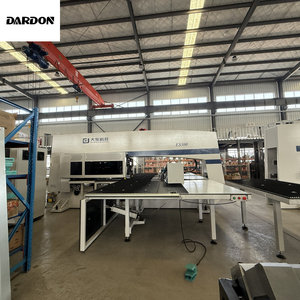
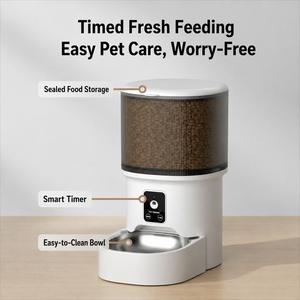
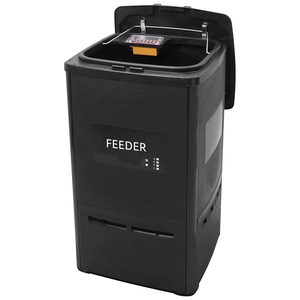
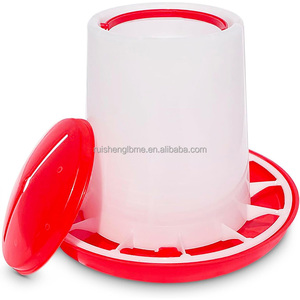
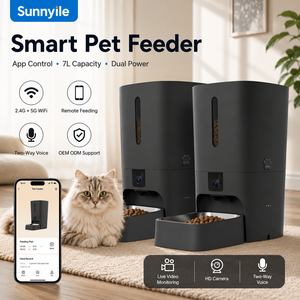
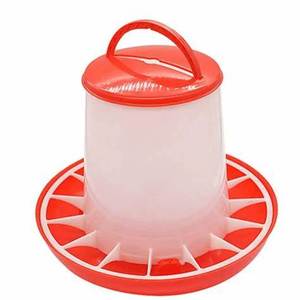
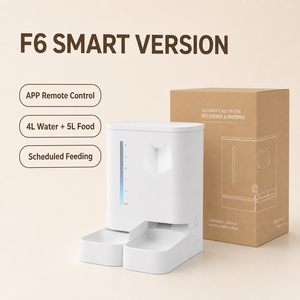
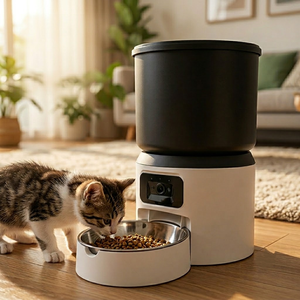
Engineering Specifications Across Industrial, Agricultural, Aquaculture, and Smart Domestic Platforms
| Category Application | Primary Drive Mechanism | Dispensing Accuracy | Ingress / Protection Rating | Core Control System |
|---|---|---|---|---|
| Industrial CNC Stamping | AC Servo Motor / Dual Gripper Pneumatic | ±0.01 mm | IP54 Dust Tight Enclosure | PLC / CNC Synced Pulse Control |
| Commercial Aquaculture | High-Torque DC Motor & Spreader Impeller | ±2.0% Volumetric | IP66 Waterproof & UV Resistant | Digital Programmable Timer / Solar PLC |
| Livestock & Poultry | Gravity-Feed Auger / Vibration Valve | Continuous Flow | Corrosion-Proof Polypropylene | Mechanical / Automated Micro-switch |
| Smart Consumer Pet Care | Gearbox Stepper Motor with Reverse Torque | ±1.0 Gram Portioning | Food-Grade ABS / 304 Stainless Steel | ARM Cortex MCU + Wi-Fi/BLE Cloud Module |
Key Innovation Drivers Reshaping Global Auto Feeder OEM Manufacturing and Procurement Strategies
Next-generation feeders are replacing simple timed relays with real-time optical vision analysis and strain-gauge weight sensors to detect blockage, monitor consumption rates, and adjust feed cycles dynamically.
Enterprise buyers now require native MQTT and MODBUS communications protocols in automated feeding systems, enabling seamless integration into factory MES software or remote agricultural telemetry clouds.
Procurement mandates emphasize PCR (Post-Consumer Recycled) plastics, food-grade 304/316 stainless steel, ultra-low standby power consumption, and integrated solar or lithium battery power redundancy.
To secure a reliable manufacturing partner among top auto feeder suppliers, procurement managers must look beyond surface-level unit pricing. A thorough supplier verification process evaluates four critical technical dimensions:
For CNC sheet metal feeders, bed frames must undergo thermal annealing and stress-relieving to guarantee pitch precision over years of high-speed vibration.
Industrial gearboxes require heavy-duty copper-wound motors with thermal cutoff protection to prevent jam-induced burnouts in continuous operations.
Consumer IoT feeders require firmware over-the-air (FOTA) update capabilities, AES-128 encryption, and Tuya/Smart Life certified module integration.
Direct Answers to Essential Technical and Commercial Buyer Questions
For standard consumer or agricultural auto feeders, OEM branding MOQs typically start at 300 to 500 units. For specialized industrial CNC servo feeders (e.g., punch press units), orders are accepted starting at 1 unit with custom adapter plates.
Top factories utilize bi-directional reverse-torque gearboxes, anti-clog silicone impellers, dynamic weight feedback sensors, and wide-angle discharge chutes that accommodate diverse particle geometries (from 2mm to 15mm kibble/pellets or varying sheet gauges).
Electronic pet and aquaculture feeders require CE, FCC, RoHS, and REACH certifications. Units coming into contact with feed must feature FDA or LFGB compliant food-grade 304 stainless steel or BPA-free ABS plastics.
Yes. OEM industrial feeders include programmable PLC interface cards, encoder feedback connectors, and emergency stop interlocks designed for seamless integration with AMADA, TRUMPF, and Dardon punch presses.
Commercial and consumer units feature dual-power architectures: primary AC wall power paired with automatic failover to D-cell alkaline batteries or rechargeable lithium-ion packs during grid blackouts.
Initial CAD/3D prototype samples take 7–12 days. Full plastic injection mold or metal stamping die creation requires 30–45 days, with mass production runs completing within 25–35 days after sample approval.
Looking for direct factory pricing, OEM custom tooling, or enterprise quotation datasheets? Connect directly with our engineering sales specialists for instant technical consultation.
