The global industrial laser processing equipment landscape is undergoing a structural transition driven by high-brightness solid-state fiber laser cavities, intelligent closed-loop galvo positioning heads, and automated material handling integration. For procurement directors, sheet metal fabricators, and automotive Tier-1 suppliers, identifying a top-tier laser engraver and cutter factory requires auditing beyond raw price-per-watt metrics. Critical evaluation standards center on frame stress-relieving thermal protocols, structural rigidity, sub-component optical alignment, and direct factory after-sales service infrastructure.
This technical white paper evaluates high-performance machinery platforms across CO2 laser engraving, ultra-high-power CNC fiber sheet cutters, automated pipe processing lines, and handheld laser welding systems. Engineered by industry-leading manufacturing enterprises such as Marvel Industrial Solution—a premier machinery OEM operating out of Gujarat's industrial hub in Ahmedabad—these systems incorporate world-class components including IPG, Raycus, and Maxphotonics sources, heavy gantry beds, and multi-axis CNC interfaces designed for continuous 24/7 production cycles.
Direct factory supply models engineered with stress-relieved steel frames, imported cutting optics, and industrial-grade CNC motion control.
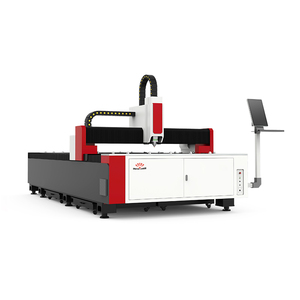
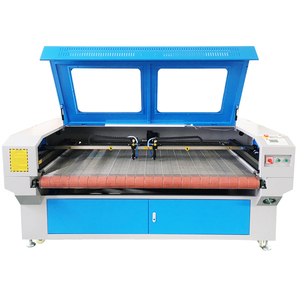
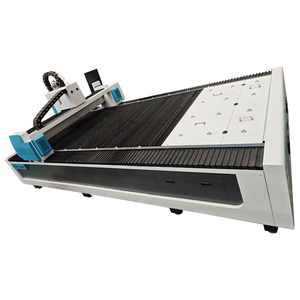
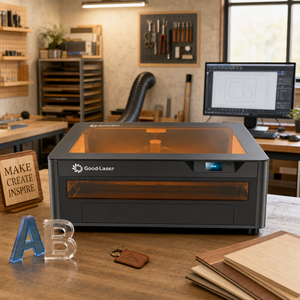
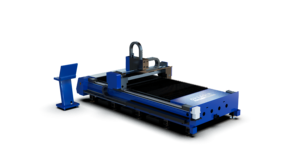
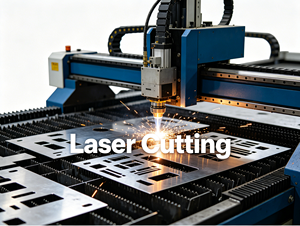
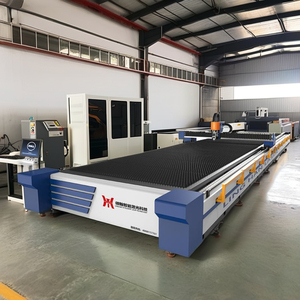
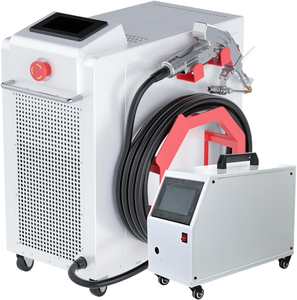
Selecting the optimal wavelength and laser cavity architecture is critical to maximizing yield and minimizing electrical TCO. The table below outlines empirical performance variables across primary industrial laser media.
| Laser Source Wavelength | Primary Substrate Compatibility | Wall-Plug Efficiency | Kerf Width & Accuracy | Assist Gas Requirement | Typical Maintenance Interval |
|---|---|---|---|---|---|
| Fiber Laser (1064 nm) | Carbon steel, stainless steel, aluminum, brass, copper, titanium | 35% – 45% | 0.04 mm – 0.12 mm (±0.03mm) | Nitrogen (N⁚), Oxygen (O⁚), High-pressure Air | >100,000 Hours (Cavity maintenance-free) |
| CO2 Sealed Tube (10.6 μm) | MDF, acrylic, wood, leather, textiles, plastics, rubber, glass | 10% – 15% | 0.10 mm – 0.25 mm (±0.01mm) | Compressed Air / Inert Gas purge | 2,000 – 10,000 Hours (Glass tube replacement) |
| UV Solid-State (355 nm) | Heat-sensitive polymers, silicon wafers, glass, thin metal foils | 15% – 20% | 0.01 mm – 0.03 mm (±0.005mm) | Cold marking / Air assist | 20,000+ Hours (Diode pump replacement) |
| Handheld Fiber Welder (1064 nm) | Stainless steel seam welding, aluminum sheet, sheet metal joints | 35% – 40% | Wobble width: 0.5 mm – 5.0 mm | Argon / Nitrogen protective gas | 50,000+ Hours (Protective window replace) |
B2B procurement teams must audit direct manufacturers against strict structural engineering and quality management controls to guarantee machine longevity and alignment integrity under high acceleration forces.
Premier machine builders like Marvel Industrial Solution utilize heavy welded carbon plate structures subjected to high-temperature electric furnace annealing (600°C) for 24 hours. This eliminates internal welding stress, preventing bed deformation over decades of 1.5G–2.0G dynamic gantry acceleration.
Inspect whether the factory utilizes large-format gantry machining centers to mill rail seats and rack slots in a single clamping setup. Dual linear guide rail parallelism must be verified via laser interferometer measurements to maintain sub-0.02mm positioning tolerance across long travels.
Fiber laser cutting head installation and QBH collimation lens assembly require ISO Class 7 dust-free cleanroom environments. Foreign particulate contamination on quartz protective windows leads to thermal lensing, focal shift, and catastrophic lens burn-through.
A legitimate OEM runs a minimum 48-hour continuous continuous-path laser test under full dynamic load prior to factory dispatch. Thermal imaging checks electrical cabinet heat dissipation, servo drive current balance, and chiller coolant temperature stability.
Industrial metal fabrication is rapidly shifting toward automated, eco-efficient, and AI-assisted processing hubs. Strategic buyers are structuring machinery RFQs around four key technology trends:
High-power fiber laser sources are replacing traditional plasma and oxy-fuel flame cutting for thick carbon plate up to 50mm. Nitrogen bright cutting allows ultra-fast processing speeds on thick stainless steel without oxide formation, eliminating secondary edge-grinding operations prior to welding.
Modern engravers and cutters integrate camera CCD positioning for auto-aligning sheet orientation and locating complex stamping parts. Real-time optical spark spectrum analyzers automatically adjust assist gas pressure and feed rates if dross formation or piercing anomalies occur.
Integrating decoiling units and leveling machinery directly with single-table fiber laser blanking lines enables continuous sheet metal cutting directly from steel coils. This setup minimizes scrap loss, lowers sheet loading overheads, and powers unmanned "lights-out" automated cell manufacturing.
Processing pure copper, gold, and brass with standard 1064nm IR fiber lasers presents severe back-reflection risks to internal optics. Short-wavelength blue (450nm) and green (515nm) diode lasers achieve up to 80% absorption in copper, unlocking spatter-free high-speed laser welding for EV battery busbars and electronics manufacturing.
Understanding machine TCO involves calculating electrical consumption, assist gas expenditure, and optical wear items over a typical 5-year operational lifecycle.
A typical 3kW Fiber CNC cutter drawing approximately 12kW–15kW total plant power (including dual-circuit chiller and dust extractor system):
Compared to legacy CO2 systems—which consume up to 35kW for equivalent optical power while requiring costly laser gas refills and beam-path mirror realignments—fiber technology reduces net operational cost per part by 50% to 70%.
In-depth responses compiled by senior machine application engineers to address key technical and commercial friction points.
Operating from a modern manufacturing hub in Ahmedabad, Gujarat, India, Marvel Industrial Solution stands as a leading engineering enterprise specialized in CNC fiber laser cutting, tube processing, laser welding, industrial marking, and robotic SPM cell automation.
Unlike trading entities, Marvel Industrial Solution executes stress-relief heat treatment, precision gantry machining, electrical cabinet wiring, and quality control testing entirely in-house. Every machine is calibrated with laser interferometers to guarantee true sub-millimeter dynamic accuracy.
Supporting clients across sheet metal fabrication, automotive stamping, panel building, and structural engineering worldwide. Each export shipment includes complete utility schematics, foundation engineering drawings, operator nesting software tutorials, and guaranteed spare parts availability.
Send your DXF / CAD drawings, material specifications, and volume requirements directly to our application engineering team for a comprehensive machinery proposal and cut sample analysis.
