
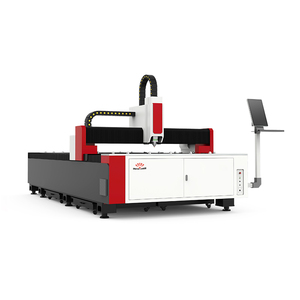
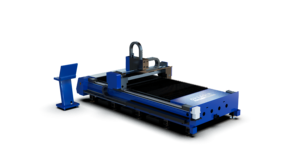
4015 Fiber CNC Lazer Cutter Laser Cutting Machines 6000W 8000W 12000W
6kW - 12kW
4000x1500mm
Heavy Duty
Get a Quote
Engineered for high-volume traceability, structural fabrication, and severe operational resilience.
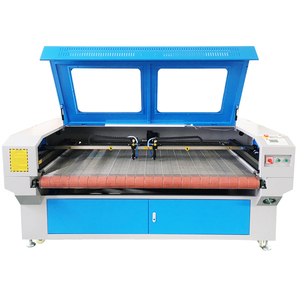
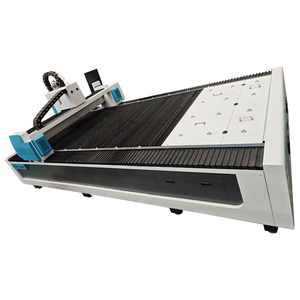
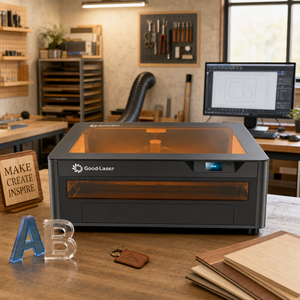
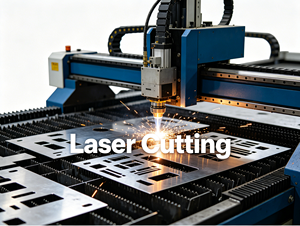
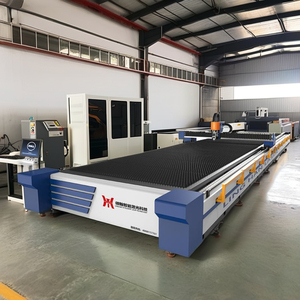
In the modern era of smart manufacturing, direct part marking (DPM), high-speed component coding, and heavy-plate laser cutting form the backbone of industrial traceability and agile manufacturing. As global regulatory standards like ISO 9001, AS9100, and IATF 16949 enforce strict lifecycle part tracking, selecting a reliable marking machine manufacturer and exporter has shifted from a mere capital expenditure decision to a vital strategic partnership.
Modern industrial marking machines span a wide spectrum of physical optical physics: from 1064nm Ytterbium fiber lasers designed for deep metal engraving and high-density 2D DataMatrix coding, to 355nm UV cold-laser systems engineered for delicate semiconductor wafer marking and non-destructive plastic package coding. Understanding the fundamental beam quality metrics ($M^2 < 1.3$), pulse width modulation (1ns to 250ns), and dynamic Rayleigh lengths is paramount for procurement teams optimizing throughput against total cost of ownership (TCO).
Utilizing 1064nm wavelength fiber optics for high-contrast metal marking, deep annealing, and rapid ablation on hardened steel, titanium, and copper alloys.
Operating at 355nm wavelength to prevent thermal degradation. Ideal for medical plastics, glass containers, and flexible PCB substrates.
Integrated machine vision for automatic part recognition and Marking-On-The-Fly (MOTF) capabilities for high-speed conveyanced assembly lines.
At Marvel Industrial Solution (operating globally as a premiere OEM and machine builder), engineering philosophy centers on structural rigidity, optical beam stability, and modular field-serviceability. Unlike simple assembly operations or pure trading intermediaries, our manufacturing facility in Ahmedabad, Gujarat, executes strict stress-relieving and thermal annealing on all welded steel structures prior to precision CNC milling.
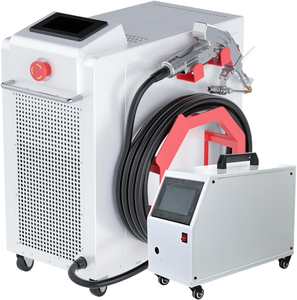
Every industrial laser cutter, handheld welder, and high-speed fiber marker leaves our factory floor backed by rigorous pre-dispatch testing. Our sample-first engineering validation procedure guarantees that your drawing files (DXF/STEP) undergo simulated production trials—measuring heat-affected zones (HAZ), kerf width, micro-burr generation, and code readability using standardized ISO/IEC 15415 optical verifiers.
To assist global procurement officers and production managers in selecting the ideal machine architecture, the following matrix outlines operational performance across key laser categories:
| Laser Source Type | Wavelength / Power Range | Target Substrates | Primary Industrial Use Case | Assist Gas / Cooling Requirements |
|---|---|---|---|---|
| MOPA Fiber Laser | 1064 nm (20W - 100W) | Anodized Aluminum, Stainless, Brass | Black marking on aluminum, color marking on titanium, micro-engraving | Air Cooled / Zero Assist Gas |
| Galvo CO2 Laser | 10.6 µm (30W - 180W) | Wood, Acrylic, Leather, Rubber, Glass | Packaging date coding, non-metallic part cutting and engraving | Air Cooled / Exhaust Fan |
| UV Flying Laser | 355 nm (3W - 15W) | HDPE Plastics, Silicon, Glass, PCB | Cold marking, high-speed cable marking, tamper-evident packaging | Chiller Water Cooled |
| Fiber Laser Cutter | 1.5 kW - 30 kW | Carbon Steel, Stainless, Aluminum, Copper | High-speed heavy sheet blanking, structural metal processing | N₂ (Bright Cut) / O₂ (Thick Steel) |
| Handheld Laser Welder | 1.0 kW - 3.0 kW | Sheet Stainless, Galvanized Steel, Aluminum | Low-distortion seam welding, gap filling, rust cleaning | Integrated Industrial Water Chiller |
As global supply chains transition toward Industry 4.0 architecture, the marking machine and industrial laser export market is experiencing a profound technological convergence. Buyers seeking sustainable competitive advantages must align their equipment roadmap with four major engineering vectors:
Traditional manual fixture alignment is rapidly being replaced by high-resolution CCD camera vision systems. Integrated AI algorithms recognize randomized part orientations on conveyor belts, automatically adjusting the galvo scanner target coordinates in real-time. This eliminates custom jigging costs and human error in high-mix, low-volume (HMLV) production environments.
In sheet metal cutting, laser power thresholds have breached 30kW to 60kW limits. This allows thick plate cutting (up to 40mm steel) using high-pressure compressed air or nitrogen assist, drastically reducing part cost compared to traditional oxy-fuel or plasma cutting methods while maintaining near-machined edge squareness.
Modern 3D fiber laser marking systems incorporate motorized optical z-axes capable of dynamically altering the focal plane across multi-tiered surfaces, spheres, cones, and irregular casting geometries without sacrificing spot diameter or power density.
With industrial gas costs accounting for up to 45% of fiber laser operational expenses, advanced compressed air filtration systems (achieving ISO 8573-1 Class 1 oil/water purity) enable ultra-clean cutting of stainless steel up to 10mm thickness at a fraction of high-purity nitrogen costs.
Expert guidance addressing common technical, operational, and export compliance queries.
Selection depends entirely on substrate absorption spectra. Fiber lasers (1064nm) are optimal for metals and dense engineering plastics where thermal absorption enables durable annealing or etching. CO2 lasers (10.6µm) absorb efficiently in organic materials like wood, acrylic, paper, and leather. UV lasers (355nm) utilize "cold photochemical" marking, ideal for heat-sensitive plastics, glass, and thin films that degrade under infrared heat.
For general sheet metal work: 1.5kW processes up to 6mm mild steel and 3mm stainless. A 3kW system cleanly handles up to 14mm mild steel and 6mm stainless. 6kW to 12kW units are industry standards for fast nitrogen cutting of 12mm-20mm stainless steel and heavy plate fabrication. 20kW+ machines target ultra-thick structural plate above 25mm with extreme feed speeds.
A single table cutter utilizes a fixed working bed where loading and unloading must occur while the laser head is idle. An exchange table (dual pallet) machine features an automated shuttle system that swaps cut parts with a fresh sheet in under 15 seconds. This allows continuous cutting while operators unload parts, increasing daily shift productivity by 20% to 35%.
All exported machinery undergoes vacuum anti-rust sealing, reinforced wooden crate encapsulation, and moisture-absorbent packaging designed for ocean freight transits. We provide complete foundation engineering drawings, pre-shipment Factory Acceptance Test (FAT) video documentation, remote CAD/CAM nesting software training, and emergency spare parts kits for international clients.
Yes. Beyond standardized laser cutters and marking stations, our engineering team designs and manufactures turnkey Special Purpose Machines (SPMs)—including automatic metal polishing lines, gantry robotic pick-and-place tending units, and multi-stage stamping press transfer robots tailored to your specific plant layout and cycle-time goals.