
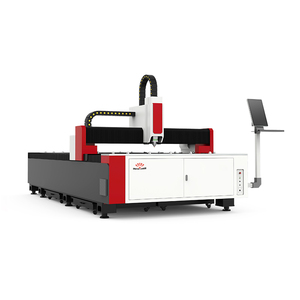
Explore factory-direct CNC fiber laser cutters, CO2 engravers, and automated fabrication lines engineered for demanding manufacturing standards.
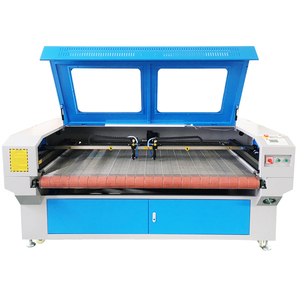
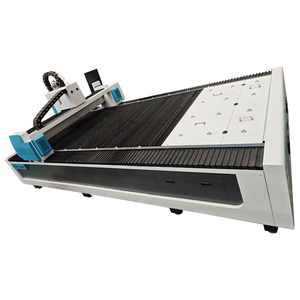
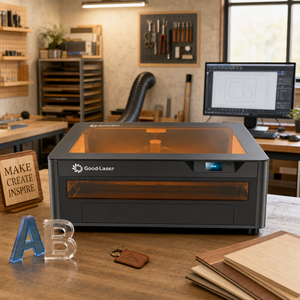
In the modern metal fabrication landscape, selecting the ideal CNC punch press manufacturer and exporter requires a rigorous analysis of Total Cost of Ownership (TCO), kinetic stroke efficiency, ram drive physics, and modular factory automation. Industrial punch presses—spanning traditional hydraulic systems, mechanical flywheels, and cutting-edge servo-electric drive architectures—serve as the foundational backbone for electrical enclosure manufacturing, automotive tier-1 stamping, HVAC ducting, server chassis production, and architectural sheet metal work.
Historically, metal fabricators faced a strict compromise between force intensity and power consumption. Traditional hydraulic punch presses offered high tonnage for thick plate processing but suffered from high thermal dissipation, heavy maintenance overheads, oil degradation, and constant standby energy loss. The introduction of servo-electric punch press technology revolutionized the sector by decoupling ram velocity from engine speed, allowing precision control over forming depth, silent nibbling, louvre crafting, and tapping operations without hydraulic oil infrastructure.
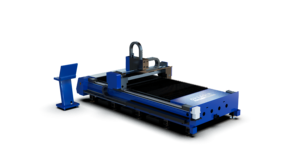
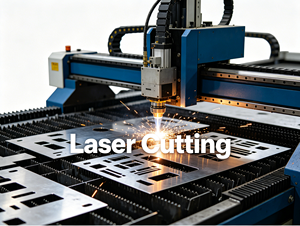
Simultaneously, the convergence of CNC punching with fiber laser cutting—known as Combination Punch-Laser Systems—has set a new standard for high-mix, low-volume job shops. These hybrid platforms leverage the rapid tool-change speed and forming capabilities of a turret punch press alongside the geometry-agnostic, zero-tooling flexibility of ultra-high-power fiber lasers (up to 30kW). Engineering executives evaluating global OEM vendors must scrutinize structural bed rigidity, stress-relief heat treatment processes, tool station capacity, and intelligent CAM nesting software integration.
An authoritative engineering breakdown of market leaders, core technology specializations, and global manufacturing capabilities.
Specialization: AC Servo Turret Punch Presses & EML Combination Lines.
Amada remains a global benchmark in sheet metal machinery. Famous for its EM series twin AC servo drive systems, Amada platforms feature high-speed nibbling, low noise emission, and proprietary thick turret tooling that minimizes sheet distortion during intensive forming operations.
Specialization: TruPunch Linear Drive Systems & High-Precision Forming.
TRUMPF excels in single-head electro-hydraulic and servo-electric punch presses. Utilizing a 360-degree rotation head for all tooling, TRUMPF punch presses reduce overall tool inventory requirements while offering scratch-free sheet processing via active die mechanisms.
Specialization: OEM Fiber Laser, Servo Punching & Custom Robotic Automation (SPM).
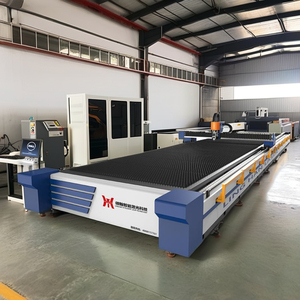
Distinguished by single-source engineering integration, Marvel Industrial Solution manufactures ultra-rigid, stress-relieved machinery frames paired with Tier-1 optic sources and custom gantry transfer systems. Delivering high ROI with tailor-made special purpose machinery and global export support.
Specialization: Flexible Manufacturing Systems (FMS) & S4 Punching-Shearing Systems.
Salvagnini's integrated multi-press heads allow simultaneous punching with automatic tool management. Designed specifically for lights-out automated production, their S4 system processes sheets directly from raw inventory into bent components without manual intervention.
Specialization: Servo-Electric Punch-Shear & Punch-Laser Workcells.
Pioneers of green button servo-electric technology, Prima Power's Shear Genius and Combi Genius series offer sustainable energy efficiency, high stroke rates, and low maintenance costs across high-volume sheet metal manufacturing hubs.
Specialization: Motor-Driven Servo Ram Punch Presses & Automation Tower Systems.
Muratec's Motor Driven Ram Punch Presses employ a dual-servo ram design that delivers controlled force profiles. Renowned for long tool life, high-density turret layouts, and seamless connection to automated material loading towers.
Specialization: Strippit CNC Turret Punch Presses & Heavy-Duty Tooling Stations.
LVD Strippit platforms deliver robust punching force with large turret configurations. Designed for heavy sheet applications, LVD presses feature energy-reduction modes, versatile indexable stations, and intuitive Touch-P graphical interfaces.
Specialization: Heavy Mechanical & AC Servo Stamping Presses.
Komatsu provides high-tonnage mechanical and servo stamping presses engineered for progressive die work and structural automobile chassis panels. Built with extreme bed stiffness to resist off-center loading dynamic stresses.
Specialization: Industrial Stamping Lines & High-Speed Blanking Presses.
Schuler represents the apex of automotive metal forming and industrial press line automation. Their servo-tech transfer presses execute rapid stroke frequencies while maintaining sub-millimeter die synchronization.
Specialization: Cost-Effective Mechanical & Hydraulic Turret Punch Machines.
Tailift provides economic punching solutions catered to expanding fabrication workshops requiring basic auto-index capability, reliable thick-turret tool compatibility, and entry-level CNC control integration.
Evaluating electrical demand, maintenance metrics, forming capabilities, and operational noise across major punch press drive platforms.
| Evaluation Parameter | Hydraulic Drive Press | Servo-Electric Ram Press | Fiber Laser Punch Hybrid |
|---|---|---|---|
| Power Consumption (kW) | High (Constant Pump Idle: 18 - 30 kW) | Ultra-Low (On-Demand: 4 - 9 kW) | Moderate (Dynamic Fiber + Servo: 12 - 22 kW) |
| Stroke Rate (Hits/Min) | 350 - 600 HPM | 800 - 1200 HPM | 1000 HPM Punch / Continuous Laser |
| Forming & Tapping Capability | Limited Speed Control | Full Ram Depth & Speed Control | Advanced Hole Forming + Laser Profiling |
| Maintenance & Fluid Cost | High (Oil Changes, Seals, Chiller Units) | Minimal (Grease Lubrication Only) | Low-Medium (Laser Optics + Mechanical) |
| Noise Level (dB) | 85 - 95 dB (High Dynamic Noise) | 70 - 78 dB (Silent Nibbling) | 75 - 82 dB (Enclosed Work Zone) |
| Optimal Production Mix | Thick Steel Plate, Medium Batches | Thin Sheet, High-Speed Forming, High Volumes | Complex Geometries, Prototype to Mass Production |
Strategic technologies shaping international machinery procurement decisions through 2030.
Procurement teams are prioritizing continuous "lights-out" operation. Modern punch press exports are bundled with automated compact sheet loaders, raw material storage towers, and automated part-sorting robots (gantry or 6-axis articulated arms) to minimize manual operator handling.
Industry 4.0 integration has shifted from a luxury feature to a baseline bid requirement. Smart sensors monitor ram load signature, vibration anomalies, and thermal variance to predict tool wear and prevent unexpected die crashes via real-time cloud dashboards.
With volatile raw material prices for stainless steel, brass, and copper, modern CNC control software utilizes advanced CAD/CAM auto-nesting algorithms. Common-line cutting, micro-joint placement, and residual sheet management drastically reduce scrap percentages.
Direct OEM machine building, in-house stress-relieving, rigorous quality assurance, and complete turnkey export services.
Unlike trading houses that simply re-badge generic equipment, our manufacturing infrastructure builds machinery from the ground up. Every structural frame is stress-relieved via heat treatment and precision-machined in-house to maintain structural integrity under high traverse acceleration.
Our engineering group approaches production floor challenges holistically. We design and build integrated production cells incorporating material handling, laser cutting, precision marking, auto metal polishing, and robotic press transfer systems.
Essential guidance for procurement directors, plant engineers, and fabrication workshop managers.
Punching force (Tons) is calculated using the formula: Tonnage = (Perimeter of Cut in mm × Sheet Thickness in mm × Shear Strength in N/mm²) / 9800. For example, punching a 50mm diameter hole in 3mm mild steel (Shear Strength ~340 N/mm²) requires approx. 16.3 tons of punching force. We recommend sizing your press at 20-30% above peak tonnage to prolong tool life and ram bearings.
Servo-electric systems cut energy consumption by 50% to 70% by drawing power only during the punch stroke. Additionally, the elimination of hydraulic oil changes, seal replacements, chillers, and thermal expansion warm-up periods typically yields complete equipment payback within 18 to 24 months under multi-shift operation.
Not entirely. While fiber lasers excel at cutting complex outer profiles and unpredictable contours without tooling costs, they cannot perform 3D sheet forming operations such as louvres, card guides, countersinking, extrusion tapping, or rib stiffening. The ideal modern shop floor utilizes either dedicated servo punch presses alongside fiber lasers or an integrated combination punch-laser machine.
As a baseline benchmark: 1.5kW-2kW is ideal for up to 6mm mild steel and 3mm stainless steel; 3kW-4kW economically processes 12-16mm mild steel and 8mm stainless steel; 6kW processes up to 22mm plate; while 12kW-30kW platforms are engineered for heavy structural plate (25mm-40mm) and ultra-high-speed nitrogen bright-cutting of thin sheet metals.
Every international machinery order includes comprehensive sea-worthy packaging, foundation layouts, electrical wiring schematics, full factory acceptance testing (FAT) video logs, spare parts catalogs, on-site commissioning support, and operator training. Recommended 1-year and 2-year maintenance spare kits are offered alongside remote diagnostic connectivity.
Yes. Our engineering team designs custom automation workcells—such as automatic metal polishing systems, gantry pick-and-place robots, and stamping press transfer lines—tailored directly to your part drawings, cycle-time targets, and factory floor layout.
Send us your DXF/CAD drawings, part specifications, or target production volumes. Our senior application engineers will provide a comprehensive machine configuration report, power sizing analysis, and factory-direct quotation.
Contact Us