Explore our engineering-grade range of CNC fiber laser cutting systems, CO2 processing machinery, handheld welders, and precision metal fabrication equipment engineered for round, square, profile, and sheet metal applications.
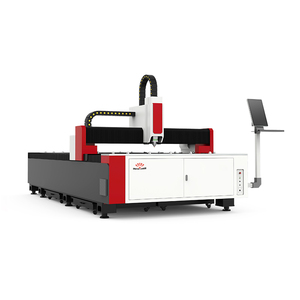
Heavy-duty dual-drive Gantry CNC laser processing center designed for high-power, thick-plate metal fabrication.
Contact Us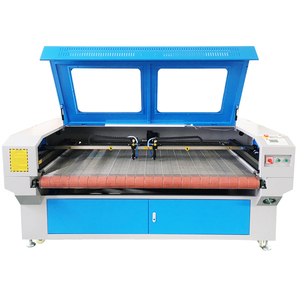
High-speed precision CO2 laser cutter suited for acrylic, wood, MDF, leather, and technical fabric processing.
Contact Us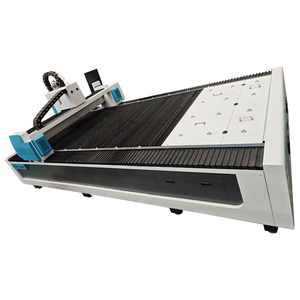
Industrial-grade fiber cutting machinery backed by a 3-year factory warranty, optimized for carbon and stainless steel.
Contact Us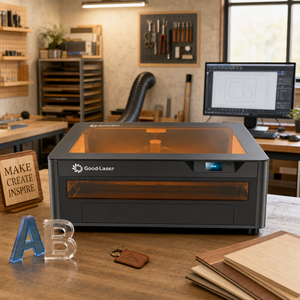
Enclosed high-accuracy 520x315mm desktop system engineered for delicate non-metallic components and micro-engraving.
Contact Us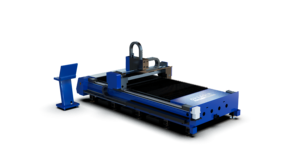
Compact single-platform CNC cutter delivering extreme structural rigidity and cost-effective sheet metal fabrication.
Contact Us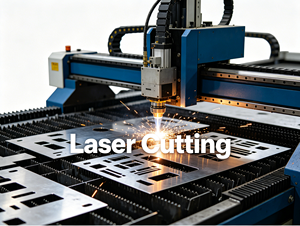
Custom engineering subcontracting for rapid prototyping and mass-production of brass, copper, and aluminum parts.
Contact Us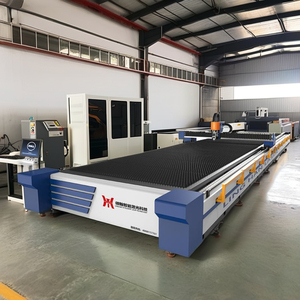
High-power 3015/4015 fiber laser center built for high-speed bright cutting of heavy structural plates.
Contact Us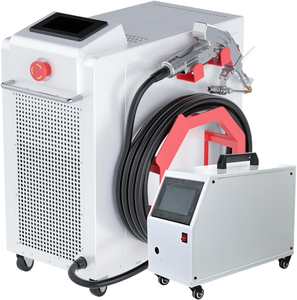
Water-cooled wobble-head laser welder capable of deep penetration seam welding and metal surface oxide cleaning.
Contact UsThe global metal fabrication landscape is undergoing a paradigm shift driven by the transition from traditional mechanical sawing, drilling, and manual coping to integrated CNC fiber tube laser processing. Modern tube laser cutting machines consolidate multiple manufacturing steps—including cutoff, beveling, slotting, hole punching, and complex intersection profiling—into a single continuous automated operation.
According to industrial manufacturing intelligence, the shift toward solid-state fiber laser sources ( operating at a ~1.06μm wavelength ) has yielded operational efficiency gains exceeding 300% compared to legacy CO2 systems. Key drivers include higher wall-plug electrical efficiency (over 40% for fiber vs. 10% for CO2), maintenance-free beam delivery via flexible optical fiber cables, and significantly enhanced absorption rates in non-ferrous, highly reflective alloys such as brass, copper, and aluminum.
For procurement directors, plant operations managers, and OEM fabricators, selecting the ideal tube laser manufacturer requires a multi-dimensional assessment that goes beyond laser wattage. Critical evaluation metrics encompass bed structural rigidity, chuck clamping kinematics, dynamic acceleration (G-force ratings), software nesting intelligence, zero-tailings material utilization technology, and lifecycle total cost of ownership (TCO).
Below is a technical analysis of the leading global original equipment manufacturers (OEMs) and specialized machinery builders engineering advanced pipe and profile laser cutting systems.
| Manufacturer | Primary Power Range | Max Tube Capacity | Core Engineering Advantage | Ideal Industry Target |
|---|---|---|---|---|
| TRUMPF Group | 2.0 kW - 12.0 kW | Up to Ø 254 mm | TruLaser Tube tech with open-profile & bevel cutting excellence | High-end Automotive, Aerospace & Medical |
| Bystronic Laser | 3.0 kW - 15.0 kW | Up to Ø 318 mm | FL Tube series featuring fully automated material handling integration | Structural Steel & Contract Job Shops |
| BLM Group | 2.0 kW - 10.0 kW | Up to Ø 610 mm | Lasertube ADIGE technology with 3D 5-axis tilting head systems | Heavy Infrastructure, HVAC & Agricultural Equipment |
| Mazak Optonics | 2.5 kW - 10.0 kW | Up to Ø 406 mm | 3D FABRI GEAR series with multi-chuck self-centering technology | Building Construction & Structural Pipes |
| Han's Laser | 1.5 kW - 20.0 kW | Up to Ø 350 mm | High-speed dual-drive chucks & automated production lines | Automotive Tier Suppliers & Metal Furniture |
| Marvel Industrial Solution | 1.5 kW - 30.0 kW | Up to Ø 500 mm | Custom SPM integration, zero-tailing chuck systems & stress-relieved frames | Heavy Engineering, Process Equipment & General Fabrication |
| Amada Co., Ltd. | 3.0 kW - 9.0 kW | Up to Ø 220 mm | ENSIS beam modulation for seamless thin-to-thick profile transition | Precision Metal Enclosures & Appliance Racks |
| Prima Power | 2.0 kW - 6.0 kW | Up to Ø 305 mm | Laser Tube 3D technology featuring flexible 5-axis head geometry | Commercial Vehicle Frames & Logistics Systems |
| IPG Photonics / Systems | 1.0 kW - 10.0 kW | Custom Profiles | Direct diode and ultra-bright fiber laser beam delivery systems | Specialized Electronics & Battery Enclosure Profiles |
| Salvagnini | 2.0 kW - 6.0 kW | Up to Ø 200 mm | Optionally integrated structural blanking & flexible pipe cells | Modular Metal Cabinetry & HVAC Systems |
The tube processing industry is rapidly migrating away from standard 2D perpendicular cutting toward multi-axis intelligent automation systems. Engineers must consider the following technological developments during capital equipment budgeting:
Modern tube processors incorporate high-precision motorized ±45° tilting heads capable of executing complex weld seam prep angles, countersinks, and interlocking saddle joints directly on round, rectangular, and open C/U/H structural profiles.
Material scrap represents one of the largest ongoing operational expenses in pipe fabrication. Advanced 3-chuck and 4-chuck moving clamping systems allow continuous tube shifting through the cutting zone, enabling true zero-tailing material loss on raw stock bars.
Real-time thermal monitoring cameras integrated directly inside the cutting head sense molten splatter during high-power oxygen piercing. Closed-loop algorithms instantly modulate laser peak power and assist gas pressure to prevent piercing blowouts and cut quality degradation.
To eliminate manual material handling bottlenecks, automated bundle loaders handle up to 5,000 kg raw material packs. Intelligent separation arms measure, profile, seam-detect, and feed individual tubes sequentially into the machine's front chuck without operator intervention.
When evaluating suppliers for commercial procurement, purchasing teams must assess long-term operational viability rather than focusing solely on upfront machine purchase prices. Industry dynamics are driving several major strategic trends:
Assist gas typically accounts for 40% to 60% of hourly variable running costs. While nitrogen cutting produces oxide-free edges for stainless steel and oxygen allows thick carbon steel cutting, leading fabricators are shifting to high-pressure compressed air (16-20 bar) for medium-gauge steel cutting. Procurement directors should select machines equipped with dual-stage gas filtration and high-pressure dynamic flow valves to enable rapid switching between oxygen, nitrogen, and compressed air.
Standalone cutting units are increasingly being integrated directly with secondary downstream processes. Forward-thinking buyers prioritize machine vendors capable of engineering combined production cells—integrating tube laser cutting with auto-polishing units, robotic welding stations, laser marking setups, and gantry pick-and-place systems under a unified PLC/HMI controller platform.
Dynamic acceleration speeds up to 1.5G generate immense vibrational forces across the machine bed. Premium OEMs utilize heavy-duty plate-welded structural steel beds subjected to high-temperature electric furnace annealing and stress relieving prior to precision CNC milling. This guarantees long-term geometric accuracy and prevents bed deformation across decades of multi-shift operation.
Marvel Industrial Solution manufactures industrial laser systems and specialized automation lines from its production facilities in Ahmedabad, Gujarat, India. Built on rigorous engineering standards and direct OEM technical support, our equipment helps global fabricators maximize machine uptime and operational ROI.
Every machine is configured with world-class, globally standardized core components—including Raycus/IPG fiber laser sources, Raytools/Precitec autofocus cutting heads, Yaskawa/Fuji servo systems, and Schneider/SMC pneumatics—ensuring easy access to local spare parts globally.
We provide full sample testing before order confirmation. Send us your CAD drawings (DXF/STEP) or raw material samples, and our application lab will perform cutting or welding trials, returning detailed cut-edge roughness metrics, speed reports, and video documentation.
Our engineering team designs custom automation solutions tailored to unique production requirements, including automated pipe polishing lines, stamping press transfer robots, gantry loading systems, and vision-guided laser marking stations.
Technical guidance and answers to common procurement questions, compiled by our engineering team to assist equipment buyers.
Selecting laser power should be based on your primary production material thickness rather than maximum edge capacity. A 1.5kW to 2.0kW fiber laser economically processes mild steel up to 6mm and stainless up to 3mm. A 3.0kW to 4.0kW source handles up to 10mm mild steel and 5mm stainless steel efficiently. For heavy structural pipes (exceeding 12mm wall thickness) or high-speed nitrogen bright cutting, power platforms from 6.0kW to 12.0kW are recommended.
Standard 2-chuck machines require a minimal clamp distance between the cutting head and chuck jaws, resulting in usable material scrap (tailings) ranging from 150mm to 300mm per bar. A 4-chuck moving system allows synchronized clamping, passing the tube seamlessly between chucks through the cutting plane. This enables continuous zero-tailing cutting, maximizing material yield per length of raw stock.
Yes. Solid-state fiber lasers operate at a 1.06-micron wavelength, which is absorbed far more readily by reflective metals than legacy 10.6-micron CO2 beams. Modern fiber sources include optical back-reflection isolators and sensors that instantly shut down laser emission if high-energy reflections return to the optical cavity, allowing safe processing of copper, brass, and aluminum alloys.
Fiber laser systems eliminate high-cost consumables associated with CO2 lasers, such as laser gas mixtures, vacuum pumps, and beam delivery mirrors. Primary consumable costs for fiber lasers include assist gases (oxygen, nitrogen, or compressed air), copper cutting nozzles, protective quartz cover slides, and ceramic mounting rings. Proper gas filtration and parameter tuning ensure protective optics last hundreds of beam hours.
Every machine export order includes detailed foundation loading diagrams, electrical utility specs, sea-worthy vacuum packaging, and a full set of replacement wear parts. Remote video-assisted diagnostics and on-site engineering support cover installation, parameter calibration, CAM nesting software training, and preventive maintenance instruction for your operator team.
High-precision optical or inductive seam detection sensors scan the tube profile prior to the initial piercing cut. By locating the longitudinal weld seam of the raw pipe, the CNC software dynamically rotates the nesting layout, ensuring holes, slots, and critical features avoid cutting directly through the weld seam, maintaining part structural integrity.
Consult with our applications engineering team to review your part drawings, material specifications, and production targets. We provide detailed equipment proposals, nesting efficiency analysis, and cut-sample demonstrations.
