Direct factory supply with engineering integration, global support, and documented E-E-A-T performance standards.
In the contemporary manufacturing landscape, selecting a qualified Welding Machine Manufacturer & Factory requires a strategic shift from evaluating basic power supplies to auditing whole-system thermal management, optical stability, and process automation. Modern industrial metal joining is undergoing a rapid paradigm shift. Legacy Shielded Metal Arc Welding (SMAW) and Gas Metal Arc Welding (GMAW/MIG) are increasingly yielding market share to continuous-wave (CW) fiber laser welding systems and automated robotic cells.
This technical whitepaper provides B2B procurement heads, plant managers, and structural fabrication engineers with an authoritative analysis of top-tier industrial machine platforms. It examines how advanced fiber laser sources (ranging from 1.5kW to 30kW), precision CNC gantries, and intelligent wobble-head optics minimize the Heat-Affected Zone (HAZ), reduce post-weld grinding by up to 80%, and optimize total cost of ownership (TCO) across intensive duty cycles.
Key technical parameters global procurement teams must audit before specifying welding and laser fabrication assets.
Superior factories construct machine beds from heavy welded structural steel, subjected to high-temperature electric furnace annealing (600°C+) to eliminate residual mechanical stress. This guarantees geometric stability over decades of high-acceleration traverse operations.
Reliable manufacturing operations specify global Tier-1 fiber laser engines equipped with built-in optical back-reflection isolation mechanisms. This allows safe, continuous processing of highly reflective non-ferrous alloys such as copper, brass, and aluminum alloys.
Complete traceability through ISO9001 and CE industrial certifications. Every system must undergo pre-shipment laser interferometer accuracy verification, dust-free optical cleanroom assembly, and rigorous load testing prior to global export.
Comprehensive engineering comparison of modern metal joining processes for production planning.
| Welding Process | Heat-Affected Zone (HAZ) | Processing Speed | Post-Weld Processing | Suitable Material Spectrum | Automation Readiness |
|---|---|---|---|---|---|
| Handheld Fiber Laser | Minimal (< 0.5 mm) | 4x - 10x faster than TIG | Zero to negligible grinding required | Stainless steel, carbon steel, aluminum, galvanized sheet | High (Wobble head / Cobot) |
| Robotic Laser Gantry | Ultra-Low (< 0.2 mm) | High-speed continuous seam | None (Automated cosmetic finish) | Sheet metal assemblies, aerospace, automotive chassis | Fully Automated (Industry 4.0) |
| TIG (GTAW) Welding | Wide (High thermal input) | Slow to Moderate | Extensive planishing & polishing required | Thin stainless, titanium alloys, nickel base | Moderate (Dedicated lathe) |
| MIG/MAG (GMAW) | Moderate to Large | Moderate | Heavy slag cleanup & spatter removal | Heavy structural steel, thick plate steelwork | High (Industrial articulated robot) |
| Hybrid Laser-Arc (HLA) | Controlled / Moderate | Extremely Fast | Minimal filler metal smoothing | Shipbuilding, pressure vessels, pipeline steel | Fully Automated CNC |
Technical classification of industry-standard machines manufactured by premier global factories.
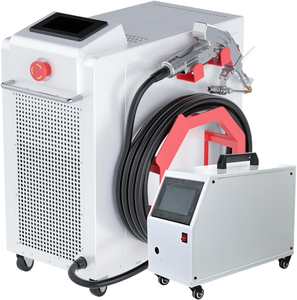
Integrating dual-wobble optical heads, integrated water chillers, and automatic wire feeders. Designed for ergonomic manual operation, these units deliver aesthetic fillet and lap welds on stainless steel and aluminum without distortion, dramatically lowering reliance on rare certified skilled welders.
Combining 6-axis industrial robots or precision Cartesian gantries with high-power fiber laser sources. Equipped with seam-tracking vision sensors, these cells execute complex 3D spatial seams on complex automotive pressings and enclosure components with sub-millimeter precision.
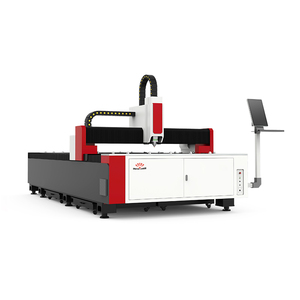
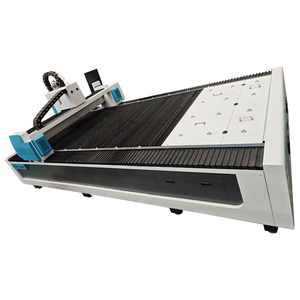
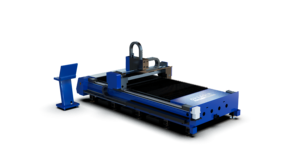
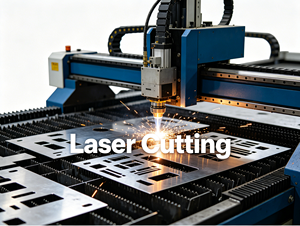
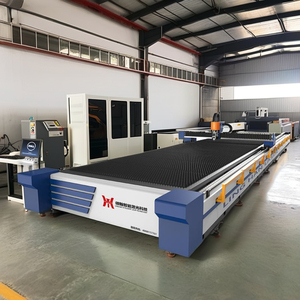
Large-format machines ranging up to 30kW capacity. Engineered for dual-function thick structural plate preparation, bevel cutting, and heavy section edge joining. Built upon stress-relieved gantry frames capable of supporting heavy structural loads.
Pneumatic self-centering chuck systems engineered for round, rectangular, and oval tubing. Enables single-pass tube profiling, slotting, and subsequent automated seam welding, replacing multiple traditional mechanical operations.
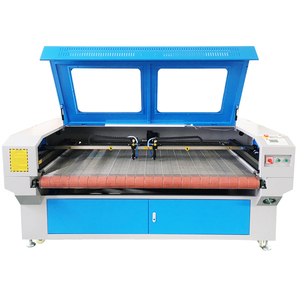
Sealed CO2 laser platforms optimized for non-metallic components, industrial seals, gaskets, composite insulator profiling, and specialized acrylic shield production supporting industrial welding cells.
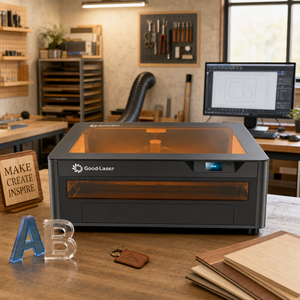
Class-1 fully enclosed compact laser platforms offering 0.01mm positioning repeatability. Widely deployed for precision shims, electrical contact tabs, sensor housings, and micro-welding component preparation.
Continuous production systems incorporating decoiling, servo leveling, laser cutting, and inline welding. Designed for high-volume HVAC ducting, electrical cabinet panels, and appliance manufacturing.
High-speed fiber and UV laser markers integrated into welding assembly lines. Prints permanent high-density DataMatrix 2D barcodes, serials, and logos directly onto welded assemblies for full supply chain traceability.
Dedicated Special Purpose Machines (SPMs) featuring multi-head automated abrasive belts and buffing spindles. Replaces hazardous manual weld seam grinding, delivering uniform Ra surface finishes on sanitary stainless steel vessels.
Heavy payload robotic transfer mechanisms engineered to feed blank metal plates into press lines and transfer welded sub-assemblies cleanly between automated stations without human intervention.
Why leading global fabricators choose direct factory-engineered solutions from Marvel Industrial Solution.
As a dedicated machinery builder headquartered in the industrial hub of Ahmedabad, Gujarat, India, Marvel Industrial Solution operates as an engineering-driven OEM. Unlike pure commercial trading operations, every machine platform—from single-table fiber cutters and handheld laser welders to multi-axis gantry robots—is designed, welded, stress-relieved, and precision-machined in-house.
Machine frames undergo total thermal stress relief in dedicated furnaces, preventing bed deflection and maintaining precision track alignment for decades.
Clients submit DXF files or physical part drawings; optical engineers perform sample cutting/welding and deliver full metallurgical penetration reports prior to contract execution.
Complete sea-worthy vacuum packaging, comprehensive schematic documentation, foundation loading plans, and remote video commissioning support.
Market intelligence and technological trajectories shaping the global welding equipment ecosystem.
For non-ferrous joining, traditional 1064nm infrared laser light experiences high initial reflectivity when processing pure copper and gold. Procurement budgets are shifting toward 450nm blue and 515nm green laser sources, which achieve spatter-free keyhole welding at significantly lower energy inputs.
Factories are replacing fixed-path automated welding with AI-assisted laser vision sensors. These systems measure joint gap variations dynamically in real-time, automatically adjusting laser beam power, wobble frequency, and wire feed speed to eliminate weld defects.
Modern machine platforms feature direct OPC-UA protocol integration, constantly streaming real-time operational diagnostics—such as protective lens temperature, cover gas flow rates, optical power degradation, and chiller status—directly into factory MES systems.
Expert answers to common engineering and purchasing inquiries regarding industrial welding & laser platforms.
Power selection depends on material composition, joint configuration (lap, butt, or corner weld), and required penetration depth. As a benchmark rule: a 1.5kW handheld laser welder achieves full penetration up to 3mm in stainless steel and 2.5mm in aluminum; a 2kW system handles up to 5mm stainless steel and 4mm aluminum; while 3kW+ power sources are specified for heavy section joining above 6mm or high-speed automated production lines.
Although initial capital investment for a fiber laser welder is higher than a legacy TIG power source, laser welding yields a dramatically lower total cost per part. Fiber laser processing operates at 4x to 8x the travel speed of TIG, consumes significantly less electrical power via high wall-plug efficiency, and virtually eliminates secondary post-weld grinding and straightening labor.
Yes. Modern continuous-wave (CW) laser machinery incorporates specialized optical isolators within the laser source to absorb back-reflected light. Furthermore, utilizing high-frequency wobble welding heads distributes optical density evenly, creating a stable molten bath and preventing optics damage when processing reflective alloys.
Industrial laser welding typically utilizes high-purity Argon (99.99%) or Nitrogen as shield gas. Argon provides superior oxidation protection for titanium and high-grade stainless steel, while Nitrogen is widely utilized for carbon steel and general fabrication to optimize operating cost per meter.
Industrial laser welding machinery must comply with IEC 60825-1 laser safety regulations. Handheld and automated systems require interlocked safety circuit enclosures, protective laser safety eyewear (OD6+ rated for 1064nm wavelengths), automated optical contact sensors in the torch head, and integrated fume extraction systems to ensure operator safety.
Comprehensive export services include full sea-worthy timber boxing, detailed electrical and utility connection schematics, pre-installed parameter libraries, step-by-step remote video commissioning, operator CAM training, and rapid global dispatch of critical consumables (nozzles, protective lenses, ceramic rings).
Consult directly with our technical application team to evaluate part drawings, calculate cycle times, and configure the ideal fiber laser welding or automated machinery platform for your facility.
