Explore our direct OEM manufactured laser equipment, rigorously tested for structural integrity, continuous beam stability, and thermal resilience under heavy multi-shift industrial manufacturing environments.
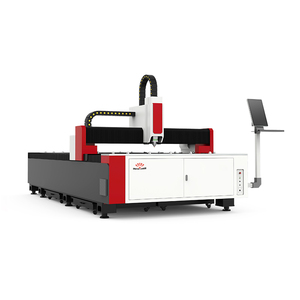
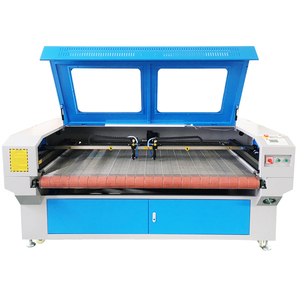
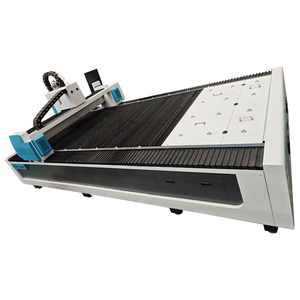
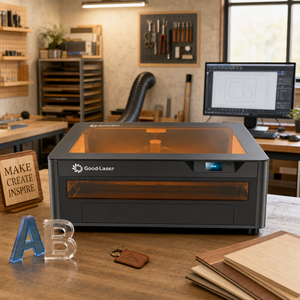
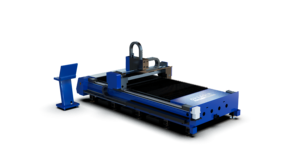

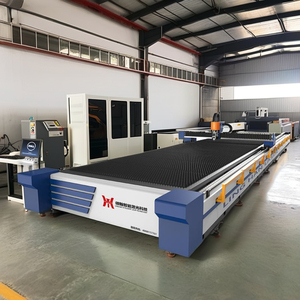
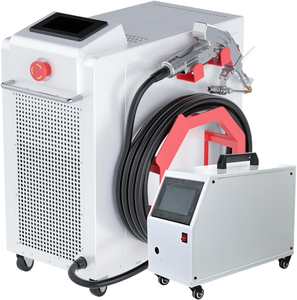
As a leading Chinese fiber laser machinery supplier and global exporter, our engineering philosophy revolves around solving real-world manufacturing bottlenecks. In industrial metal fabrication, operational profitability is determined by three variables: beam energy delivery efficiency, dynamic gantry stability, and operational assist gas economics. Understanding these parameters allows global procurement directors to look beyond initial capital expenditure and evaluate lifetime total cost of ownership (TCO).
Modern fiber lasers utilize solid-state laser diodes to pump ytterbium-doped optical fibers. Unlike legacy CO2 systems that required complex internal mirror alignment and gas replacement, fiber laser optical paths are entirely enclosed within optical fiber cables. This architecture yields a fundamental wavelength of 1.064 μm—precisely one-tenth that of a CO2 laser (10.6 μm)—resulting in an absorption rate in metals that is up to 500% higher, particularly for highly reflective substrates such as aluminium, brass, and copper.
Fiber laser sources convert electrical power into optical laser power at efficiency rates exceeding 40%, compared to a mere 8% to 10% for traditional CO2 lasers. This drastic energy conversion efficiency cuts workshop electricity bills by over 60% annually.
Our single-mode and specialized multi-mode laser sources maintain a Beam Parameter Product (BPP) near the theoretical diffraction limit. A smaller beam waist concentrates photons into high power densities, enabling faster cutting feed rates.
Machine frames undergo a 600°C high-temperature heat treatment inside automated annealing furnaces, followed by 72-hour vibration stress relief. This prevents structural distortion under 1.5G to 2.5G dynamic acceleration.
To provide actionable Information Gain for machinery procurement teams, the table below breaks down practical cutting performance metrics across varying power levels and material types:
| Laser Source Power | Max Clean Cut (Mild Steel) | Max Bright Cut (Stainless Steel) | Assist Gas Strategy | Optimal Production Speed |
|---|---|---|---|---|
| 3,000 Watts (3kW) | 16 mm - 20 mm | 8 mm - 10 mm | N2 (Stainless) / O2 (Mild Steel) | 1.8 - 4.5 m/min (3mm SS) |
| 6,000 Watts (6kW) | 22 mm - 25 mm | 14 mm - 16 mm | High-Pressure Compressed Air / N2 | 4.0 - 9.5 m/min (3mm SS) |
| 12,000 Watts (12kW) | 35 mm - 40 mm | 25 mm - 30 mm | Nitrogen Bright Cutting | 12.0 - 22.0 m/min (3mm SS) |
| 20,000W+ (20kW–30kW) | 50 mm - 70 mm | 40 mm - 50 mm | Mix Gas / Ultra-High N2 | 25.0 - 45.0 m/min (3mm SS) |
The global metal processing sector is undergoing a massive transformation driven by industrial automation, carbon offset mandates, and intelligent machine monitoring. As overseas buyers seek equipment suppliers in China, evaluating technological longevity over a 10-year machine lifecycle is vital. Below are the key engineering trends reshaping fiber laser procurement:
Historically, plasma and flame cutting dominated thick plate processing above 25mm. Modern 20kW+ fiber lasers have rendered legacy thermal cutting obsolete. High-power fiber lasers achieve up to 8x the processing speed of plasma while offering kerf tolerances of ±0.1mm, eliminating downstream secondary grinding operations entirely.
Smart cutting heads now integrate internal optical sensors, thermal cameras, and nozzle distance monitors. By feeding real-time melt pool data back to the CNC controller via EtherCAT fieldbus, the machine automatically adjusts focal position, assist gas pressure, and feed velocity dynamically—preventing blowouts and burr formation before they occur.
Stand-alone laser cutters are rapidly being replaced by fully automated cell layouts. Modern international buyers prioritize integration capabilities with compact tower storage systems, vacuum sheet loaders, and robotic sorting gantries to enable true 24/7 "lights-out" unattended factory operations.
Gas supply represents up to 70% of running operational costs. Advancement in multi-stage oil-free high-pressure air compressors (up to 16 bar - 30 bar) allows fabricators to cut medium-thickness carbon steel and stainless steel using compressed air alone, reducing hourly assist gas expense by as much as 85%.
We operate as a true original equipment manufacturer (OEM), not an intermediate trading company. Every machine dispatched to international destinations reflects decades of structural research and optical integration mastery.
Our machine beds are fabricated using heavy structural plate steel. Machined components undergo high-temperature thermal stress relieving in computerized electric furnaces to ensure decades of zero structural sagging or geometric deformation under rigorous production schedules.
Linear guides, helical racks, and pitch compensations are calibrated using Renishaw laser interferometers. Every axis is mapped across its total travel distance to guarantee repeat positioning accuracy within ±0.02 mm across multi-meter gantries.
We systematically eliminate failure points by sourcing exclusively from global market leaders: Raycus/MAX/IPG fiber laser sources, Precitec/Raytools cutting heads, Yaskawa/Panasonic servo drives, and Shimpo/Apex reducers.
Overseas transit subjects machinery to moisture and vibration. Our export protocol includes anti-rust oil application, vacuum-sealed barrier foil wrapping, steel-frame chassis tie-downs, and heavy plywood crating for absolute ocean freight protection.
All machinery platforms conform to international safety regulations, featuring Class-1 fully enclosed safety housing, dual-circuit interlocks, laser protective glass windows, and CE-certified electrical wiring cabinets with active heat exchangers.
Our dedicated multilingual service team provides remote diagnostics via IoT fieldbus controllers, step-by-step video commissioning support, and rapid air-express shipment of localized consumable and spare parts kits.
Direct, highly technical answers addressing technical evaluation, power sizing, utility preparation, and international export logistics.
Select your laser power based on your dominant daily production material thickness, rather than the occasional maximum thickness. For instance, if 80% of your production involves 3mm to 6mm mild steel or stainless steel, a 3kW to 4kW fiber laser delivers optimal ROI and high cutting speeds. If your daily workflow includes 12mm to 20mm plate cutting, a 6kW or 12kW system is required to maintain dross-free edge quality and high throughput. Contact our engineering team with your DXF files for cut-sample evaluation and cycle time estimation.
A single-table machine utilizes one static bed, requiring the laser head to halt while operators manually unload finished cut parts and load a new raw metal sheet. An exchange-table system (dual pallet shuttle) allows loading and unloading on an external pallet while the machine actively cuts inside the enclosure on the internal pallet. Exchange tables recover 25% to 40% of idle machine time, making them indispensable for high-volume job shops and multi-shift industrial plants.
Yes. The 1064nm wavelength of fiber lasers is absorbed far more effectively by non-ferrous metals than legacy CO2 beams. Furthermore, our laser sources feature hardware back-reflection protection modules (anti-reflection optical isolators) that instantly redirect reflected laser light away from sensitive diode modules. You can cut copper, brass, bronze, aluminium, and galvanised steel continuously without risk of optical damage.
Primary operating costs consist of electrical energy consumption, assist gas supply (Oxygen, Nitrogen, or Compressed Air), and consumable optical components. For example, a 3kW machine draws approximately 13kW to 16kW of total electrical power (including laser source, water chiller, CNC controller, and exhaust blower). Consumable items are limited to protective cover glasses, copper nozzles, and ceramic rings, resulting in dramatically lower maintenance costs compared to mirror-driven CO2 systems.
Every exported machine includes comprehensive foundation layouts, electrical wiring schematics, sea-worthy packaging, and pre-installed parameter databases. We provide overseas engineering installation, CAM nesting software training, and remote diagnostic assistance via optical fieldbus. Recommended first-year and second-year maintenance spare parts kits (protective windows, nozzles, seal rings) are shipped alongside the machine to ensure zero downtime.
Absolutely. In addition to standard sheet and tube fiber laser cutters, our automation engineering department designs custom automated cell solutions—including coil-fed laser blanking lines, automated tube loading racks, gantry robotic pick-and-place systems, and automated stamping press transfer automation. Provide your component drawings and targeted cycle times to receive a turnkey engineering proposal.
Request a comprehensive product catalog, customized quotation, or free DXF part sample cutting report. Our senior application engineers respond within 12 hours with detailed technical specifications and factory-direct pricing.
