Factory-direct CNC processing cells, automated transfer loaders, high-power fiber laser systems, and precision welding equipment built to rigorous international engineering standards.
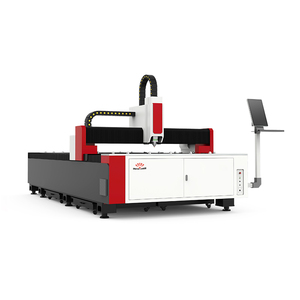
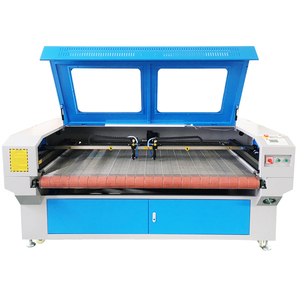
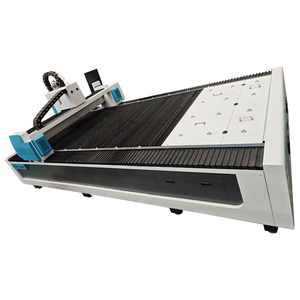
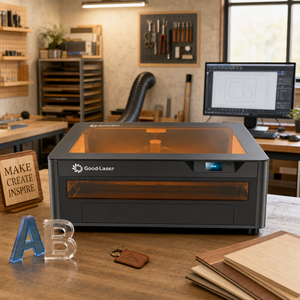
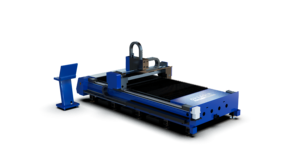
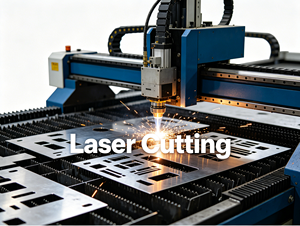
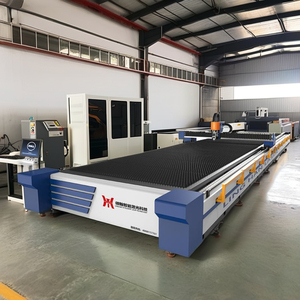
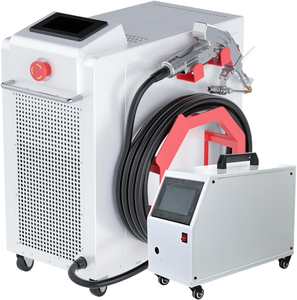
In the contemporary smart-manufacturing landscape, the transition toward fully autonomous shop floors is no longer driven solely by labor cost reduction, but by the mandatory requirement for absolute process repeatability, elevated Overall Equipment Effectiveness (OEE), and strict occupational safety compliance. As a premier handling robot factory and supplier, Marvel Industrial Solution manufactures specialized automation systems, high-power CNC fiber laser cutters, gantry loaders, and press-transfer robotic lines designed to eliminate floor bottlenecks and maximize production throughput.
Industrial material handling—spanning raw sheet stock loading, stamping press transfer, inter-machine part conveyance, and post-machining unloading—represents up to 65% of total part cycle time in conventional metal fabrication plants. Modern automated handling robots bridge this operational gap by linking high-speed machine tools directly with dynamic material streams, securing non-stop, lights-out production shifts.
Installing a high-power 12kW or 30kW fiber laser yields minimal ROI if the system sits idle during manual sheet loading. Synchronizing an automated gantry robot or dual-pallet exchange table recovers up to 35% more spindle-on time per shift, compounding annual production yield without increasing energy expenditure.
Selecting the correct mechanical kinematics for industrial material handling depends heavily on floor spatial constraints, payload dynamics, and required cycle speeds. Industrial buyers frequently evaluate three core architectural paradigms:
High-payload Cartesian (XYZ) overhead systems capable of spanning multi-machine bays up to 60 meters. Ideal for heavy sheet loading, palletizing, and direct laser-bed tending with minimum floor footprint footprint overhead.
Multi-axis articulated arms or high-speed synchronization arms engineered to extract stamped blanks between press dies. Operates at accelerations up to 2.5G while maintaining mechanical vibration damping.
Custom Special Purpose Machines combining robotic pick-and-place end-effectors with inline Vision Inspection, Laser Marking, or Auto Metal Polishing stations within a centralized PLC safety bus.
The following specification matrix illustrates standard performance parameters across primary handling robot categories:
| Handling Kinematic Type | Payload Spectrum | Positional Accuracy | Max Acceleration | Primary Industrial Use-Case |
|---|---|---|---|---|
| Cartesian Linear Gantry | 50 kg – 1,500 kg | ±0.05 mm | 1.2 G | Raw Sheet Metal Loading, Heavy Plate Machine Tending |
| Stamping Press Transfer | 10 kg – 120 kg | ±0.03 mm | 2.5 G | High-Speed Multi-Stage Press-to-Press Part Transfer |
| 6-Axis Articulated Arm | 6 kg – 300 kg | ±0.02 mm | 1.8 G | Flexible Laser Welding, Deburring, Complex Bin Picking |
| Coil-Fed Auto Blanking Line | Continuous Coil | ±0.03 mm | 1.5 G | High-Volume Blanking & Laser Cutting from Coil Stock |
As procurement officers and enterprise engineering directors project capital expenditure (CapEx) strategies over the coming decade, several critical technological shifts are reshaping the acquisition criteria for automated handling equipment:
Legacy handling systems relied on rigid mechanical drop-locators and custom physical jigs. Next-generation handling robots integrate 3D CAD-matching cameras and deep-learning vision systems. This enables automated bin-picking of unorganized sheet blanks, dynamic offset correction for slightly warped raw materials, and instant visual quality verification during transfer steps.
Siloed robotic machinery is rapidly being phased out. Procurement standards now mandate unified industrial communication protocols—such as Profinet, EtherCAT, and OPC UA—to allow handling robots to exchange real-time status telemetry with MES (Manufacturing Execution Systems) and ERP platforms. This data feedback loop facilitates predictive maintenance, tracking vacuum cup wear, servo thermal loads, and energy consumption metrics.
With global energy prices remaining volatile, high-acceleration press transfer automation and overhead gantries utilize kinetic energy recovery systems (KERS). Servo drives store decelerative energy in capacitor banks, rechanneling electricity into subsequent motion cycles to decrease baseline facility energy loads by 15% to 22%.
Modern automated cells merge mechanical barriers with light curtains, safety scanners, and safe-motion monitoring (Safe Torque Off, Safe Operational Stop). ISO 13849-1 PL-e compliance ensures that robotic handling lines operate safely adjacent to manual intervention areas without requiring full floor lockouts during minor tooling adjustments.
Marvel Industrial Solution designs, builds, and tests high-performance laser systems and robotic material handling solutions directly from its facility in Ahmedabad, Gujarat, India. Unlike trading intermediaries, our engineering team manages the complete lifecycle—from initial 3D motion simulation to precision machining, panel wiring, and on-site commissioning.
All linear gantries and heavy machine beds undergo high-temperature thermal annealing and vibration stress relief to eliminate internal weld tensions, preserving positioning stability over decades of continuous 24/7 operations.
We integrate certified tier-1 components including premium fiber laser sources, imported optical cutting heads, Japanese Yaskawa/Fuji servo drives, and Schneider electrical controls to ensure international spare part availability.
Every robot and laser cutter undergoes rigorous sample part trials, laser interferometer calibration, and continuous 48-hour burn-in testing. Video reports and dimensional inspection sheets are provided prior to export packaging.
Our application engineers handle foundation layouts, utility integration, CAM nesting software training, operator safety protocols, and offer rapid remote diagnostic access for international operations.
Detailed technical answers to common procurement, engineering, and operational inquiries.
