Explore OEM factory-direct high-power fiber laser cutters, specialized cladding systems, and precision metal processing equipment engineered for rigorous B2B production floors.
Modern industrial surface modification has undergone a paradigm shift driven by stringent operational demands in heavy mining, aerospace propulsion, oil and gas exploration, and high-duty metal fabrication. When evaluating a top trusted laser cladding factory, enterprise buyers must move beyond surface-level equipment specifications to examine core metallurgical thermodynamics, heat-affected zone (HAZ) management, and optical power delivery efficiency.
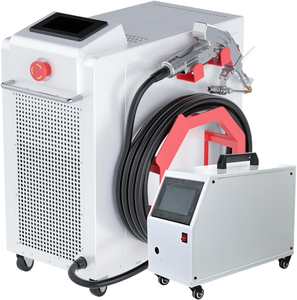
Laser cladding—also recognized as laser cladding deposition or laser additive cladding—utilizes a high-density coherent laser beam to melt filler powder or wire feed simultaneously with a ultra-thin layer of the substrate material. Unlike traditional thermal spraying, plasma transferred arc (PTA), or submerged arc welding (SAW), high-speed laser cladding creates a true metallurgical bond with a negligible dilution zone (typically under 5%), retaining the structural integrity of the substrate while depositing high-performance alloy coatings (such as Inconel 625, Stellite 6, tungsten carbide matrix, and NiCrBSi alloys).
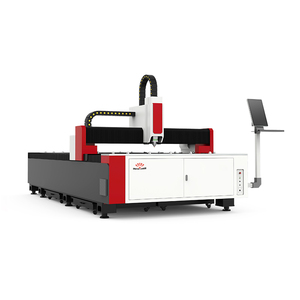
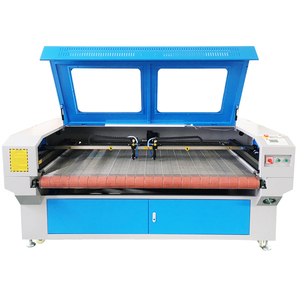
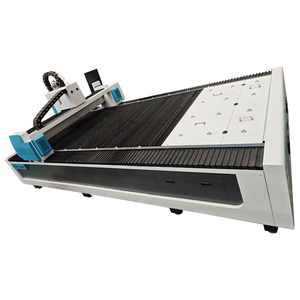
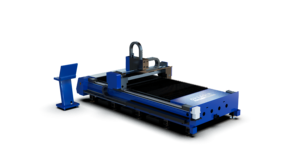
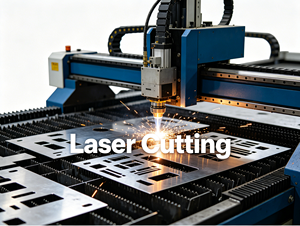
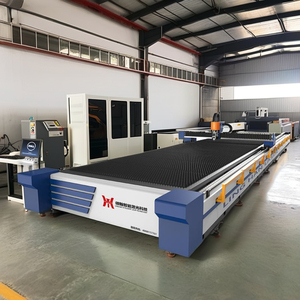
At Marvel Industrial Solution, our manufacturing methodology blends heavy-duty stress-relieved bed frame construction with tier-1 fiber laser optical engines. Whether deploying high-power laser cladding rigs, exchange table CNC fiber laser cutters (ranging from 1.5kW up to 30kW), automated tube profile cutters, or multi-axis robotic transfer systems, our engineering protocols focus on minimizing total cost of ownership (TCO) while maximizing shift uptime and edge accuracy (±0.03 mm).
Why Tier-1 automotive suppliers, heavy equipment rebuilders, and global industrial buyers partner with Marvel Industrial Solution as their qualified factory partner.
Every laser cutting and cladding bed undergoes high-temperature electric furnace annealing and stress-relieving cycles. Heavy steel structures are machined in-house on large gantry milling centers to ensure zero thermal deformation over tens of thousands of operating hours.
We strictly integrate world-class fiber laser sources, imported optical processing heads, closed-loop servo drives, and branded pneumatic controls. Standardized spare parts availability minimizes risk for international export buyers.
Prior to order confirmation, our engineering lab processes customer DXF files and physical samples. We provide pre-shipment cross-sectional metallurgical reports, edge roughness values, and video verification testing for complete buyer peace of mind.
Designed to meet international CE and ISO 9001 standards. Enclosed Class-1 laser safety structures, automated fume extraction interlocks, and emergency stop logic safeguard shop-floor operators and simplify factory audits.
Every shipment is packaged in moisture-proof, sea-worthy steel-framed timber crates. Complete documentation—including foundation schematics, utility wiring diagrams, parameter databases, and spare parts lists—is included.
Beyond standard catalog machinery, our automation division engineers gantry pick-and-place robots, automated metal polishers, press-to-press transfer systems, and custom multi-axis laser cladding stations tailored to specific cycle times.
Understanding the operational trade-offs across surface modification technologies is critical when establishing long-term manufacturing agreements or selecting capital equipment. The table below outlines how laser cladding outperforms conventional hardfacing and thermal spray methods across key engineering metrics.
| Process Parameter | Laser Cladding (Fiber/Diode) | Plasma Transferred Arc (PTA) | Thermal Spraying (HVOF) | Submerged Arc Welding (SAW) |
|---|---|---|---|---|
| Metallurgical Bond Type | 100% Dense Fusion Bond | Dense Fusion Bond | Mechanical Micro-Interlock | High-Dilution Fusion Bond |
| Dilution Rate (%) | < 3% - 5% (Controlled) | 10% - 15% | 0% (Non-Fused) | 20% - 30% |
| Heat Affected Zone (HAZ) | Minimal (< 0.5 mm) | Moderate (2.0 - 4.0 mm) | Negligible | Extensive (> 6.0 mm) |
| Porosity & Oxide Content | < 0.1% (Near Zero) | < 1% | 1% - 3% | 1% - 2% |
| Deposit Hardness Range | Up to 68 HRC (Custom Alloys) | Up to 60 HRC | Up to 65 HRC | Up to 55 HRC |
| Post-Processing Machining | Minimal Allowance Needed | Heavy Machining Required | Grinding Only | Extensive Rough Machining |
As industrial manufacturing shifts toward Industry 4.0 standards and sustainable resource management, laser cladding and laser machining technologies are experiencing significant architectural developments. B2B procurement managers must align their capital expenditure strategies with the following emerging technological vectors:
1. Extreme High-Speed Laser Cladding (EHLA): Conventional laser cladding operates at travel speeds between 0.5 to 2.0 m/min. Next-generation EHLA systems achieve speeds from 20 to 200 m/min by melting powder particles directly in the laser beam path prior to hitting the molten pool. This dramatically reduces thermal input to the substrate, allowing cladding thicknesses of 25 to 300 microns per pass on thin-walled hydraulic cylinders and shafts previously restricted to hard chrome plating.
2. Blue and Green Laser Wavelength Integration: Standard fiber lasers emit around 1064 nm wavelength, which faces high initial reflectivity when processing non-ferrous metals like copper and aluminum alloys. The integration of 450 nm blue lasers and 532 nm green lasers improves energy absorption efficiency up to 80%, enabling defect-free, spatter-free laser cladding and precision welding of pure copper busbars, heat exchangers, and electrical connectors.
3. AI-Assisted Closed-Loop Process Control: Premier laser cladding facilities are embedding infrared thermography, pyrometric camera arrays, and real-time acoustic sensors into processing heads. Machine learning algorithms continuously adjust laser output power, powder feeder RPM, and nozzle distance dynamically based on melt-pool temperature profiles, guaranteeing uniform coating density across complex 3D geometry.
4. Additive-Subtractive Hybrid Manufacturing Cells: Future equipment configurations combine multi-axis laser cladding heads with heavy-duty CNC milling spindles on a single gantry platform. This hybrid approach enables shop floors to rebuild worn turbine impellers, extrusion screws, and heavy gears in a single continuous clamping cycle—cladding wear-resistant alloys first, followed immediately by high-precision finish milling.
Procuring industrial laser machinery involves significant financial capital and directly impacts operational yield. To ensure long-term ROI and operational reliability, procurement committees should follow a structured evaluation framework:
Step A: Assess Optical & Mechanical Structural Integrity
Verify that the OEM utilizes stress-relieved, fully annealed steel bed frames rather than bolted aluminum profile assemblies. For high-power applications (above 6kW), bed rigidity prevents micro-vibrations from disrupting cut edge quality or clad track consistency during high acceleration (1.2G to 2.0G).
Step B: Match Laser Power to Application Tonnage
Avoid purchasing based on peak nominal capacity alone. Match the operational continuous laser rating to your daily production mix. For instance, a 3kW-4kW fiber laser cuts up to 16 mm mild steel and 8 mm stainless steel efficiently, while 12kW-30kW systems target continuous heavy plate production (above 25 mm) or high-speed nitrogen bright-cutting requirements.
Step C: Audit Technical Support & Spares Ecosystem
Ensure the factory provides comprehensive documentation, including detailed electrical schematics, foundation civil drawings, and parameter libraries for common alloys. Evaluate whether replacement optical protective windows, nozzles, ceramic rings, and powder feeder tubes are standard off-the-shelf components.
Expert insights compiled by senior application engineers addressing technical, operational, and commercial procurement queries.
Contact our application engineering lab to request full machine technical specifications, detailed ROI cycle-time calculations, or sample testing verification for your upcoming laser cladding or CNC laser cutting equipment investments.
