Direct OEM-engineered machinery designed for maximum duty cycles, high-precision sheet blanking, multi-axis tube cutting, and integrated laser welding.
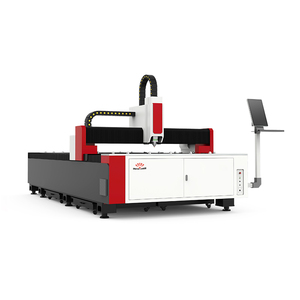
Heavy-duty 4000x1500mm bed capacity engineered for high-power fiber sources. Delivers rapid linear speed with dual rack-and-pinion drive positioning.
Inquire Now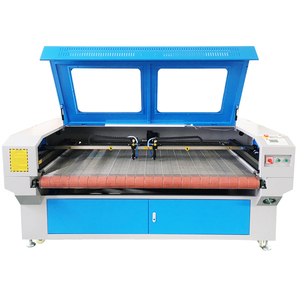
Precision non-metal cutting platform optimized for MDF, acrylics, fabrics, and rubber. Features automatic feeding bed and digital optical alignment.
Inquire Now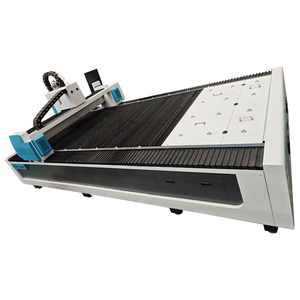
Direct OEM metal cutter equipped with dynamic focal heads, auto-nesting software integration, and a comprehensive 3-year factory warranty coverage.
Inquire Now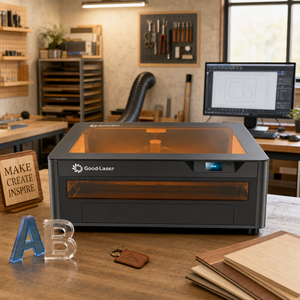
Compact 0.01mm high-precision enclosed cutter (520x315mm work area). Active liquid cooling system designed for 10mm localized material processing.
Inquire Now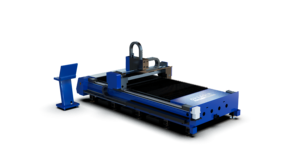
High-rigidity single bed system targeted for stainless steel sheet blanking. Offers thermal-resistant cutting slats and high-speed EtherCAT CNC drives.
Inquire Now
Customized production platform tailored for processing brass, copper, aluminum, and carbon steel with minimal burr formation and zero thermal warping.
Inquire Now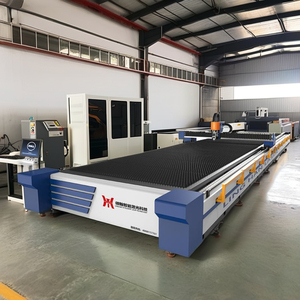
Industrial-grade high-kilowatt platform engineered for heavy plate manufacturing. Capable of nitrogen bright cutting on thick structural steels.
Inquire Now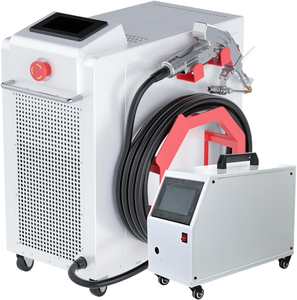
Multifunctional 3-in-1 laser welding, cleaning, and cutting tool. Features dual-wobble wire feeder for deep weld penetration in structural metals.
Inquire NowWhen procuring high-capital industrial equipment such as CNC fiber lasers, tube cutters, and robotic cell automation, global buyers must distinguish between basic equipment aggregators and genuine original equipment manufacturers (OEMs). Marvel Industrial Solution (operating from its central manufacturing center in Ahmedabad, Gujarat, India) establishes its authority through rigorous end-to-end mechanical engineering, certified stress-relief thermal processing, and component-level calibration.
Every frame built within modern high-precision facilities undergoes heavy steel plate welding followed by a high-temperature annealing heat treatment. This stress-relief process prevents structural distortion over decades of multi-shift operation, ensuring that rack-and-pinion rails retain mechanical alignment tolerance down to ±0.03 mm even when subject to rapid 1.5G gantry acceleration.
Integration of world-class laser sources (IPG Photonics, Raycus, Maxphotonics) paired with auto-focusing capacitive cutting heads (Raytools, Precitec) with active thermal lens compensation.
High-speed bus communications connecting real-time servo drivers (Yaskawa, Fuji), eliminating signal propagation delays during complex trajectory nesting profiles.
Custom engineering for Gantry Pick-and-Place robots, Stamping Press Transfer automation, and automated coil-fed blanking lines built to custom operational footprints.
The global industrial laser market is undergoing a seismic structural transition. Buying decisions are no longer driven purely by capital expenditure (CapEx) metrics; procurement directors are evaluating Total Cost of Ownership (TCO), electrical efficiency ratios, assist gas optimization strategies, and automated material handling compatibility.
While 3kW and 6kW systems remain the workhorses of standard sheet metal job shops, medium-to-heavy engineering fabricators are rapidly transitioning to 12kW, 15kW, 20kW, and 30kW laser sources. High-kilowatt fiber systems fundamentally alter processing economics: by replacing oxygen (O2) reaction cutting with high-pressure nitrogen (N2) or compressed shop-air cutting on medium carbon steel, operations achieve bright, oxide-free edge finishes at 300% to 500% faster feed rates, virtually eliminating costly secondary edge deburring processes.
Labor shortages and demands for high shift output have accelerated the adoption of dual-pallet exchange tables, auto-loading tower systems, and synchronized gantry robots. Machines equipped with fast automatic shuttle tables allow continuous beam-on execution—loading raw sheet material while the shuttle enclosure processes the active workload inside a Class-1 laser enclosure.
| Laser Source Power | Optimal Carbon Steel (O2) | Bright Stainless Steel (N2) | Aluminum Alloy (N2) | Primary Industrial Sector |
|---|---|---|---|---|
| 1.5 kW - 2.0 kW | Up to 12 mm | Up to 4 mm | Up to 4 mm | Electrical Enclosures, Light Signage, Sheet Metal Work |
| 3.0 kW - 4.0 kW | Up to 20 mm | Up to 8 mm | Up to 8 mm | HVAC Ducting, Kitchen Equipment, Contract Job Shops |
| 6.0 kW - 8.0 kW | Up to 25 mm | Up to 14 mm | Up to 12 mm | Automotive Chassis, Agricultural Equipment Components |
| 12.0 kW - 15.0 kW | Up to 35 mm | Up to 25 mm | Up to 20 mm | Structural Steel Fabrication, Yellow Goods Manufacturing |
| 20.0 kW - 30.0 kW | Up to 45 mm+ | Up to 40 mm | Up to 30 mm | Shipbuilding, Heavy Earthmoving, Pressure Vessel Plates |
With liquid nitrogen costs representing up to 40% of operational variable expenditure in high-throughput facilities, advanced factories are integrating high-pressure, oil-free air compressor packages (25–30 bar). Filtered compressed air cutting on 1kW–12kW machines delivers low-cost edge blanking for galvanized steel, mild steel, and aluminum sheet applications.
The modern CNC laser processing system represents a fusion of quantum optics, software-driven motion algorithms, and sensor-guided automation. Buyers seeking sustained competitive advantage must consider several major technological advancements during factory sourcing:
Modern fiber optic couplers feature dynamic beam-shaping technology. By instantly modifying the spatial intensity distribution from a concentrated Gaussian core to a broader ring-shaped profile, a single machine seamlessly switches between razor-sharp thin sheet processing and smooth-edge thick plate piercing.
Equipped with high-resolution CCD cameras and machine vision algorithms, advanced vision laser marking and cutting machines auto-detect sheet boundaries, angle offsets, and part contours, automatically correcting toolpaths to eliminate material scrap.
Early fiber iterations struggled with highly reflective alloys (copper, brass, raw aluminum). Modern industrial fiber sources incorporate multi-stage optical isolators that divert reflected 1064nm wavelengths into internal beam dumps, ensuring uninterrupted cutting of reflective metals.
Engineering responses to common procurement, utility calculation, and technical integration questions raised during supplier audits.
Submit your CAD drawings, material specifications, or cycle time targets directly to our senior application engineering team. Receive detailed technical proposals, power evaluations, and nesting time estimates.
