Direct Factory OEM Solutions for Brazilian Metalworking, Automotive & Structural Steel Sector
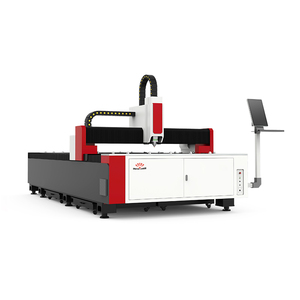
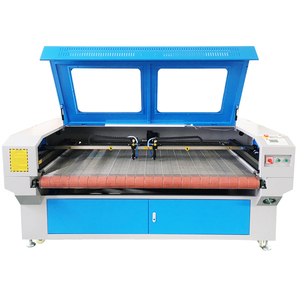
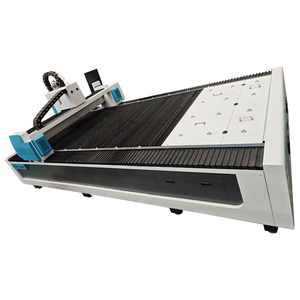
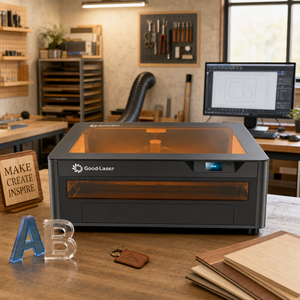
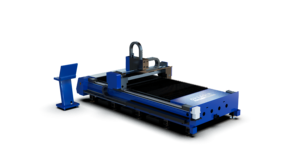
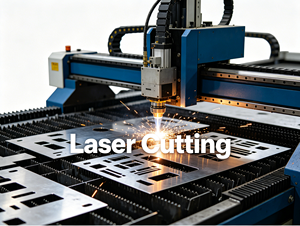
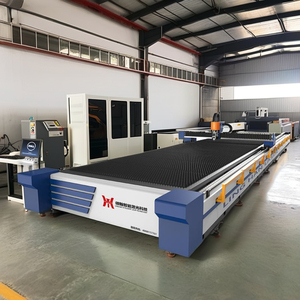
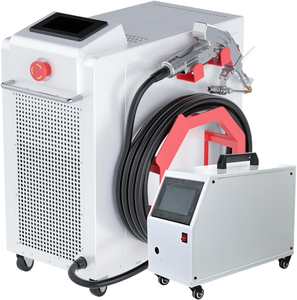
The industrial landscape in Brazil is undergoing a profound structural metamorphosis. As South America's largest industrial power, Brazil’s manufacturing sectors—ranging from automotive assembly lines in the ABCD region of São Paulo to heavy agricultural machinery manufacturing in Rio Grande do Sul and Paraná—are actively accelerating their transition toward high-precision 3D laser processing and advanced CNC fiber cutting technologies.
Historically, traditional 2D laser processing and mechanical stamping dominated local job shops. However, the surge in demand for hydroformed structural components, complex tubular frames, aerospace parts (centered around the São José dos Campos hub), and sugar-cane processing machinery has driven an unprecedented surge in demand for 5-axis 3D laser cutting, robotic 3D laser welding, and automated fiber processing machines.
Navigating the Brazilian market requires a sophisticated understanding of local engineering standards, regulatory compliance, and economic variables. Manufacturers importing machinery into Brazil must adhere strictly to NR-12 (Segurança no Trabalho em Máquinas e Equipamentos) safety regulations, NR-10 electrical standards, and specific INMETRO certifications. Furthermore, accounting for local duty structures (Import Duty / TEC) and electrical power distribution nuances (such as 220V, 380V, or 440V grids operating at 60Hz across different states) is essential for successful factory integration.
Dynamic 5-axis and 6-axis articulated robot heads engineered for beveling, hydroformed pipe cutting, and complex 3D automotive stampings.
Class-1 light-tight enclosures, fail-safe dual circuit safety relays, anti-laser protective glass, and integrated safety PLC logic.
Custom industrial isolation transformers configured for 220V/380V/440V 3-phase 60Hz electrical supply common across Brazilian industrial hubs.
For Brazilian fabrication plant directors evaluating capital expenditure, understanding the Information Gain of 3D laser integration versus conventional 2D planar cutting or mechanical milling is critical. 3D laser processing eliminates multi-stage fixtures, drastically lowers labor cycles, and delivers micron-level repeatability across non-planar surfaces.
| Performance Parameter | Traditional 2D Flatbed Laser | Robotic / 5-Axis 3D Fiber Laser | Mechanical Milling / Punching |
|---|---|---|---|
| Geometrical Capability | Flat sheets, limited 2D profile work | Hydroformed tubes, curved stampings, 3D bevels | Prismatic shapes, rigid straight edges |
| Processing Speed & Cycle Time | High on flat sheet; zero 3D capability | 3-5x faster than multi-axis CNC milling | Slow tool changeover, high mechanical drag |
| Tooling & Jig Costs | Low (flat clamps) | Minimal (flexible universal 3D fixtures) | Extremely high (custom dies & dedicated fixtures) |
| Edge Finish & Dross | Clean edge on flat surfaces | Oxide-free bevels, zero burr with N2 assist | Requires secondary deburring & finishing |
| NR-12 Compliance Complexity | Standard enclosure curtains | Full Class-1 enclosure with light curtains | Physical guarding, high noise/vibration risks |
When cutting stainless steel (e.g., AISI 304, AISI 316L) or high-strength structural carbon steels (such as Hardox or Domex used in mining and sugar-cane transport), 3D fiber laser sources operating at 1064nm deliver superior absorption rates compared to legacy CO2 lasers. The operational cost of ownership is further optimized when utilizing nitrogen bright cutting techniques for thin-to-medium gauges, or high-purity oxygen assist gas for thick plate structural components.
Region: São Paulo (ABCD), Curitiba, Resende.
Application: Trimming and hole-punching of thermoformed high-strength steel (AHSS) body structural members and B-pillars. 3D laser cutting replaces expensive progressive stamping dies with instant digital software CAD updates.
Region: Caxias do Sul (RS), Piracicaba (SP), Maringá (PR).
Application: Precision profiling of heavy structural chassis, combine harvester tubular frameworks, and sugar-cane planter components. Handles high-thickness carbon steel with high thermal stability.
Region: São José dos Campos, Macaé (Offshore Hub).
Application: High-precision 5-axis 3D laser cutting of titanium alloys, Inconel, and complex aluminum structural manifolds used in aerospace structures and deep-sea oil extraction equipment.
As a premier direct-factory manufacturer, Marvel Industrial Solution (headquartered in Ahmedabad, India) bridges the gap between top-tier precision engineering and highly competitive capital equipment investment. Our machines are built from the ground up for 24/7 continuous industrial duty cycles.
Consult with our senior application engineers today. Send your DXF/STEP CAD drawings for a complimentary sample cutting evaluation, cut-time calculation, and tailored ROI analysis for the Brazilian market.
