Direct OEM Export Solutions Engineered for Greater Boston Automotive, Aerospace, Medical Device, and Heavy Industrial Fabricators
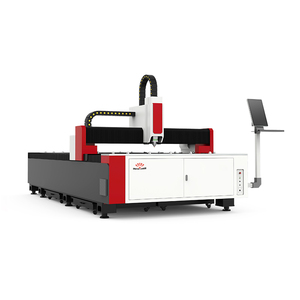
Heavy-duty 4000x1500mm bed for rapid sheet blanking prior to stamping press operations. Handles stainless steel and alloy plates up to 35mm.
Get a Quote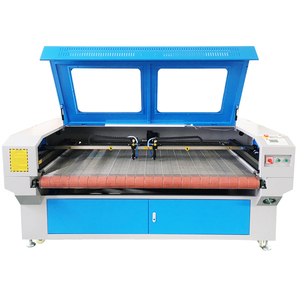
Ideal for cutting non-metallic gaskets, rubber dampening pads, and organic insulating layers used in multi-layer die stamping assemblies.
Get a Quote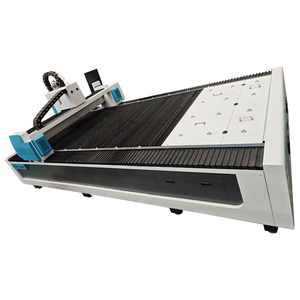
Equipped with ultra-fast linear drives and continuous cutting parameter databases. Built for round-the-clock press workshop blank production.
Get a Quote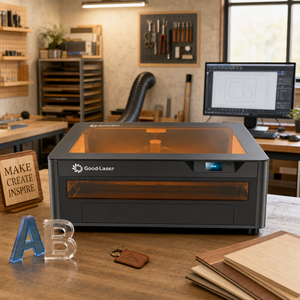
Compact 520x315mm enclosed setup with 0.01mm accuracy. Perfect for Boston R&D labs prototyping micro-stamping die components and templates.
Get a Quote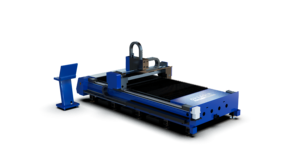
High-rigidity annealed frame designed for high acceleration. Optimized for cutting stainless steel, brass, and copper strips prior to press drawing.
Get a Quote
Turnkey OEM custom laser cutting, pre-punching, and bending services for specialized brass, aluminium, and alloy components exported to North America.
Get a Quote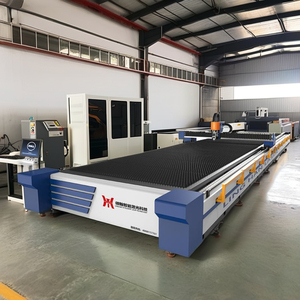
Industrial-grade high-power laser platform engineered to process structural blanking for heavy stamping presses in defense and automotive plants.
Get a Quote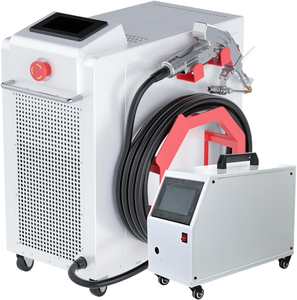
Versatile 3-in-1 laser welding and seam cleaning system. Eliminates post-stamping grinding work on deep-drawn automotive and enclosure parts.
Get a QuoteA Comprehensive Engineering Blueprint for Importing High-Performance Chinese Stamping Presses and Transfer Automation into Boston, MA
The Greater Boston industrial cluster—spanning Route 128, the Interstate 495 corridor, and key manufacturing hubs across Massachusetts, Connecticut, and Rhode Island—represents one of North America's most demanding markets for precision metal stamping. From defense electronics and subsea systems in Quincy and Cambridge to high-reliability medical devices in Framingham and aerospace components near Connecticut, local manufacturers require high-speed press machinery, transfer robotics, and CNC fiber laser equipment capable of strict geometric tolerances, uncompromised operator safety, and non-stop operational availability.
As a leading industrial machinery OEM and specialized exporter in China, our organization bridges the gap between cost-optimized Asian machine manufacturing and rigorous North American engineering standards. This whitepaper analyzes technical parameters, localized Boston market applications, compliance requirements (ANSI/OSHA), and ROI models for importing mechanical presses, servo presses, automated press transfer robots, and integrated laser blanking lines from China.
To successfully integrate imported press equipment into Boston-area production lines, engineering teams must evaluate machine capabilities against sector-specific manufacturing constraints:
Proximity to Boston’s biotech ecosystem drives demand for ultra-precise micro-stamping presses (15 to 80 tons). Applications include surgical staples, titanium implantable clips, sensor housings, and diagnostic contact pins. Machines feature ultra-rigid C-frame and straight-side designs minimizing bed deflection to under 0.05 mm/m.
Supplying regional primes (such as Raytheon and General Dynamics defense supply networks) demands traceable press forming of aerospace-grade aluminium, Inconel, and titanium alloys. Our high-tonnage gantry and straight-side presses incorporate optical tonnage monitors and real-time load sensors to satisfy AS9100 quality traceability.
Commercial HVAC fabricators in Worcester and New Hampshire utilize medium-to-heavy mechanical transfer presses (200 to 800 tons) paired with automatic coil feeders and progressive dies for multi-stage box forming, motor laminations, and heat exchanger fins.
Selecting the optimal stamping press requires matching process parameters with machine kinetics. The table below details engineering metrics across primary press configurations exported to North America:
| Press Technology | Tonnage Range | Stroke Rates (SPM) | Best-Fit Application | Boston Market Suitability |
|---|---|---|---|---|
| High-Speed Precision Press | 25 - 300 Tons | 200 - 1200 SPM | Electronics connectors, lead frames, micro-terminals | High (Route 128 electronics & sensor manufacturing) |
| Servo-Drive Mechanical Press | 100 - 1200 Tons | 10 - 120 SPM (Programmable) | Deep drawing, complex aerospace alloys, zero-rebound forming | Very High (Medical & defense precision metal forming) |
| Straight-Side 2-Point Press | 160 - 800 Tons | 20 - 80 SPM | Progressive die stamping, heavy appliance panels | High (Regional OEM & Tier-1 automotive component blanking) |
| Integrated Fiber Laser Blanking Line | 1.5kW - 30kW Laser | Continuous Feed | Die-less flexible blanking, short-run sheet prototyping | Extreme (Eliminates high die costs for Boston job shops) |
Due to high industrial real estate costs and tight labor markets in Massachusetts, Boston-area fabricators are rapidly replacing traditional single-station manual punch presses with hybrid lines: CNC Fiber Laser Cutters for initial flexible blanking combined with Automated Transfer Robots feeding multi-station mechanical presses.
With machine operator hourly rates in New England significantly above national averages, local press shops cannot rely on manual blank loading. Importing Chinese stamping presses equipped with integrated 2-axis or 3-axis multi-station transfer robots (Stamping Press Transfer Robots) allows a single technician to supervise up to three press lines, dramatically lowering labor cost per part.
Unlike traditional flywheel-driven mechanical presses, direct-drive servo presses allow customized slide motion profiles (pendulum mode, dwell time at bottom dead center, pulse forming). This capability is crucial for Boston medical stampers working with hard-to-form metals such as Nitinol, 316L stainless steel, and titanium wire mesh.
Municipal zoning laws in Massachusetts mandate strict acoustic and vibrational limits for industrial properties. Export-grade Chinese presses supplied to Boston feature heavy cast-iron frame structures, hydraulic vibration dampening mounts, and full acoustic soundproof enclosures to ensure quiet operation in urban industrial parks.
Modern defense sub-tier suppliers in New England require complete part traceability. Our export press controls integrate EtherCAT protocol connectivity, allowing real-time telemetry output (tonnage curve, stroke counts, die temperature, lube pressure) directly to shop-floor MES and ERP systems.
Delivering European-Grade Machine Rigidity and US Safety Standard Compliance at Competitive Direct Factory Pricing
Every stamping press exported to North America is engineered with 480V/60Hz electrical architecture, NEMA rated enclosures, Allen-Bradley or Siemens PLC safety relays, dual safety solenoid valves, and light curtain guard interlocks meeting OSHA 1910.217 and ANSI B11.1 standard requirements.
All press structures (beds, slides, and uprights) undergo electric furnace thermal stress relief annealing to guarantee structural stability. Critical guide surfaces are machined on high-precision Okuma and Waldrich Coburg gantry mills to hold parallelism within 0.02mm.
Before shipment, buyers can send DXF drawings and actual sample dies to our factory. We execute comprehensive FAT trial stamping runs, provide full CMM dimensional reports, and share 4K video documentation prior to final packing.
Engineering & Logistics Answers for Procurement Managers, Plant Engineers, and Import Compliance Officers
