
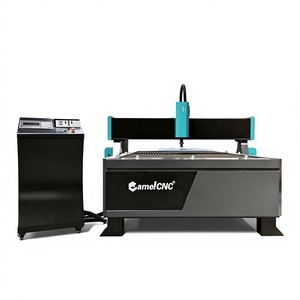
Pre-tested cutting equipment engineered for high-duty cycle sheet metal, plate structural steel, and stainless steel fabrication.
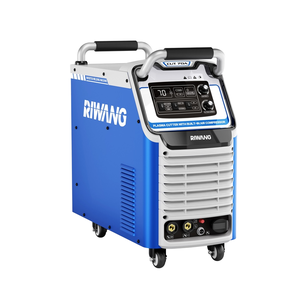
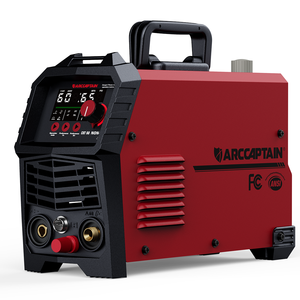
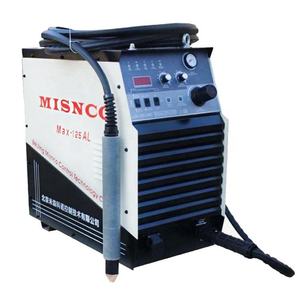
Understanding the procurement requirements for sheet metal processors in the Greater Bangkok Metropolitan Region and Eastern Economic Corridor (EEC).
The manufacturing landscape across the Greater Bangkok Metropolitan Region—spanning strategic industrial provinces such as Samut Prakan, Pathum Thani, Nonthaburi, and Samut Sakhon—is undergoing a profound technological shift. Driven by the Royal Thai Government’s Thailand 4.0 Initiative and the expansion of the Eastern Economic Corridor (EEC), metal fabrication job shops, structural steel contractors, and automotive Tier-1/Tier-2 suppliers are rapidly upgrading from legacy oxy-fuel systems and manual arc cutting to high-precision, digital inverter-driven plasma cutting machinery.
For Bangkok procurement managers and workshop directors, sourcing thermal cutting equipment directly from OEM China plasma cutter manufacturers presents a compelling economic advantage. China’s advanced power electronics ecosystem delivers cutting-edge IGBT (Insulated Gate Bipolar Transistors) inverter modules, High-Frequency (HF) and Non-High-Frequency (Blowback) pilot arc technology, and computerized Arc Voltage Height Controllers (AVHC) at unit economics that significantly reduce initial capital expenditure (CAPEX) while drastically lowering operational costs (OPEX) per meter of cut metal.
By establishing direct supply chains with specialized OEM plasma cutter factories in China, Thai fabricators eliminate multi-layer local distributor markups (typically 35% to 50%). Furthermore, under the ASEAN-China Free Trade Area (ACFTA) agreements, importers utilizing the Form E Certificate of Origin qualify for zero (0%) import duties on plasma cutting systems entering the Port of Bangkok (Klong Toey) or Laem Chabang Port, comparing favorably to the standard 10–15% Most Favored Nation (MFN) tariff rates.
However, thermal cutting operations in Thailand face unique environmental and electrical challenges that standard domestic market machines cannot handle. Bangkok's tropical climate features mean annual relative humidity levels exceeding 80% and peak summer ambient temperatures reaching 42°C in non-air-conditioned steel workshops. Furthermore, industrial sub-stations in areas like Bang Plee, Bang Poo, and Lat Krabang frequently experience network voltage fluctuations of ±15%. OEM plasma cutters manufactured for the Thai export market are custom-engineered with heavy-duty varnish-coated circuit boards, dual-stage water-oil pneumatic separators, and wide-voltage tolerance transformers to ensure continuous 100% duty cycle operation under grueling local conditions.
How specialized inverter and CNC plasma cutters solve specific fabrication challenges across regional manufacturing hubs.
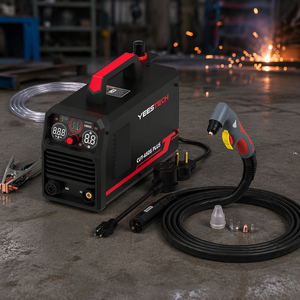
The high density of automotive modification shops, pickup truck bed fabricators, and commercial vehicle body builders in Samut Prakan requires precise, low-distortion cutting of high-tensile carbon steel frame rails and aluminum sheet alloys. Portable plasma units like the CUT-70A Inverter and 65Amp Dual Voltage systems allow technicians to perform intricate non-touch pilot arc cutting on expanded metal floor grids and custom chassis brackets without damaging surrounding electrical harnesses or heat-treated structural components.
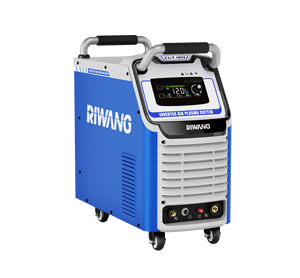
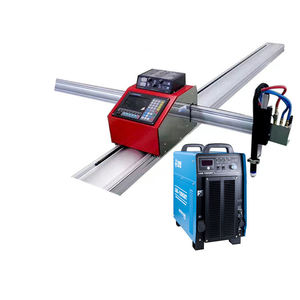
Contractors operating along the EEC industrial development corridor frequently cut thick mild steel plates (ranging from 20mm to 50mm) for factory warehouse beams, crane gantry plates, and petrochemical pipeline flanges. Industrial 3-phase systems like the CUT-120A and heavy-duty LGK-125AL power sources integrated with portable CA-1325 CNC Gantry tables deliver bevel-ready edges with minimal dross formation, eliminating the need for expensive secondary angle-grinding operations prior to submerged arc welding.
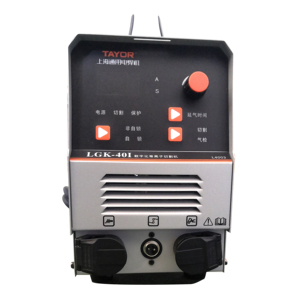
Dockyards along the Chao Phraya river mouth and Samut Sakhon fishing fleet repair centers handle rusted, painted, and heavily oxidized mild steel and stainless steel hull plates. Non-HF (Blowback) arc ignition technology, as engineered into modern 60A and 100A Chinese inverter plasma units, guarantees instantaneous pilot arc initiation through thick marine epoxy coatings without emitting electromagnetic interference (EMI) that could corrupt nearby computerized navigation or sonar equipment.
Manufacturers producing stainless steel commercial food preparation equipment, cleanroom ducting, and industrial exhaust hoods in Lat Krabang industrial estate demand high-speed kerf cutting on 1.0mm to 3.0mm Grade 304 and Grade 316 stainless sheets. Utilizing mini CNC plasma cutter arms paired with AutoCAD software enables fast nesting of complex elbow joints and perimeter flanges, reducing raw sheet scrap rates by up to 22% compared to manual foot-shear blanking.
Technical performance metrics for selecting the optimal amperage and gas configuration based on Bangkok steel shop cutting profiles.
| Plasma Model / Amperage | Optimal Clean Cut (Mild Steel) | Max Severance Cut | Recommended Assist Gas | Power Consumption (kW) | Est. Operating Cost (THB/Meter)* |
|---|---|---|---|---|---|
| CUT-60A Non-HF (Single Phase) | 10 mm | 18 mm | Compressed Air (6.5 Bar) | 6.2 kW | 2.80 THB / m |
| CUT-70A Integrated Air | 14 mm | 22 mm | Internal Compressed Air | 7.8 kW | 3.10 THB / m |
| CUT-100A / LGK-100 (3-Phase) | 20 mm | 35 mm | Dry Compressed Air / N2 | 15.0 kW | 5.40 THB / m |
| CUT-120A Heavy Industrial | 25 mm | 50 mm | Dry Air / Oxygen Shield | 19.5 kW | 7.20 THB / m |
| Max-125AL 100% Duty Cycle | 32 mm | 55 mm | Dual Gas Air / Nitrogen | 22.0 kW | 8.50 THB / m |
*Operating cost calculations include electrical power based on Metropolitan Electricity Authority (MEA) Thailand industrial peak tariffs (~4.2 THB/kWh), torch nozzle/electrode wear, and compressed air filtration maintenance.
Built with modular Siemens/Infineon IGBT switches running at high frequencies (up to 50 kHz). Provides instantaneous current feedback control, smooth arc stabilization, and 30% higher electrical efficiency than traditional transformer-rectifier power sources.
All main control PCBs undergo a triple-layer automated conformal dipping process. This protects sensitive electronics against conductive airborne dust, high atmospheric moisture, and coastal salt corrosion found in Samut Sakhon and Eastern Seaboard zones.
Employs pneumatic electrode retraction (blowback arc) instead of high-frequency spark generation. Eliminates high-voltage radio frequency interference, making the cutter safe to operate alongside CNC controllers, computers, and medical equipment.
Strict quality control protocols, customized production line engineering, and robust export logistics handling.
As a leading Chinese plasma cutter manufacturer and global OEM exporter, our facility bridges the gap between affordable wholesale pricing and international industrial engineering standards. Every plasma cutter shipped to the Bangkok market undergoes rigorous quality control checks before container sealing:
We support local Thai machinery distributors, industrial tool importers, and machinery brands with customized chassis colors, localized Thai-language front panel silkscreen printing, custom user manuals, and tailored spare consumable kits (electrodes, nozzles, swirl rings, retaining caps).
Essential answers regarding trade tariffs, voltage compatibility, freight logistics, and spare parts support.
Under the ASEAN-China Free Trade Agreement (ACFTA), plasma cutting machines (HS Code: 8456.40.10) imported from China are eligible for zero duty in Thailand. As a certified Chinese manufacturer, our export documentation department issues the official Form E Certificate of Origin stamped by China Customs. When declared by your customs broker at Port of Bangkok or Laem Chabang, the standard import tariff is waived, leaving only the standard 7% Thai Value Added Tax (VAT).
Yes. Thailand utilizes 220V Single-Phase 50Hz for standard workshop sockets and 380V 3-Phase 50Hz for industrial plants. Our export plasma cutting units are factory-configured specifically for 50Hz frequency grids with wide-voltage stabilization circuits (±15% variance tolerance). This prevents machine trippings during peak industrial load hours in heavy manufacturing zones like Samut Prakan and Pathum Thani.
Orders are dispatched from our factory to major ports such as Guangzhou, Shenzhen, or Ningbo within 7 to 10 days depending on OEM customization requirements. Direct ocean freight transit from Guangzhou to Klong Toey Port (Bangkok) or Laem Chabang Port typically takes 3 to 5 days. Total door-to-door transit time including customs clearance usually averages 12 to 16 calendar days.
Bangkok's high relative humidity can cause moisture condensation in compressed air lines, leading to torch sputtering, poor cut quality, and rapid nozzle oxidation. We recommend pairing your plasma system with a refrigerated air dryer and a dual-stage 0.01-micron oil-water separator filter. For field operations, models with built-in compressors feature internal moisture traps to protect torch consumables.
High-Frequency (HF) arc ignition uses high-voltage spark gaps to start the pilot arc. While effective, HF emits radio frequency noise that can interfere with digital CNC controllers, sensors, and computers. Non-HF (Blowback) arc ignition uses internal torch air pressure to physically slide the electrode away from the tip, creating a pilot arc mechanically. Non-HF ignition is strongly recommended for CNC cutting tables and shops running sensitive electronic equipment.
We supply bulk consumable kits (electrodes, tips, shield caps, swirl rings) packed directly alongside machine shipments. Furthermore, we maintain standardized torch compatibility (such as IPT-60, P-80, and AG-60 profiles), allowing buyers to source compatible consumable parts locally in Bangkok hardware districts like Klong Thom and Yaowarat or through major online B2B industrial channels in Thailand. Full video technical support, circuit schematics, and component replacements are provided directly by our factory engineering team.