
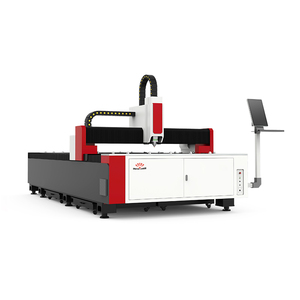
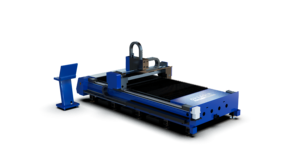
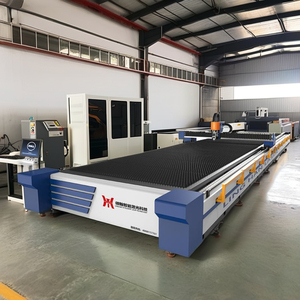
4015 Heavy-Duty CNC Fiber Laser Cutting & Cladding Machine (6kW-12kW)
6000W - 12000W
4000x1500mm Bed
Heavy Steel Frame
Contact Us
Engineered for extreme wear resistance, shaft repair, heavy industrial remanufacturing, and high-precision sheet metal processing. Backed by factory-direct OEM custom engineering.
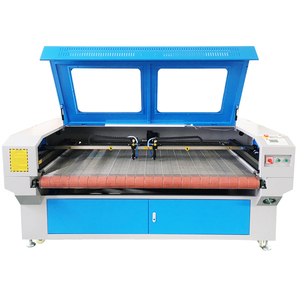
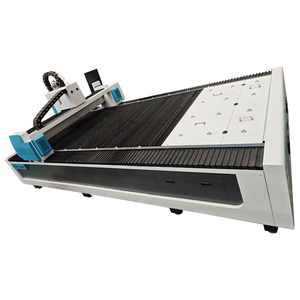
An engineering dive into microstructural bonding, low heat input, microhardness profiles, and OEM system integration for high-value asset restoration.
Unlike thermal spraying or hard-facing arc welding, our OEM laser cladding systems produce a high-strength metallurgical bond with dilution rates under 5%. The laser beam melts a precise surface micro-layer of the substrate while concurrently melting the alloy powder stream, forming a dense, pore-free functional coating without altering base-material structural properties.
Precision optics focus high power densities into a highly localized melt pool. This results in an extremely small Heat-Affected Zone (HAZ), preventing thermal distortion, cracking, or grain growth in delicate structural components such as marine hydraulic shafts, turbine rotors, and aerospace landing gear components commonly serviced around London's industrial hubs.
Our OEM/ODM cladding heads support coaxial and off-axis powder feeding of specialized alloy powders: Cobalt-base (Stellite 6, Stellite 12), Nickel-base (Inconel 625, Inconel 718), Tungsten Carbide Matrix (WC-Co / WC-Ni), Titanium alloys, and Stainless Steels (316L, 410, Duplex 2205) tailored for heavy wear, cavitation, and marine corrosion resistance.
For plant managers and engineering procurement directors comparing life-cycle costs and technical performance metrics across industrial repairs:
| Technical Parameter | Fiber Laser Cladding (LMD) | HVOF Thermal Spray | PTA (Plasma Transferred Arc) | TIG / Submerged Arc Hardfacing |
|---|---|---|---|---|
| Bond Mechanism | Metallurgical Fusion Bond (>500 MPa) | Mechanical Interlock (<80 MPa) | Metallurgical Fusion Bond | Metallurgical Fusion Bond |
| Substrate Dilution | 1% – 5% (Ultra Low) | 0% (Mechanical Coating) | 8% – 15% (Moderate) | 15% – 35% (Very High) |
| Heat Affected Zone (HAZ) | 0.1 – 0.5 mm (Negligible) | None | 1.5 – 3.0 mm (Moderate) | 3.0 – 8.0 mm (Extreme) |
| Thermal Distortion | Minimal to Zero | Zero Distortion | Moderate Component Distortion | Severe Distortion / Requires Straightening |
| Deposit Porosity | < 0.1% (Fully Dense) | 1% – 3% Micro-porosity | 0.5% – 1% Porosity | Variable Gas Inclusion Risks |
| Finishing Allowance Needed | 0.3 – 0.8 mm Near Net Shape | 0.2 – 0.4 mm | 1.5 – 3.0 mm (Heavy Machining) | 3.0 – 6.0 mm (Heavy Machining) |
How our heavy-duty laser cladding systems and automated CNC platforms serve London's key infrastructure, maritime, aerospace MRO, and power generation clusters.
Along the River Thames, Port of Tilbury, and London Gateway, heavy marine machinery experiences relentless saltwater corrosion and abrasive sand wear. Our laser cladding rigs hardface dredger cutter heads, winch shafts, propeller shaft journals, and hydraulic cylinder rods with Nickel-Inconel and Tungsten Carbide matrices, extending operational life by 300% to 500% compared to new component replacement.
London’s aviation MRO sector demands uncompromising precision under strict UK Civil Aviation Authority (CAA) standards. Our custom ODM laser cladding workstations deposit single-crystal or superalloy materials onto jet engine turbine blade tips, compressor seals, and landing gear actuators, restoring original dimensional tolerances without micro-cracking or grain degradation.
Transport for London (TfL) rail networks undergo high contact stress. Wear-resistant cladding solutions are applied to restore rail frogs, switch points, wheel flanges, and heavy electric motor shafts, providing high Vickers hardness (60-65 HRC) to eliminate expensive trackside maintenance shutdowns across the Underground and Elizabeth Line networks.
Across industrial hubs in Park Royal, Enfield, Dagenham, and Croydon, injection moulding plants and metal stamping facilities rely on custom laser cladding to perform in-situ die repair, plastic mould edge restoration, and shaft journal rebuilds, drastically cutting tooling lead times from weeks down to hours.
Boiler tube walls, steam turbine valves, and trash-incinerator feed screws in London’s renewable energy and waste management plants suffer severe high-temperature oxidation and erosion. Applying Stellite or chromium-carbide laser cladding creates a thermal barrier and corrosion protection layer that resists severe flue-gas environments.
UK defense contractors and subsea oil & gas engineering firms operating out of Greater London require specialized cladding of subsea valve trees, riser clamps, and naval propulsion gearboxes using corrosion-resistant cladding tailored to withstand deep-sea pressures and hydrogen embrittlement.
How laser metal deposition empowers UK industrial facilities to achieve zero-carbon targets, comply with UKCA / ISO standards, and eliminate material waste.
With the UK Government’s strict mandate targeting Net-Zero greenhouse gas emissions by 2050 and Greater London’s low-emission industrial policies, scrap-and-replace manufacturing is rapidly becoming commercially unviable. Scrapping a 5-ton forged steel rotor shaft consumes massive embodied energy in steel mills and long-distance transport.
Laser Cladding remanufacturing saves up to 85% of embodied energy and CO2 emissions compared to forging or casting a new component. By depositing only millimeters of high-performance alloy onto worn localized areas, London manufacturers drastically reduce raw material consumption while delivering component surface properties superior to the original part.
Furthermore, our machinery is fully compliant with UK health, safety, and environmental frameworks including UKCA marking, BS EN ISO 15614-7 (specification and qualification of welding procedures for laser cladding), and UK REACH regulations regarding chemical and alloy powder handling.
Essential answers regarding electrical standards, UK import logistics, laser cladding parameters, warranty, and technical support.
Yes. All machines exported to London and the wider UK are custom-built to standard UK electrical grid specifications: 400V AC, 3-Phase, 50Hz with full neutral and protective earth isolation. Electrical cabinets feature Schneider/Siemens components wired to EN 60204-1 standards, emergency stop safety relays, interlocked Class 1 laser enclosures, and full UKCA/CE compliance documentation.
We provide full export-ready seaworthy wooden crate packaging with moisture-proof vacuum wrapping. Delivery can be arranged direct to London Gateway, Port of Tilbury, or Felixstowe. Our engineering team provides complete foundation drawings, utility requirement checklists, and sends certified commissioning engineers for on-site installation, laser calibration, and hands-on operator training.
Conventional laser cladding deposits layer thicknesses of 0.5mm to 2.0mm at processing speeds around 0.5 to 2.0 m/min, ideal for thick wear-resistant build-ups. High-Speed Laser Cladding (EHLA / EHLA-style) melts powder particles directly in the laser beam before they hit the melt pool, enabling surface speeds up to 20 to 100 m/min with thin coating layers (25 to 300 microns). This provides ultra-fast coating rates for long hydraulic cylinders and shafts, effectively replacing hard chrome plating.
Absolutely. As a direct OEM/ODM manufacturer, we engineer specialized compact internal bore cladding heads designed to reach deep inside pipes, cylinder bores, and valve bodies down to 50mm inner diameter with lengths up to 2.5 meters, complete with water cooling and integrated CCTV alignment optics.
Our dual and quad-chamber gravimetric powder feeders handle spherical metal powders ranging from 45 to 150 microns. This includes Cobalt-base alloys (Stellite 1, 6, 12, 21), Nickel-base alloys (Inconel 625, 718, Hastelloy C276), Iron-base hardfacing alloys, Stainless Steels (316L, 420), and blended Carbide matrices (WC/Ni 60/40).
We provide a comprehensive 3-year warranty on core machine structures and up to 2 years on fiber laser sources (IPG/Raycus/MAX). All systems are equipped with secure remote IoT diagnostic modules allowing our software engineers to perform real-time parameter tuning, PLC updates, and fault troubleshooting. Spare optics, nozzles, and powder tubes are stocked for rapid express delivery to UK addresses.
Submit your part drawings, material specifications, or wear-repair requirements today. Our senior application engineers will provide a customized OEM quotation, metallurgical feasibility study, and production ROI analysis.