Deploying industrial-grade metallurgical deposition, precise surface cladding, ultra-fast sheet processing, and automated seam joining designed for heavy industrial remanufacturing across Argentina.
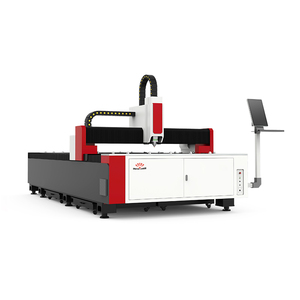
Multi-axis automated industrial cladding system customized for heavy shaft rebuilding, hydraulic cylinder coating, and valve seat deposition in rugged industrial sectors.
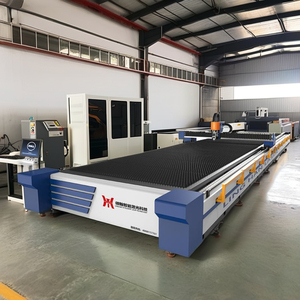
High-power, large-envelope laser deposition framework explicitly built for structural components, drill collars, and heavy mining slurry pump rotors.
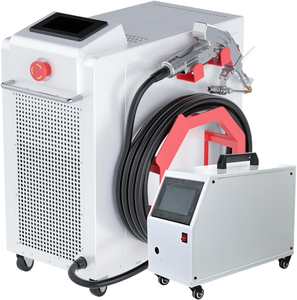
Compact water-cooled field unit for rapid micro-cladding, seam restoration, and surface alloy repairs without thermal distortion on sensitive dies.
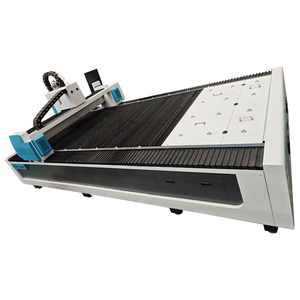
Specialized optical lance system designed for internal diameter cladding of long pipes, hydraulic cylinders, and oilfield tube interiors with zero porosity.
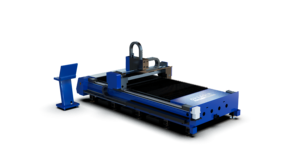
Ultra-fast powder cladding technology designed to apply tungsten carbide hardfacing onto harvester blades, feeder augers, and agricultural tillers.
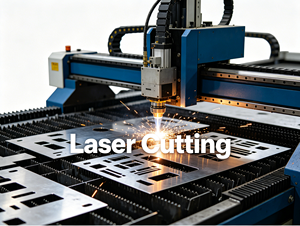
Turnkey tailored machine integration combining laser cladding, laser hardening, and real-time melt pool pyrometry monitoring for OEM gear makers.
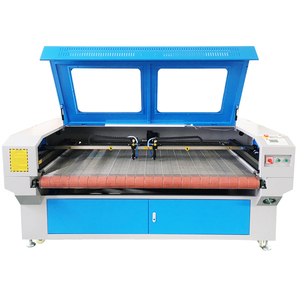
Advanced optical deposition head featured with multi-channel coaxial nozzles, dynamic focus adjustments, and high powder utilization efficiency.
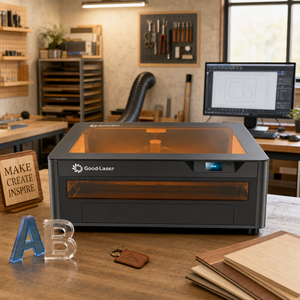
Fully sealed safety-enclosed laser processing station ideal for medical devices, precision shaft remanufacturing, and clean laboratory setups.
In the modern industrial paradigm of Argentina—ranging from the harsh drilling environments of the Vaca Muerta shale formation to the high-altitude copper and lithium mining facilities of San Juan, Salta, and Jujuy—component surface degradation remains one of the primary drivers of operational downtime and capital expenditure. Conventional surface hardfacing technologies, such as Submerged Arc Welding (SAW), Plasma Transferred Arc (PTA) welding, and High-Velocity Oxygen-Fuel (HVOF) thermal spraying, present severe metallurgical limitations including massive thermal distortion, delamination risk, high micro-porosity, or excessive substrate dilution.
As a specialized OEM/ODM Laser Cladding Machine Manufacturer & Engineering Factory, our high-energy laser deposition systems utilize precise high-power fiber or direct-diode laser sources coupled with multi-axis coaxial powder delivery systems. By focusing a coherent high-density beam onto the workpiece substrate while concurrently delivering specialized metallic alloy powders (such as Nickel-based Inconel 625, Cobalt-based Stellite 6, or spherical Tungsten Carbide matrices), a micro-melt pool is created under inert argon gas shielding.
Unlike thermal spray coatings that rely on mechanically interlocking physical bonds prone to spalling under high shear stress, laser cladding creates a true atomic chemical metallurgical bond with bond strengths exceeding 500 MPa, eliminating coating separation under extreme pressure.
The energy density of high-power fiber lasers permits rapid processing speeds with extremely low overall heat input into the component. The Heat-Affected Zone (HAZ) is typically constrained below 0.2mm, preserving original substrate mechanical properties and preventing structural warping of long shafts or thin cylinders.
Traditional arc welding hardfacing results in high base-metal dilution (often 15% to 30%), degrading the corrosion and wear resistance of the deposited layer. Our precision CNC laser cladding optics maintain a controlled dilution rate under 5%, allowing single-layer clad execution with maximum alloy purity.
| Process Characteristic | Laser Cladding (Our OEM Systems) | HVOF Thermal Spray | Plasma Transferred Arc (PTA) | Submerged Arc Welding (SAW) |
|---|---|---|---|---|
| Bonding Mechanism | Metallurgical (Atomic Fusion) | Mechanical Interlock / Physical | Metallurgical Fusion | Metallurgical Fusion |
| Bond Strength | > 500 MPa (Extremely High) | 40 - 80 MPa (Risk of Peeling) | 300 - 400 MPa | > 450 MPa |
| Dilution Rate | Controlled < 3% - 5% | 0% (No Melt Pool) | 10% - 15% | 20% - 35% (High Contamination) |
| Heat Affected Zone (HAZ) | Minimal (< 0.2 mm) | None | Substantial (1.0 - 2.5 mm) | Severe (> 3.5 mm Distortion) |
| Porosity Level | < 0.1% (Fully Dense Layer) | 1% - 2% Micro-porous | < 0.5% | Variable (Risk of Slag Inclusion) |
| Post-Process Machining | Minimal (Near-Net Shape) | Grinding Only | Extensive Rough Machining | Heavy Machining Required |
Understanding regional industrial challenges is vital for implementing tailored OEM/ODM laser cladding solutions. Argentina’s economic landscape relies heavily on specialized mechanical capital assets operating under severe environmental stress.
The hydraulic fracturing and deep drilling operations in Neuquén expose drill collars, hydraulic fracturing fluid ends, mud motor rotors, drill pipe stabilizers, and valve ball/seats to brutal combination wear: intense silica sand abrasion coupled with aggressive sour gas ($H_2S$ / $CO_2$) chemical corrosion. Our automated Internal Diameter (ID) Laser Cladding Machines and multi-axis workstations deposit Inconel 625 or Stellite alloys inside valve bodies and across drill stems. This extends component life by up to 400%, allowing drilling contractors to significantly cut expensive downhole tooling replacements.
High-altitude lithium brine extraction and copper mining facilities require slurry pumps, hydrocyclone components, crusher jaws, and heavy hydraulic excavator rams to work continuously under harsh abrasive slurries and corrosive salt brines. By cladding high-volume Nickel-Tungsten Carbide (Ni-WC) coatings onto pump impellers and hydraulic rod surfaces, our customized laser cladding equipment prevents premature surface pitting and mechanical seal leakage, reducing maintenance intervals in remote high-altitude mines.
Argentina’s agricultural powerhouse demands long-lasting components for harvesters, seeders, and tillage implements. Agricultural equipment parts such as combine harvester feeder blades, grain transport augers, and rotary tiller teeth suffer heavy soil abrasion. Our High-Speed Laser Cladding (HSLC) Systems apply thin (0.2mm - 0.8mm) ultra-hard iron-based or tungsten carbide composite layers at speeds up to 20-50 m/min. This provides a self-sharpening wear surface, allowing local machinery manufacturers (OEMs) and repair shops to offer agricultural parts with 3x higher durability at lower lifecycle costs.
Hydroelectric power plants operating Francis and Kaplan turbines experience cavitation damage and sand erosion along runner blades and guide vanes. Our portable and robotic laser cladding units allow localized in-situ and shop repairs using martensitic stainless steel powders (e.g., 410L/420), restoring hydro-turbine aerodynamic profiles without inducing stress cracking.
Argentine industrial leaders and procurement teams are rapidly pivoting from traditional part replacement models to advanced laser remanufacturing platforms. Key structural drivers include:
Strict foreign exchange controls, import tariffs, and logistics delays make importing finished heavy spare parts expensive and unpredictable. Localized laser cladding enables domestic factories to rebuild worn original equipment parts locally to zero-tolerance specifications, keeping plants running independently.
Remanufacturing a heavy shaft via laser cladding consumes up to 85% less energy and raw steel material compared to forging a new replacement from scratch. Argentine industrial exporters leverage this to meet stringent carbon footprint audits for European and global supply chains.
With increasing investments in pipelines and fracturing infrastructure, field component reliability is critical. Operational managers prioritize laser cladding to prevent catastrophic valve blowouts and seal failures during high-pressure fracking operations.
As a specialized original equipment manufacturer, we don't just supply standard off-the-shelf machines. We provide complete technical transfers, optical customization, and mechanical engineering tailored to your production floor requirements.
All system gantries, lathe beds, and optical columns are fabricated from heavy-gauge structural steel, fully stress-relieved via thermal annealing, and CNC-machined to ensure sub-10 micron structural positioning stability across years of heavy continuous operation.
Our OEM laser processing heads feature integrated high-speed pyrometers and CCD melt-pool camera optics. Real-time temperature feedback continuously regulates laser power to prevent overheating on thin-walled workpieces, ensuring uniform metallurgy.
We build loss-in-weight twin-cylinder and quad-cylinder powder feeders utilizing carrier gas pressure control. This delivers steady, pulse-free alloy powder flow rates from 5 g/min up to 300 g/min, maximizing material deposition efficiency.
All our export-bound laser cladding systems for South America are built with heavy-duty power isolation transformers and automatic voltage regulation (AVR) units designed to handle voltage fluctuations ($\pm15\%$) common in regional industrial corridors. Our electrical enclosures feature IP54 dust/moisture sealing and industrial air conditioners to protect fiber laser sources and CNC cabinets from extreme environmental conditions.
Our cladding optical heads feature universal powder feed geometry compatible with all standard spherical atomized powders (grain sizes 45-150 $\mu m$ or 15-45 $\mu m$ for high-speed laser cladding) certified under international standards (ISO/ASTM). We can supply initial pre-tested alloy powders (Inconel 625, Stellite 6, Carbide blends, Stainless 410/316) along with parameter recipe books, or assist your procurement team in verifying locally sourced powders in Argentina.
We provide comprehensive export-grade engineering support. Upon machine delivery, our field application engineers execute complete site commissioning, utility integration, optical calibration, and hands-on operational training for your technical team. We cover CAM nesting, laser path programming, optical nozzle alignment, and metallurgical testing. Remote diagnostic modules are pre-installed in every machine cabinet for 24/7 internet-assisted engineering troubleshooting.
For mid-to-large machine shops and industrial service providers in Argentina, average ROI ranges between 8 to 14 months. Considering that a clad repair typical costs 20% to 30% of a new imported component's price—while delivering up to 300% longer service life—margins for contract remanufacturers are exceptionally strong.
Our multi-axis CNC systems support intelligent toolpath generation for 3D laser cladding deposition. Minor surface wear can be resolved with a single layer (0.5mm - 1.5mm), while severe structural wear on heavy shafts or housings can be built up layer-by-layer using automated overlapping paths with tailored step-over distances and integrated inter-pass temperature control.
Send us your component technical drawings, material substrates, and production targets. Our engineering factory team will provide a comprehensive feasibility study, cycle time calculation, and turnkey machine catalog for your facility in Argentina.
