Top 10 UV Laser Manufacturer & Suppliers in Ho Chi Minh City

2026 Industrial Procurement & Technical Benchmark Guide for Southern Vietnam

Featured Industrial UV Laser Solutions

Precision 355nm Cold Laser Processing Systems Engineered for Electronics, Medical Devices, Packaging, and Advanced Manufacturing in HCMC
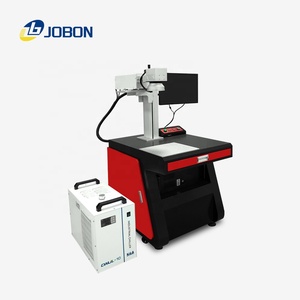
Flexible PCB Board Marking Chip LCD UV Marking Machine

Ultra Violet Laser Engraving Machine Laser Printer for Flexible PCB Board Marking Chip LCD

Engineered for ultra-fine micro-marking on FPC boards, semiconductor chips, and LCD glass modules. Zero thermal stress ensures pristine trace integrity.

Inquire Now
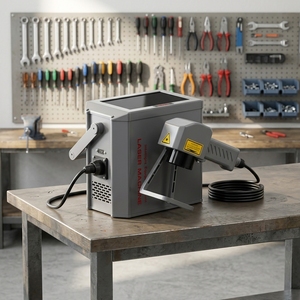
Small Desktop UV Laser Engraving Machine Air Cooling Mini Marker

Small Desktop UV Laser Engraving Machine Air Cooling Mini Laser Marker For Cosmetic Packaging

Compact air-cooled design tailored for high-speed date coding, QR marking, and anti-counterfeiting logos on cosmetic polymer packaging.

Inquire Now
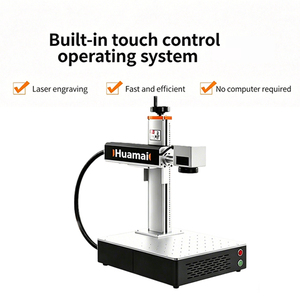
Desktop Split Commarker Omni 1 UV Laser Fiber Laser Marking Machine

JPT 30w 50w 60w 100w Desktop Split Commarker Omni 1 UV Laser Fiber Laser Marking Machine

Multi-wave hybrid platform integrated with JPT laser sources. Optimized for precision jewelry, stainless steel annealing, and fine plastic coding.

Inquire Now
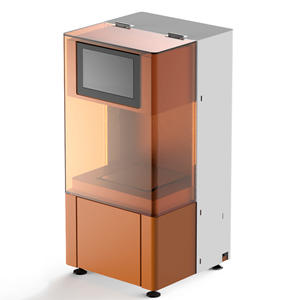
3D Printer UV SLA Laser Curing Ceramic 3D Printer

3D Printer UV SLA Laser Curing Ceramic 3D Printer For Alumina Silicon Nitride

High-precision SLA stereolithography system utilizing 355nm UV laser optics for additive manufacturing of complex technical ceramic components.

Inquire Now
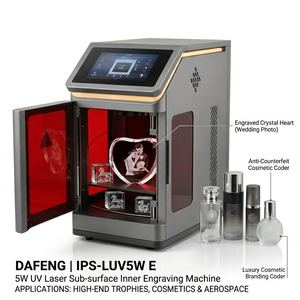
Professional 5W UV Laser Inner Engraving Machine 3D Photo Crystal

Professional New 5W UV Laser Inner Engraving Machine IPS-LUV5W 3D Photo Crystal Glass

Sub-surface focal control technology for high-density 3D volumetric engraving inside optical glass, acrylic, and premium crystalline structures.

Inquire Now
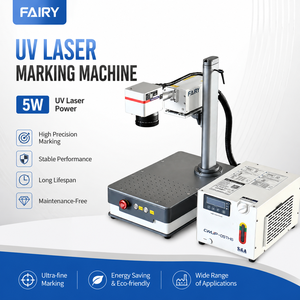
Portable Mini 5W UV Laser Engraver Industrial Machine

Portable Mini 5W UV Laser Engraver Industrial UV Laser Marking Machine For Glass Plastic

Versatile industrial workstation built for non-metal processing. Delivers high contrast, dross-free marks on HDPE, PET, silica glass, and silicon.

Inquire Now
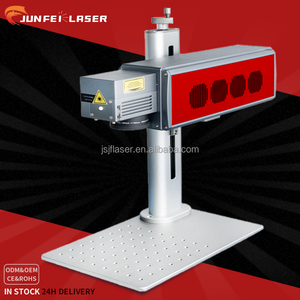
Portable Mini UV Laser Marking Machine for Metal Plastic 3D

Portable Mini UV Laser Marking Machine for Metal & Plastic Engraving (3D Dynamic Focus)

Equipped with 3D galvo dynamic focusing optics to maintain beam spot sharpness across curved surfaces, sloped planes, and complex geometries.

Inquire Now
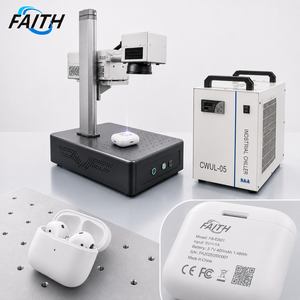
Faith Desktop UV Laser Engraving Machine Galvo Printer for Pipes

Faith Desktop UV Laser Engraving Machine High Precision Galvo Marking Printer For Pipes

High-speed galvanometer continuous flyer marking system designed for extruded plastic piping, medical tubing, and industrial cabling production lines.

Inquire Now
355 nm
Cold Laser Wavelength
< 0.01 mm
Repeatability Accuracy
15,000 mm/s
Max Galvo Scan Speed
24 / 7
Continuous Duty Cycle

Ho Chi Minh City Industrial Transformation & The Demand for UV Cold Processing

As the economic engine of Vietnam, the Greater Ho Chi Minh City region—encompassing vital industrial corridors across Saigon Hi-Tech Park (SHTP), Tan Thuan Export Processing Zone, and neighboring centers in Binh Duong and Dong Nai—is undergoing a rapid technological migration. Transitioning from traditional low-margin OEM manufacturing toward high-density electronics assembly, semiconductor back-end packaging, medical device fabrication, and eco-friendly consumer packaging, local factories face stringent quality mandates from global brand owners in North America, Europe, and East Asia.

Traditional thermal processing tools, such as standard CO2 lasers (10.6 µm) or Near-Infrared Fiber lasers (1064 nm), introduce excessive thermal energy into sensitive substrates. This energy generates a substantial Heat Affected Zone (HAZ), resulting in micro-charring, edge melting, material warping, and delamination on delicate items such as Flexible Printed Circuits (FPC), thin polymer films, HDPE pharmaceutical bottles, and silica glass wafers.

Enter 355nm Ultra-Violet (UV) Laser Technology: Operating via "photochemical processing" (cold processing) rather than thermal melting, UV lasers utilize high-energy ultraviolet photons to directly break the molecular bonds within organic and inorganic compounds. This micro-machining process eliminates thermal collateral damage, enabling clean, crisp, high-contrast marks and burr-free cuts indispensable for HCMC's tier-1 electronics and medical packaging suppliers.

Key Localized Application Workflows in Southern Vietnam

  • FPC & Rigid-Flex Circuit Board Processing: Cutting, contouring, and 2D DataMatrix code marking on polyimide (PI) flexible circuits without carbonization or layer separation in SHTP electronics plants.
  • Pharmaceutical & Cosmetic Packaging Serialization: High-speed, tamper-proof date coding and batch numbering on HDPE, PET, and glass containers across Binh Duong packaging hubs without ink consumables or toxic VOC emissions.
  • Sub-surface Optical Glass & Semiconductor Wafer Dicing: Micro-engraving internal tracking marks inside sapphire glass display covers and precision dicing of ceramic substrates (Alumina and Silicon Nitride).
  • Medical Catheter & Polymer Tubing Marking: Ultra-smooth, biocompatible surface coding on fluoropolymers (PTFE, FEP) and silicone tubes without degrading material flexibility or sterile integrity.

Technical Benchmark: Why UV Cold Lasers Outperform Alternative Technologies

Engineering breakdown of wavelength interaction, beam optics, and process efficiency

Photochemical "Cold" Ablation

UV photons (355nm) possess photon energy up to 3.49 eV, sufficient to sever chemical bonds directly. Unlike infrared lasers that rely on localized heating, cold ablation prevents material charring and thermal deformation.

Diffraction-Limited Spot Size

Because focused spot diameter is directly proportional to wavelength ($\text{Spot} \propto \lambda$), a 355nm UV beam focuses to a spot size 1/3 smaller than a 1064nm fiber beam, achieving micro-feature resolution down to 10 micrometers.

Universal Substrate Absorption

Most industrial polymers, transparent resins, glass, ceramics, and precious metals exhibit significantly higher optical absorption in the ultraviolet spectrum, unlocking process capabilities impossible with CO2 or Fiber systems.

Industrial Laser Technology Comparison Matrix

A side-by-side engineering evaluation for procurement directors selecting machinery for Southern Vietnam manufacturing plants:

Performance Parameter 355nm UV Laser (Cold Processing) 1064nm Fiber Laser (Thermal) 10.6µm CO2 Laser (Thermal)
Primary Processing Mode Photochemical Bond Breaking Thermal Melting & Vaporization Thermal Burning & Pyrolysis
Heat Affected Zone (HAZ) Negligible (< 5 µm) Moderate to High (50 - 200 µm) Extremely High (> 250 µm)
Focused Spot Diameter 10 - 15 µm 30 - 50 µm 100 - 180 µm
FPC / Flexible PCB Suitability Optimal (Zero Edge Charring) Unsuitable (Layer Burning) Poor (Large Kerf & Melting)
White/Clear Plastic Marking Contrast High Contrast (Pure Color Change) Low / Foaming Effect Engraved Melting / Discoloration
Glass & Crystal Micro-Engraving Chipping-Free / Sub-surface 3D Unsuitable (Transparent to 1064nm) Surface Micro-Cracking
Consumables & Maintenance Solid-State Diode / Low Maintenance No Consumables / Maintenance Free Laser Gas / Mirror Realignment

Evaluation Criteria for Sourcing UV Laser Suppliers in Ho Chi Minh City

Selecting an industrial laser supplier requires rigorous auditing beyond initial machine price tags. Facilities operating across Southern Vietnam must consider local environmental conditions—such as high ambient humidity and temperatures exceeding $35^\circ\text{C}$ during monsoon cycles—which can severely impact DPSS (Diode-Pumped Solid-State) laser crystal longevity if optical cavities are not properly sealed.

Key Evaluation Dimensions for Enterprise Buyers

1. OEM Engineering Integrity

Verify whether the manufacturer utilizes stress-relieved gantry frames, brand-name harmonic drives, and precision galvo heads (e.g., ScanLab or high-end Sino-Galvo) versus low-cost unbranded assemblies prone to drift.

2. Laser Source Architecture

Premier suppliers integrate third-harmonic generation (THG) DPSS sources from Tier-1 innovators (JPT, Inno, Bellin, IPG) featuring sealed, dust-proof internal optics and active water-chilling temperature stability ($\pm 0.1^\circ\text{C}$).

3. Localized Service & Spares

Machine downtime halts production lines. Ensure your vendor provides field service availability in HCMC, stocked replacement protective windows, field-serviceable galvo mirrors, and remote software diagnostics.

Factory-Direct Engineering & Quality Control Standards

Our manufacturing facility operates under strict ISO 9001 and CE compliance frameworks. Unlike trading intermediaries, our factory engineers manage the entire machinery build cycle from frame fabrication to final optic tuning:

  • Annealed Frame Construction: Machine bases undergo high-temperature furnace stress-relieving to eliminate internal structural strain, ensuring zero frame deformation over a decade of continuous operational use.
  • Clean-Room Optical Alignment: UV laser heads and beam delivery paths are assembled within Class 10,000 clean-room environments to prevent airborne dust contamination of high-energy 355nm optical coatings.
  • Full-Power 72-Hour Burn-In Test: Prior to export packing, every UV laser system undergoes continuous 72-hour power stability logging and sample part trial cutting under simulated high-humidity factory conditions.
  • Comprehensive Export Handover: Shipments to Vietnam include full foundation layout schematics, electrical wiring diagrams, localized operator training, and recommended 1-year and 2-year wear-and-tear spare kits.

Frequently Asked Questions by HCMC Procurement Teams

Expert insights addressing practical procurement, installation, and operational queries in Vietnam

What is the functional difference between 3W, 5W, and 10W UV laser power options?
Higher UV laser wattage enables faster processing speeds and deeper material penetration. A 3W system is ideal for high-contrast coding on cosmetic bottles and light plastic marking. A 5W system is the industry standard sweet spot, balancing rapid marking speeds with micro-cutting capability on thin FPC boards and glass. 10W and higher systems are specified for continuous high-speed industrial flyer marking on extrusion lines or thick ceramic SLA 3D printing.
How do high ambient temperature and humidity in Southern Vietnam affect UV laser systems?
UV lasers use Non-Linear Crystals (LBO/BBO) to convert 1064nm infrared light to 355nm ultraviolet light via Third Harmonic Generation. These crystals are sensitive to moisture and temperature fluctuations. Our industrial UV systems feature IP54-sealed optical cavities paired with precision dual-circuit water chillers ($\pm 0.1^\circ\text{C}$ regulation) to prevent condensation and optical crystal degradation in tropical climates.
Is air-cooling sufficient for UV laser marking machines, or is water-cooling required?
For mini desktop units operating up to 3W in air-conditioned environments, air-cooling offers a compact, low-maintenance footprint suitable for light-duty coding. However, for industrial 5W, 10W, or continuous 24/7 manufacturing environments in HCMC industrial parks, active industrial water chillers are strongly recommended to guarantee laser output stability and extend diode pump lifetime.
Can UV lasers cut sheet metals like stainless steel or aluminum?
While UV lasers can mark metals with extremely fine contrast and minimal surface heat, they are not designed for structural metal sheet cutting. Fiber lasers (1kW to 30kW) are far more cost-effective for sheet metal fabrication. UV lasers excel at thin metal foil ablation (sub-100 micron thickness), precision metal wire stripping, and micro-drilling.
What importing procedures, customs taxes, and site requirements apply to Vietnam industrial deliveries?
Machines exported to Vietnam are packed in sea-worthy IPPC-certified wooden crates accompanied by HS Code documentation, Form E / Certificate of Origin (CO), CE certifications, and commercial invoices. Standard installation requires a stable 220V $\pm 10\%$ 50Hz single-phase electrical supply, oil-free compressed air (for pneumatic galvo assist), and basic fume extraction to maintain clean plant air quality.
What maintenance is required to ensure a 10-year UV laser operational lifespan?
Routine maintenance involves inspecting and cleaning the f-theta protective lens window using optical-grade isopropyl alcohol, replacing water chiller distilled fluid every 3 months, and ensuring air filters on electrical cabinets remain dust-free. Because our optical cavities are hermetically sealed, internal optical tuning is minimized.

Ready to Upgrade Your Precision Manufacturing Line?

Consult with our senior application engineers to receive custom sample cutting reports, system CAD layouts, and factory-direct quotation packages for your Ho Chi Minh City facility.